 Movie
Movie Controller

[English] 日本語
 Yorodumi
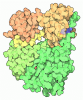
- EMDB-66607: Cryo-EM structure of the human KCNQ2/3 heteromer channel in the X... -
+ Open data

- Basic information
| Entry |  | |||||||||
|---|---|---|---|---|---|---|---|---|---|---|
| Title | Cryo-EM structure of the human KCNQ2/3 heteromer channel in the XEN1101-bound open state | |||||||||
 Map data Map data | ||||||||||
 Sample Sample |
| |||||||||
 Keywords Keywords | Kv7 / Ion Channel / XEN1101 / MEMBRANE PROTEIN | |||||||||
| Function / homology |  Function and homology information Function and homology informationaxon initial segment / Voltage gated Potassium channels / node of Ranvier / CaM pathway / Cam-PDE 1 activation / Sodium/Calcium exchangers / Calmodulin induced events / Reduction of cytosolic Ca++ levels / Activation of Ca-permeable Kainate Receptor / CREB1 phosphorylation through the activation of CaMKII/CaMKK/CaMKIV cascasde ...axon initial segment / Voltage gated Potassium channels / node of Ranvier / CaM pathway / Cam-PDE 1 activation / Sodium/Calcium exchangers / Calmodulin induced events / Reduction of cytosolic Ca++ levels / Activation of Ca-permeable Kainate Receptor / CREB1 phosphorylation through the activation of CaMKII/CaMKK/CaMKIV cascasde / ankyrin binding / Interaction between L1 and Ankyrins / Loss of phosphorylation of MECP2 at T308 / CREB1 phosphorylation through the activation of Adenylate Cyclase / PKA activation / CaMK IV-mediated phosphorylation of CREB / CASP4 inflammasome assembly / Glycogen breakdown (glycogenolysis) / voltage-gated monoatomic cation channel activity / negative regulation of ryanodine-sensitive calcium-release channel activity / Activation of RAC1 downstream of NMDARs / organelle localization by membrane tethering / CLEC7A (Dectin-1) induces NFAT activation / : / negative regulation of high voltage-gated calcium channel activity / autophagosome membrane docking / negative regulation of calcium ion export across plasma membrane / regulation of cardiac muscle cell action potential / presynaptic endocytosis / Synthesis of IP3 and IP4 in the cytosol / Phase 0 - rapid depolarisation / Negative regulation of NMDA receptor-mediated neuronal transmission / Unblocking of NMDA receptors, glutamate binding and activation / calcineurin-mediated signaling / RHO GTPases activate PAKs / regulation of cell communication by electrical coupling involved in cardiac conduction / Uptake and function of anthrax toxins / Ion transport by P-type ATPases / protein phosphatase activator activity / Long-term potentiation / Calcineurin activates NFAT / regulation of ryanodine-sensitive calcium-release channel activity / action potential / catalytic complex / Regulation of MECP2 expression and activity / DARPP-32 events / Smooth Muscle Contraction / detection of calcium ion / voltage-gated potassium channel activity / regulation of cardiac muscle contraction / cellular response to interferon-beta / RHO GTPases activate IQGAPs / calcium channel inhibitor activity / presynaptic cytosol / Activation of AMPK downstream of NMDARs / eNOS activation / regulation of release of sequestered calcium ion into cytosol by sarcoplasmic reticulum / Tetrahydrobiopterin (BH4) synthesis, recycling, salvage and regulation / Ion homeostasis / regulation of heart rate / Protein methylation / titin binding / regulation of cardiac muscle contraction by regulation of the release of sequestered calcium ion / voltage-gated potassium channel complex / calcium channel complex / FCERI mediated Ca+2 mobilization / substantia nigra development / FCGR3A-mediated IL10 synthesis / potassium ion transmembrane transport / protein serine/threonine kinase activator activity / sperm midpiece / Antigen activates B Cell Receptor (BCR) leading to generation of second messengers / calyx of Held / positive regulation of receptor signaling pathway via JAK-STAT / Ras activation upon Ca2+ influx through NMDA receptor / adenylate cyclase activator activity / regulation of cytokinesis / VEGFR2 mediated cell proliferation / VEGFR2 mediated vascular permeability / spindle microtubule / sarcomere / Translocation of SLC2A4 (GLUT4) to the plasma membrane / calcium channel regulator activity / myelin sheath / cellular response to type II interferon / Transcriptional activation of mitochondrial biogenesis / long-term synaptic potentiation / Enterobacterial factors antagonize host defense / response to calcium ion / RAF activation / Stimuli-sensing channels / spindle pole / calcium-dependent protein binding / Signaling by RAF1 mutants / Signaling by moderate kinase activity BRAF mutants / Paradoxical activation of RAF signaling by kinase inactive BRAF / Signaling downstream of RAS mutants / RAS processing / Signaling by BRAF and RAF1 fusions / Platelet degranulation Similarity search - Function | |||||||||
| Biological species |  Homo sapiens (human) Homo sapiens (human) | |||||||||
| Method | single particle reconstruction / cryo EM / Resolution: 3.19 Å | |||||||||
 Authors Authors | Cheng XY / Wan SY / Hou PP / Zhang J | |||||||||
| Funding support | 1 items
| |||||||||
 Citation Citation | Journal: To Be Published Title: Cryo-EM structure of the human KCNQ2/3 heteromer channel in the XEN1101-bound open state Authors: Cheng XY / Wan SY / Hou PP / Zhang J | |||||||||
| History |
|
- Structure visualization
| Supplemental images |
|---|

- Downloads & links
-EMDB archive
| Map data | emd_66607.map.gz | 230.3 MB | EMDB map data format | |
|---|---|---|---|---|
| Header (meta data) | emd-66607-v30.xmlemd-66607.xml | 19.3 KB 19.3 KB | Display Display | EMDB header |
| Images |  emd_66607.png emd_66607.png | 97 KB | ||
| Filedesc metadata | emd-66607.cif.gz | 6.8 KB | ||
| Others | emd_66607_half_map_1.map.gzemd_66607_half_map_2.map.gz | 226.9 MB 226.9 MB | ||
| Archive directory |  https://data.pdbj.org/pub/emdb/structures/EMD-66607ftp://data.pdbj.org/pub/emdb/structures/EMD-66607 https://data.pdbj.org/pub/emdb/structures/EMD-66607ftp://data.pdbj.org/pub/emdb/structures/EMD-66607 | HTTPS FTP |
-Related structure data
| Related structure data |  9x65MC M: atomic model generated by this map C: citing same article ( |
|---|---|
| Similar structure data |
-Links
| EMDB pages | EMDB (EBI/PDBe) / EMDataResource |
|---|---|
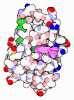
| Related items in Molecule of the Month |

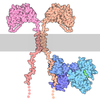
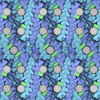
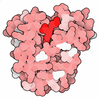
-Map
| File | Download / File: emd_66607.map.gz / Format: CCP4 / Size: 244.1 MB / Type: IMAGE STORED AS FLOATING POINT NUMBER (4 BYTES) | ||||||||||||||||||||||||||||||||||||
|---|---|---|---|---|---|---|---|---|---|---|---|---|---|---|---|---|---|---|---|---|---|---|---|---|---|---|---|---|---|---|---|---|---|---|---|---|---|
| Projections & slices | Image control
Images are generated by Spider. | ||||||||||||||||||||||||||||||||||||
| Voxel size | X=Y=Z: 0.891 Å | ||||||||||||||||||||||||||||||||||||
| Density |
| ||||||||||||||||||||||||||||||||||||
| Symmetry | Space group: 1 | ||||||||||||||||||||||||||||||||||||
| Details | EMDB XML:
|
 Z (Sec.)
 Y (Row.)
 X (Col.)


-Supplemental data
-Half map: #2
| File | emd_66607_half_map_1.map | ||||||||||||
|---|---|---|---|---|---|---|---|---|---|---|---|---|---|
| Projections & Slices |
| ||||||||||||
| Density Histograms |


-Half map: #1
| File | emd_66607_half_map_2.map | ||||||||||||
|---|---|---|---|---|---|---|---|---|---|---|---|---|---|
| Projections & Slices |
| ||||||||||||
| Density Histograms |


- Sample components
-Entire : Cryo-EM structure of the human KCNQ2/3 heteromer channel in the X...
| Entire | Name: Cryo-EM structure of the human KCNQ2/3 heteromer channel in the XEN1101-bound open state |
|---|---|
| Components |
|
-Supramolecule #1: Cryo-EM structure of the human KCNQ2/3 heteromer channel in the X...
| Supramolecule | Name: Cryo-EM structure of the human KCNQ2/3 heteromer channel in the XEN1101-bound open state type: complex / ID: 1 / Parent: 0 / Macromolecule list: #2-#3, #1 |
|---|---|
| Source (natural) | Organism: Homo sapiens (human) |
-Macromolecule #1: Calmodulin-1
| Macromolecule | Name: Calmodulin-1 / type: protein_or_peptide / ID: 1 / Number of copies: 4 / Enantiomer: LEVO |
|---|---|
| Source (natural) | Organism: Homo sapiens (human) |
| Molecular weight | Theoretical: 16.852545 KDa |
| Recombinant expression | Organism: Homo sapiens (human) |
| Sequence | String: MADQLTEEQI AEFKEAFSLF DKDGDGTITT KELGTVMRSL GQNPTEAELQ DMINEVDADG NGTIDFPEFL TMMARKMKDT DSEEEIREA FRVFDKDGNG YISAAELRHV MTNLGEKLTD EEVDEMIREA DIDGDGQVNY EEFVQMMTAK UniProtKB: Calmodulin-1 |
-Macromolecule #2: Potassium voltage-gated channel subfamily KQT member 3
| Macromolecule | Name: Potassium voltage-gated channel subfamily KQT member 3 type: protein_or_peptide / ID: 2 / Number of copies: 3 / Enantiomer: LEVO |
|---|---|
| Source (natural) | Organism: Homo sapiens (human) |
| Molecular weight | Theoretical: 96.866391 KDa |
| Recombinant expression | Organism: Homo sapiens (human) |
| Sequence | String: MGLKARRAAG AAGGGGDGGG GGGGAANPAG GDAAAAGDEE RKVGLAPGDV EQVTLALGAG ADKDGTLLLE GGGRDEGQRR TPQGIGLLA KTPLSRPVKR NNAKYRRIQT LIYDALERPR GWALLYHALV FLIVLGCLIL AVLTTFKEYE TVSGDWLLLL E TFAIFIFG ...String: MGLKARRAAG AAGGGGDGGG GGGGAANPAG GDAAAAGDEE RKVGLAPGDV EQVTLALGAG ADKDGTLLLE GGGRDEGQRR TPQGIGLLA KTPLSRPVKR NNAKYRRIQT LIYDALERPR GWALLYHALV FLIVLGCLIL AVLTTFKEYE TVSGDWLLLL E TFAIFIFG AEFALRIWAA GCCCRYKGWR GRLKFARKPL CMLDIFVLIA SVPVVAVGNQ GNVLATSLRS LRFLQILRML RM DRRGGTW KLLGSAICAH SKELITAWYI GFLTLILSSF LVYLVEKDVP EVDAQGEEMK EEFETYADAL WWGLITLATI GYG DKTPKT WEGRLIAATF SLIGVSFFAL PAGILGSGLA LKVQEQHRQK HFEKRRKPAA ELIQAAWRYY ATNPNRIDLV ATWR FYESV VSFPFFRKEQ LEAASSQKLG LLDRVRLSNP RGSNTKGKLF TPLNVDAIEE SPSKEPKPVG LNNKERFRTA FRMKA YAFW QSSEDAGTGD PMAEDRGYGN DFPIEDMIPT LKAAIRAVRI LQFRLYKKKF KETLRPYDVK DVIEQYSAGH LDMLSR IKY LQTRIDMIFT PGPPSTPKHK KSQKGSAFTF PSQQSPRNEP YVARPSTSEI EDQSMMGKFV KVERQVQDMG KKLDFLV DM HMQHMERLQV QVTEYYPTKG TSSPAEAEKK EDNRYSDLKT IICNYSETGP PEPPYSFHQV TIDKVSPYGF FAHDPVNL P RGGPSSGKVQ ATPPSSATTY VERPTVLPIL TLLDSRVSCH SQADLQGPYS DRISPRQRRS ITRDSDTPLS LMSVNHEEL ERSPSGFSIS QDRDDYVFGP NGGSSWMREK RYLAEGETDT DTDPFTPSGS MPLSSTGDGI SDSVWTPSNK PI UniProtKB: Potassium voltage-gated channel subfamily KQT member 3 |
-Macromolecule #3: Potassium voltage-gated channel subfamily KQT member 2
| Macromolecule | Name: Potassium voltage-gated channel subfamily KQT member 2 type: protein_or_peptide / ID: 3 / Number of copies: 1 / Enantiomer: LEVO |
|---|---|
| Source (natural) | Organism: Homo sapiens (human) |
| Molecular weight | Theoretical: 95.976742 KDa |
| Recombinant expression | Organism: Homo sapiens (human) |
| Sequence | String: MVQKSRNGGV YPGPSGEKKL KVGFVGLDPG APDSTRDGAL LIAGSEAPKR GSILSKPRAG GAGAGKPPKR NAFYRKLQNF LYNVLERPR GWAFIYHAYV FLLVFSCLVL SVFSTIKEYE KSSEGALYIL EIVTIVVFGV EYFVRIWAAG CCCRYRGWRG R LKFARKPF ...String: MVQKSRNGGV YPGPSGEKKL KVGFVGLDPG APDSTRDGAL LIAGSEAPKR GSILSKPRAG GAGAGKPPKR NAFYRKLQNF LYNVLERPR GWAFIYHAYV FLLVFSCLVL SVFSTIKEYE KSSEGALYIL EIVTIVVFGV EYFVRIWAAG CCCRYRGWRG R LKFARKPF CVIDIMVLIA SIAVLAAGSQ GNVFATSALR SLRFLQILRM IRMDRRGGTW KLLGSVVYAH SKELVTAWYI GF LCLILAS FLVYLAEKGE NDHFDTYADA LWWGLITLTT IGYGDKYPQT WNGRLLAATF TLIGVSFFAL PAGILGSGFA LKV QEQHRQ KHFEKRRNPA AGLIQSAWRF YATNLSRTDL HSTWQYYERT VTVPMYSSQT QTYGASRLIP PLNQLELLRN LKSK SGLAF RKDPPPEPSP SKGSPCRGPL CGCCPGRSSQ KVSLKDRVFS SPRGVAAKGK GSPQAQTVRR SPSADQSLED SPSKV PKSW SFGDRSRARQ AFRIKGAASR QNSEEASLPG EDIVDDKSCP CEFVTEDLTP GLKVSIRAVC VMRFLVSKRK FKESLR PYD VMDVIEQYSA GHLDMLSRIK SLQSRVDQIV GRGPAITDKD RTKGPAEAEL PEDPSMMGRL GKVEKQVLSM EKKLDFL VN IYMQRMGIPP TETEAYFGAK EPEPAPPYHS PEDSREHVDR HGCIVKIVRS SSSTGQKNFS APPAAPPVQC PPSTSWQP Q SHPRQGHGTS PVGDHGSLVR IPPPPAHERS LSAYGGGNRA SMEFLRQEDT PGCRPPEGNL RDSDTSISIP SVDHEELER SFSGFSISQS KENLDALNSC YAAVAPCAKV RPYIAEGESD TDSDLCTPCG PPPRSATGEG PFGDVGWAGP RK UniProtKB: Potassium voltage-gated channel subfamily KQT member 2 |
-Macromolecule #4: Azetukalner
| Macromolecule | Name: Azetukalner / type: ligand / ID: 4 / Number of copies: 4 / Formula: A1EY8 |
|---|---|
| Molecular weight | Theoretical: 368.488 Da |
-Macromolecule #5: [(2R)-2-octanoyloxy-3-[oxidanyl-[(1R,2R,3S,4R,5R,6S)-2,3,6-tris(o...
| Macromolecule | Name: [(2R)-2-octanoyloxy-3-[oxidanyl-[(1R,2R,3S,4R,5R,6S)-2,3,6-tris(oxidanyl)-4,5-diphosphonooxy-cyclohexyl]oxy-phosphoryl]oxy-propyl] octanoate type: ligand / ID: 5 / Number of copies: 4 / Formula: PIO |
|---|---|
| Molecular weight | Theoretical: 746.566 Da |
| Chemical component information | 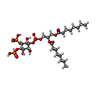 ChemComp-PIO: |
-Macromolecule #6: POTASSIUM ION
| Macromolecule | Name: POTASSIUM ION / type: ligand / ID: 6 / Number of copies: 3 / Formula: K |
|---|---|
| Molecular weight | Theoretical: 39.098 Da |
-Experimental details
-Structure determination
| Method | cryo EM |
|---|---|
 Processing Processing | single particle reconstruction |
| Aggregation state | particle |
-Sample preparation
| Buffer | pH: 7.5 |
|---|---|
| Vitrification | Cryogen name: ETHANE |
- Electron microscopy
| Microscope | FEI TECNAI SPIRIT |
|---|---|
| Image recording | Film or detector model: FEI FALCON IV (4k x 4k) / Average electron dose: 50.0 e/Å2 |
| Electron beam | Acceleration voltage: 300 kV / Electron source:  FIELD EMISSION GUN FIELD EMISSION GUN |
| Electron optics | Illumination mode: FLOOD BEAM / Imaging mode: BRIGHT FIELD / Nominal defocus max: 2.0 µm / Nominal defocus min: 1.0 µm |
| Experimental equipment | 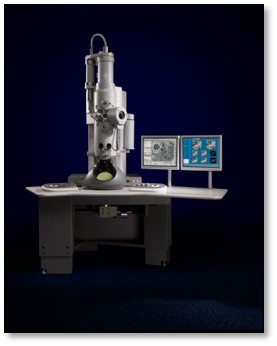 Model: Tecnai Spirit / Image courtesy: FEI Company |
