Ministry of Education, Culture, Sports, Science and Technology (Japan)
Japan
Citation
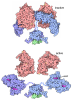
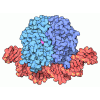
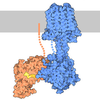
Journal: Sci Adv / Year: 2026 Title: AKT5 is a bona fide potassium channel and controls petiole growth in . Authors: Yuki Muraoka / Shunsuke Kobayashi / Lisa Oskam / Michihiro Tateyama / Ayumu Masago / Yoshikazu Tanaka / Takeshi Yokoyama / Tadaomi Furuta / Hinano Takase / Ellen Tanudjaja / Shota Terashima ...Authors: Yuki Muraoka / Shunsuke Kobayashi / Lisa Oskam / Michihiro Tateyama / Ayumu Masago / Yoshikazu Tanaka / Takeshi Yokoyama / Tadaomi Furuta / Hinano Takase / Ellen Tanudjaja / Shota Terashima / Haruto Shimizukawa / Taro Yamanashi / Shunya Saito / Hiroki Ijima / Miyuki Tanaka / Atsushi Miyamoto / Megumi Kato / Kanane Sato / Masaru Tsujii / Taishi Umezawa / Francisco J Quintero / Francisco Rubio / Jörg Kudla / Masaaki Ito / Yoshihiro Kubo / Yasuhiro Ishimaru / Ronald Pierik / Nobuyuki Uozumi / Abstract: Potassium ion (K) is essential for plant growth and development. Despite decades of study, the -type K channel AKT5 has remained functionally unassigned. Here, we report that AKT5 functions as a bona ...Potassium ion (K) is essential for plant growth and development. Despite decades of study, the -type K channel AKT5 has remained functionally unassigned. Here, we report that AKT5 functions as a bona fide voltage-dependent K channel and serves as an essential regulator of petiole elongation. Structural analyses of AKT5 in a closed state and the AKT5-D403 variant in a pre-open state provide direct structural evidence for functional K channel activity. AKT5 assembled into a canonical tetramer with two-fold symmetry and, upon phosphorylation, operated as an inward-rectifying K channel activated at strongly hyperpolarized membrane potentials. AKT5 was predominantly expressed in young petioles, and loss of AKT5 function largely suppressed petiole elongation throughout the diurnal cycle, resulting in compact rosettes and reduced biomass under crowded growth conditions. These findings show that AKT5 is involved in a regulator of plant competitive growth and high-density performance.
In the structure databanks used in Yorodumi, some data are registered as the other names, "COVID-19 virus" and "2019-nCoV". Here are the details of the virus and the list of structure data.
Jan 31, 2019. EMDB accession codes are about to change! (news from PDBe EMDB page)
EMDB accession codes are about to change! (news from PDBe EMDB page)
The allocation of 4 digits for EMDB accession codes will soon come to an end. Whilst these codes will remain in use, new EMDB accession codes will include an additional digit and will expand incrementally as the available range of codes is exhausted. The current 4-digit format prefixed with “EMD-” (i.e. EMD-XXXX) will advance to a 5-digit format (i.e. EMD-XXXXX), and so on. It is currently estimated that the 4-digit codes will be depleted around Spring 2019, at which point the 5-digit format will come into force.
The EM Navigator/Yorodumi systems omit the EMD- prefix.
Related info.:Q: What is EMD? / ID/Accession-code notation in Yorodumi/EM Navigator
Yorodumi is a browser for structure data from EMDB, PDB, SASBDB, etc.
This page is also the successor to EM Navigator detail page, and also detail information page/front-end page for Omokage search.
The word "yorodu" (or yorozu) is an old Japanese word meaning "ten thousand". "mi" (miru) is to see.
Related info.:EMDB / PDB / SASBDB / Comparison of 3 databanks / Yorodumi Search / Aug 31, 2016. New EM Navigator & Yorodumi / Yorodumi Papers / Jmol/JSmol / Function and homology information / Changes in new EM Navigator and Yorodumi
 Movie
Movie Controller


 Open data
 Basic information
 Map data
 Sample
 Keywords
 Function and homology information
 Arabidopsis thaliana (thale cress)
 Authors
 Japan, 1 items
  Citation


 Structure visualization
 Downloads & links
 emd_66431.png
 https://data.pdbj.org/pub/emdb/structures/EMD-66431


 Z (Sec.)
 Y (Row.)
 X (Col.)


 Sample components
 Spodoptera frugiperda (fall armyworm)
 Processing
 Electron microscopy
 FIELD EMISSION GUN
