Journal: Nat Struct Mol Biol / Year: 2026 Title: Distinct amyloid-β filament fold in individuals with APP Flemish mutation. Authors: Peerzada Shariq Shaheen Khaki / Pablo Adrian Guillen-Poza / Carlton Wong / Chloe Kan / Rakesh Sharma / Rio Sugimura / Andrew C Robinson / Alejandro Valbuena / Roy Chun-Laam Ng / Yang Yang / Ruben Hervas / Abstract: The dominantly inherited Flemish mutation-an A692G substitution in the amyloid precursor protein, corresponding to an A21G change in amyloid-β (Aβ)-causes a rare, early-onset form of Alzheimer ...The dominantly inherited Flemish mutation-an A692G substitution in the amyloid precursor protein, corresponding to an A21G change in amyloid-β (Aβ)-causes a rare, early-onset form of Alzheimer disease characterized by pronounced cerebral amyloid angiopathy and unusually large senile plaque cores. Here, we report cryo-electron microscopy structures of amyloid filaments extracted from the postmortem parietal lobes of two individuals representing the only two known Flemish pedigrees worldwide. Although tau paired helical filaments were present, the predominant filaments comprise Aβ40-A21G, assembled as two identical protofilaments (D1-V40) packed with two-start helical symmetry. Aβ40-A21G and wild-type Aβ42 filaments share a substructure preceding the substitution site (Y10-F19); however, loss of the methyl group at residue 21 gives rise to a distinct arrangement, termed the 'Flemish fold', which differs from all previously characterized Aβ folds and is defined by a unique hydrophobic interface. Using a cell-based assay, we find that this distinctive fold is associated with the vascular tropism characteristic of the Flemish variant. Together, our structural and cellular data define a familial Alzheimer-disease-associated amyloid fold and provide insight into the molecular basis of Flemish-type dementia and cerebral hemorrhage.
In the structure databanks used in Yorodumi, some data are registered as the other names, "COVID-19 virus" and "2019-nCoV". Here are the details of the virus and the list of structure data.
Jan 31, 2019. EMDB accession codes are about to change! (news from PDBe EMDB page)
EMDB accession codes are about to change! (news from PDBe EMDB page)
The allocation of 4 digits for EMDB accession codes will soon come to an end. Whilst these codes will remain in use, new EMDB accession codes will include an additional digit and will expand incrementally as the available range of codes is exhausted. The current 4-digit format prefixed with “EMD-” (i.e. EMD-XXXX) will advance to a 5-digit format (i.e. EMD-XXXXX), and so on. It is currently estimated that the 4-digit codes will be depleted around Spring 2019, at which point the 5-digit format will come into force.
The EM Navigator/Yorodumi systems omit the EMD- prefix.
Related info.:Q: What is EMD? / ID/Accession-code notation in Yorodumi/EM Navigator
Yorodumi is a browser for structure data from EMDB, PDB, SASBDB, etc.
This page is also the successor to EM Navigator detail page, and also detail information page/front-end page for Omokage search.
The word "yorodu" (or yorozu) is an old Japanese word meaning "ten thousand". "mi" (miru) is to see.
Related info.:EMDB / PDB / SASBDB / Comparison of 3 databanks / Yorodumi Search / Aug 31, 2016. New EM Navigator & Yorodumi / Yorodumi Papers / Jmol/JSmol / Function and homology information / Changes in new EM Navigator and Yorodumi
 Movie
Movie Controller

 Yorodumi
 Open data
 Basic information
 Map data
 Sample
 Keywords
 Function and homology information
 Homo sapiens (human)
 Authors
 Hong Kong, 1 items
  Citation


 Structure visualization
 Downloads & links
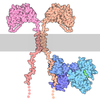
 emd_66225.png
 https://data.pdbj.org/pub/emdb/structures/EMD-66225

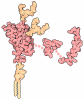

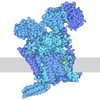
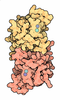
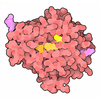
 Z (Sec.)
 Y (Row.)
 X (Col.)


 Sample components
 Processing
 Electron microscopy
 FIELD EMISSION GUN

