Journal: ACS Infect Dis / Year: 2026 Title: Development of a Thermostable and Broadly Neutralizing Pan-Sarbecovirus Vaccine Candidate. Authors: Simran Srivastava / Sahil Kumar / Suman Mishra / Raju S Rajmani / Randhir Singh / Somnath Dutta / Rajesh Prakash Ringe / Raghavan Varadarajan / Abstract: Zoonotic spillover of sarbecoviruses to humans resulted in the SARS-CoV-1 outbreak in 2003 and the current COVID-19 pandemic caused by SARS-CoV-2. In both cases, the viral spike protein (S) is the ...Zoonotic spillover of sarbecoviruses to humans resulted in the SARS-CoV-1 outbreak in 2003 and the current COVID-19 pandemic caused by SARS-CoV-2. In both cases, the viral spike protein (S) is the principal target of neutralizing antibodies that prevent infection. Within the spike, the immunodominant receptor-binding domain (RBD) is the primary target of neutralizing antibodies in COVID-19 convalescent sera and vaccine recipients. We have constructed stabilized RBD derivatives of different sarbecoviruses: SARS-CoV-1 (Clade 1a), WIV-1 (Clade 1a), RaTG13 (Clade 1b), RmYN02 (Clade 2), and BtKY72 (Clade 3). Stabilization enhanced yield by 3-23-fold. The RBD derivatives were conformationally intact, as assayed by binding to multiple broadly neutralizing antibodies. The stabilized RBDs show significant enhancement in apparent , exhibit resistance to a 2-h incubation at temperatures up to 60 °C in PBS in contrast to the corresponding WT RBDs, and show prolonged stability of over 15 days at 37 °C after lyophilization. In mice immunizations, both stabilization and trimerization significantly enhanced elicited neutralization titers by ∼100-fold. The stabilized RBD cocktail elicited highly neutralizing titers against both homologous and heterologous pseudoviruses. The immunogenicity of the vaccine formulation was assessed in both naïve and SARS-CoV-2 preimmunized mice, revealing an absence of immune imprinting, thus indicating its suitability for use in future sarbecovirus-origin epidemics or pandemics.
In the structure databanks used in Yorodumi, some data are registered as the other names, "COVID-19 virus" and "2019-nCoV". Here are the details of the virus and the list of structure data.
Jan 31, 2019. EMDB accession codes are about to change! (news from PDBe EMDB page)
EMDB accession codes are about to change! (news from PDBe EMDB page)
The allocation of 4 digits for EMDB accession codes will soon come to an end. Whilst these codes will remain in use, new EMDB accession codes will include an additional digit and will expand incrementally as the available range of codes is exhausted. The current 4-digit format prefixed with “EMD-” (i.e. EMD-XXXX) will advance to a 5-digit format (i.e. EMD-XXXXX), and so on. It is currently estimated that the 4-digit codes will be depleted around Spring 2019, at which point the 5-digit format will come into force.
The EM Navigator/Yorodumi systems omit the EMD- prefix.
Related info.:Q: What is EMD? / ID/Accession-code notation in Yorodumi/EM Navigator
Yorodumi is a browser for structure data from EMDB, PDB, SASBDB, etc.
This page is also the successor to EM Navigator detail page, and also detail information page/front-end page for Omokage search.
The word "yorodu" (or yorozu) is an old Japanese word meaning "ten thousand". "mi" (miru) is to see.
Related info.:EMDB / PDB / SASBDB / Comparison of 3 databanks / Yorodumi Search / Aug 31, 2016. New EM Navigator & Yorodumi / Yorodumi Papers / Jmol/JSmol / Function and homology information / Changes in new EM Navigator and Yorodumi
 Movie
Movie Controller

 Yorodumi
 Open data
 Basic information
 Map data
 Sample
 Keywords
 Function and homology information
 Severe acute respiratory syndrome coronavirus /
 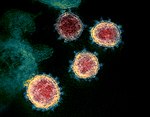 Severe acute respiratory syndrome coronavirus 2
 Authors
 United States, 1 items
  Citation
 Structure visualization
 Downloads & links
 emd_66202.png
 https://data.pdbj.org/pub/emdb/structures/EMD-66202
 Z (Sec.)
 Y (Row.)
 X (Col.)


 Sample components
 Homo sapiens (human)
 Processing
 Electron microscopy
 FIELD EMISSION GUN