- EMDB-65617: Structure of the complex of human PD-1 and a PD-1-directed antibody -
+
Open data
ID or keywords:
Loading...
-
Basic information
Entry
Database: EMDB / ID: EMD-65617
Title
Structure of the complex of human PD-1 and a PD-1-directed antibody
Map data
Sample
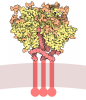
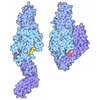
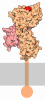
Complex: PD1-fab complex
Protein or peptide: Heavy chain of 1C4 Fab fragment
Protein or peptide: Light chain of 1C4 Fab fragment
Protein or peptide: Programmed cell death protein 1
Keywords
PD-1 / PD-1-directed antibody / antigen-antibody complex / IMMUNE SYSTEM
Function / homology
Function and homology information
negative regulation of immune response / negative regulation of T cell mediated immune response to tumor cell / negative regulation of T cell activation / humoral immune response / Co-inhibition by PD-1 / regulation of immune response / negative regulation of T cell receptor signaling pathway / PD-L1(CD274) glycosylation and translocation to plasma membrane / negative regulation of inflammatory response / transmembrane signaling receptor activity ...negative regulation of immune response / negative regulation of T cell mediated immune response to tumor cell / negative regulation of T cell activation / humoral immune response / Co-inhibition by PD-1 / regulation of immune response / negative regulation of T cell receptor signaling pathway / PD-L1(CD274) glycosylation and translocation to plasma membrane / negative regulation of inflammatory response / transmembrane signaling receptor activity / signaling receptor activity / Potential therapeutics for SARS / apoptotic process / external side of plasma membrane / plasma membrane Similarity search - Function
Journal: MAbs / Year: 2026 Title: Dual agonism and selective T-cell depletion activity of a PD-1-directed antibody for treating autoimmune diseases. Authors: Wenbo Jiang / Lingyun Li / Weili Xue / Xuzhi He / Xuebin Chu / Lei Song / Xue Li / Ranran Zhao / Xinghang Yuan / Xiaoliang Jin / Lishi Fan / Tian Sun / Aisi Zhu / Ling Zhou / Fei Gu / Qian ...Authors: Wenbo Jiang / Lingyun Li / Weili Xue / Xuzhi He / Xuebin Chu / Lei Song / Xue Li / Ranran Zhao / Xinghang Yuan / Xiaoliang Jin / Lishi Fan / Tian Sun / Aisi Zhu / Ling Zhou / Fei Gu / Qian Xu / Guangli Ma / Siqin Wang / Lei Jin / John L Xu / Abstract: Precise inhibition of autoreactivity without concomitant induction of general immunosuppression is an overarching goal that remains elusive for the treatment of autoimmune diseases. PD-1 is ...Precise inhibition of autoreactivity without concomitant induction of general immunosuppression is an overarching goal that remains elusive for the treatment of autoimmune diseases. PD-1 is preferentially expressed on activated T cells that drive autoimmunity. These PD-1 T cells could serve as a target for therapeutic intervention. Here, we report the discovery of a unique PD-1 agonist antibody, GenSci120, that exhibited potent and selective T-cell inhibition in vitro and T-cell depletion activity both in vitro and in vivo. Target engagement by GenSci120 directly promoted SHP2 recruitment into the PD-1 signaling pathway but also enhanced the binding of PD-1 to its natural ligands and augmented PD-L1-induced PD-1 signaling. Moreover, GenSci120 exhibited robust efficacy in several animal models of human autoimmune disease. Thus, GenSci120, by selectively depleting PD-1 T cells and by directly (via PD-1 binding and SHP2 recruitment) or indirectly (via enhancing PD-1 and ligand interaction) stimulating PD-1 signaling, has the capability to restore immune balance in autoimmunity. In a first-in-human study in healthy adults (NCT06827457), GenSci120 demonstrated favorable safety/tolerability and pharmacokinetic profiles as well as robust pharmacodynamic effect. Together, these findings suggest the potential of GenSci120 as an innovative precision medicine for treating autoimmune diseases and support further evaluation of this investigational new drug in future clinical trials.
In the structure databanks used in Yorodumi, some data are registered as the other names, "COVID-19 virus" and "2019-nCoV". Here are the details of the virus and the list of structure data.
Jan 31, 2019. EMDB accession codes are about to change! (news from PDBe EMDB page)
EMDB accession codes are about to change! (news from PDBe EMDB page)
The allocation of 4 digits for EMDB accession codes will soon come to an end. Whilst these codes will remain in use, new EMDB accession codes will include an additional digit and will expand incrementally as the available range of codes is exhausted. The current 4-digit format prefixed with “EMD-” (i.e. EMD-XXXX) will advance to a 5-digit format (i.e. EMD-XXXXX), and so on. It is currently estimated that the 4-digit codes will be depleted around Spring 2019, at which point the 5-digit format will come into force.
The EM Navigator/Yorodumi systems omit the EMD- prefix.
Related info.:Q: What is EMD? / ID/Accession-code notation in Yorodumi/EM Navigator
Yorodumi is a browser for structure data from EMDB, PDB, SASBDB, etc.
This page is also the successor to EM Navigator detail page, and also detail information page/front-end page for Omokage search.
The word "yorodu" (or yorozu) is an old Japanese word meaning "ten thousand". "mi" (miru) is to see.
Related info.:EMDB / PDB / SASBDB / Comparison of 3 databanks / Yorodumi Search / Aug 31, 2016. New EM Navigator & Yorodumi / Yorodumi Papers / Jmol/JSmol / Function and homology information / Changes in new EM Navigator and Yorodumi
 Movie
Movie Controller

 Yorodumi
 Open data
 Basic information
 Map data
 Sample
 Keywords
 Function and homology information
 Homo sapiens (human)
 Authors
 Citation
 Structure visualization
 Downloads & links
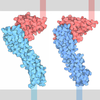
 emd_65617.png
 https://data.pdbj.org/pub/emdb/structures/EMD-65617
 Z (Sec.)
 Y (Row.)
 X (Col.)


 Sample components
 Cricetulus griseus (Chinese hamster)
 Processing
 Electron microscopy
 FIELD EMISSION GUN

