National Natural Science Foundation of China (NSFC)
32371255
China
National Natural Science Foundation of China (NSFC)
32071203
China
National Natural Science Foundation of China (NSFC)
32130022
China
National Natural Science Foundation of China (NSFC)
82121005
China
Citation
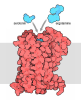
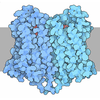
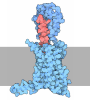
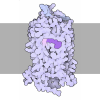
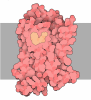
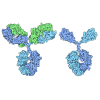
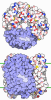
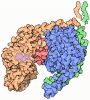
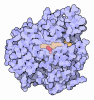
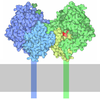
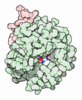
Journal: Proc Natl Acad Sci U S A / Year: 2025 Title: Structural insights into nonpeptide antagonist inhibition of somatostatin receptor subtype 5. Authors: Yang Li / Zhongliang Xing / Wen Hu / Kai Wu / H Eric Xu / Li-Hua Zhao / Abstract: The somatostatin receptor subtype 5 (SSTR5) is a critical pharmacological target involved in neuroendocrine signaling, metabolic regulation, and tumorigenesis. Despite its therapeutic potential, the ...The somatostatin receptor subtype 5 (SSTR5) is a critical pharmacological target involved in neuroendocrine signaling, metabolic regulation, and tumorigenesis. Despite its therapeutic potential, the structural mechanisms underlying SSTR5 inhibition by nonpeptide antagonists remain largely unresolved. In this study, we present high-resolution cryoelectron microscopy structures of human SSTR5 in complex with two selective small-molecule antagonists, antagonist 1 and S5A1, revealing the receptor's inactive conformation. Both antagonists induce a unique remodeling of extracellular loop 2, which adopts a capping architecture that sterically occludes the orthosteric site, thus preventing agonist access and stabilizing receptor inactivation. Structural analyses and functional experiments elucidate how distinct molecular moieties of the antagonists differentially contribute to inhibitory efficacy, and subtype selectivity. Furthermore, we delineate rational avenues for molecular optimization to enhance therapeutic index and mitigate off-target liabilities. These findings, complementing our previous agonist-bound structures, establish a comprehensive structural foundation for developing improved nonpeptidic SSTR5 antagonists with potential therapeutic applications for type 2 diabetes and related endocrine disorders.
In the structure databanks used in Yorodumi, some data are registered as the other names, "COVID-19 virus" and "2019-nCoV". Here are the details of the virus and the list of structure data.
Jan 31, 2019. EMDB accession codes are about to change! (news from PDBe EMDB page)
EMDB accession codes are about to change! (news from PDBe EMDB page)
The allocation of 4 digits for EMDB accession codes will soon come to an end. Whilst these codes will remain in use, new EMDB accession codes will include an additional digit and will expand incrementally as the available range of codes is exhausted. The current 4-digit format prefixed with “EMD-” (i.e. EMD-XXXX) will advance to a 5-digit format (i.e. EMD-XXXXX), and so on. It is currently estimated that the 4-digit codes will be depleted around Spring 2019, at which point the 5-digit format will come into force.
The EM Navigator/Yorodumi systems omit the EMD- prefix.
Related info.:Q: What is EMD? / ID/Accession-code notation in Yorodumi/EM Navigator
Yorodumi is a browser for structure data from EMDB, PDB, SASBDB, etc.
This page is also the successor to EM Navigator detail page, and also detail information page/front-end page for Omokage search.
The word "yorodu" (or yorozu) is an old Japanese word meaning "ten thousand". "mi" (miru) is to see.
Related info.:EMDB / PDB / SASBDB / Comparison of 3 databanks / Yorodumi Search / Aug 31, 2016. New EM Navigator & Yorodumi / Yorodumi Papers / Jmol/JSmol / Function and homology information / Changes in new EM Navigator and Yorodumi
 Movie
Movie Controller


 Open data
 Basic information
 Map data
 Sample
 Keywords
 Function and homology information
 Homo sapiens (human)
 Authors
 China, 4 items
  Citation
 Structure visualization
 Downloads & links
 emd_65588.png
 http://ftp.pdbj.org/pub/emdb/structures/EMD-65588


 Z (Sec.)
 Y (Row.)
 X (Col.)


 Sample components
 Trichoplusia ni (cabbage looper)
 Processing
 Electron microscopy
 FIELD EMISSION GUN

