National Natural Science Foundation of China (NSFC)
82473951
China
Citation
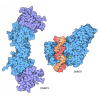
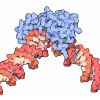
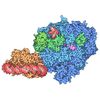
Journal: Adv Sci (Weinh) / Year: 2026 Title: Discovery of a Novel DNMT1 Inhibitor with Improved Efficacy in Treating β-Thalassemia. Authors: Yijie Shen / Jiale Wei / Shibing Tang / Dongliang Wu / Liangyi Zong / Shuyuan Ma / Qing Xiong / Ruijie Gong / Siyuan Xu / Chuxuan Peng / Qin Feng / Songchen Liu / Qitong Liu / Yuhua Ye / ...Authors: Yijie Shen / Jiale Wei / Shibing Tang / Dongliang Wu / Liangyi Zong / Shuyuan Ma / Qing Xiong / Ruijie Gong / Siyuan Xu / Chuxuan Peng / Qin Feng / Songchen Liu / Qitong Liu / Yuhua Ye / Quan Zhao / Cheng Luo / Peng Huang / Zhihai Li / Xiangqian Kong / Xianjiang Lan / Abstract: β-thalassemia is a recessively inherited blood disorder affecting millions worldwide. Pharmacological induction of fetal hemoglobin (HbF) is an effective therapeutic strategy, yet existing DNA ...β-thalassemia is a recessively inherited blood disorder affecting millions worldwide. Pharmacological induction of fetal hemoglobin (HbF) is an effective therapeutic strategy, yet existing DNA methyltransferase (DNMT) inhibitors, although effective HbF inducers, currently are not approved for β-thalassemia treatment. Here, we report that DMT207, a novel non-nucleoside DNMT1 inhibitor, robustly reactivates HbF in HUDEP-2 cells and adult primary erythroblasts with minimal toxicity. In a mouse model of β-thalassemia, DMT207 effectively elevates the levels of mouse fetal- and embryonic-type hemoglobin, promotes the maturation of erythroid cells, and alleviates the splenomegaly. Further multi-omics analyses expose γ-globin as one of the most sensitive genes with promoter demethylation and transcriptional activation following DMT207 treatment. Mechanistically, DMT207 traps DNMT1 into a catalytically inactive conformation and concurrently enhances its interaction with UHRF1, which partially contributes to DNMT1 degradation. These findings highlight the therapeutic potential of DMT207 for β-thalassemia and support its further preclinical development.
In the structure databanks used in Yorodumi, some data are registered as the other names, "COVID-19 virus" and "2019-nCoV". Here are the details of the virus and the list of structure data.
Jan 31, 2019. EMDB accession codes are about to change! (news from PDBe EMDB page)
EMDB accession codes are about to change! (news from PDBe EMDB page)
The allocation of 4 digits for EMDB accession codes will soon come to an end. Whilst these codes will remain in use, new EMDB accession codes will include an additional digit and will expand incrementally as the available range of codes is exhausted. The current 4-digit format prefixed with “EMD-” (i.e. EMD-XXXX) will advance to a 5-digit format (i.e. EMD-XXXXX), and so on. It is currently estimated that the 4-digit codes will be depleted around Spring 2019, at which point the 5-digit format will come into force.
The EM Navigator/Yorodumi systems omit the EMD- prefix.
Related info.:Q: What is EMD? / ID/Accession-code notation in Yorodumi/EM Navigator
Yorodumi is a browser for structure data from EMDB, PDB, SASBDB, etc.
This page is also the successor to EM Navigator detail page, and also detail information page/front-end page for Omokage search.
The word "yorodu" (or yorozu) is an old Japanese word meaning "ten thousand". "mi" (miru) is to see.
Related info.:EMDB / PDB / SASBDB / Comparison of 3 databanks / Yorodumi Search / Aug 31, 2016. New EM Navigator & Yorodumi / Yorodumi Papers / Jmol/JSmol / Function and homology information / Changes in new EM Navigator and Yorodumi
 Movie
Movie Controller

 Yorodumi
 Open data
 Basic information
 Map data
 Sample
 Keywords
 Function and homology information
 Homo sapiens (human)
 Authors
 China, 1 items
  Citation
 Structure visualization
 Downloads & links
 emd_64791.png
 https://data.pdbj.org/pub/emdb/structures/EMD-64791
 Z (Sec.)
 Y (Row.)
 X (Col.)


 Sample components
 Spodoptera frugiperda (fall armyworm)
 Processing
 Electron microscopy
 FIELD EMISSION GUN
