regulation of lymphocyte differentiation / regulation of B cell differentiation / regulation of B cell proliferation / Conversion from APC/C:Cdc20 to APC/C:Cdh1 in late anaphase / Inactivation of APC/C via direct inhibition of the APC/C complex / APC/C:Cdc20 mediated degradation of mitotic proteins / nucleotide-excision repair complex / Aberrant regulation of mitotic exit in cancer due to RB1 defects / Phosphorylation of the APC/C / cellular response to camptothecin ...regulation of lymphocyte differentiation / regulation of B cell differentiation / regulation of B cell proliferation / Conversion from APC/C:Cdc20 to APC/C:Cdh1 in late anaphase / Inactivation of APC/C via direct inhibition of the APC/C complex / APC/C:Cdc20 mediated degradation of mitotic proteins / nucleotide-excision repair complex / Aberrant regulation of mitotic exit in cancer due to RB1 defects / Phosphorylation of the APC/C / cellular response to camptothecin / negative regulation of monoatomic ion transmembrane transport / Signaling by BMP / negative regulation of beige fat cell differentiation / cullin-RING-type E3 NEDD8 transferase / NEDD8 transferase activity / (E3-independent) E2 ubiquitin-conjugating enzyme / cullin-RING ubiquitin ligase complex / negative regulation of mitophagy / regulation of xenophagy / cellular response to chemical stress / Loss of Function of FBXW7 in Cancer and NOTCH1 Signaling / Cul7-RING ubiquitin ligase complex / regulation of cell cycle process / neural crest cell differentiation / RNA polymerase II transcription initiation surveillance / positive regulation by virus of viral protein levels in host cell / positive regulation of protein autoubiquitination / protein neddylation / regulation of BMP signaling pathway / NEDD8 ligase activity / spindle assembly involved in female meiosis / epigenetic programming in the zygotic pronuclei / regulation of mitophagy / negative regulation of response to oxidative stress / regulation of centrosome duplication / protein K27-linked ubiquitination / UV-damage excision repair / VCB complex / Cul5-RING ubiquitin ligase complex / ubiquitin-ubiquitin ligase activity / ubiquitin-dependent protein catabolic process via the C-end degron rule pathway / E2 ubiquitin-conjugating enzyme / regulation of TOR signaling / Cul2-RING ubiquitin ligase complex / negative regulation of DNA-templated DNA replication / biological process involved in interaction with symbiont / SCF ubiquitin ligase complex / regulation of mitotic cytokinesis / regulation of DNA damage checkpoint / negative regulation of type I interferon production / Cul3-RING ubiquitin ligase complex / mesoderm development / regulation of mitotic cell cycle phase transition / regulation of miRNA-mediated gene silencing / regulation of natural killer cell activation / SCF-dependent proteasomal ubiquitin-dependent protein catabolic process / WD40-repeat domain binding / Prolactin receptor signaling / Formation of the ternary complex, and subsequently, the 43S complex / regulation of cell cycle phase transition / locomotory exploration behavior / Cul4-RING E3 ubiquitin ligase complex / regulation of stem cell population maintenance / Regulation of APC/C activators between G1/S and early anaphase / Cul4A-RING E3 ubiquitin ligase complex / Ribosomal scanning and start codon recognition / TGF-beta receptor signaling activates SMADs / negative regulation of BMP signaling pathway / Cul4B-RING E3 ubiquitin ligase complex / Translation initiation complex formation / ubiquitin ligase complex scaffold activity / Transcriptional Regulation by VENTX / negative regulation of adipose tissue development / ubiquitin conjugating enzyme activity / T cell differentiation / regulation of proteolysis / regulation of cellular response to stress / limb development / viral release from host cell / regulation of postsynapse assembly / PELO:HBS1L and ABCE1 dissociate a ribosome on a non-stop mRNA / SARS-CoV-1 modulates host translation machinery / protein monoubiquitination / Peptide chain elongation / anatomical structure morphogenesis / cullin family protein binding / Selenocysteine synthesis / Formation of a pool of free 40S subunits / Eukaryotic Translation Termination / SRP-dependent cotranslational protein targeting to membrane / Response of EIF2AK4 (GCN2) to amino acid deficiency / positive regulation of Wnt signaling pathway / Viral mRNA Translation / negative regulation of protein-containing complex assembly / centrosome duplication / Nonsense Mediated Decay (NMD) independent of the Exon Junction Complex (EJC) / regulation of DNA-templated DNA replication initiation / GTP hydrolysis and joining of the 60S ribosomal subunit / positive regulation of viral genome replication / cilium assembly Similarity search - Function
National Natural Science Foundation of China (NSFC)
22137005, 92253302, 22227810, T2488301
China
Citation
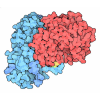
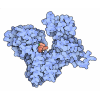
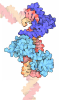
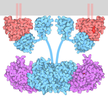
Journal: To Be Published Title: Cryo-EM structure of avadomide-organized CRL4-DDB1-CRBN-IKZF3(ZF2-ZF3)-UbcH5a-Ub ubiquitylation assembly Authors: Deng ZH / Ai HS / Liu L
In the structure databanks used in Yorodumi, some data are registered as the other names, "COVID-19 virus" and "2019-nCoV". Here are the details of the virus and the list of structure data.
Jan 31, 2019. EMDB accession codes are about to change! (news from PDBe EMDB page)
EMDB accession codes are about to change! (news from PDBe EMDB page)
The allocation of 4 digits for EMDB accession codes will soon come to an end. Whilst these codes will remain in use, new EMDB accession codes will include an additional digit and will expand incrementally as the available range of codes is exhausted. The current 4-digit format prefixed with “EMD-” (i.e. EMD-XXXX) will advance to a 5-digit format (i.e. EMD-XXXXX), and so on. It is currently estimated that the 4-digit codes will be depleted around Spring 2019, at which point the 5-digit format will come into force.
The EM Navigator/Yorodumi systems omit the EMD- prefix.
Related info.:Q: What is EMD? / ID/Accession-code notation in Yorodumi/EM Navigator
Yorodumi is a browser for structure data from EMDB, PDB, SASBDB, etc.
This page is also the successor to EM Navigator detail page, and also detail information page/front-end page for Omokage search.
The word "yorodu" (or yorozu) is an old Japanese word meaning "ten thousand". "mi" (miru) is to see.
Related info.:EMDB / PDB / SASBDB / Comparison of 3 databanks / Yorodumi Search / Aug 31, 2016. New EM Navigator & Yorodumi / Yorodumi Papers / Jmol/JSmol / Function and homology information / Changes in new EM Navigator and Yorodumi
 Movie
Movie Controller

 Yorodumi
 Open data
 Basic information
 Map data
 Sample
 Keywords
 Function and homology information
 Homo sapiens (human)
 Authors
 China, 1 items
  Citation
 Structure visualization
 Downloads & links
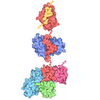
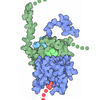
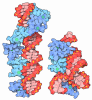
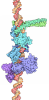
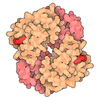
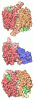
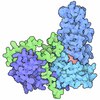
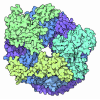
 emd_64660.png
 https://data.pdbj.org/pub/emdb/structures/EMD-64660

 Z (Sec.)
 Y (Row.)
 X (Col.)


 Sample components
 Escherichia coli (E. coli)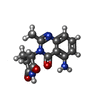
 Processing
 Electron microscopy
 FIELD EMISSION GUN

