 Movie
Movie Controller


+ Open data

- Basic information
| Entry |  | |||||||||
|---|---|---|---|---|---|---|---|---|---|---|
| Title | Cryo-EM structure of CXCR4 complexed with agonist SDVX1 | |||||||||
 Map data Map data | optimized by Locscale2.0 and sharpened by phenix.autosharpen | |||||||||
 Sample Sample |
| |||||||||
 Keywords Keywords | CXC motif chemokine receptor 4 / agonist / SIGNALING PROTEIN | |||||||||
| Function / homology |  Function and homology information Function and homology informationOplophorus-luciferin 2-monooxygenase / Oplophorus-luciferin 2-monooxygenase activity / telencephalon cell migration / chemokine (C-X-C motif) ligand 12 signaling pathway / C-X-C motif chemokine 12 receptor activity / response to ultrasound / negative regulation of leukocyte tethering or rolling / regulation of actin polymerization or depolymerization / positive regulation of macrophage migration inhibitory factor signaling pathway / negative regulation of dendritic cell apoptotic process ...Oplophorus-luciferin 2-monooxygenase / Oplophorus-luciferin 2-monooxygenase activity / telencephalon cell migration / chemokine (C-X-C motif) ligand 12 signaling pathway / C-X-C motif chemokine 12 receptor activity / response to ultrasound / negative regulation of leukocyte tethering or rolling / regulation of actin polymerization or depolymerization / positive regulation of macrophage migration inhibitory factor signaling pathway / negative regulation of dendritic cell apoptotic process / CXCL12-activated CXCR4 signaling pathway / myosin light chain binding / Specification of primordial germ cells / chemokine receptor binding / myelin maintenance / Developmental Lineage of Multipotent Pancreatic Progenitor Cells / CXCR chemokine receptor binding / C-X-C chemokine receptor activity / positive regulation of axon extension involved in axon guidance / positive regulation of vasculature development / induction of positive chemotaxis / Signaling by ROBO receptors / negative regulation of intrinsic apoptotic signaling pathway in response to DNA damage / Formation of definitive endoderm / integrin activation / positive regulation of dopamine secretion / cellular response to chemokine / C-C chemokine binding / C-C chemokine receptor activity / positive regulation of monocyte chemotaxis / chemokine activity / Chemokine receptors bind chemokines / blood circulation / dendritic cell chemotaxis / positive regulation of oligodendrocyte differentiation / cellular response to cytokine stimulus / positive regulation of calcium ion import / cell leading edge / animal organ regeneration / detection of temperature stimulus involved in sensory perception of pain / Binding and entry of HIV virion / detection of mechanical stimulus involved in sensory perception of pain / regulation of cell adhesion / anchoring junction / positive regulation of T cell migration / Nuclear signaling by ERBB4 / positive regulation of neuron differentiation / neurogenesis / adult locomotory behavior / coreceptor activity / positive regulation of endothelial cell proliferation / regulation of eating behavior / adenylate cyclase inhibitor activity / T cell migration / positive regulation of protein localization to cell cortex / positive regulation of relaxation of smooth muscle / Adenylate cyclase inhibitory pathway / D2 dopamine receptor binding / positive regulation of cell adhesion / axon guidance / adenylate cyclase-inhibiting dopamine receptor signaling pathway / adenylate cyclase-inhibiting serotonin receptor signaling pathway / G protein-coupled serotonin receptor binding / regulation of G protein-coupled receptor signaling pathway / cellular response to forskolin / growth factor activity / regulation of mitotic spindle organization / mast cell degranulation / calcium-mediated signaling / chemokine-mediated signaling pathway / brain development / cell chemotaxis / defense response / ubiquitin binding / establishment of mitotic spindle orientation / neuron migration / neuropeptide signaling pathway / Regulation of insulin secretion / response to prostaglandin E / electron transport chain / positive regulation of cholesterol biosynthetic process / response to virus / virus receptor activity / G protein-coupled receptor binding / chemotaxis / integrin binding / intracellular calcium ion homeostasis / response to peptide hormone / G protein-coupled receptor activity / G-protein beta/gamma-subunit complex binding / adenylate cyclase-inhibiting G protein-coupled receptor signaling pathway / adenylate cyclase-modulating G protein-coupled receptor signaling pathway / Olfactory Signaling Pathway / Activation of the phototransduction cascade / G protein-coupled acetylcholine receptor signaling pathway / G beta:gamma signalling through PLC beta / Presynaptic function of Kainate receptors / Thromboxane signalling through TP receptor / Activation of G protein gated Potassium channels / Inhibition of voltage gated Ca2+ channels via Gbeta/gamma subunits Similarity search - Function | |||||||||
| Biological species |  Homo sapiens (human) / Homo sapiens (human) /  Oplophorus gracilirostris (arthropod) Oplophorus gracilirostris (arthropod) | |||||||||
| Method | single particle reconstruction / cryo EM / Resolution: 2.7 Å | |||||||||
 Authors Authors | Jiao HZ / Sang XH / Huang ZW / Hu HL | |||||||||
| Funding support |  China, 1 items China, 1 items
| |||||||||
 Citation Citation | Journal: bioRxiv / Year: 2025 Title: The cryo-EM-delineated mechanism underlying mimicry of CXCR4 agonism enables widespread stem cell neuroprotection in a mouse model of ALS. Authors: Xiaohong Sang / Haizhan Jiao / Qian Meng / Xiong Fang / Kartik S Sundaram / Jiao Zhou / Yan Xu / Asuka I W Alvarado / Ruslan L Nuryyev / Jitka Ourenik / Vaclav Ourednik / Iris S Huang / ...Authors: Xiaohong Sang / Haizhan Jiao / Qian Meng / Xiong Fang / Kartik S Sundaram / Jiao Zhou / Yan Xu / Asuka I W Alvarado / Ruslan L Nuryyev / Jitka Ourenik / Vaclav Ourednik / Iris S Huang / Xiang Liu / Yuheng Mei / Tingli Qian / Aaron Ciechanover / Donald P Pizzo / Michael A Lane / Lyandysha V Zholudeva / Jing An / Evan Y Snyder / Hongli Hu / Ziwei Huang /   Abstract: G-protein coupled receptors (GPCRs) are transmembrane proteins that mediate a range of signaling functions and, therefore, offer targets for a number of therapeutic interventions. Chemokine receptor ...G-protein coupled receptors (GPCRs) are transmembrane proteins that mediate a range of signaling functions and, therefore, offer targets for a number of therapeutic interventions. Chemokine receptor CXCR4, a GPCR, plays versatile roles in normal and abnormal physiological processes. Synthetic CXCR4 antagonists have been extensively studied and approved for the clinical treatment of cancer and other diseases. We recently elucidated the structural mechanisms underlying CXCR4 antagonism using cryogenic electron microscopy (cryo-EM). CXCR4 agonism by synthetic molecules is an unanticipated therapeutic intervention we recently unveiled. The structural mechanisms underlying those actions remain poorly understood yet could help elucidate a new class of drugs. Here we demonstrate a synthetic dual-moiety strategy that combines simplified agonistic and antagonistic moieties taken from natural agonistic and antagonistic chemokines, respectively, to design de novo peptide mimics of biological function of natural CXCR4 agonist SDF-1α. Two peptides so generated, SDV1a and SDVX1 were shown to mimic the action of SDF-1α in activating CXCR4 signaling pathways and cell migration. The structural mechanism of these peptides in the mimicry of CXCR4 agonism was illustrated by cryo-EM structures of CXCR4 bound and activated by the peptides in the presence of G protein, revealing common interactions with the receptor by these peptides in comparison with SDF-1α that explain their close mimicry and conformational changes leading to CXCR4 signal activation. The therapeutic benefit of one of these peptides, SDV1a, was demonstrated in the SOD1 mouse model of the spinal motor neuron degenerative disease, amyotrophic lateral sclerosis (ALS) wherein the success of neuroprotective actions of transplanted human neural stem cells (hNSCs) is directly correlated with the expanse of diseased neuroaxis traversed by the donor cells; SDV1a enabled broader neuroprotective coverage while also permitting a much less invasive route of cell administration for extending life. Taken together, these results provide insights into the structural determinants of therapeutic CXCR4 agonism which may allow the design of adjunctive drugs that improve cell-based treatments of central nervous system (CNS) diseases. | |||||||||
| History |
|
- Structure visualization
| Supplemental images |
|---|

- Downloads & links
-EMDB archive
| Map data | emd_64403.map.gz | 77.8 MB | EMDB map data format | |
|---|---|---|---|---|
| Header (meta data) | emd-64403-v30.xmlemd-64403.xml | 25.7 KB 25.7 KB | Display Display | EMDB header |
| FSC (resolution estimation) | emd_64403_fsc.xml | 10.5 KB | Display | FSC data file |
| Images |  emd_64403.png emd_64403.png | 104.8 KB | ||
| Filedesc metadata | emd-64403.cif.gz | 7.7 KB | ||
| Others | emd_64403_additional_1.map.gzemd_64403_half_map_1.map.gzemd_64403_half_map_2.map.gz | 62.8 MB 116 MB 116 MB | ||
| Archive directory |  https://data.pdbj.org/pub/emdb/structures/EMD-64403ftp://data.pdbj.org/pub/emdb/structures/EMD-64403 https://data.pdbj.org/pub/emdb/structures/EMD-64403ftp://data.pdbj.org/pub/emdb/structures/EMD-64403 | HTTPS FTP |
-Related structure data
| Related structure data |  9upvMC  9upuC M: atomic model generated by this map C: citing same article ( |
|---|---|
| Similar structure data |

-Links
| EMDB pages | EMDB (EBI/PDBe) / EMDataResource |
|---|---|
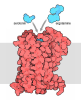
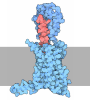
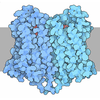
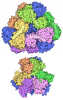
| Related items in Molecule of the Month |

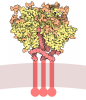
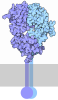

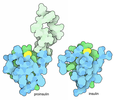
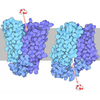
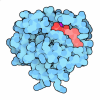

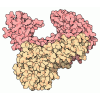
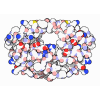
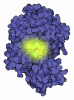


-Map
| File | Download / File: emd_64403.map.gz / Format: CCP4 / Size: 125 MB / Type: IMAGE STORED AS FLOATING POINT NUMBER (4 BYTES) | ||||||||||||||||||||||||||||||||||||
|---|---|---|---|---|---|---|---|---|---|---|---|---|---|---|---|---|---|---|---|---|---|---|---|---|---|---|---|---|---|---|---|---|---|---|---|---|---|
| Annotation | optimized by Locscale2.0 and sharpened by phenix.autosharpen | ||||||||||||||||||||||||||||||||||||
| Projections & slices | Image control
Images are generated by Spider. | ||||||||||||||||||||||||||||||||||||
| Voxel size | X=Y=Z: 0.85 Å | ||||||||||||||||||||||||||||||||||||
| Density |
| ||||||||||||||||||||||||||||||||||||
| Symmetry | Space group: 1 | ||||||||||||||||||||||||||||||||||||
| Details | EMDB XML:
|
 X (Sec.)
 Y (Row.)
 Z (Col.)


-Supplemental data
-Additional map: unsharpened map
| File | emd_64403_additional_1.map | ||||||||||||
|---|---|---|---|---|---|---|---|---|---|---|---|---|---|
| Annotation | unsharpened map | ||||||||||||
| Projections & Slices |
| ||||||||||||
| Density Histograms |


-Half map: #2
| File | emd_64403_half_map_1.map | ||||||||||||
|---|---|---|---|---|---|---|---|---|---|---|---|---|---|
| Projections & Slices |
| ||||||||||||
| Density Histograms |


-Half map: #1
| File | emd_64403_half_map_2.map | ||||||||||||
|---|---|---|---|---|---|---|---|---|---|---|---|---|---|
| Projections & Slices |
| ||||||||||||
| Density Histograms |


- Sample components
-Entire : SDVX1-CXCR4-DNGi-scFv16
| Entire | Name: SDVX1-CXCR4-DNGi-scFv16 |
|---|---|
| Components |
|
-Supramolecule #1: SDVX1-CXCR4-DNGi-scFv16
| Supramolecule | Name: SDVX1-CXCR4-DNGi-scFv16 / type: complex / ID: 1 / Parent: 0 / Macromolecule list: #1-#6 |
|---|---|
| Source (natural) | Organism: Homo sapiens (human) |
-Macromolecule #1: Guanine nucleotide-binding protein G(I)/G(S)/G(T) subunit beta-1
| Macromolecule | Name: Guanine nucleotide-binding protein G(I)/G(S)/G(T) subunit beta-1 type: protein_or_peptide / ID: 1 / Number of copies: 1 / Enantiomer: LEVO |
|---|---|
| Source (natural) | Organism: Homo sapiens (human) |
| Molecular weight | Theoretical: 42.005895 KDa |
| Recombinant expression | Organism:  Spodoptera frugiperda (fall armyworm) Spodoptera frugiperda (fall armyworm) |
| Sequence | String: HHHHHHHHHH LEVLFQGPGS SGSELDQLRQ EAEQLKNQIR DARKACADAT LSQITNNIDP VGRIQMRTRR TLRGHLAKIY AMHWGTDSR LLVSASQDGK LIIWDSYTTN KVHAIPLRSS WVMTCAYAPS GNYVACGGLD NICSIYNLKT REGNVRVSRE L AGHTGYLS ...String: HHHHHHHHHH LEVLFQGPGS SGSELDQLRQ EAEQLKNQIR DARKACADAT LSQITNNIDP VGRIQMRTRR TLRGHLAKIY AMHWGTDSR LLVSASQDGK LIIWDSYTTN KVHAIPLRSS WVMTCAYAPS GNYVACGGLD NICSIYNLKT REGNVRVSRE L AGHTGYLS CCRFLDDNQI VTSSGDTTCA LWDIETGQQT TTFTGHTGDV MSLSLAPDTR LFVSGACDAS AKLWDVREGM CR QTFTGHE SDINAICFFP NGNAFATGSD DATCRLFDLR ADQELMTYSH DNIICGITSV SFSKSGRLLL AGYDDFNCNV WDA LKADRA GVLAGHDNRV SCLGVTDDGM AVATGSWDSF LKIWNGASGA SGASGASVSG WRLFKKIS UniProtKB: Guanine nucleotide-binding protein G(I)/G(S)/G(T) subunit beta-1 |
-Macromolecule #2: Guanine nucleotide-binding protein G(I)/G(S)/G(O) subunit gamma-2
| Macromolecule | Name: Guanine nucleotide-binding protein G(I)/G(S)/G(O) subunit gamma-2 type: protein_or_peptide / ID: 2 / Number of copies: 1 / Enantiomer: LEVO |
|---|---|
| Source (natural) | Organism: Homo sapiens (human) |
| Molecular weight | Theoretical: 7.861143 KDa |
| Recombinant expression | Organism: Spodoptera frugiperda (fall armyworm) |
| Sequence | String: MASNNTASIA QARKLVEQLK MEANIDRIKV SKAAADLMAY CEAHAKEDPL LTPVPASENP FREKKFFCAI L UniProtKB: Guanine nucleotide-binding protein G(I)/G(S)/G(O) subunit gamma-2 |
-Macromolecule #3: Stromal cell-derived factor 1
| Macromolecule | Name: Stromal cell-derived factor 1 / type: protein_or_peptide / ID: 3 / Number of copies: 1 / Enantiomer: LEVO |
|---|---|
| Source (natural) | Organism: Homo sapiens (human) |
| Molecular weight | Theoretical: 951.122 Da |
| Sequence | String: KPVSLSYR UniProtKB: Stromal cell-derived factor 1 |
-Macromolecule #4: Soluble cytochrome b562,C-X-C chemokine receptor type 4,Oplophoru...
| Macromolecule | Name: Soluble cytochrome b562,C-X-C chemokine receptor type 4,Oplophorus-luciferin 2-monooxygenase catalytic subunit type: protein_or_peptide / ID: 4 / Number of copies: 1 / Enantiomer: LEVO / EC number: Oplophorus-luciferin 2-monooxygenase |
|---|---|
| Source (natural) | Organism: Oplophorus gracilirostris (arthropod) |
| Molecular weight | Theoretical: 72.689641 KDa |
| Recombinant expression | Organism: Spodoptera frugiperda (fall armyworm) |
| Sequence | String: MKTIIALSYI FCLVFADYKD DDDKGSADLE DNWETLNDNL KVIEKADNAA QVKDALTKMR AAALDAQKAT PPKLEDKSPD SPEMKDFRH GFDILVGQID DALKLANEGK VKEAQAAAEQ LKTTRNAYIQ KYLLVPRGSM EGISIYTSDN YTEEMGSGDY D SMKEPCFR ...String: MKTIIALSYI FCLVFADYKD DDDKGSADLE DNWETLNDNL KVIEKADNAA QVKDALTKMR AAALDAQKAT PPKLEDKSPD SPEMKDFRH GFDILVGQID DALKLANEGK VKEAQAAAEQ LKTTRNAYIQ KYLLVPRGSM EGISIYTSDN YTEEMGSGDY D SMKEPCFR EENANFNKIF LPTIYSIIFL TGIVGNGLVI LVMGYQKKLR SMTDKYRLHL SVADLLFVIT LPFWAVDAVA NW YFGNFLC KAVHVIYTVS LYSSVLILAF ISLDRYLAIV HATNSQRPRK LLAEKVVYVG VWIPALLLTI PDFIFANVSE ADD RYICDR FYPNDLWVVV FQFQHIMVGL ILPGIVILSC YCIIISKLSH SKGHQKRKAL KTTVILILAF FACWLPYYIG ISID SFILL EIIKQGCEFE NTVHKWISIT EALAFFHCCL NPILYAFLGA KFKTSAQHAL TSVSRGSSLK ILSKGKRGGH SSVST ESES SSFHSSVFTL EDFVGDWEQT AAYNLDQVLE QGGVSSLLQN LAVSVTPIQR IVRSGENALK IDIHVIIPYE GLSADQ MAQ IEEVFKVVYP VDDHHFKVIL PYGTLVIDGV TPNMLNYFGR PYEGIAVFDG KKITVTGTLW NGNKIIDERL ITPDGSM LF RVTINS UniProtKB: Soluble cytochrome b562, C-X-C chemokine receptor type 4, Oplophorus-luciferin 2-monooxygenase catalytic subunit |
-Macromolecule #5: Guanine nucleotide-binding protein G(i) subunit alpha-1
| Macromolecule | Name: Guanine nucleotide-binding protein G(i) subunit alpha-1 type: protein_or_peptide / ID: 5 / Number of copies: 1 / Enantiomer: LEVO |
|---|---|
| Source (natural) | Organism: Homo sapiens (human) |
| Molecular weight | Theoretical: 40.445059 KDa |
| Recombinant expression | Organism: Spodoptera frugiperda (fall armyworm) |
| Sequence | String: MGCTLSAEDK AAVERSKMID RNLREDGEKA AREVKLLLLG AGESGKSTIV KQMKIIHEAG YSEEECKQYK AVVYSNTIQS IIAIIRAMG RLKIDFGDSA RADDARQLFV LAGAAEEGFM TAELAGVIKR LWKDSGVQAC FNRSREYQLN DSAAYYLNDL D RIAQPNYI ...String: MGCTLSAEDK AAVERSKMID RNLREDGEKA AREVKLLLLG AGESGKSTIV KQMKIIHEAG YSEEECKQYK AVVYSNTIQS IIAIIRAMG RLKIDFGDSA RADDARQLFV LAGAAEEGFM TAELAGVIKR LWKDSGVQAC FNRSREYQLN DSAAYYLNDL D RIAQPNYI PTQQDVLRTR VKTTGIVETH FTFKDLHFKM FDVGAQRSER KKWIHCFEGV TAIIFCVALS DYDLVLAEDE EM NRMHESM KLFDSICNNK WFTDTSIILF LNKKDLFEEK IKKSPLTICY PEYAGSNTYE EAAAYIQCQF EDLNKRKDTK EIY THFTCS TDTKNVQFVF DAVTDVIIKN NLKDCGLF UniProtKB: Guanine nucleotide-binding protein G(i) subunit alpha-1 |
-Macromolecule #6: single-chain variable fragment scFv16
| Macromolecule | Name: single-chain variable fragment scFv16 / type: protein_or_peptide / ID: 6 / Number of copies: 1 / Enantiomer: LEVO |
|---|---|
| Source (natural) | Organism: Homo sapiens (human) |
| Molecular weight | Theoretical: 27.784896 KDa |
| Recombinant expression | Organism: Spodoptera frugiperda (fall armyworm) |
| Sequence | String: DVQLVESGGG LVQPGGSRKL SCSASGFAFS SFGMHWVRQA PEKGLEWVAY ISSGSGTIYY ADTVKGRFTI SRDDPKNTLF LQMTSLRSE DTAMYYCVRS IYYYGSSPFD FWGQGTTLTV SSGGGGSGGG GSGGGGSDIV MTQATSSVPV TPGESVSISC R SSKSLLHS ...String: DVQLVESGGG LVQPGGSRKL SCSASGFAFS SFGMHWVRQA PEKGLEWVAY ISSGSGTIYY ADTVKGRFTI SRDDPKNTLF LQMTSLRSE DTAMYYCVRS IYYYGSSPFD FWGQGTTLTV SSGGGGSGGG GSGGGGSDIV MTQATSSVPV TPGESVSISC R SSKSLLHS NGNTYLYWFL QRPGQSPQLL IYRMSNLASG VPDRFSGSGS GTAFTLTISR LEAEDVGVYY CMQHLEYPLT FG AGTKLEL KAAAHHHHHH HH |
-Macromolecule #7: CHOLESTEROL
| Macromolecule | Name: CHOLESTEROL / type: ligand / ID: 7 / Number of copies: 1 / Formula: CLR |
|---|---|
| Molecular weight | Theoretical: 386.654 Da |
| Chemical component information | 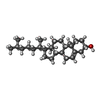 ChemComp-CLR: |
-Experimental details
-Structure determination
| Method | cryo EM |
|---|---|
 Processing Processing | single particle reconstruction |
| Aggregation state | particle |
-Sample preparation
| Buffer | pH: 7.5 |
|---|---|
| Vitrification | Cryogen name: ETHANE |
- Electron microscopy
| Microscope | TFS KRIOS |
|---|---|
| Specialist optics | Energy filter - Name: GIF Bioquantum / Energy filter - Slit width: 20 eV |
| Image recording | Film or detector model: GATAN K3 (6k x 4k) / Average electron dose: 55.2 e/Å2 |
| Electron beam | Acceleration voltage: 300 kV / Electron source:  FIELD EMISSION GUN FIELD EMISSION GUN |
| Electron optics | Illumination mode: FLOOD BEAM / Imaging mode: BRIGHT FIELD / Nominal defocus max: 1.8 µm / Nominal defocus min: 1.2 µm |
| Experimental equipment |  Model: Titan Krios / Image courtesy: FEI Company |

