National Natural Science Foundation of China (NSFC)
China
Citation
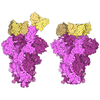
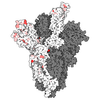
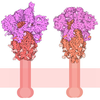
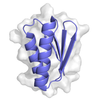
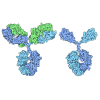
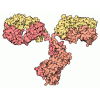
Journal: Mol Ther / Year: 2026 Title: From weak but broad to potent and universal: A trispecific antibody against conserved SARS-CoV-2 spike epitopes. Authors: Xiaodong Tian / Chunmei Wang / Pu Han / Honghui Liu / Lili Wu / Xiaoyun Wang / Shufan Yu / Yanning Zhang / Binbin Zhao / Jiangning Liu / George Fu Gao / Qihui Wang / Abstract: Most neutralizing antibodies against severe acute respiratory syndrome coronavirus 2 target the receptor-binding domain (RBD). However, due to high immune pressure, the RBD accumulates mutations, ...Most neutralizing antibodies against severe acute respiratory syndrome coronavirus 2 target the receptor-binding domain (RBD). However, due to high immune pressure, the RBD accumulates mutations, thus significantly reducing antibody efficacy against emerging variants/subvariants. Although some RBD-targeting antibodies bind conserved epitopes, they usually exhibit weak-to-moderate neutralization. Similarly, antibodies against the N-terminal domain (NTD) or S2 subunit often retain broad binding but generally lack potent neutralization. To address this, we initially identified the broadly reactive nanobody, N103, which exhibited weak neutralizing potency. Structural and functional analyses revealed that N103 targets a conserved NTD epitope and triggers S1 subunit shedding, thereby destabilizing the spike trimer through an allosteric mechanism. Leveraging this insight, we engineered a trispecific antibody combining N103 with antibodies targeting the conserved RBD and S2 epitopes. This design synergistically integrated their distinct binding profiles and mechanisms, achieving potent and broad neutralization against both pseudoviruses and authentic viruses, including the immune-evasive BA.2.86 subvariant. Furthermore, challenge studies in human angiotensin-converting enzyme 2 knockin mice demonstrated robust in vivo protection. Our findings highlight a cooperative multi-target strategy in which antibodies with limited individual potency can collectively achieve broad and potent neutralization through rational design. This approach provides a promising framework for next-generation antibody therapeutics.
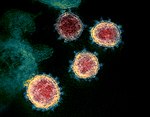
In the structure databanks used in Yorodumi, some data are registered as the other names, "COVID-19 virus" and "2019-nCoV". Here are the details of the virus and the list of structure data.
Jan 31, 2019. EMDB accession codes are about to change! (news from PDBe EMDB page)
EMDB accession codes are about to change! (news from PDBe EMDB page)
The allocation of 4 digits for EMDB accession codes will soon come to an end. Whilst these codes will remain in use, new EMDB accession codes will include an additional digit and will expand incrementally as the available range of codes is exhausted. The current 4-digit format prefixed with “EMD-” (i.e. EMD-XXXX) will advance to a 5-digit format (i.e. EMD-XXXXX), and so on. It is currently estimated that the 4-digit codes will be depleted around Spring 2019, at which point the 5-digit format will come into force.
The EM Navigator/Yorodumi systems omit the EMD- prefix.
Related info.:Q: What is EMD? / ID/Accession-code notation in Yorodumi/EM Navigator
Yorodumi is a browser for structure data from EMDB, PDB, SASBDB, etc.
This page is also the successor to EM Navigator detail page, and also detail information page/front-end page for Omokage search.
The word "yorodu" (or yorozu) is an old Japanese word meaning "ten thousand". "mi" (miru) is to see.
Related info.:EMDB / PDB / SASBDB / Comparison of 3 databanks / Yorodumi Search / Aug 31, 2016. New EM Navigator & Yorodumi / Yorodumi Papers / Jmol/JSmol / Function and homology information / Changes in new EM Navigator and Yorodumi
 Movie
Movie Controller

 Yorodumi
 Open data
 Basic information
 Map data
 Sample
 Keywords
 Function and homology information
 Vicugna pacos (alpaca) /
  Homo sapiens (human) /
 Severe acute respiratory syndrome coronavirus 2
 Authors
 China, 1 items
  Citation
 Structure visualization
 Downloads & links
 emd_64401.png
 https://data.pdbj.org/pub/emdb/structures/EMD-64401
 Z (Sec.)
 Y (Row.)
 X (Col.)


 Sample components
 Processing
 Electron microscopy
 FIELD EMISSION GUN