negative regulation of lymphoid progenitor cell differentiation / transcription export complex 2 / post-transcriptional tethering of RNA polymerase II gene DNA at nuclear periphery / histone H3 acetyltransferase activity / nuclear pore nuclear basket / nucleosome organization / spleen development / Impaired BRCA2 translocation to the nucleus / Impaired BRCA2 binding to SEM1 (DSS1) / integrator complex ...negative regulation of lymphoid progenitor cell differentiation / transcription export complex 2 / post-transcriptional tethering of RNA polymerase II gene DNA at nuclear periphery / histone H3 acetyltransferase activity / nuclear pore nuclear basket / nucleosome organization / spleen development / Impaired BRCA2 translocation to the nucleus / Impaired BRCA2 binding to SEM1 (DSS1) / integrator complex / proteasome regulatory particle, lid subcomplex / positive regulation of B cell differentiation / somatic hypermutation of immunoglobulin genes / poly(A)+ mRNA export from nucleus / cellular response to type I interferon / Regulation of ornithine decarboxylase (ODC) / Proteasome assembly / histone acetyltransferase activity / Cross-presentation of soluble exogenous antigens (endosomes) / negative regulation of gene expression, epigenetic / Somitogenesis / Homologous DNA Pairing and Strand Exchange / Defective homologous recombination repair (HRR) due to BRCA1 loss of function / Defective HDR through Homologous Recombination Repair (HRR) due to PALB2 loss of BRCA1 binding function / Defective HDR through Homologous Recombination Repair (HRR) due to PALB2 loss of BRCA2/RAD51/RAD51C binding function / Resolution of D-loop Structures through Synthesis-Dependent Strand Annealing (SDSA) / Resolution of D-loop Structures through Holliday Junction Intermediates / Impaired BRCA2 binding to RAD51 / Presynaptic phase of homologous DNA pairing and strand exchange / AMPK-induced ERAD and lysosome mediated degradation of PD-L1(CD274) / histone acetyltransferase / proteasome assembly / mRNA export from nucleus / GSK3B-mediated proteasomal degradation of PD-L1(CD274) / SPOP-mediated proteasomal degradation of PD-L1(CD274) / Ribosome Quality Control (RQC) complex extracts and degrades nascent peptide / Transferases; Acyltransferases; Transferring groups other than aminoacyl groups / proteasome complex / regulation of proteasomal protein catabolic process / Regulation of activated PAK-2p34 by proteasome mediated degradation / ubiquitin binding / proteasomal protein catabolic process / Autodegradation of Cdh1 by Cdh1:APC/C / APC/C:Cdc20 mediated degradation of Securin / Asymmetric localization of PCP proteins / Ubiquitin-dependent degradation of Cyclin D / SCF-beta-TrCP mediated degradation of Emi1 / NIK-->noncanonical NF-kB signaling / AUF1 (hnRNP D0) binds and destabilizes mRNA / TNFR2 non-canonical NF-kB pathway / Assembly of the pre-replicative complex / Vpu mediated degradation of CD4 / Cdc20:Phospho-APC/C mediated degradation of Cyclin A / Dectin-1 mediated noncanonical NF-kB signaling / Degradation of DVL / Degradation of AXIN / Degradation of CRY and PER proteins / Hh mutants are degraded by ERAD / transcription elongation by RNA polymerase II / Activation of NF-kappaB in B cells / G2/M Checkpoints / Degradation of GLI1 by the proteasome / Hedgehog ligand biogenesis / Autodegradation of the E3 ubiquitin ligase COP1 / Regulation of RUNX3 expression and activity / Defective CFTR causes cystic fibrosis / GSK3B and BTRC:CUL1-mediated-degradation of NFE2L2 / Negative regulation of NOTCH4 signaling / Hedgehog 'on' state / APC/C:Cdh1 mediated degradation of Cdc20 and other APC/C:Cdh1 targeted proteins in late mitosis/early G1 / Vif-mediated degradation of APOBEC3G / FBXL7 down-regulates AURKA during mitotic entry and in early mitosis / Degradation of GLI2 by the proteasome / GLI3 is processed to GLI3R by the proteasome / Ubiquitin-Mediated Degradation of Phosphorylated Cdc25A / MAPK6/MAPK4 signaling / Degradation of CDH1 / Degradation of beta-catenin by the destruction complex / Oxygen-dependent proline hydroxylation of Hypoxia-inducible Factor Alpha / CDK-mediated phosphorylation and removal of Cdc6 / HDR through Homologous Recombination (HRR) / ABC-family protein mediated transport / CLEC7A (Dectin-1) signaling / SCF(Skp2)-mediated degradation of p27/p21 / FCERI mediated NF-kB activation / Regulation of expression of SLITs and ROBOs / Regulation of PTEN stability and activity / Interleukin-1 signaling / Orc1 removal from chromatin / Regulation of RUNX2 expression and activity / Regulation of RAS by GAPs / The role of GTSE1 in G2/M progression after G2 checkpoint / Separation of Sister Chromatids / UCH proteinases / KEAP1-NFE2L2 pathway / Downstream TCR signaling / synaptic vesicle / Antigen processing: Ubiquitination & Proteasome degradation / chromosome / protein transport Similarity search - Function
National Natural Science Foundation of China (NSFC)
32471302
China
Citation
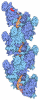
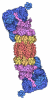
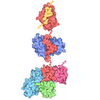
Journal: Nat Commun / Year: 2026 Title: Molecular insights into mRNA export regulation by the human TREX-2 complex. Authors: Xing Gong / Ran Tao / Xiaofei Ge / Huihui Zhu / Mengqi Li / Yufang Chen / Yongxiang Gao / Jing Hang / Xiaofeng Zhang / Abstract: The nuclear export of mRNA represents a critical regulatory node in eukaryotic gene expression. This process is orchestrated by two conserved multi-subunit assemblies: the transcription-and-export ...The nuclear export of mRNA represents a critical regulatory node in eukaryotic gene expression. This process is orchestrated by two conserved multi-subunit assemblies: the transcription-and-export complex (TREX) and TREX-2. While TREX facilitates mRNP packaging through multivalent RNA-protein interactions, the precise mechanism by which TREX-2 contributes to mRNA export has remained elusive. Here, we report a functional interaction between UAP56 and TREX-2 and resolve the structures of TREX-2 in both apo and UAP56-bound states. UAP56 engages TREX-2 via its N-terminal region, positioning its RecA domains on the V-shaped surface of the complex. A conserved loop from TREX-2 inserts between the RecA domains of UAP56, stabilizing an open conformation. Biochemical assays demonstrate that TREX-2 significantly stimulates the ATPase activity of UAP56, thereby promoting RNA release. These findings provide structural and mechanistic insights into TREX-2-mediated regulation of mRNA export through UAP56 remodeling.
In the structure databanks used in Yorodumi, some data are registered as the other names, "COVID-19 virus" and "2019-nCoV". Here are the details of the virus and the list of structure data.
Jan 31, 2019. EMDB accession codes are about to change! (news from PDBe EMDB page)
EMDB accession codes are about to change! (news from PDBe EMDB page)
The allocation of 4 digits for EMDB accession codes will soon come to an end. Whilst these codes will remain in use, new EMDB accession codes will include an additional digit and will expand incrementally as the available range of codes is exhausted. The current 4-digit format prefixed with “EMD-” (i.e. EMD-XXXX) will advance to a 5-digit format (i.e. EMD-XXXXX), and so on. It is currently estimated that the 4-digit codes will be depleted around Spring 2019, at which point the 5-digit format will come into force.
The EM Navigator/Yorodumi systems omit the EMD- prefix.
Related info.:Q: What is EMD? / ID/Accession-code notation in Yorodumi/EM Navigator
Yorodumi is a browser for structure data from EMDB, PDB, SASBDB, etc.
This page is also the successor to EM Navigator detail page, and also detail information page/front-end page for Omokage search.
The word "yorodu" (or yorozu) is an old Japanese word meaning "ten thousand". "mi" (miru) is to see.
Related info.:EMDB / PDB / SASBDB / Comparison of 3 databanks / Yorodumi Search / Aug 31, 2016. New EM Navigator & Yorodumi / Yorodumi Papers / Jmol/JSmol / Function and homology information / Changes in new EM Navigator and Yorodumi
 Movie
Movie Controller


 Open data
 Basic information
 Map data
 Sample
 Keywords
 Function and homology information
 Homo sapiens (human)
 Authors
 China, 1 items
  Citation
 Structure visualization
 Downloads & links
 emd_64391.png
 http://ftp.pdbj.org/pub/emdb/structures/EMD-64391



 Z (Sec.)
 Y (Row.)
 X (Col.)


 Sample components
 Processing
 Electron microscopy
 FIELD EMISSION GUN