 Movie
Movie Controller


+ Open data

- Basic information
| Entry |  | ||||||||||||||||||
|---|---|---|---|---|---|---|---|---|---|---|---|---|---|---|---|---|---|---|---|
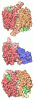
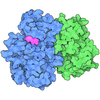
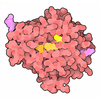
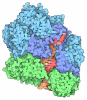
| Title | Structure of UBE3A-E6-p53 complex | ||||||||||||||||||
 Map data Map data | |||||||||||||||||||
 Sample Sample |
| ||||||||||||||||||
 Keywords Keywords | complex / PROTEIN BINDING | ||||||||||||||||||
| Function / homology |  Function and homology information Function and homology informationsymbiont-mediated suppression of host transcription / regulation of ubiquitin-dependent protein catabolic process / Golgi lumen acidification / symbiont-mediated suppression of host apoptosis / HECT-type E3 ubiquitin transferase / negative regulation of helicase activity / Loss of function of TP53 in cancer due to loss of tetramerization ability / Regulation of TP53 Expression / signal transduction by p53 class mediator / negative regulation of G1 to G0 transition ...symbiont-mediated suppression of host transcription / regulation of ubiquitin-dependent protein catabolic process / Golgi lumen acidification / symbiont-mediated suppression of host apoptosis / HECT-type E3 ubiquitin transferase / negative regulation of helicase activity / Loss of function of TP53 in cancer due to loss of tetramerization ability / Regulation of TP53 Expression / signal transduction by p53 class mediator / negative regulation of G1 to G0 transition / Transcriptional activation of cell cycle inhibitor p21 / negative regulation of pentose-phosphate shunt / Activation of NOXA and translocation to mitochondria / ATP-dependent DNA/DNA annealing activity / regulation of cell cycle G2/M phase transition / oligodendrocyte apoptotic process / positive regulation of thymocyte apoptotic process / oxidative stress-induced premature senescence / bone marrow development / transcription regulator activator activity / regulation of Cdc42 protein signal transduction / circadian behavior / cellular response to actinomycin D / positive regulation of programmed necrotic cell death / RUNX3 regulates CDKN1A transcription / TP53 Regulates Transcription of Death Receptors and Ligands / Activation of PUMA and translocation to mitochondria / TP53 regulates transcription of additional cell cycle genes whose exact role in the p53 pathway remain uncertain / mRNA transcription / Urea cycle / Regulation of TP53 Activity through Association with Co-factors / ER overload response / hematopoietic stem cell differentiation / Formation of Senescence-Associated Heterochromatin Foci (SAHF) / TP53 Regulates Transcription of Caspase Activators and Caspases / intrinsic apoptotic signaling pathway by p53 class mediator / entrainment of circadian clock by photoperiod / Zygotic genome activation (ZGA) / TP53 Regulates Transcription of Genes Involved in Cytochrome C Release / detection of maltose stimulus / PI5P Regulates TP53 Acetylation / positive regulation of release of cytochrome c from mitochondria / hematopoietic progenitor cell differentiation / Association of TriC/CCT with target proteins during biosynthesis / negative regulation of telomere maintenance via telomerase / SUMOylation of transcription factors / progesterone receptor signaling pathway / TP53 regulates transcription of several additional cell death genes whose specific roles in p53-dependent apoptosis remain uncertain / response to progesterone / carbohydrate transport / intrinsic apoptotic signaling pathway in response to DNA damage by p53 class mediator / Transcriptional Regulation by VENTX / replicative senescence / TFIID-class transcription factor complex binding / intrinsic apoptotic signaling pathway in response to endoplasmic reticulum stress / regulation of proteolysis / viral process / positive regulation of intrinsic apoptotic signaling pathway / Pyroptosis / determination of adult lifespan / positive regulation of RNA polymerase II transcription preinitiation complex assembly / negative regulation of fibroblast proliferation / general transcription initiation factor binding / carbohydrate transmembrane transporter activity / positive regulation of execution phase of apoptosis / type II interferon-mediated signaling pathway / postsynaptic cytosol / TP53 Regulates Transcription of Genes Involved in G1 Cell Cycle Arrest / maltose binding / maltose transport / maltodextrin transmembrane transport / cellular response to glucose starvation / core promoter sequence-specific DNA binding / cis-regulatory region sequence-specific DNA binding / protein autoubiquitination / Regulation of TP53 Activity through Acetylation / ATP-binding cassette (ABC) transporter complex, substrate-binding subunit-containing / intrinsic apoptotic signaling pathway / mitotic G1 DNA damage checkpoint signaling / response to gamma radiation / protein K48-linked ubiquitination / 14-3-3 protein binding / MDM2/MDM4 family protein binding / TP53 Regulates Transcription of Genes Involved in G2 Cell Cycle Arrest / negative regulation of TORC1 signaling / ATP-binding cassette (ABC) transporter complex / protein phosphatase 2A binding / molecular function activator activity / positive regulation of protein ubiquitination / transcription initiation-coupled chromatin remodeling / Regulation of PTEN gene transcription / tumor necrosis factor-mediated signaling pathway / cellular response to ionizing radiation / cellular response to xenobiotic stimulus / DNA damage response, signal transduction by p53 class mediator / TP53 Regulates Metabolic Genes / brain development / autophagy / cell chemotaxis / TP53 Regulates Transcription of DNA Repair Genes Similarity search - Function | ||||||||||||||||||
| Biological species |  Homo sapiens (human) / Homo sapiens (human) /  Human papillomavirus 16 Human papillomavirus 16 | ||||||||||||||||||
| Method | single particle reconstruction / cryo EM / Resolution: 3.39 Å | ||||||||||||||||||
 Authors Authors | Ren XK / Xin J / Liu JB / Chen SW / Yan KG / Liu XT / Zhang MJ | ||||||||||||||||||
| Funding support |  China, 5 items China, 5 items
| ||||||||||||||||||
 Citation Citation | Journal: To Be Published Title: Structure of UBE3A-E6-p53 complex Authors: Ren XK / Xin J / Liu JB / Chen SW / Yan KG / Liu XT / Zhang MJ | ||||||||||||||||||
| History |
|
- Structure visualization
| Supplemental images |
|---|

- Downloads & links
-EMDB archive
| Map data | emd_63843.map.gz | 199.6 MB | EMDB map data format | |
|---|---|---|---|---|
| Header (meta data) | emd-63843-v30.xmlemd-63843.xml | 16.4 KB 16.4 KB | Display Display | EMDB header |
| Images |  emd_63843.png emd_63843.png | 69 KB | ||
| Filedesc metadata | emd-63843.cif.gz | 6.7 KB | ||
| Archive directory |  https://data.pdbj.org/pub/emdb/structures/EMD-63843ftp://data.pdbj.org/pub/emdb/structures/EMD-63843 https://data.pdbj.org/pub/emdb/structures/EMD-63843ftp://data.pdbj.org/pub/emdb/structures/EMD-63843 | HTTPS FTP |
-Related structure data
| Related structure data |  9u4dMC M: atomic model generated by this map C: citing same article ( |
|---|---|
| Similar structure data |


-Links
| EMDB pages | EMDB (EBI/PDBe) / EMDataResource |
|---|---|
| Related items in Molecule of the Month |

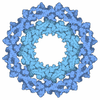
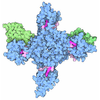
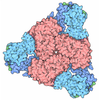
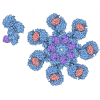
-Map
| File | Download / File: emd_63843.map.gz / Format: CCP4 / Size: 216 MB / Type: IMAGE STORED AS FLOATING POINT NUMBER (4 BYTES) | ||||||||||||||||||||||||||||||||||||
|---|---|---|---|---|---|---|---|---|---|---|---|---|---|---|---|---|---|---|---|---|---|---|---|---|---|---|---|---|---|---|---|---|---|---|---|---|---|
| Projections & slices | Image control
Images are generated by Spider. | ||||||||||||||||||||||||||||||||||||
| Voxel size | X=Y=Z: 0.67 Å | ||||||||||||||||||||||||||||||||||||
| Density |
| ||||||||||||||||||||||||||||||||||||
| Symmetry | Space group: 1 | ||||||||||||||||||||||||||||||||||||
| Details | EMDB XML:
|
 X (Sec.)
 Y (Row.)
 Z (Col.)


-Supplemental data
- Sample components
-Entire : UBE3A-E6-p53 ternary complex
| Entire | Name: UBE3A-E6-p53 ternary complex |
|---|---|
| Components |
|
-Supramolecule #1: UBE3A-E6-p53 ternary complex
| Supramolecule | Name: UBE3A-E6-p53 ternary complex / type: complex / ID: 1 / Parent: 0 / Macromolecule list: #1-#3 |
|---|---|
| Source (natural) | Organism: Homo sapiens (human) |
-Macromolecule #1: Maltose/maltodextrin-binding periplasmic protein,Protein E6
| Macromolecule | Name: Maltose/maltodextrin-binding periplasmic protein,Protein E6 type: protein_or_peptide / ID: 1 Details: Recombinant Protein E6 with an N-terminal MBP-His-HRV 3C tag Number of copies: 1 / Enantiomer: LEVO |
|---|---|
| Source (natural) | Organism: Human papillomavirus 16 |
| Molecular weight | Theoretical: 61.225496 KDa |
| Recombinant expression | Organism:   Escherichia coli (E. coli) Escherichia coli (E. coli) |
| Sequence | String: MKIEEGKLVI WINGDKGYNG LAEVGKKFEK DTGIKVTVEH PDKLEEKFPQ VAATGDGPDI IFWAHDRFGG YAQSGLLAEI TPDKAFQDK LYPFTWDAVR YNGKLIAYPI AVEALSLIYN KDLLPNPPKT WEEIPALDKE LKAKGKSALM FNLQEPYFTW P LIAADGGY ...String: MKIEEGKLVI WINGDKGYNG LAEVGKKFEK DTGIKVTVEH PDKLEEKFPQ VAATGDGPDI IFWAHDRFGG YAQSGLLAEI TPDKAFQDK LYPFTWDAVR YNGKLIAYPI AVEALSLIYN KDLLPNPPKT WEEIPALDKE LKAKGKSALM FNLQEPYFTW P LIAADGGY AFKYENGKYD IKDVGVDNAG AKAGLTFLVD LIKNKHMNAD TDYSIAEAAF NKGETAMTIN GPWAWSNIDT SK VNYGVTV LPTFKGQPSK PFVGVLSAGI NAASPNKELA KEFLENYLLT DEGLEAVNKD KPLGAVALKS YEEELAKDPR IAA TMENAQ KGEIMPNIPQ MSAFWYAVRT AVINAASGRQ TVDEALKDAQ TNSHMHHHHH HSSGLEVLFQ GPGSMFQDPQ ERPR KLPQL CTELQTTIHD IILECVYCKQ QLLRREVYDF AFRDLCIVYR DGNPYAVCDK CLKFYSKISE YRHYSYSLYG TTLEQ QYNK PLSDLLIRCI NCQKPLSPEE KQRHLDKKQR FHNIRGRWTG RCMSCSRSSR TRRETQL UniProtKB: Maltose/maltodextrin-binding periplasmic protein, Protein E6 |
-Macromolecule #2: Cellular tumor antigen p53
| Macromolecule | Name: Cellular tumor antigen p53 / type: protein_or_peptide / ID: 2 / Number of copies: 1 / Enantiomer: LEVO |
|---|---|
| Source (natural) | Organism: Homo sapiens (human) |
| Molecular weight | Theoretical: 43.865336 KDa |
| Recombinant expression | Organism: Escherichia coli (E. coli) |
| Sequence | String: GPMEEPQSDP SVEPPLSQET FSDLWKLLPE NNVLSPLPSQ AMDDLMLSPD DIEQWFTEDP GPDEAPRMPE AAPPVAPAPA APTPAAPAP APSWPLSSSV PSQKTYQGSY GFRLGFLHSG TAKSVTCTYS PALNKMFCQL AKTCPVQLWV DSTPPPGTRV R AMAIYKQS ...String: GPMEEPQSDP SVEPPLSQET FSDLWKLLPE NNVLSPLPSQ AMDDLMLSPD DIEQWFTEDP GPDEAPRMPE AAPPVAPAPA APTPAAPAP APSWPLSSSV PSQKTYQGSY GFRLGFLHSG TAKSVTCTYS PALNKMFCQL AKTCPVQLWV DSTPPPGTRV R AMAIYKQS QHMTEVVRRC PHHERCSDSD GLAPPQHLIR VEGNLRVEYL DDRNTFRHSV VVPYEPPEVG SDCTTIHYNY MC NSSCMGG MNRRPILTII TLEDSSGNLL GRNSFEVRVC ACPGRDRRTE EENLRKKGEP HHELPPGSTK RALPNNTSSS PQP KKKPLD GEYFTLQIRG RERFEMFREL NEALELKDAQ AGKEPGGSRA HSSHLKSKKG QSTSRHKKLM FKTEGPDSD UniProtKB: Cellular tumor antigen p53 |
-Macromolecule #3: Isoform I of Ubiquitin-protein ligase E3A
| Macromolecule | Name: Isoform I of Ubiquitin-protein ligase E3A / type: protein_or_peptide / ID: 3 / Number of copies: 1 / Enantiomer: LEVO / EC number: HECT-type E3 ubiquitin transferase |
|---|---|
| Source (natural) | Organism: Homo sapiens (human) |
| Molecular weight | Theoretical: 98.38582 KDa |
| Recombinant expression | Organism: Escherichia coli (E. coli) |
| Sequence | String: GPGSMKRAAA KHLIERYYHQ LTEGCGNEAC TNEFCASCPT FLRMDNNAAA IKALELYKIN AKLCDPHPSK KGASSAYLEN SKGAPNNSC SEIKMNKKGA RIDFKDVTYL TEEKVYEILE LCREREDYSP LIRVIGRVFS SAEALVQSFR KVKQHTKEEL K SLQAKDED ...String: GPGSMKRAAA KHLIERYYHQ LTEGCGNEAC TNEFCASCPT FLRMDNNAAA IKALELYKIN AKLCDPHPSK KGASSAYLEN SKGAPNNSC SEIKMNKKGA RIDFKDVTYL TEEKVYEILE LCREREDYSP LIRVIGRVFS SAEALVQSFR KVKQHTKEEL K SLQAKDED KDEDEKEKAA CSAAAMEEDS EASSSRIGDS SQGDNNLQKL GPDDVSVDID AIRRVYTRLL SNEKIETAFL NA LVYLSPN VECDLTYHNV YSRDPNYLNL FIIVMENRNL HSPEYLEMAL PLFCKAMSKL PLAAQGKLIR LWSKYNADQI RRM METFQQ LITYKVISNE FNSRNLVNDD DAIVAASKCL KMVYYANVVG GEVDTNHNEE DDEEPIPESS ELTLQELLGE ERRN KKGPR VDPLETELGV KTLDCRKPLI PFEEFINEPL NEVLEMDKDY TFFKVETENK FSFMTCPFIL NAVTKNLGLY YDNRI RMYS ERRITVLYSL VQGQQLNPYL RLKVRRDHII DDALVRLEMI AMENPADLKK QLYVEFEGEQ GVDEGGVSKE FFQLVV EEI FNPDIGMFTY DESTKLFWFN PSSFETEGQF TLIGIVLGLA IYNNCILDVH FPMVVYRKLM GKKGTFRDLG DSHPVLY QS LKDLLEYEGN VEDDMMITFQ ISQTDLFGNP MMYDLKENGD KIPITNENRK EFVNLYSDYI LNKSVEKQFK AFRRGFHM V TNESPLKYLF RPEEIELLIC GSRNLDFQAL EETTEYDGGY TRDSVLIREF WEIVHSFTDE QKRLFLQFTT GTDRAPVGG LGKLKMIIAK NGPDTERLPT SHTCFNVLLL PEYSSKEKLK ERLLKAITYA KGFGML UniProtKB: Ubiquitin-protein ligase E3A |
-Macromolecule #4: ZINC ION
| Macromolecule | Name: ZINC ION / type: ligand / ID: 4 / Number of copies: 3 / Formula: ZN |
|---|---|
| Molecular weight | Theoretical: 65.409 Da |
-Experimental details
-Structure determination
| Method | cryo EM |
|---|---|
 Processing Processing | single particle reconstruction |
| Aggregation state | particle |
-Sample preparation
| Buffer | pH: 7.8 |
|---|---|
| Vitrification | Cryogen name: ETHANE |
- Electron microscopy
| Microscope | TFS KRIOS |
|---|---|
| Image recording | Film or detector model: GATAN K3 (6k x 4k) / Average electron dose: 50.0 e/Å2 |
| Electron beam | Acceleration voltage: 300 kV / Electron source:  FIELD EMISSION GUN FIELD EMISSION GUN |
| Electron optics | Illumination mode: FLOOD BEAM / Imaging mode: BRIGHT FIELD / Cs: 2.7 mm / Nominal defocus max: 2.2 µm / Nominal defocus min: 1.2 µm |
| Experimental equipment |  Model: Titan Krios / Image courtesy: FEI Company |
