[English] 日本語
Yorodumi
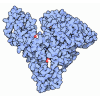
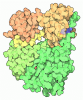
- EMDB-63831: Cryo-EM structure of peptide GPCR-Gq complex -

+
Open data


ID or keywords:

Loading...

-
Basic information

Entry
Database: EMDB / ID: EMD-63831
TitleCryo-EM structure of peptide GPCR-Gq complex
Map data
Sample
  • Complex: V1aR with Gq
    • Protein or peptide: exo-alpha-sialidase,Vasopressin V1a receptor
    • Protein or peptide: Arg-vasopressin
    • Protein or peptide: Guanine nucleotide-binding protein G(q) subunit alpha-1
    • Protein or peptide: Guanine nucleotide-binding protein G(I)/G(S)/G(T) subunit beta-1
    • Protein or peptide: Guanine nucleotide-binding protein G(I)/G(S)/G(O) subunit gamma-2
    • Protein or peptide: Nanobody 35
  • Ligand: MAGNESIUM ION
KeywordsVasopressin / GPCR / Complex / SIGNALING PROTEIN/IMMUNE SYSTEM / SIGNALING PROTEIN-IMMUNE SYSTEM complex
Function / homology
Function and homology information


V1B vasopressin receptor binding / : / Defective AVP does not bind AVPR1A,B and causes neurohypophyseal diabetes insipidus (NDI) / V1A vasopressin receptor binding / negative regulation of female receptivity / cellular response to water deprivation / neurohypophyseal hormone activity / response to nerve growth factor / maternal aggressive behavior / negative regulation of transmission of nerve impulse ...V1B vasopressin receptor binding / : / Defective AVP does not bind AVPR1A,B and causes neurohypophyseal diabetes insipidus (NDI) / V1A vasopressin receptor binding / negative regulation of female receptivity / cellular response to water deprivation / neurohypophyseal hormone activity / response to nerve growth factor / maternal aggressive behavior / negative regulation of transmission of nerve impulse / Organic anion transport by SLCO transporters / myotube differentiation / grooming behavior / Defective AVP does not bind AVPR2 and causes neurohypophyseal diabetes insipidus (NDI) / sperm ejaculation / regulation of systemic arterial blood pressure by vasopressin / Vasopressin-like receptors / renal water absorption / vasopressin receptor activity / response to peptide / response to 2,3,7,8-tetrachlorodibenzodioxine / telencephalon development / positive regulation of prostaglandin biosynthetic process / vasoconstriction / maternal behavior / water transport / ganglioside catabolic process / neuropeptide hormone activity / oligosaccharide catabolic process / blood circulation / response to corticosterone / positive regulation of glutamate secretion / exo-alpha-sialidase / positive regulation of systemic arterial blood pressure / exo-alpha-sialidase activity / response to testosterone / peptide hormone binding / social behavior / response to electrical stimulus / response to salt stress / multicellular organismal response to stress / positive regulation of vasoconstriction / endocytic vesicle / positive regulation of heart rate / neuronal dense core vesicle / cellular response to hormone stimulus / transport across blood-brain barrier / BMAL1:CLOCK,NPAS2 activates circadian expression / secretory granule / locomotory behavior / protein kinase C binding / calcium-mediated signaling / response to nicotine / generation of precursor metabolites and energy / clathrin-coated endocytic vesicle membrane / hormone activity / Olfactory Signaling Pathway / Activation of the phototransduction cascade / G protein-coupled acetylcholine receptor signaling pathway / G beta:gamma signalling through PLC beta / Presynaptic function of Kainate receptors / Thromboxane signalling through TP receptor / Activation of G protein gated Potassium channels / Inhibition of voltage gated Ca2+ channels via Gbeta/gamma subunits / G-protein activation / Glucagon signaling in metabolic regulation / G beta:gamma signalling through CDC42 / Prostacyclin signalling through prostacyclin receptor / Synthesis, secretion, and inactivation of Glucagon-like Peptide-1 (GLP-1) / photoreceptor disc membrane / G beta:gamma signalling through BTK / ADP signalling through P2Y purinoceptor 12 / Sensory perception of sweet, bitter, and umami (glutamate) taste / Glucagon-type ligand receptors / Adrenaline,noradrenaline inhibits insulin secretion / cell-cell signaling / Vasopressin regulates renal water homeostasis via Aquaporins / G alpha (z) signalling events / Glucagon-like Peptide-1 (GLP1) regulates insulin secretion / ADP signalling through P2Y purinoceptor 1 / cellular response to catecholamine stimulus / positive regulation of cell growth / G beta:gamma signalling through PI3Kgamma / ADORA2B mediated anti-inflammatory cytokines production / Cargo recognition for clathrin-mediated endocytosis / adenylate cyclase-activating dopamine receptor signaling pathway / cellular response to prostaglandin E stimulus / Cooperation of PDCL (PhLP1) and TRiC/CCT in G-protein beta folding / GPER1 signaling / heterotrimeric G-protein complex / G alpha (12/13) signalling events / Inactivation, recovery and regulation of the phototransduction cascade / Clathrin-mediated endocytosis / G-protein beta-subunit binding / extracellular vesicle / positive regulation of cytosolic calcium ion concentration / Thrombin signalling through proteinase activated receptors (PARs) / signaling receptor complex adaptor activity / GTPase binding / Ca2+ pathway
Similarity search - Function
Vasopressin V1A receptor / Vasopressin V1 receptor, C-terminal / Vasopressin V1 receptor, C-terminal / DUF1856 / Neurohypophysial hormones, N-terminal Domain / Neurohypophysial hormone / Neurohypophysial hormone, conserved site / Neurohypophysial hormone domain superfamily / Neurohypophysial hormones, C-terminal Domain / Neurohypophysial hormones signature. ...Vasopressin V1A receptor / Vasopressin V1 receptor, C-terminal / Vasopressin V1 receptor, C-terminal / DUF1856 / Neurohypophysial hormones, N-terminal Domain / Neurohypophysial hormone / Neurohypophysial hormone, conserved site / Neurohypophysial hormone domain superfamily / Neurohypophysial hormones, C-terminal Domain / Neurohypophysial hormones signature. / Neurohypophysial hormones / BNR repeat-like domain / Vasopressin receptor / Glycoside hydrolase, family 33, N-terminal / Trans-sialidase, domain 3 / Sialidase, N-terminal domain / Sialidase family / Sialidase / Sialidase superfamily / G-protein, gamma subunit / G-protein gamma subunit domain profile. / G-protein gamma-like domain / G-protein gamma-like domain superfamily / GGL domain / G protein gamma subunit-like motifs / GGL domain / Guanine nucleotide-binding protein, beta subunit / G protein beta WD-40 repeat protein / G-protein, beta subunit / G-protein coupled receptors family 1 signature. / Concanavalin A-like lectin/glucanase domain superfamily / 7 transmembrane receptor (rhodopsin family) / G protein-coupled receptor, rhodopsin-like / GPCR, rhodopsin-like, 7TM / G-protein coupled receptors family 1 profile. / G-protein beta WD-40 repeat / WD40 repeat, conserved site / Trp-Asp (WD) repeats signature. / Trp-Asp (WD) repeats profile. / Trp-Asp (WD) repeats circular profile. / WD40 repeats / WD40 repeat / WD40-repeat-containing domain superfamily / WD40/YVTN repeat-like-containing domain superfamily
Similarity search - Domain/homology
Vasopressin-neurophysin 2-copeptin / Vasopressin V1a receptor / Guanine nucleotide-binding protein G(I)/G(S)/G(O) subunit gamma-2 / Guanine nucleotide-binding protein G(I)/G(S)/G(T) subunit beta-1 / exo-alpha-sialidase
Similarity search - Component
Biological speciesHomo sapiens (human) / Lama glama (llama)
Methodsingle particle reconstruction / cryo EM / Resolution: 3.04 Å
AuthorsLiu SH / Zhang YJ / Hua T / Liu ZJ
Funding support1 items
OrganizationGrant numberCountry
Not funded
CitationJournal: To Be Published
Title: Cryo-EM structure of peptide GPCR-Gq complex
Authors: Liu SH / Zhang YJ / Hua T / Liu ZJ
History
DepositionMar 19, 2025-
Header (metadata) releaseSep 23, 2026-
Map releaseSep 23, 2026-
UpdateSep 23, 2026-
Current statusSep 23, 2026Processing site: PDBc / Status: Released

-
Structure visualization

Supplemental images

Downloads & links

-
Map

FileDownload / File: emd_63831.map.gz / Format: CCP4 / Size: 125 MB / Type: IMAGE STORED AS FLOATING POINT NUMBER (4 BYTES)
Projections & slices

Image control

Size
Brightness
Contrast
Others
AxesZ (Sec.)Y (Row.)X (Col.)
0.96 Å/pix.
x 320 pix.
= 307.2 Å
0.96 Å/pix.
x 320 pix.
= 307.2 Å
0.96 Å/pix.
x 320 pix.
= 307.2 Å

Surface

Projections

Slices (1/3)

Slices (1/2)

Slices (2/3)

Images are generated by Spider.

Voxel sizeX=Y=Z: 0.96 Å
Density
Contour LevelBy AUTHOR: 0.1
Minimum - Maximum-0.02692356 - 2.2093687
Average (Standard dev.)0.00082029204 (±0.020589475)
SymmetrySpace group: 1
Details

EMDB XML:

Map geometry
Axis orderXYZ
Origin000
Dimensions320320320
Spacing320320320
CellA=B=C: 307.19998 Å
α=β=γ: 90.0 °

-
Supplemental data

-
Half map: #1

Fileemd_63831_half_map_1.map
Projections & Slices
AxesZYX

Projections

Slices (1/2)
Density Histograms

-
Half map: #2

Fileemd_63831_half_map_2.map
Projections & Slices
AxesZYX

Projections

Slices (1/2)
Density Histograms

-
Sample components

-
Entire : V1aR with Gq

EntireName: V1aR with Gq
Components
  • Complex: V1aR with Gq
    • Protein or peptide: exo-alpha-sialidase,Vasopressin V1a receptor
    • Protein or peptide: Arg-vasopressin
    • Protein or peptide: Guanine nucleotide-binding protein G(q) subunit alpha-1
    • Protein or peptide: Guanine nucleotide-binding protein G(I)/G(S)/G(T) subunit beta-1
    • Protein or peptide: Guanine nucleotide-binding protein G(I)/G(S)/G(O) subunit gamma-2
    • Protein or peptide: Nanobody 35
  • Ligand: MAGNESIUM ION

-
Supramolecule #1: V1aR with Gq

SupramoleculeName: V1aR with Gq / type: complex / ID: 1 / Parent: 0 / Macromolecule list: #1-#6
Source (natural)Organism: Homo sapiens (human)

-
Macromolecule #1: exo-alpha-sialidase,Vasopressin V1a receptor

MacromoleculeName: exo-alpha-sialidase,Vasopressin V1a receptor / type: protein_or_peptide / ID: 1 / Number of copies: 1 / Enantiomer: LEVO / EC number: exo-alpha-sialidase
Source (natural)Organism: Homo sapiens (human)
Molecular weightTheoretical: 95.943984 KDa
Recombinant expressionOrganism: Trichoplusia ni (cabbage looper)
SequenceString: MKTIIALSYI FCLVFADYKD DDDAGRAVEG AVKTEPVDLF HPGFLNSSNY RIPALFKTKE GTLIASIDAR RHGGADAPNN DIDTAVRRS EDGGKTWDEG QIIMDYPDKS SVIDTTLIQD DETGRIFLLV THFPSKYGFW NAGLGSGFKN IDGKEYLCLY D SSGKEFTV ...String:
MKTIIALSYI FCLVFADYKD DDDAGRAVEG AVKTEPVDLF HPGFLNSSNY RIPALFKTKE GTLIASIDAR RHGGADAPNN DIDTAVRRS EDGGKTWDEG QIIMDYPDKS SVIDTTLIQD DETGRIFLLV THFPSKYGFW NAGLGSGFKN IDGKEYLCLY D SSGKEFTV RENVVYDKDS NKTEYTTNAL GDLFKNGTKI DNINSSTAPL KAKGTSYINL VYSDDDGKTW SEPQNINFQV KK DWMKFLG IAPGRGIQIK NGEHKGRIVV PVYYTNEKGK QSSAVIYSDD SGKNWTIGES PNDNRKLENG KIINSKTLSD DAP QLTECQ VVEMPNGQLK LFMRNLSGYL NIATSFDGGA TWDETVEKDT NVLEPYCQLS VINYSQKVDG KDAVIFSNPN ARSR SNGTV RIGLINQVGT YENGEPKYEF DWKYNKLVKP GYYAYSCLTE LSNGNIGLLY EGTPSEEMSY IEMNLKYLES GANKL ATGA GNTSREAEAL GEGNGPPRDV RNEELAKLEI AVLAVTFAVA VLGNSSVLLA LHRTPRKTSR MHLFIRHLSL ADLAVA FFQ VLPQMCWDIT YRFRGPDWLC RVVKHLQVFG MFASAYMLVV MTADRYIAVC HPLKTLQQPA RRSRLMIAAA WVLSFVL ST PQYFVFSMIE VNNVTKARDC WATFIQPWGS RAYVTWMTGG IFVAPVVILG TCYGFICYNI WCNVRGKTAS RQSKGAEQ A GVAFQKGFLL APCVSSVKSI SRAKIRTVKM TFVIVTAYIV CWAPFFIIQM WSVWDPMSVW TESENPTITI TALLGSLNS CCNPWIYMFF SGHLLQDCVQ SFPCCQNMKE KFNKEDTLEV LFQGPHHHHH HHHHH

UniProtKB: exo-alpha-sialidase, Vasopressin V1a receptor

-
Macromolecule #2: Arg-vasopressin

MacromoleculeName: Arg-vasopressin / type: protein_or_peptide / ID: 2 / Number of copies: 1 / Enantiomer: LEVO
Source (natural)Organism: Homo sapiens (human)
Molecular weightTheoretical: 1.086248 KDa
SequenceString:
CYFQNCPRG(NH2)

UniProtKB: Vasopressin-neurophysin 2-copeptin

-
Macromolecule #3: Guanine nucleotide-binding protein G(q) subunit alpha-1

MacromoleculeName: Guanine nucleotide-binding protein G(q) subunit alpha-1
type: protein_or_peptide / ID: 3 / Number of copies: 1 / Enantiomer: LEVO
Source (natural)Organism: Homo sapiens (human)
Molecular weightTheoretical: 28.084832 KDa
Recombinant expressionOrganism: Trichoplusia ni (cabbage looper)
SequenceString: MGSTVSAEDK AAAERSKMID KNLREDGEKA RRTLRLLLLG ADNSGKSTIV KQMRILHGGS GGSGGTSGIF ETKFQVDKVN FHMFDVGGQ RDERRKWIQC FNDVTAIIFV VDSSDYNRLQ EALNDFKSIW NNRWLRTISV ILFLNKQDLL AEKVLAGKSK I EDYFPEFA ...String:
MGSTVSAEDK AAAERSKMID KNLREDGEKA RRTLRLLLLG ADNSGKSTIV KQMRILHGGS GGSGGTSGIF ETKFQVDKVN FHMFDVGGQ RDERRKWIQC FNDVTAIIFV VDSSDYNRLQ EALNDFKSIW NNRWLRTISV ILFLNKQDLL AEKVLAGKSK I EDYFPEFA RYTTPEDATP EPGEDPRVTR AKYFIRKEFV DISTASGDGR HICYPHFTCA VDTENARRIF NDCKDIILQM NL REYNLV

-
Macromolecule #4: Guanine nucleotide-binding protein G(I)/G(S)/G(T) subunit beta-1

MacromoleculeName: Guanine nucleotide-binding protein G(I)/G(S)/G(T) subunit beta-1
type: protein_or_peptide / ID: 4 / Number of copies: 1 / Enantiomer: LEVO
Source (natural)Organism: Homo sapiens (human)
Molecular weightTheoretical: 41.055867 KDa
Recombinant expressionOrganism: Trichoplusia ni (cabbage looper)
SequenceString: MHHHHHHGSL LQSELDQLRQ EAEQLKNQIR DARKACADAT LSQITNNIDP VGRIQMRTRR TLRGHLAKIY AMHWGTDSRL LVSASQDGK LIIWDSYTTN KVHAIPLRSS WVMTCAYAPS GNYVACGGLD NICSIYNLKT REGNVRVSRE LAGHTGYLSC C RFLDDNQI ...String:
MHHHHHHGSL LQSELDQLRQ EAEQLKNQIR DARKACADAT LSQITNNIDP VGRIQMRTRR TLRGHLAKIY AMHWGTDSRL LVSASQDGK LIIWDSYTTN KVHAIPLRSS WVMTCAYAPS GNYVACGGLD NICSIYNLKT REGNVRVSRE LAGHTGYLSC C RFLDDNQI VTSSGDTTCA LWDIETGQQT TTFTGHTGDV MSLSLAPDTR LFVSGACDAS AKLWDVREGM CRQTFTGHES DI NAICFFP NGNAFATGSD DATCRLFDLR ADQELMTYSH DNIICGITSV SFSKSGRLLL AGYDDFNCNV WDALKADRAG VLA GHDNRV SCLGVTDDGM AVATGSWDSF LKIWNGSSGG GGSGGGGSSG VSGWRLFKKI S

UniProtKB: Guanine nucleotide-binding protein G(I)/G(S)/G(T) subunit beta-1

-
Macromolecule #5: Guanine nucleotide-binding protein G(I)/G(S)/G(O) subunit gamma-2

MacromoleculeName: Guanine nucleotide-binding protein G(I)/G(S)/G(O) subunit gamma-2
type: protein_or_peptide / ID: 5 / Number of copies: 1 / Enantiomer: LEVO
Source (natural)Organism: Homo sapiens (human)
Molecular weightTheoretical: 7.861143 KDa
Recombinant expressionOrganism: Trichoplusia ni (cabbage looper)
SequenceString:
MASNNTASIA QARKLVEQLK MEANIDRIKV SKAAADLMAY CEAHAKEDPL LTPVPASENP FREKKFFCAI L

UniProtKB: Guanine nucleotide-binding protein G(I)/G(S)/G(O) subunit gamma-2

-
Macromolecule #6: Nanobody 35

MacromoleculeName: Nanobody 35 / type: protein_or_peptide / ID: 6 / Number of copies: 1 / Enantiomer: LEVO
Source (natural)Organism: Lama glama (llama)
Molecular weightTheoretical: 17.057271 KDa
Recombinant expressionOrganism: Escherichia coli (E. coli)
SequenceString:
MKYLLPTAAA GLLLLAAQPA MAMQVQLQES GGGLVQPGGS LRLSCAASGF TFSNYKMNWV RQAPGKGLEW VSDISQSGAS ISYTGSVKG RFTISRDNAK NTLYLQMNSL KPEDTAVYYC ARCPAPFTRD CFDVTSTTYA YRGQGTQVTV SSHHHHHH

-
Macromolecule #7: MAGNESIUM ION

MacromoleculeName: MAGNESIUM ION / type: ligand / ID: 7 / Number of copies: 1 / Formula: MG
Molecular weightTheoretical: 24.305 Da

-
Experimental details

-
Structure determination

Methodcryo EM
Processingsingle particle reconstruction
Aggregation stateparticle

-
Sample preparation

BufferpH: 7.4
VitrificationCryogen name: ETHANE

-
Electron microscopy

MicroscopeFEI TALOS ARCTICA
Image recordingFilm or detector model: FEI FALCON IV (4k x 4k) / Average electron dose: 60.0 e/Å2
Electron beamAcceleration voltage: 300 kV / Electron source: FIELD EMISSION GUN
Electron opticsIllumination mode: FLOOD BEAM / Imaging mode: BRIGHT FIELD / Nominal defocus max: 1.6 µm / Nominal defocus min: 0.8 µm
Sample stageCooling holder cryogen: NITROGEN
Experimental equipment
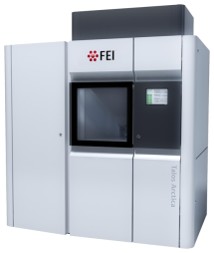
Model: Talos Arctica / Image courtesy: FEI Company

+
Image processing

CTF correctionType: PHASE FLIPPING ONLY
Startup modelType of model: NONE
Final reconstructionResolution.type: BY AUTHOR / Resolution: 3.04 Å / Resolution method: FSC 0.143 CUT-OFF / Number images used: 313990
Initial angle assignmentType: COMMON LINE
Final angle assignmentType: MAXIMUM LIKELIHOOD

+
About Yorodumi

-
News

-
Feb 9, 2022. New format data for meta-information of EMDB entries

New format data for meta-information of EMDB entries

  • Version 3 of the EMDB header file is now the official format.
  • The previous official version 1.9 will be removed from the archive.

Related info.:EMDB header

External links:wwPDB to switch to version 3 of the EMDB data model

-
Aug 12, 2020. Covid-19 info

Covid-19 info

URL: https://pdbj.org/emnavi/covid19.php

New page: Covid-19 featured information page in EM Navigator.

Related info.:Covid-19 info / Mar 5, 2020. Novel coronavirus structure data

+
Mar 5, 2020. Novel coronavirus structure data

Novel coronavirus structure data

Related info.:Yorodumi Speices / Aug 12, 2020. Covid-19 info

External links:COVID-19 featured content - PDBj / Molecule of the Month (242):Coronavirus Proteases

+
Jan 31, 2019. EMDB accession codes are about to change! (news from PDBe EMDB page)

EMDB accession codes are about to change! (news from PDBe EMDB page)

  • The allocation of 4 digits for EMDB accession codes will soon come to an end. Whilst these codes will remain in use, new EMDB accession codes will include an additional digit and will expand incrementally as the available range of codes is exhausted. The current 4-digit format prefixed with “EMD-” (i.e. EMD-XXXX) will advance to a 5-digit format (i.e. EMD-XXXXX), and so on. It is currently estimated that the 4-digit codes will be depleted around Spring 2019, at which point the 5-digit format will come into force.
  • The EM Navigator/Yorodumi systems omit the EMD- prefix.

Related info.:Q: What is EMD? / ID/Accession-code notation in Yorodumi/EM Navigator

External links:EMDB Accession Codes are Changing Soon! / Contact to PDBj

+
Jul 12, 2017. Major update of PDB

Major update of PDB

  • wwPDB released updated PDB data conforming to the new PDBx/mmCIF dictionary.
  • This is a major update changing the version number from 4 to 5, and with Remediation, in which all the entries are updated.
  • In this update, many items about electron microscopy experimental information are reorganized (e.g. em_software).
  • Now, EM Navigator and Yorodumi are based on the updated data.

External links:wwPDB Remediation / Enriched Model Files Conforming to OneDep Data Standards Now Available in the PDB FTP Archive

-
Yorodumi

Thousand views of thousand structures

  • Yorodumi is a browser for structure data from EMDB, PDB, SASBDB, etc.
  • This page is also the successor to EM Navigator detail page, and also detail information page/front-end page for Omokage search.
  • The word "yorodu" (or yorozu) is an old Japanese word meaning "ten thousand". "mi" (miru) is to see.

Related info.:EMDB / PDB / SASBDB / Comparison of 3 databanks / Yorodumi Search / Aug 31, 2016. New EM Navigator & Yorodumi / Yorodumi Papers / Jmol/JSmol / Function and homology information / Changes in new EM Navigator and Yorodumi

Read more