sphingosine-1-phosphate receptor activity / regulation of meiotic nuclear division / electron transport chain / G protein-coupled receptor activity / positive regulation of cold-induced thermogenesis / adenylate cyclase-activating G protein-coupled receptor signaling pathway / periplasmic space / electron transfer activity / iron ion binding / heme binding ...sphingosine-1-phosphate receptor activity / regulation of meiotic nuclear division / electron transport chain / G protein-coupled receptor activity / positive regulation of cold-induced thermogenesis / adenylate cyclase-activating G protein-coupled receptor signaling pathway / periplasmic space / electron transfer activity / iron ion binding / heme binding / plasma membrane / cytoplasm 類似検索 - 分子機能
National Natural Science Foundation of China (NSFC)
中国
引用
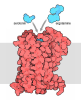
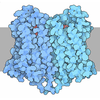
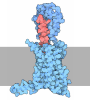
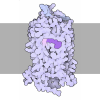
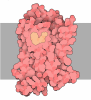
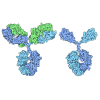
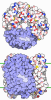
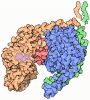
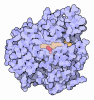
ジャーナル: Nat Commun / 年: 2025 タイトル: Mechanism and function of GPR3 regulated by a negative allosteric modulator. 著者: Geng Chen / Jana Bláhová / Nico Staffen / Harald Hübner / Nadja Nunhöfer / Chen Qiu / Peter Gmeiner / Dorothee Weikert / Yang Du / Jun Xu / 要旨: Allosteric modulators have gained substantial interest in current GPCR drug discovery. Here, we present a mechanism of allosteric modulation involving the dimerization of GPR3, a promising drug ...Allosteric modulators have gained substantial interest in current GPCR drug discovery. Here, we present a mechanism of allosteric modulation involving the dimerization of GPR3, a promising drug target for metabolic diseases and central nervous system disorders. We show that GPR3 forms constitutive homodimers in live cells and reveal that the inhibitor AF64394 functions as a negative allosteric modulator (NAM) specifically targeting dimeric GPR3. Using cryogenic electron microscopy (cryo-EM), we determine the structures of the AF64394-bound GPR3 dimer and its dimer-Gs signaling complex. These high-resolution structures reveal that AF64394 binds to the transmembrane dimer interface. AF64394 binding prevents the dissociation of the GPR3 dimer upon engagement with Gs and restrains transmembrane helix 5 in an inactive-like intermediate conformation, leading to reduced coupling with Gs. Our studies unveil a mechanism of dimer-specific inhibition of signaling with significant implications for the discovery of drugs targeting GPCRs capable of dimerization.
 ムービー
ムービー コントローラー


 データを開く
 基本情報
基本情報
 マップデータ
 試料
試料 キーワード
キーワード 機能・相同性情報
 Homo sapiens (ヒト)
 データ登録者
 中国, 1件
  引用
引用
 構造の表示
構造の表示
 ダウンロードとリンク
 emd_63717.png
 http://ftp.pdbj.org/pub/emdb/structures/EMD-63717


 Z (Sec.)
 Y (Row.)
 X (Col.)


 試料の構成要素
 Spodoptera aff. frugiperda 1 BOLD-2017 (蝶・蛾)
 解析
解析 電子顕微鏡法
 FIELD EMISSION GUN


