[English] 日本語
Yorodumi
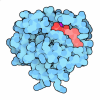
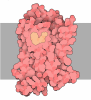
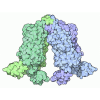
- EMDB-63713: cryo-EM structure of human TAS2R4 -

+
Open data


ID or keywords:

Loading...

-
Basic information

Entry
Database: EMDB / ID: EMD-63713
Titlecryo-EM structure of human TAS2R4
Map data
Sample
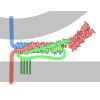
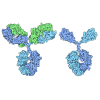
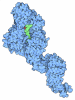
  • Complex: T2R4
    • Protein or peptide: Taste receptor type 2 member 4
    • Protein or peptide: Single-chain variable fragment 16
    • Protein or peptide: Guanine nucleotide-binding protein G(I)/G(S)/G(O) subunit gamma-13
    • Protein or peptide: Guanine nucleotide-binding protein G(I)/G(S)/G(T) subunit beta-3
    • Protein or peptide: Guanine nucleotide-binding protein G(s) subunit alpha isoforms short
Keywordsbitter taste receptors / cryo-EM / MEMBRANE PROTEIN/IMMUNE SYSTEM / MEMBRANE PROTEIN-IMMUNE SYSTEM complex
Function / homology
Function and homology information


regulation of phospholipid metabolic process / regulation of hormone metabolic process / regulation of triglyceride metabolic process / bitter taste receptor activity / taste receptor activity / detection of light stimulus involved in visual perception / sensory perception of sweet taste / detection of chemical stimulus involved in sensory perception of bitter taste / regulation of fat cell differentiation / cell volume homeostasis ...regulation of phospholipid metabolic process / regulation of hormone metabolic process / regulation of triglyceride metabolic process / bitter taste receptor activity / taste receptor activity / detection of light stimulus involved in visual perception / sensory perception of sweet taste / detection of chemical stimulus involved in sensory perception of bitter taste / regulation of fat cell differentiation / cell volume homeostasis / Class C/3 (Metabotropic glutamate/pheromone receptors) / regulation of cholesterol metabolic process / ciliary membrane / spectrin binding / regulation of glucose metabolic process / phototransduction, visible light / axoneme / regulation of eating behavior / adenylate cyclase inhibitor activity / positive regulation of protein localization to cell cortex / T cell migration / positive regulation of relaxation of smooth muscle / Adenylate cyclase inhibitory pathway / D2 dopamine receptor binding / adenylate cyclase-inhibiting serotonin receptor signaling pathway / G protein-coupled serotonin receptor binding / acrosomal vesicle / cellular response to forskolin / mast cell degranulation / regulation of mitotic spindle organization / chemokine-mediated signaling pathway / response to nicotine / Regulation of insulin secretion / neuropeptide signaling pathway / response to prostaglandin E / positive regulation of cholesterol biosynthetic process / G protein-coupled receptor binding / regulation of blood pressure / response to peptide hormone / G protein-coupled receptor activity / G-protein beta/gamma-subunit complex binding / adenylate cyclase-modulating G protein-coupled receptor signaling pathway / adenylate cyclase-inhibiting G protein-coupled receptor signaling pathway / Olfactory Signaling Pathway / G beta:gamma signalling through PLC beta / Presynaptic function of Kainate receptors / Thromboxane signalling through TP receptor / Activation of G protein gated Potassium channels / Inhibition of voltage gated Ca2+ channels via Gbeta/gamma subunits / G-protein activation / Glucagon signaling in metabolic regulation / G beta:gamma signalling through CDC42 / Prostacyclin signalling through prostacyclin receptor / Synthesis, secretion, and inactivation of Glucagon-like Peptide-1 (GLP-1) / G beta:gamma signalling through BTK / GDP binding / ADP signalling through P2Y purinoceptor 12 / Glucagon-type ligand receptors / Sensory perception of sweet, bitter, and umami (glutamate) taste / Adrenaline,noradrenaline inhibits insulin secretion / Vasopressin regulates renal water homeostasis via Aquaporins / Glucagon-like Peptide-1 (GLP1) regulates insulin secretion / G alpha (z) signalling events / ADP signalling through P2Y purinoceptor 1 / G beta:gamma signalling through PI3Kgamma / ADORA2B mediated anti-inflammatory cytokines production / Cooperation of PDCL (PhLP1) and TRiC/CCT in G-protein beta folding / GPER1 signaling / heterotrimeric G-protein complex / G alpha (12/13) signalling events / G-protein beta-subunit binding / sensory perception of taste / Thrombin signalling through proteinase activated receptors (PARs) / signaling receptor complex adaptor activity / adenylate cyclase-activating G protein-coupled receptor signaling pathway / regulation of gene expression / cell body / GTPase binding / G protein activity / midbody / Ca2+ pathway / cell cortex / High laminar flow shear stress activates signaling by PIEZO1 and PECAM1:CDH5:KDR in endothelial cells / G alpha (i) signalling events / G alpha (s) signalling events / G alpha (q) signalling events / phospholipase C-activating G protein-coupled receptor signaling pathway / Hydrolases; Acting on acid anhydrides; Acting on GTP to facilitate cellular and subcellular movement / Extra-nuclear estrogen signaling / apical plasma membrane / ciliary basal body / G protein-coupled receptor signaling pathway / cell division / lysosomal membrane / GTPase activity / centrosome / dendrite / synapse / GTP binding / magnesium ion binding
Similarity search - Function
Taste receptor type 2 member 4 / Guanine nucleotide-binding protein G(I)/G(S)/G(O) subunit gamma-13 / Taste receptor type 2 / Taste receptor protein (TAS2R) / G-protein alpha subunit, group I / G protein alpha subunit, helical insertion / G protein alpha subunit / Guanine nucleotide binding protein (G-protein), alpha subunit / G-protein alpha subunit / G-alpha domain profile. ...Taste receptor type 2 member 4 / Guanine nucleotide-binding protein G(I)/G(S)/G(O) subunit gamma-13 / Taste receptor type 2 / Taste receptor protein (TAS2R) / G-protein alpha subunit, group I / G protein alpha subunit, helical insertion / G protein alpha subunit / Guanine nucleotide binding protein (G-protein), alpha subunit / G-protein alpha subunit / G-alpha domain profile. / G-protein, gamma subunit / G-protein gamma subunit domain profile. / G-protein gamma-like domain / G-protein gamma-like domain superfamily / GGL domain / G protein gamma subunit-like motifs / GGL domain / G protein beta WD-40 repeat protein / Guanine nucleotide-binding protein, beta subunit / G-protein, beta subunit / G-protein beta WD-40 repeat / WD40 repeat, conserved site / Trp-Asp (WD) repeats signature. / Trp-Asp (WD) repeats profile. / Trp-Asp (WD) repeats circular profile. / WD40 repeats / WD40 repeat / WD40-repeat-containing domain superfamily / WD40/YVTN repeat-like-containing domain superfamily / P-loop containing nucleoside triphosphate hydrolase
Similarity search - Domain/homology
Guanine nucleotide-binding protein G(t) subunit alpha-3 / Guanine nucleotide-binding protein G(I)/G(S)/G(T) subunit beta-3 / Guanine nucleotide-binding protein G(i) subunit alpha-1 / Taste receptor type 2 member 4 / Guanine nucleotide-binding protein G(I)/G(S)/G(O) subunit gamma-13
Similarity search - Component
Biological speciesHomo sapiens (human) / Mus musculus (house mouse)
Methodsingle particle reconstruction / cryo EM / Resolution: 3.3 Å
AuthorsTan M / Wu J
Funding support China, 1 items
OrganizationGrant numberCountry
National Natural Science Foundation of China (NSFC) China
CitationJournal: To Be Published
Title: Receptor hyper-flexibility for detecting diverse bitter tastes revealed by the significant structural rearrangements in human bitter taste receptor TAS2R4
Authors: Tan M / Wu J
History
DepositionMar 12, 2025-
Header (metadata) releaseMar 18, 2026-
Map releaseMar 18, 2026-
UpdateJul 15, 2026-
Current statusJul 15, 2026Processing site: PDBc / Status: Released

-
Structure visualization

Supplemental images

Downloads & links

-
Map

FileDownload / File: emd_63713.map.gz / Format: CCP4 / Size: 91.1 MB / Type: IMAGE STORED AS FLOATING POINT NUMBER (4 BYTES)
Projections & slices

Image control

Size
Brightness
Contrast
Others
AxesZ (Sec.)Y (Row.)X (Col.)
1.1 Å/pix.
x 288 pix.
= 316.8 Å
1.1 Å/pix.
x 288 pix.
= 316.8 Å
1.1 Å/pix.
x 288 pix.
= 316.8 Å

Surface

Projections

Slices (1/3)

Slices (1/2)

Slices (2/3)

Images are generated by Spider.

Voxel sizeX=Y=Z: 1.1 Å
Density
Contour LevelBy AUTHOR: 0.465
Minimum - Maximum-4.5662804 - 6.8454084
Average (Standard dev.)-0.0013491099 (±0.088728026)
SymmetrySpace group: 1
Details

EMDB XML:

Map geometry
Axis orderXYZ
Origin000
Dimensions288288288
Spacing288288288
CellA=B=C: 316.80002 Å
α=β=γ: 90.0 °

-
Supplemental data

-
Additional map: #1

Fileemd_63713_additional_1.map
Projections & Slices
AxesZYX

Projections

Slices (1/2)
Density Histograms

-
Half map: #2

Fileemd_63713_half_map_1.map
Projections & Slices
AxesZYX

Projections

Slices (1/2)
Density Histograms

-
Half map: #1

Fileemd_63713_half_map_2.map
Projections & Slices
AxesZYX

Projections

Slices (1/2)
Density Histograms

-
Sample components

-
Entire : T2R4

EntireName: T2R4
Components
  • Complex: T2R4
    • Protein or peptide: Taste receptor type 2 member 4
    • Protein or peptide: Single-chain variable fragment 16
    • Protein or peptide: Guanine nucleotide-binding protein G(I)/G(S)/G(O) subunit gamma-13
    • Protein or peptide: Guanine nucleotide-binding protein G(I)/G(S)/G(T) subunit beta-3
    • Protein or peptide: Guanine nucleotide-binding protein G(s) subunit alpha isoforms short

-
Supramolecule #1: T2R4

SupramoleculeName: T2R4 / type: complex / ID: 1 / Parent: 0 / Macromolecule list: all
Source (natural)Organism: Homo sapiens (human)

-
Macromolecule #1: Taste receptor type 2 member 4

MacromoleculeName: Taste receptor type 2 member 4 / type: protein_or_peptide / ID: 1 / Number of copies: 1 / Enantiomer: LEVO
Source (natural)Organism: Homo sapiens (human)
Molecular weightTheoretical: 37.848758 KDa
Recombinant expressionOrganism: Spodoptera frugiperda (fall armyworm)
SequenceString: MLRLFYFSAI IASVILNFVG IIMNLFITVV NCKTWVKSHR ISSSDRILFS LGITRFLMLG LFLVNTIYFV SSNTERSVYL SAFFVLCFM FLDSSSVWFV TLLNILYCVK ITNFAHSVFL LLKRNISPKI PRLLLACVLI SAFTTCLYIT LSQASPFPEL V TTRNNTSF ...String:
MLRLFYFSAI IASVILNFVG IIMNLFITVV NCKTWVKSHR ISSSDRILFS LGITRFLMLG LFLVNTIYFV SSNTERSVYL SAFFVLCFM FLDSSSVWFV TLLNILYCVK ITNFAHSVFL LLKRNISPKI PRLLLACVLI SAFTTCLYIT LSQASPFPEL V TTRNNTSF NISEGILSLV VSLVLSSSLQ FIINVTSASL LIHSLRRHIQ KMQKNATGFW NPQTEAHVGA MKLMVYFLIL YI PYSVATL VQYLPFYAGM DMGTKSICLI FATLYSPGHS VLIIITHPKL KTTAKKILCF KKEFLEVLFQ GPWSHPQFEK GGG SGGGSG GSAWSHPQFE K

UniProtKB: Taste receptor type 2 member 4

-
Macromolecule #2: Single-chain variable fragment 16

MacromoleculeName: Single-chain variable fragment 16 / type: protein_or_peptide / ID: 2 / Number of copies: 1 / Enantiomer: LEVO
Source (natural)Organism: Mus musculus (house mouse)
Molecular weightTheoretical: 33.013008 KDa
Recombinant expressionOrganism: Spodoptera frugiperda (fall armyworm)
SequenceString: MKLKLVNQSH QGFNKEHTSK MVSAIVLYVL LAAAAHSAFA DVQLVESGGG LVQPGGSRKL SCSASGFAFS SFGMHWVRQA PEKGLEWVA YISSGSGTIY YADTVKGRFT ISRDDPKNTL FLQMTSLRSE DTAMYYCVRS IYYYGSSPFD FWGQGTTLTV S SGGGGSGG ...String:
MKLKLVNQSH QGFNKEHTSK MVSAIVLYVL LAAAAHSAFA DVQLVESGGG LVQPGGSRKL SCSASGFAFS SFGMHWVRQA PEKGLEWVA YISSGSGTIY YADTVKGRFT ISRDDPKNTL FLQMTSLRSE DTAMYYCVRS IYYYGSSPFD FWGQGTTLTV S SGGGGSGG GGSGGGGSDI VMTQATSSVP VTPGESVSIS CRSSKSLLHS NGNTYLYWFL QRPGQSPQLL IYRMSNLASG VP DRFSGSG SGTAFTLTIS RLEAEDVGVY YCMQHLEYPL TFGAGTKLEL KAAALEVLFQ GPHHHHHHHH

-
Macromolecule #3: Guanine nucleotide-binding protein G(I)/G(S)/G(O) subunit gamma-13

MacromoleculeName: Guanine nucleotide-binding protein G(I)/G(S)/G(O) subunit gamma-13
type: protein_or_peptide / ID: 3 / Number of copies: 1 / Enantiomer: LEVO
Source (natural)Organism: Homo sapiens (human)
Molecular weightTheoretical: 7.959299 KDa
Recombinant expressionOrganism: Spodoptera frugiperda (fall armyworm)
SequenceString:
MEEWDVPQMK KEVESLKYQL AFQREMASKT IPELLKWIED GIPKDPFLNP DLMKNNPWVE KGKCTIL

UniProtKB: Guanine nucleotide-binding protein G(I)/G(S)/G(O) subunit gamma-13

-
Macromolecule #4: Guanine nucleotide-binding protein G(I)/G(S)/G(T) subunit beta-3

MacromoleculeName: Guanine nucleotide-binding protein G(I)/G(S)/G(T) subunit beta-3
type: protein_or_peptide / ID: 4 / Number of copies: 1 / Enantiomer: LEVO
Source (natural)Organism: Homo sapiens (human)
Molecular weightTheoretical: 38.587559 KDa
Recombinant expressionOrganism: Spodoptera frugiperda (fall armyworm)
SequenceString: MHHHHHHGSL LQGEMEQLRQ EAEQLKKQIA DARKACADVT LAELVSGLEV VGRVQMRTRR TLRGHLAKIY AMHWATDSKL LVSASQDGK LIVWDSYTTN KVHAIPLRSS WVMTCAYAPS GNFVACGGLD NMCSIYNLKS REGNVKVSRE LSAHTGYLSC C RFLDDNNI ...String:
MHHHHHHGSL LQGEMEQLRQ EAEQLKKQIA DARKACADVT LAELVSGLEV VGRVQMRTRR TLRGHLAKIY AMHWATDSKL LVSASQDGK LIVWDSYTTN KVHAIPLRSS WVMTCAYAPS GNFVACGGLD NMCSIYNLKS REGNVKVSRE LSAHTGYLSC C RFLDDNNI VTSSGDTTCA LWDIETGQQK TVFVGHTGDC MSLAVSPDFN LFISGACDAS AKLWDVREGT CRQTFTGHES DI NAICFFP NGEAICTGSD DASCRLFDLR ADQELICFSH ESIICGITSV AFSLSGRLLF AGYDDFNCNV WDSMKSERVG ILS GHDNRV SCLGVTADGM AVATGSWDSF LKIWN

UniProtKB: Guanine nucleotide-binding protein G(I)/G(S)/G(T) subunit beta-3

-
Macromolecule #5: Guanine nucleotide-binding protein G(s) subunit alpha isoforms short

MacromoleculeName: Guanine nucleotide-binding protein G(s) subunit alpha isoforms short
type: protein_or_peptide / ID: 5 / Number of copies: 1 / Enantiomer: LEVO
Source (natural)Organism: Homo sapiens (human)
Molecular weightTheoretical: 27.068969 KDa
Recombinant expressionOrganism: Spodoptera frugiperda (fall armyworm)
SequenceString: MGCTLSAEDK AAVERSKMID RNLREDGEKA AREVKLLLLG ADNSGKSTIV KQMKIIHGGG GGGGGTTGII ETQFSFKDLH FRMFDVGGQ RSERKKWIHC FEDVTCIIFC ADLSAYDMVL VEDEEVNRMH ESLHLFNSIC NHKYFSTTSI VLFLNKKDIF Q EKVTKVHL ...String:
MGCTLSAEDK AAVERSKMID RNLREDGEKA AREVKLLLLG ADNSGKSTIV KQMKIIHGGG GGGGGTTGII ETQFSFKDLH FRMFDVGGQ RSERKKWIHC FEDVTCIIFC ADLSAYDMVL VEDEEVNRMH ESLHLFNSIC NHKYFSTTSI VLFLNKKDIF Q EKVTKVHL SICFPEYTGP NTFEDAGNYI KNQFLDLNLK KEDKEIYSHM TCATDTQNAK FIFDAVTDII IKENLKDCGL F

-
Experimental details

-
Structure determination

Methodcryo EM
Processingsingle particle reconstruction
Aggregation stateparticle

-
Sample preparation

BufferpH: 7.5
VitrificationCryogen name: ETHANE

-
Electron microscopy

MicroscopeTFS KRIOS
Image recordingFilm or detector model: GATAN K3 (6k x 4k) / Average electron dose: 54.0 e/Å2
Electron beamAcceleration voltage: 300 kV / Electron source: FIELD EMISSION GUN
Electron opticsIllumination mode: FLOOD BEAM / Imaging mode: BRIGHT FIELD / Nominal defocus max: 2.0 µm / Nominal defocus min: 1.5 µm
Experimental equipment
Model: Titan Krios / Image courtesy: FEI Company

+
Image processing

CTF correctionType: PHASE FLIPPING AND AMPLITUDE CORRECTION
Startup modelType of model: INSILICO MODEL
Final reconstructionResolution.type: BY AUTHOR / Resolution: 3.3 Å / Resolution method: FSC 0.143 CUT-OFF / Number images used: 573811
Initial angle assignmentType: COMMON LINE
Final angle assignmentType: MAXIMUM LIKELIHOOD

+
About Yorodumi

-
News

-
Feb 9, 2022. New format data for meta-information of EMDB entries

New format data for meta-information of EMDB entries

  • Version 3 of the EMDB header file is now the official format.
  • The previous official version 1.9 will be removed from the archive.

Related info.:EMDB header

External links:wwPDB to switch to version 3 of the EMDB data model

-
Aug 12, 2020. Covid-19 info

Covid-19 info

URL: https://pdbj.org/emnavi/covid19.php

New page: Covid-19 featured information page in EM Navigator.

Related info.:Covid-19 info / Mar 5, 2020. Novel coronavirus structure data

+
Mar 5, 2020. Novel coronavirus structure data

Novel coronavirus structure data

Related info.:Yorodumi Speices / Aug 12, 2020. Covid-19 info

External links:COVID-19 featured content - PDBj / Molecule of the Month (242):Coronavirus Proteases

+
Jan 31, 2019. EMDB accession codes are about to change! (news from PDBe EMDB page)

EMDB accession codes are about to change! (news from PDBe EMDB page)

  • The allocation of 4 digits for EMDB accession codes will soon come to an end. Whilst these codes will remain in use, new EMDB accession codes will include an additional digit and will expand incrementally as the available range of codes is exhausted. The current 4-digit format prefixed with “EMD-” (i.e. EMD-XXXX) will advance to a 5-digit format (i.e. EMD-XXXXX), and so on. It is currently estimated that the 4-digit codes will be depleted around Spring 2019, at which point the 5-digit format will come into force.
  • The EM Navigator/Yorodumi systems omit the EMD- prefix.

Related info.:Q: What is EMD? / ID/Accession-code notation in Yorodumi/EM Navigator

External links:EMDB Accession Codes are Changing Soon! / Contact to PDBj

+
Jul 12, 2017. Major update of PDB

Major update of PDB

  • wwPDB released updated PDB data conforming to the new PDBx/mmCIF dictionary.
  • This is a major update changing the version number from 4 to 5, and with Remediation, in which all the entries are updated.
  • In this update, many items about electron microscopy experimental information are reorganized (e.g. em_software).
  • Now, EM Navigator and Yorodumi are based on the updated data.

External links:wwPDB Remediation / Enriched Model Files Conforming to OneDep Data Standards Now Available in the PDB FTP Archive

-
Yorodumi

Thousand views of thousand structures

  • Yorodumi is a browser for structure data from EMDB, PDB, SASBDB, etc.
  • This page is also the successor to EM Navigator detail page, and also detail information page/front-end page for Omokage search.
  • The word "yorodu" (or yorozu) is an old Japanese word meaning "ten thousand". "mi" (miru) is to see.

Related info.:EMDB / PDB / SASBDB / Comparison of 3 databanks / Yorodumi Search / Aug 31, 2016. New EM Navigator & Yorodumi / Yorodumi Papers / Jmol/JSmol / Function and homology information / Changes in new EM Navigator and Yorodumi

Read more