 ムービー
ムービー コントローラー


+ データを開く

- 基本情報
基本情報
| 登録情報 |  | |||||||||
|---|---|---|---|---|---|---|---|---|---|---|
| タイトル | DOI-bound Serotonin 2A (5-HT2A) receptor-Gq complex | |||||||||
 マップデータ マップデータ | ||||||||||
 試料 試料 |
| |||||||||
 キーワード キーワード | complex / agonist / MEMBRANE PROTEIN | |||||||||
| 機能・相同性 |  機能・相同性情報 機能・相同性情報protein localization to cytoskeleton / positive regulation of heat generation / 1-(4-iodo-2,5-dimethoxyphenyl)propan-2-amine binding / Gq/11-coupled serotonin receptor activity / positive regulation of phosphatidylinositol biosynthetic process / G protein-coupled serotonin receptor signaling pathway / G protein-coupled serotonin receptor complex / neurofilament / Fatty Acids bound to GPR40 (FFAR1) regulate insulin secretion / Acetylcholine regulates insulin secretion ...protein localization to cytoskeleton / positive regulation of heat generation / 1-(4-iodo-2,5-dimethoxyphenyl)propan-2-amine binding / Gq/11-coupled serotonin receptor activity / positive regulation of phosphatidylinositol biosynthetic process / G protein-coupled serotonin receptor signaling pathway / G protein-coupled serotonin receptor complex / neurofilament / Fatty Acids bound to GPR40 (FFAR1) regulate insulin secretion / Acetylcholine regulates insulin secretion / sensory perception of itch / phospholipase C-activating G protein-coupled glutamate receptor signaling pathway / cell body fiber / artery smooth muscle contraction / PLC beta mediated events / phospholipase C-activating serotonin receptor signaling pathway / positive regulation of cytokine production involved in immune response / serotonin receptor activity / regulation of platelet activation / Serotonin receptors / entrainment of circadian clock / G protein-coupled serotonin receptor activity / serotonin receptor signaling pathway / sensitization / neurotransmitter receptor activity / urinary bladder smooth muscle contraction / serotonin binding / positive regulation of platelet aggregation / regulation of canonical Wnt signaling pathway / negative regulation of synaptic transmission, glutamatergic / positive regulation of DNA biosynthetic process / glutamate receptor signaling pathway / mast cell degranulation / temperature homeostasis / detection of temperature stimulus involved in sensory perception of pain / regulation of dopamine secretion / adenylate cyclase-activating G protein-coupled bile acid receptor signaling pathway / adenylate cyclase-activating serotonin receptor signaling pathway / negative regulation of potassium ion transport / protein tyrosine kinase activator activity / regulation of skeletal muscle contraction / phototransduction, visible light / PKA activation in glucagon signalling / positive regulation of vasoconstriction / hair follicle placode formation / developmental growth / positive regulation of execution phase of apoptosis / intracellular transport / photoreceptor outer segment / detection of mechanical stimulus involved in sensory perception of pain / G protein-coupled receptor signaling pathway, coupled to cyclic nucleotide second messenger / positive regulation of fat cell differentiation / D1 dopamine receptor binding / postsynaptic cytosol / vascular endothelial cell response to laminar fluid shear stress / renal water homeostasis / activation of adenylate cyclase activity / Hedgehog 'off' state / cellular response to acidic pH / adenylate cyclase-activating adrenergic receptor signaling pathway / adenylate cyclase inhibitor activity / positive regulation of protein localization to cell cortex / T cell migration / positive regulation of relaxation of smooth muscle / behavioral response to cocaine / Adenylate cyclase inhibitory pathway / release of sequestered calcium ion into cytosol / D2 dopamine receptor binding / hormone-mediated signaling pathway / adenylate cyclase-inhibiting serotonin receptor signaling pathway / G protein-coupled serotonin receptor binding / cellular response to glucagon stimulus / presynaptic modulation of chemical synaptic transmission / intracellular glucose homeostasis / cellular response to forskolin / Turbulent (oscillatory, disturbed) flow shear stress activates signaling by PIEZO1 and integrins in endothelial cells / positive regulation of glycolytic process / regulation of mitotic spindle organization / positive regulation of insulin secretion involved in cellular response to glucose stimulus / adenylate cyclase activator activity / chemokine-mediated signaling pathway / dendritic shaft / trans-Golgi network membrane / GTPase activator activity / glycolytic process / negative regulation of inflammatory response to antigenic stimulus / Regulation of insulin secretion / neuropeptide signaling pathway / response to prostaglandin E / positive regulation of cholesterol biosynthetic process / negative regulation of insulin secretion / bone development / G protein-coupled receptor binding / caveola / platelet aggregation / response to peptide hormone / cognition / adenylate cyclase-modulating G protein-coupled receptor signaling pathway / G-protein beta/gamma-subunit complex binding / centriolar satellite 類似検索 - 分子機能 | |||||||||
| 生物種 |  Homo sapiens (ヒト) Homo sapiens (ヒト) | |||||||||
| 手法 | 単粒子再構成法 / クライオ電子顕微鏡法 / 解像度: 2.76 Å | |||||||||
 データ登録者 データ登録者 | Xu Z / Shao ZH | |||||||||
| 資金援助 |  中国, 1件 中国, 1件
| |||||||||
 引用 引用 | ジャーナル: Nature / 年: 2026 タイトル: Psychedelics elicit their effects by 5-HT receptor-mediated G signalling. 著者: Zheng Xu / Hongshuang Wang / Jingjing Yu / Yue Deng / Xiaowen Tian / Rongjun Ni / Fan Xia / Lingyi Yang / Chanjuan Xu / Liting Zhang / Renxuan Luo / Peipei Chen / Xiaoyu Zhang / Yuxuan Liu / ...著者: Zheng Xu / Hongshuang Wang / Jingjing Yu / Yue Deng / Xiaowen Tian / Rongjun Ni / Fan Xia / Lingyi Yang / Chanjuan Xu / Liting Zhang / Renxuan Luo / Peipei Chen / Xiaoyu Zhang / Yuxuan Liu / Jingyu Hou / Miyuan Zhang / Shasha Chen / Lantian Su / Hui Sun / Yixiao He / Dandan Chen / Xiaoting Chen / Zhuang Miao / Jie Xie / Xinlei Liu / Jie Zhao / Bowen Ke / Xiaohe Tian / Linan Zeng / Lingli Zhang / Xiangdong Tang / Shengyong Yang / Jianfeng Liu / Xiaohui Wang / Wei Yan / Zhenhua Shao / 要旨: Psychedelics are undergoing a renaissance as potential therapy for psychiatric disorders, with more than 200 clinical trials being studied across several countries. However, the precise mechanisms by ...Psychedelics are undergoing a renaissance as potential therapy for psychiatric disorders, with more than 200 clinical trials being studied across several countries. However, the precise mechanisms by which these drugs bring about benefits and the potential clinical risks are not yet fully understood. The serotonin 2A receptor (5-HTR) was reported to be a G-coupled receptor and the primary interoceptive target of psychedelics. Here we compared psychedelics and their non-hallucinogenic analogues (nHAs) using in vitro and in vivo approaches, finding that 5-HTR-mediated non-canonical G signalling is essential for hallucinogenic effect. We further presented five cryo-electron microscopy structures of 5-HTR-G/G in complex with psychedelics or nHAs. Structural analysis and pharmacological investigation revealed that a special contact between nHAs with 5-HTR mediated the signalling bias. Building on this insight, we identified a 2,5-dimethoxy-4-iodoamphetamine derivative, DOI-NBOMe, which exhibits potent and selective G-biased activity, and demonstrates promising therapeutic effects in mouse models without hallucinogenic effect. Our finding uncovers the functional mechanisms underlying the G signalling mediated by 5-HTR and provides valuable insights for designing psychedelic-based drugs with minimized risk from hallucinogenic effects. | |||||||||
| 履歴 |
|
- 構造の表示
構造の表示
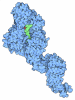
| 添付画像 |
|---|

- ダウンロードとリンク
-EMDBアーカイブ
| マップデータ | emd_63194.map.gz | 86 MB | EMDBマップデータ形式 | |
|---|---|---|---|---|
| ヘッダ (付随情報) | emd-63194-v30.xmlemd-63194.xml | 30.1 KB 30.1 KB | 表示 表示 | EMDBヘッダ |
| 画像 |  emd_63194.png emd_63194.png | 108 KB | ||
| Filedesc metadata | emd-63194.cif.gz | 7.7 KB | ||
| その他 | emd_63194_additional_1.map.gzemd_63194_half_map_1.map.gzemd_63194_half_map_2.map.gz | 85.9 MB 84.4 MB 84.4 MB | ||
| アーカイブディレクトリ |  http://ftp.pdbj.org/pub/emdb/structures/EMD-63194ftp://ftp.pdbj.org/pub/emdb/structures/EMD-63194 http://ftp.pdbj.org/pub/emdb/structures/EMD-63194ftp://ftp.pdbj.org/pub/emdb/structures/EMD-63194 | HTTPS FTP |
-関連構造データ


-リンク
| EMDBのページ | EMDB (EBI/PDBe) / EMDataResource |
|---|---|
| 「今月の分子」の関連する項目 |
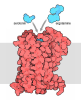
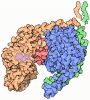
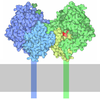
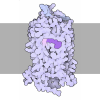
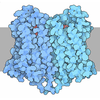
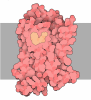
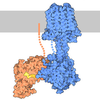
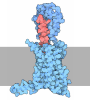

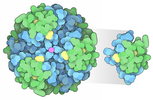
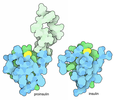
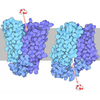
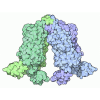
-マップ
| ファイル | ダウンロード / ファイル: emd_63194.map.gz / 形式: CCP4 / 大きさ: 91.1 MB / タイプ: IMAGE STORED AS FLOATING POINT NUMBER (4 BYTES) | ||||||||||||||||||||||||||||||||||||
|---|---|---|---|---|---|---|---|---|---|---|---|---|---|---|---|---|---|---|---|---|---|---|---|---|---|---|---|---|---|---|---|---|---|---|---|---|---|
| 投影像・断面図 | 画像のコントロール
画像は Spider により作成 | ||||||||||||||||||||||||||||||||||||
| ボクセルのサイズ | X=Y=Z: 0.75 Å | ||||||||||||||||||||||||||||||||||||
| 密度 |
| ||||||||||||||||||||||||||||||||||||
| 対称性 | 空間群: 1 | ||||||||||||||||||||||||||||||||||||
| 詳細 | EMDB XML:
|
 Z (Sec.)
 Y (Row.)
 X (Col.)


-添付データ
-追加マップ: #1
| ファイル | emd_63194_additional_1.map | ||||||||||||
|---|---|---|---|---|---|---|---|---|---|---|---|---|---|
| 投影像・断面図 |
| ||||||||||||
| 密度ヒストグラム |


-ハーフマップ: #2
| ファイル | emd_63194_half_map_1.map | ||||||||||||
|---|---|---|---|---|---|---|---|---|---|---|---|---|---|
| 投影像・断面図 |
| ||||||||||||
| 密度ヒストグラム |


-ハーフマップ: #1
| ファイル | emd_63194_half_map_2.map | ||||||||||||
|---|---|---|---|---|---|---|---|---|---|---|---|---|---|
| 投影像・断面図 |
| ||||||||||||
| 密度ヒストグラム |


- 試料の構成要素
-全体 : 5-HT2AR-bound DOI in complex with Gi heterotrimer
| 全体 | 名称: 5-HT2AR-bound DOI in complex with Gi heterotrimer |
|---|---|
| 要素 |
|
-超分子 #1: 5-HT2AR-bound DOI in complex with Gi heterotrimer
| 超分子 | 名称: 5-HT2AR-bound DOI in complex with Gi heterotrimer / タイプ: complex / ID: 1 / 親要素: 0 / 含まれる分子: #1-#4 |
|---|---|
| 由来(天然) | 生物種: Homo sapiens (ヒト) |
-分子 #1: Guanine nucleotide-binding protein G(I)/G(S)/G(T) subunit beta-1
| 分子 | 名称: Guanine nucleotide-binding protein G(I)/G(S)/G(T) subunit beta-1 タイプ: protein_or_peptide / ID: 1 / コピー数: 1 / 光学異性体: LEVO |
|---|---|
| 由来(天然) | 生物種: Homo sapiens (ヒト) |
| 分子量 | 理論値: 37.41693 KDa |
| 組換発現 | 生物種:   Spodoptera frugiperda (ツマジロクサヨトウ) Spodoptera frugiperda (ツマジロクサヨトウ) |
| 配列 | 文字列: MSELDQLRQE AEQLKNQIRD ARKACADATL SQITNNIDPV GRIQMRTRRT LRGHLAKIYA MHWGTDSRLL VSASQDGKLI IWDSYTTNK VHAIPLRSSW VMTCAYAPSG NYVACGGLDN ICSIYNLKTR EGNVRVSREL AGHTGYLSCC RFLDDNQIVT S SGDTTCAL ...文字列: MSELDQLRQE AEQLKNQIRD ARKACADATL SQITNNIDPV GRIQMRTRRT LRGHLAKIYA MHWGTDSRLL VSASQDGKLI IWDSYTTNK VHAIPLRSSW VMTCAYAPSG NYVACGGLDN ICSIYNLKTR EGNVRVSREL AGHTGYLSCC RFLDDNQIVT S SGDTTCAL WDIETGQQTT TFTGHTGDVM SLSLAPDTRL FVSGACDASA KLWDVREGMC RQTFTGHESD INAICFFPNG NA FATGSDD ATCRLFDLRA DQELMTYSHD NIICGITSVS FSKSGRLLLA GYDDFNCNVW DALKADRAGV LAGHDNRVSC LGV TDDGMA VATGSWDSFL KIWN UniProtKB: Guanine nucleotide-binding protein G(I)/G(S)/G(T) subunit beta-1 |
-分子 #2: Guanine nucleotide-binding protein G(I)/G(S)/G(O) subunit gamma-2
| 分子 | 名称: Guanine nucleotide-binding protein G(I)/G(S)/G(O) subunit gamma-2 タイプ: protein_or_peptide / ID: 2 / コピー数: 1 / 光学異性体: LEVO |
|---|---|
| 由来(天然) | 生物種: Homo sapiens (ヒト) |
| 分子量 | 理論値: 7.861143 KDa |
| 組換発現 | 生物種: Spodoptera frugiperda (ツマジロクサヨトウ) |
| 配列 | 文字列: MASNNTASIA QARKLVEQLK MEANIDRIKV SKAAADLMAY CEAHAKEDPL LTPVPASENP FREKKFFCAI L UniProtKB: Guanine nucleotide-binding protein G(I)/G(S)/G(O) subunit gamma-2 |
-分子 #3: Guanine nucleotide-binding protein G(i) subunit alpha-1,Guanine n...
| 分子 | 名称: Guanine nucleotide-binding protein G(i) subunit alpha-1,Guanine nucleotide-binding protein G(s) subunit alpha isoforms short,Guanine nucleotide-binding protein G(q) subunit alpha タイプ: protein_or_peptide / ID: 3 詳細: the aa 1-19 and 61-180 are chimera of Guanine nucleotide-binding protein G(i) subunit alpha-1; the aa 20-60 and 181-346 are chimera of Guanine nucleotide-binding protein G(s) subunit alpha; ...詳細: the aa 1-19 and 61-180 are chimera of Guanine nucleotide-binding protein G(i) subunit alpha-1; the aa 20-60 and 181-346 are chimera of Guanine nucleotide-binding protein G(s) subunit alpha; the aa 347-361 are the C terminal (345-359) of Guanine nucleotide-binding protein G(q) subunit alpha コピー数: 1 / 光学異性体: LEVO EC番号: 加水分解酵素; 酸無水物に作用; GTPに作用・細胞または細胞小器官の運動に関与 |
|---|---|
| 由来(天然) | 生物種: Homo sapiens (ヒト) |
| 分子量 | 理論値: 41.664285 KDa |
| 組換発現 | 生物種: Spodoptera frugiperda (ツマジロクサヨトウ) |
| 配列 | 文字列: MGCTLSAEDK AAVERSKMIE KQLQKDKQVY RRTLRLLLLG ADNSGKSTIV KQMRIYHVNG YSEEECKQYK AVVYSNTIQS IIAIIRAMG RLKIDFGDSA RADDARQLSV LAGAAEEGFM TAELAGVIKR LWKDSGVQAC FNRSREYQLN DSAAYYLNDL D RIAQPNYI ...文字列: MGCTLSAEDK AAVERSKMIE KQLQKDKQVY RRTLRLLLLG ADNSGKSTIV KQMRIYHVNG YSEEECKQYK AVVYSNTIQS IIAIIRAMG RLKIDFGDSA RADDARQLSV LAGAAEEGFM TAELAGVIKR LWKDSGVQAC FNRSREYQLN DSAAYYLNDL D RIAQPNYI PTQQDVLRTR VKTSGIFETK FQVDKVNFHM FDVGAQRDER RKWIQCFNDV TAIIFVVDSS DYNRLQEALN DF KSIWNNR WLRTISVILF LNKQDLLAEK VLAGKSKIED YFPEFARYTT PEDATPEPGE DPRVTRAKYF IRKEFVDIST ASG DGRHIC YPHFTCSVDT ENARRIFNDC KDIILQMNLR EYNLV UniProtKB: Guanine nucleotide-binding protein G(i) subunit alpha-1, Guanine nucleotide-binding protein G(s) subunit alpha isoforms short, Guanine nucleotide-binding protein G(i) subunit alpha-1, ...UniProtKB: Guanine nucleotide-binding protein G(i) subunit alpha-1, Guanine nucleotide-binding protein G(s) subunit alpha isoforms short, Guanine nucleotide-binding protein G(i) subunit alpha-1, Guanine nucleotide-binding protein G(s) subunit alpha isoforms short, Guanine nucleotide-binding protein G(s) subunit alpha isoforms short, Guanine nucleotide-binding protein G(q) subunit alpha |
-分子 #4: 5-hydroxytryptamine receptor 2A
| 分子 | 名称: 5-hydroxytryptamine receptor 2A / タイプ: protein_or_peptide / ID: 4 / コピー数: 1 / 光学異性体: LEVO |
|---|---|
| 由来(天然) | 生物種: Homo sapiens (ヒト) |
| 分子量 | 理論値: 52.648945 KDa |
| 組換発現 | 生物種: Spodoptera frugiperda (ツマジロクサヨトウ) |
| 配列 | 文字列: MDILCEENTS LSSTTNSLMQ LNDDTRLYSN DFNSGEANTS DAFNWTVDSE NRTNLSCEGC LSPSCLSLLH LQEKNWSALL TAVVIILTI AGNILVIMAV SLEKKLQNAT NYFLMSLAIA DMLLGFLVMP VSMLTILYGY RWPLPSKLCA VWIYLDVLFS T ASIMHLCA ...文字列: MDILCEENTS LSSTTNSLMQ LNDDTRLYSN DFNSGEANTS DAFNWTVDSE NRTNLSCEGC LSPSCLSLLH LQEKNWSALL TAVVIILTI AGNILVIMAV SLEKKLQNAT NYFLMSLAIA DMLLGFLVMP VSMLTILYGY RWPLPSKLCA VWIYLDVLFS T ASIMHLCA ISLDRYVAIQ NPIHHSRFNS RTKAFLKIIA VWTISVGISM PIPVFGLQDD SKVFKEGSCL LADDNFVLIG SF VSFFIPL TIMVITYFLT IKSLQKEATL CVSDLGTRAK LASFSFLPQS SLSSEKLFQR SIHREPGSYT GRRTMQSISN EQK ACKVLG IVFFLFVVMW CPFFITNIMA VICKESCNED VIGALLNVFV WIGYLSSAVN PLVYTLFNKT YRSAFSRYIQ CQYK ENKKP LQLILVNTIP ALAYKSSQLQ MGQKKNSKQD AKTTDNDCSM VALGKQHSEE ASKDNSDGVN EKVSCV UniProtKB: 5-hydroxytryptamine receptor 2A |
-分子 #5: (2~{R})-1-(4-iodanyl-2,5-dimethoxy-phenyl)propan-2-amine
| 分子 | 名称: (2~{R})-1-(4-iodanyl-2,5-dimethoxy-phenyl)propan-2-amine タイプ: ligand / ID: 5 / コピー数: 1 / 式: A1EK5 |
|---|---|
| 分子量 | 理論値: 321.155 Da |
-分子 #6: CHOLESTEROL
| 分子 | 名称: CHOLESTEROL / タイプ: ligand / ID: 6 / コピー数: 1 / 式: CLR |
|---|---|
| 分子量 | 理論値: 386.654 Da |
| Chemical component information | 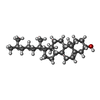 ChemComp-CLR: |
-分子 #7: water
| 分子 | 名称: water / タイプ: ligand / ID: 7 / コピー数: 13 / 式: HOH |
|---|---|
| 分子量 | 理論値: 18.015 Da |
| Chemical component information |  ChemComp-HOH: |
-実験情報
-構造解析
| 手法 | クライオ電子顕微鏡法 |
|---|---|
 解析 解析 | 単粒子再構成法 |
| 試料の集合状態 | particle |
-試料調製
| 緩衝液 | pH: 7.5 |
|---|---|
| 凍結 | 凍結剤: ETHANE |
- 電子顕微鏡法
| 顕微鏡 | TFS KRIOS |
|---|---|
| 撮影 | フィルム・検出器のモデル: TFS FALCON 4i (4k x 4k) 平均電子線量: 50.0 e/Å2 |
| 電子線 | 加速電圧: 300 kV / 電子線源:  FIELD EMISSION GUN FIELD EMISSION GUN |
| 電子光学系 | 照射モード: FLOOD BEAM / 撮影モード: BRIGHT FIELD / 最大 デフォーカス(公称値): 1.2 µm / 最小 デフォーカス(公称値): 0.6 µm |
| 実験機器 |  モデル: Titan Krios / 画像提供: FEI Company |
