[English] 日本語
Yorodumi
- EMDB-63025: AMO complex -

+
Open data


ID or keywords:

Loading...

-
Basic information

Entry
Database: EMDB / ID: EMD-63025
TitleAMO complex
Map dataAMO map
Sample
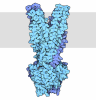
  • Complex: Bacterial AMO complex
    • Protein or peptide: x 5 types
  • Ligand: x 8 types
KeywordsAMO complex / MEMBRANE PROTEIN
Function / homology
Function and homology information


monooxygenase activity / membrane
Similarity search - Function
Ammonia monooxygenase/particulate methane monooxygenase, subunit C / Ammonia monooxygenase/particulate methane monooxygenase, subunit C domain superfamily / Ammonia monooxygenase/methane monooxygenase, subunit C / Ammonia monooxygenase/particulate methane monooxygenase, subunit A / Ammonia/methane monooxygenase, subunit B, hairpin domain superfamily / Ammonia/methane monooxygenase, subunit B, C-terminal / Ammonia/particulate methane monooxygenase, subunit A superfamily / Ammonia monooxygenase / Ammonia monooxygenase/particulate methane monooxygenase, subunit B / Ammonia/methane monooxygenase, subunitB, N-terminal ...Ammonia monooxygenase/particulate methane monooxygenase, subunit C / Ammonia monooxygenase/particulate methane monooxygenase, subunit C domain superfamily / Ammonia monooxygenase/methane monooxygenase, subunit C / Ammonia monooxygenase/particulate methane monooxygenase, subunit A / Ammonia/methane monooxygenase, subunit B, hairpin domain superfamily / Ammonia/methane monooxygenase, subunit B, C-terminal / Ammonia/particulate methane monooxygenase, subunit A superfamily / Ammonia monooxygenase / Ammonia monooxygenase/particulate methane monooxygenase, subunit B / Ammonia/methane monooxygenase, subunitB, N-terminal / Monooxygenase subunit B protein / Prokaryotic membrane lipoprotein lipid attachment site profile.
Similarity search - Domain/homology
Lipoprotein / Uncharacterized protein / Ammonia monooxygenase subunit C / Ammonia monooxygenase subunit A / Ammonia monooxygenase subunit B
Similarity search - Component
Biological speciesNitrosomonas halophila (bacteria)
Methodsingle particle reconstruction / cryo EM / Resolution: 2.36 Å
AuthorsLi ZQ / Yang XY
Funding support China, 2 items
OrganizationGrant numberCountry
National Natural Science Foundation of China (NSFC)32301015 China
National Natural Science Foundation of China (NSFC)42476110 China
CitationJournal: Nat Commun / Year: 2025
Title: Structural insights into the catalytic mechanism of ammonia monooxygenase.
Authors: Xiaoyun Yang / Zongqiang Li / Tie-Qiang Mao / Chaofu Ma / Guo-Hao Chen / Hong-Po Dong / Sen-Fang Sui /
Abstract: Ammonia monooxygenase (AMO) oxidizes ammonia to hydroxylamine. Limited knowledge of the structural information of AMO hinders our understanding of the molecular mechanism underlying ammonia ...Ammonia monooxygenase (AMO) oxidizes ammonia to hydroxylamine. Limited knowledge of the structural information of AMO hinders our understanding of the molecular mechanism underlying ammonia oxidation, impacting the mitigation of greenhouse gas emissions and enhancing agricultural productivity using ammonium as a nitrogen source. Herein, we report the cryo-electron microscopy structure of the AMO complex from an isolated strain of ammonia-oxidizing bacteria (AOB). AMO is a cylinder-shaped homotrimeric assembly composed of five subunits. A single-transmembrane protein and a soluble protein are potentially crucial in signal transduction during ammonia oxidation and mediating interactions with the outer membrane protein assembly machinery. Three modeled coppers, along with an adjacent water-mediated hydrogen-bond network, may facilitate an efficient proton transfer pathway from the periplasmic Cu to the active site Cu within the inner membrane, where Cu and Cu will act in concert to catalyze substrate reaction. The distinctive surface charge characteristics of AMO provide valuable insights into the structural features that govern ammonium assimilation and material transport during ammonia oxidation. These findings shed light on the molecular complexities of AMO and provides a structural foundation for elucidating the catalytic mechanism of ammonia oxidation.
History
DepositionJan 7, 2025-
Header (metadata) releaseFeb 4, 2026-
Map releaseFeb 4, 2026-
UpdateFeb 4, 2026-
Current statusFeb 4, 2026Processing site: PDBc / Status: Released

-
Structure visualization

Supplemental images

Downloads & links

-
Map

FileDownload / File: emd_63025.map.gz / Format: CCP4 / Size: 343 MB / Type: IMAGE STORED AS FLOATING POINT NUMBER (4 BYTES)
AnnotationAMO map
Projections & slices

Image control

Size
Brightness
Contrast
Others
AxesZ (Sec.)Y (Row.)X (Col.)
0.67 Å/pix.
x 448 pix.
= 299.264 Å
0.67 Å/pix.
x 448 pix.
= 299.264 Å
0.67 Å/pix.
x 448 pix.
= 299.264 Å

Surface

Projections

Slices (1/3)

Slices (1/2)

Slices (2/3)

Images are generated by Spider.

Voxel sizeX=Y=Z: 0.668 Å
Density
Contour LevelBy AUTHOR: 0.2
Minimum - Maximum-1.135346 - 2.168181
Average (Standard dev.)0.0013231882 (±0.059064448)
SymmetrySpace group: 1
Details

EMDB XML:

Map geometry
Axis orderXYZ
Origin000
Dimensions448448448
Spacing448448448
CellA=B=C: 299.26398 Å
α=β=γ: 90.0 °

-
Supplemental data

-
Half map: Half A

Fileemd_63025_half_map_1.map
AnnotationHalf A
Projections & Slices
AxesZYX

Projections

Slices (1/2)
Density Histograms

-
Half map: Half B

Fileemd_63025_half_map_2.map
AnnotationHalf B
Projections & Slices
AxesZYX

Projections

Slices (1/2)
Density Histograms

-
Sample components

+
Entire : Bacterial AMO complex

EntireName: Bacterial AMO complex
Components
  • Complex: Bacterial AMO complex
    • Protein or peptide: Ammonia monooxygenase subunit A
    • Protein or peptide: Ammonia monooxygenase subunit B
    • Protein or peptide: Ammonia monooxygenase subunit C
    • Protein or peptide: Lipoprotein
    • Protein or peptide: AmoD
  • Ligand: (2~{R})-2-azanyl-3-[[(2~{R})-2-hexadecanoyloxy-3-pentadecanoyloxy-propoxy]-oxidanyl-phosphoryl]oxy-propanoic acid
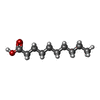
  • Ligand: DECANOIC ACID
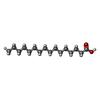
  • Ligand: PALMITIC ACID
  • Ligand: (2S)-2,3-dihydroxypropyl hexadecanoate
  • Ligand: COPPER (II) ION
  • Ligand: [(2~{S})-2-hexadecanoyloxy-3-[methoxy(oxidanyl)phosphoryl]oxy-propyl] hexadecanoate
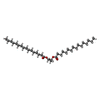
  • Ligand: (2R)-3-HYDROXYPROPANE-1,2-DIYL DIHEXADECANOATE
  • Ligand: water

+
Supramolecule #1: Bacterial AMO complex

SupramoleculeName: Bacterial AMO complex / type: complex / ID: 1 / Parent: 0 / Macromolecule list: #1-#5
Source (natural)Organism: Nitrosomonas halophila (bacteria)

+
Macromolecule #1: Ammonia monooxygenase subunit A

MacromoleculeName: Ammonia monooxygenase subunit A / type: protein_or_peptide / ID: 1 / Number of copies: 3 / Enantiomer: LEVO
Source (natural)Organism: Nitrosomonas halophila (bacteria)
Molecular weightTheoretical: 31.736248 KDa
Recombinant expressionOrganism: Nitrosomonas halophila (bacteria)
SequenceString: MFRTEEILKA AKMPPEAIHM SRMIDAVYFP ILIVLLVGTY HMHFMLLAGD WDFWLDWKDR QWWPVVTPIV GITYCAAIMY YLWVNYRQP FGATLCVISL LIGEWLTRYW GFYWWSHYPI NFVTPGIMLP GALMLDFTLY LTRNWLITAL VGGGFFGLLF Y PGNWAIFG ...String:
MFRTEEILKA AKMPPEAIHM SRMIDAVYFP ILIVLLVGTY HMHFMLLAGD WDFWLDWKDR QWWPVVTPIV GITYCAAIMY YLWVNYRQP FGATLCVISL LIGEWLTRYW GFYWWSHYPI NFVTPGIMLP GALMLDFTLY LTRNWLITAL VGGGFFGLLF Y PGNWAIFG PTHLPIVVEG TLLSMADYMG HLYIRTGTPE YTRLIEQGSL RTFGGHTTVI AAFFAAFVSM LMFTVWWYLG KV FCTAFFY VKGKRGRIVH REDVTAFGEE GFAEGIK

UniProtKB: Ammonia monooxygenase subunit A

+
Macromolecule #2: Ammonia monooxygenase subunit B

MacromoleculeName: Ammonia monooxygenase subunit B / type: protein_or_peptide / ID: 2 / Number of copies: 3 / Enantiomer: LEVO
Source (natural)Organism: Nitrosomonas halophila (bacteria)
Molecular weightTheoretical: 46.935816 KDa
Recombinant expressionOrganism: Nitrosomonas halophila (bacteria)
SequenceString: MDIKNLYKRS VMGLYGVAYA AAALAMTVTL DVSTVAAHGE RSQEPFLRMR TVQWYDLKWG PEVTKVNEHA KITGKFHLAE DWPRAAARP DRAFFNVGSP SPVFVRLSTK INGHPWFISG PLQIGRDYEF ETNLRARIPG RHHMHAMLNV KDAGPIAGPG A WMNITGSW ...String:
MDIKNLYKRS VMGLYGVAYA AAALAMTVTL DVSTVAAHGE RSQEPFLRMR TVQWYDLKWG PEVTKVNEHA KITGKFHLAE DWPRAAARP DRAFFNVGSP SPVFVRLSTK INGHPWFISG PLQIGRDYEF ETNLRARIPG RHHMHAMLNV KDAGPIAGPG A WMNITGSW DDFTNPLKLL TGETIDSETF NLSNALFWHI LWFSIGVFWI GIFVARPMFL PRSRVLLAYG DDLLLDPMDK KI TMVMAIL TLALVWGGYR YTENKHPYTV PIQAGESKVA PLPVAPNPVA IRVTYANYDV PGRALRVTME VTNNGDAPVN FGE FTTAGI RFVNSVGRKH LDPSYPRELV AVGLTFDDES AIQPGETKEV KMEAKDALWE IQRLMALLGD PESRFGGLLM SWDE EGNRH INSIAGAVIP VFTKL

UniProtKB: Ammonia monooxygenase subunit B

+
Macromolecule #3: Ammonia monooxygenase subunit C

MacromoleculeName: Ammonia monooxygenase subunit C / type: protein_or_peptide / ID: 3 / Number of copies: 3 / Enantiomer: LEVO
Source (natural)Organism: Nitrosomonas halophila (bacteria)
Molecular weightTheoretical: 31.698678 KDa
Recombinant expressionOrganism: Nitrosomonas halophila (bacteria)
SequenceString: MATTMGTSSA SSTSERGYDM SLWYDSKWYK FGMTTMLLVA IFWVWYQRTF AYSHGMDSME PEFDRIWMGL WRVHMTIMPL FALITWGWI WKTRDTKEQL DNLDPKLEIK RYFYWLMWIG VYIFGVYWGG SFFTEQDASW HQVIIRDTSF TPSHVVVFYG S FPMYIVCG ...String:
MATTMGTSSA SSTSERGYDM SLWYDSKWYK FGMTTMLLVA IFWVWYQRTF AYSHGMDSME PEFDRIWMGL WRVHMTIMPL FALITWGWI WKTRDTKEQL DNLDPKLEIK RYFYWLMWIG VYIFGVYWGG SFFTEQDASW HQVIIRDTSF TPSHVVVFYG S FPMYIVCG IAAYLYAMTR LPLYSRGISF PLVMAIAGPL MILPNVGLNE WGHAFWFMEE LFSAPLHWGF VILGWAGLFQ GG IAAQIVT RYSNLTDVIW NNQSKEILNN RIVA

UniProtKB: Ammonia monooxygenase subunit C

+
Macromolecule #4: Lipoprotein

MacromoleculeName: Lipoprotein / type: protein_or_peptide / ID: 4 / Number of copies: 3 / Enantiomer: LEVO
Source (natural)Organism: Nitrosomonas halophila (bacteria)
Molecular weightTheoretical: 7.051081 KDa
Recombinant expressionOrganism: Nitrosomonas halophila (bacteria)
SequenceString:
MKVVYAIAIV TAVLFLSACG RPSQALPETE KEAYEKIVAG EKLDCPHGLD GNGKCLKEGD SGIPDGH

UniProtKB: Lipoprotein

+
Macromolecule #5: AmoD

MacromoleculeName: AmoD / type: protein_or_peptide / ID: 5 / Number of copies: 3 / Enantiomer: LEVO
Source (natural)Organism: Nitrosomonas halophila (bacteria)
Molecular weightTheoretical: 5.046772 KDa
Recombinant expressionOrganism: Nitrosomonas halophila (bacteria)
SequenceString:
MGYDEETTRR EEAKEKEAWK VAIGATVAFI VIGFLIWSTG MGGKY

UniProtKB: Uncharacterized protein

+
Macromolecule #6: (2~{R})-2-azanyl-3-[[(2~{R})-2-hexadecanoyloxy-3-pentadecanoyloxy...

MacromoleculeName: (2~{R})-2-azanyl-3-[[(2~{R})-2-hexadecanoyloxy-3-pentadecanoyloxy-propoxy]-oxidanyl-phosphoryl]oxy-propanoic acid
type: ligand / ID: 6 / Number of copies: 6 / Formula: A1EZJ
Molecular weightTheoretical: 721.942 Da

+
Macromolecule #7: DECANOIC ACID

MacromoleculeName: DECANOIC ACID / type: ligand / ID: 7 / Number of copies: 51 / Formula: DKA
Molecular weightTheoretical: 172.265 Da
Chemical component information

ChemComp-DKA:
DECANOIC ACID

+
Macromolecule #8: PALMITIC ACID

MacromoleculeName: PALMITIC ACID / type: ligand / ID: 8 / Number of copies: 9 / Formula: PLM
Molecular weightTheoretical: 256.424 Da
Chemical component information

ChemComp-PLM:
PALMITIC ACID

+
Macromolecule #9: (2S)-2,3-dihydroxypropyl hexadecanoate

MacromoleculeName: (2S)-2,3-dihydroxypropyl hexadecanoate / type: ligand / ID: 9 / Number of copies: 6 / Formula: ZP7
Molecular weightTheoretical: 330.503 Da
Chemical component information

ChemComp-ZP7:
(2S)-2,3-dihydroxypropyl hexadecanoate

+
Macromolecule #10: COPPER (II) ION

MacromoleculeName: COPPER (II) ION / type: ligand / ID: 10 / Number of copies: 9 / Formula: CU
Molecular weightTheoretical: 63.546 Da
Chemical component information

ChemComp-CU:
COPPER (II) ION

+
Macromolecule #11: [(2~{S})-2-hexadecanoyloxy-3-[methoxy(oxidanyl)phosphoryl]oxy-pro...

MacromoleculeName: [(2~{S})-2-hexadecanoyloxy-3-[methoxy(oxidanyl)phosphoryl]oxy-propyl] hexadecanoate
type: ligand / ID: 11 / Number of copies: 9 / Formula: A1EZI
Molecular weightTheoretical: 662.918 Da

+
Macromolecule #12: (2R)-3-HYDROXYPROPANE-1,2-DIYL DIHEXADECANOATE

MacromoleculeName: (2R)-3-HYDROXYPROPANE-1,2-DIYL DIHEXADECANOATE / type: ligand / ID: 12 / Number of copies: 3 / Formula: 4AG
Molecular weightTheoretical: 568.911 Da
Chemical component information

ChemComp-4AG:
(2R)-3-HYDROXYPROPANE-1,2-DIYL DIHEXADECANOATE

+
Macromolecule #13: water

MacromoleculeName: water / type: ligand / ID: 13 / Number of copies: 549 / Formula: HOH
Molecular weightTheoretical: 18.015 Da
Chemical component information

ChemComp-HOH:
WATER

-
Experimental details

-
Structure determination

Methodcryo EM
Processingsingle particle reconstruction
Aggregation stateparticle

-
Sample preparation

BufferpH: 7.4
VitrificationCryogen name: ETHANE

-
Electron microscopy

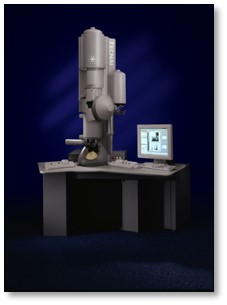
MicroscopeFEI TECNAI F30
Image recordingFilm or detector model: GATAN K3 BIOQUANTUM (6k x 4k) / Average electron dose: 50.0 e/Å2
Electron beamAcceleration voltage: 300 kV / Electron source: FIELD EMISSION GUN
Electron opticsIllumination mode: OTHER / Imaging mode: BRIGHT FIELD / Nominal defocus max: 2.0 µm / Nominal defocus min: 1.5 µm
Experimental equipment
Model: Tecnai F30 / Image courtesy: FEI Company

+
Image processing

CTF correctionType: PHASE FLIPPING AND AMPLITUDE CORRECTION
Startup modelType of model: NONE
Final reconstructionResolution.type: BY AUTHOR / Resolution: 2.36 Å / Resolution method: FSC 0.143 CUT-OFF / Software - Name: cryoSPARC / Number images used: 94482
Initial angle assignmentType: MAXIMUM LIKELIHOOD
Final angle assignmentType: PROJECTION MATCHING

+
About Yorodumi

-
News

-
Feb 9, 2022. New format data for meta-information of EMDB entries

New format data for meta-information of EMDB entries

  • Version 3 of the EMDB header file is now the official format.
  • The previous official version 1.9 will be removed from the archive.

Related info.:EMDB header

External links:wwPDB to switch to version 3 of the EMDB data model

-
Aug 12, 2020. Covid-19 info

Covid-19 info

URL: https://pdbj.org/emnavi/covid19.php

New page: Covid-19 featured information page in EM Navigator.

Related info.:Covid-19 info / Mar 5, 2020. Novel coronavirus structure data

+
Mar 5, 2020. Novel coronavirus structure data

Novel coronavirus structure data

Related info.:Yorodumi Speices / Aug 12, 2020. Covid-19 info

External links:COVID-19 featured content - PDBj / Molecule of the Month (242):Coronavirus Proteases

+
Jan 31, 2019. EMDB accession codes are about to change! (news from PDBe EMDB page)

EMDB accession codes are about to change! (news from PDBe EMDB page)

  • The allocation of 4 digits for EMDB accession codes will soon come to an end. Whilst these codes will remain in use, new EMDB accession codes will include an additional digit and will expand incrementally as the available range of codes is exhausted. The current 4-digit format prefixed with “EMD-” (i.e. EMD-XXXX) will advance to a 5-digit format (i.e. EMD-XXXXX), and so on. It is currently estimated that the 4-digit codes will be depleted around Spring 2019, at which point the 5-digit format will come into force.
  • The EM Navigator/Yorodumi systems omit the EMD- prefix.

Related info.:Q: What is EMD? / ID/Accession-code notation in Yorodumi/EM Navigator

External links:EMDB Accession Codes are Changing Soon! / Contact to PDBj

+
Jul 12, 2017. Major update of PDB

Major update of PDB

  • wwPDB released updated PDB data conforming to the new PDBx/mmCIF dictionary.
  • This is a major update changing the version number from 4 to 5, and with Remediation, in which all the entries are updated.
  • In this update, many items about electron microscopy experimental information are reorganized (e.g. em_software).
  • Now, EM Navigator and Yorodumi are based on the updated data.

External links:wwPDB Remediation / Enriched Model Files Conforming to OneDep Data Standards Now Available in the PDB FTP Archive

-
Yorodumi

Thousand views of thousand structures

  • Yorodumi is a browser for structure data from EMDB, PDB, SASBDB, etc.
  • This page is also the successor to EM Navigator detail page, and also detail information page/front-end page for Omokage search.
  • The word "yorodu" (or yorozu) is an old Japanese word meaning "ten thousand". "mi" (miru) is to see.

Related info.:EMDB / PDB / SASBDB / Comparison of 3 databanks / Yorodumi Search / Aug 31, 2016. New EM Navigator & Yorodumi / Yorodumi Papers / Jmol/JSmol / Function and homology information / Changes in new EM Navigator and Yorodumi

Read more