 Movie
Movie Controller


+ Open data

- Basic information
| Entry |  | |||||||||
|---|---|---|---|---|---|---|---|---|---|---|
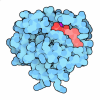
| Title | A Cryo_EM structure of CCR7 complex with CCL21 | |||||||||
 Map data Map data | ||||||||||
 Sample Sample |
| |||||||||
 Keywords Keywords | GPCR / CCR7 / CCL19 / MEMBRANE PROTEIN/IMMUNE SYSTEM / MEMBRANE PROTEIN-IMMUNE SYSTEM complex | |||||||||
| Function / homology |  Function and homology information Function and homology informationmesangial cell-matrix adhesion / dendritic cell dendrite assembly / negative regulation of dendritic cell dendrite assembly / positive regulation of hypersensitivity / chemokine (C-C motif) ligand 19 binding / chemokine (C-C motif) ligand 21 binding / C-C motif chemokine 19 receptor activity / C-C motif chemokine 21 receptor activity / : / regulation of dendritic cell dendrite assembly ...mesangial cell-matrix adhesion / dendritic cell dendrite assembly / negative regulation of dendritic cell dendrite assembly / positive regulation of hypersensitivity / chemokine (C-C motif) ligand 19 binding / chemokine (C-C motif) ligand 21 binding / C-C motif chemokine 19 receptor activity / C-C motif chemokine 21 receptor activity / : / regulation of dendritic cell dendrite assembly / myeloid dendritic cell chemotaxis / CCL19-activated CCR7 signaling pathway / CCL21-activated CCR7 signaling pathway / CCR7 chemokine receptor binding / positive regulation of immunological synapse formation / positive regulation of T cell costimulation / positive regulation of humoral immune response / lymphocyte migration into lymph node / chemokine (C-C motif) ligand 21 signaling pathway / mature conventional dendritic cell differentiation / positive regulation of dendritic cell antigen processing and presentation / positive regulation of myeloid dendritic cell chemotaxis / negative regulation of leukocyte tethering or rolling / establishment of T cell polarity / positive regulation of dendritic cell chemotaxis / regulation of interleukin-1 beta production / chemokine receptor binding / positive regulation of phospholipase C/protein kinase C signal transduction / immunological synapse formation / CCR chemokine receptor binding / positive regulation of T cell chemotaxis / regulation of type II interferon production / positive regulation of glycoprotein biosynthetic process / positive regulation of pseudopodium assembly / negative regulation of interleukin-12 production / negative thymic T cell selection / negative regulation of dendritic cell apoptotic process / positive regulation of chemotaxis / ruffle organization / cellular response to chemokine / C-C chemokine receptor activity / eosinophil chemotaxis / positive regulation of T cell receptor signaling pathway / positive regulation of cell adhesion mediated by integrin / regulation of Cdc42 protein signal transduction / chemokine activity / positive regulation of neutrophil chemotaxis / positive regulation of filopodium assembly / Chemokine receptors bind chemokines / dendritic cell chemotaxis / positive regulation of cell motility / response to nitric oxide / positive regulation of cell-matrix adhesion / cellular response to cytokine stimulus / positive regulation of actin filament polymerization / homeostasis of number of cells / positive regulation of T cell migration / positive regulation of Rac protein signal transduction / T cell costimulation / adenylate cyclase inhibitor activity / positive regulation of protein localization to cell cortex / T cell migration / positive regulation of relaxation of smooth muscle / Adenylate cyclase inhibitory pathway / cell maturation / release of sequestered calcium ion into cytosol / positive regulation of interleukin-12 production / D2 dopamine receptor binding / adenylate cyclase-inhibiting serotonin receptor signaling pathway / G protein-coupled serotonin receptor binding / positive regulation of cell adhesion / cellular response to forskolin / regulation of mitotic spindle organization / chemokine-mediated signaling pathway / cell chemotaxis / Regulation of insulin secretion / neuropeptide signaling pathway / response to prostaglandin E / calcium-mediated signaling / positive regulation of cholesterol biosynthetic process / negative regulation of insulin secretion / G protein-coupled receptor binding / positive regulation of receptor-mediated endocytosis / positive regulation of JNK cascade / response to peptide hormone / G protein-coupled receptor activity / adenylate cyclase-modulating G protein-coupled receptor signaling pathway / G-protein beta/gamma-subunit complex binding / centriolar satellite / adenylate cyclase-inhibiting G protein-coupled receptor signaling pathway / Olfactory Signaling Pathway / Activation of the phototransduction cascade / G protein-coupled acetylcholine receptor signaling pathway / G beta:gamma signalling through PLC beta / Presynaptic function of Kainate receptors / Thromboxane signalling through TP receptor / Activation of G protein gated Potassium channels / Inhibition of voltage gated Ca2+ channels via Gbeta/gamma subunits / G-protein activation / Glucagon signaling in metabolic regulation Similarity search - Function | |||||||||
| Biological species |  Homo sapiens (human) Homo sapiens (human) | |||||||||
| Method | single particle reconstruction / cryo EM / Resolution: 3.3 Å | |||||||||
 Authors Authors | Yuan Q / Duan J / Cao Y | |||||||||
| Funding support |  China, 1 items China, 1 items
| |||||||||
 Citation Citation | Journal: To Be Published Title: A Cryo_EM structure of CCR7 complex with CCL21 Authors: Yuan Q / Duan J / Cao Y | |||||||||
| History |
|
- Structure visualization
| Supplemental images |
|---|

- Downloads & links
-EMDB archive
| Map data | emd_62469.map.gz | 60.1 MB | EMDB map data format | |
|---|---|---|---|---|
| Header (meta data) | emd-62469-v30.xmlemd-62469.xml | 20.7 KB 20.7 KB | Display Display | EMDB header |
| Images |  emd_62469.png emd_62469.png | 86.1 KB | ||
| Filedesc metadata | emd-62469.cif.gz | 6.4 KB | ||
| Others | emd_62469_half_map_1.map.gzemd_62469_half_map_2.map.gz | 49.5 MB 49.5 MB | ||
| Archive directory |  http://ftp.pdbj.org/pub/emdb/structures/EMD-62469ftp://ftp.pdbj.org/pub/emdb/structures/EMD-62469 http://ftp.pdbj.org/pub/emdb/structures/EMD-62469ftp://ftp.pdbj.org/pub/emdb/structures/EMD-62469 | HTTPS FTP |
-Related structure data
| Related structure data |  9ko4MC M: atomic model generated by this map C: citing same article ( |
|---|---|
| Similar structure data |
-Links
| EMDB pages | EMDB (EBI/PDBe) / EMDataResource |
|---|---|
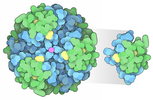
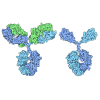
| Related items in Molecule of the Month |

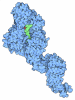
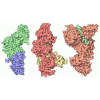
-Map
| File | Download / File: emd_62469.map.gz / Format: CCP4 / Size: 64 MB / Type: IMAGE STORED AS FLOATING POINT NUMBER (4 BYTES) | ||||||||||||||||||||||||||||||||||||
|---|---|---|---|---|---|---|---|---|---|---|---|---|---|---|---|---|---|---|---|---|---|---|---|---|---|---|---|---|---|---|---|---|---|---|---|---|---|
| Projections & slices | Image control
Images are generated by Spider. | ||||||||||||||||||||||||||||||||||||
| Voxel size | X=Y=Z: 1.04 Å | ||||||||||||||||||||||||||||||||||||
| Density |
| ||||||||||||||||||||||||||||||||||||
| Symmetry | Space group: 1 | ||||||||||||||||||||||||||||||||||||
| Details | EMDB XML:
|
 Z (Sec.)
 Y (Row.)
 X (Col.)


-Supplemental data
-Half map: #2
| File | emd_62469_half_map_1.map | ||||||||||||
|---|---|---|---|---|---|---|---|---|---|---|---|---|---|
| Projections & Slices |
| ||||||||||||
| Density Histograms |


-Half map: #1
| File | emd_62469_half_map_2.map | ||||||||||||
|---|---|---|---|---|---|---|---|---|---|---|---|---|---|
| Projections & Slices |
| ||||||||||||
| Density Histograms |


- Sample components
-Entire : A Cryo_EM structure of CCR7 complex with CCL21
| Entire | Name: A Cryo_EM structure of CCR7 complex with CCL21 |
|---|---|
| Components |
|
-Supramolecule #1: A Cryo_EM structure of CCR7 complex with CCL21
| Supramolecule | Name: A Cryo_EM structure of CCR7 complex with CCL21 / type: complex / ID: 1 / Parent: 0 / Macromolecule list: #3-#6, #1-#2 |
|---|---|
| Source (natural) | Organism: Homo sapiens (human) |
-Macromolecule #1: C-C motif chemokine 21
| Macromolecule | Name: C-C motif chemokine 21 / type: protein_or_peptide / ID: 1 / Number of copies: 1 / Enantiomer: LEVO |
|---|---|
| Source (natural) | Organism: Homo sapiens (human) |
| Molecular weight | Theoretical: 8.807232 KDa |
| Recombinant expression | Organism:  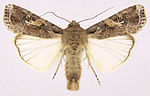 Spodoptera frugiperda (fall armyworm) Spodoptera frugiperda (fall armyworm) |
| Sequence | String: SDGGAQDCCL KYSQRKIPAK VVRSYRKQEP SLGCSIPAIL FLPRKRSQAE LCADPKELWV QQLMQHLDKT PSPQKPAQ UniProtKB: C-C motif chemokine 21 |
-Macromolecule #2: C-C chemokine receptor type 7
| Macromolecule | Name: C-C chemokine receptor type 7 / type: protein_or_peptide / ID: 2 / Number of copies: 1 / Enantiomer: LEVO |
|---|---|
| Source (natural) | Organism: Homo sapiens (human) |
| Molecular weight | Theoretical: 39.243426 KDa |
| Recombinant expression | Organism: Spodoptera frugiperda (fall armyworm) |
| Sequence | String: QDEVTDDYIG DNTTVDYTLF ESLCSKKDVR NFKAWFLPIM YSIICFVGLL GNGLVVLTYI YFKRLKTMTD TYLLNLAVAD ILFLLTLPF WAYSAAKSWV FGVHFCKLIF AIYKMSFFSG MLLLLCISID RYVAIVQAVS AHRHRARVLL ISKLSCVGIW I LATVLSIP ...String: QDEVTDDYIG DNTTVDYTLF ESLCSKKDVR NFKAWFLPIM YSIICFVGLL GNGLVVLTYI YFKRLKTMTD TYLLNLAVAD ILFLLTLPF WAYSAAKSWV FGVHFCKLIF AIYKMSFFSG MLLLLCISID RYVAIVQAVS AHRHRARVLL ISKLSCVGIW I LATVLSIP ELLYSDLQRS SSEQAMRCSL ITEHVEAFIT IQVAQMVIGF LVPLLAMSFC YLVIIRTLLQ ARNFERNKAI KV IIAVVVV FIVFQLPYNG VVLAQTVANF NITSSTCELS KQLNIAYDVT YSLACVRCCV NPFLYAFIGV KFRNDLFKLF KDL GCLSQE QLRQWSSCRH IRRSSMSV UniProtKB: C-C chemokine receptor type 7 |
-Macromolecule #3: Guanine nucleotide-binding protein G(i) subunit alpha-1
| Macromolecule | Name: Guanine nucleotide-binding protein G(i) subunit alpha-1 type: protein_or_peptide / ID: 3 / Number of copies: 1 / Enantiomer: LEVO EC number: Hydrolases; Acting on acid anhydrides; Acting on GTP to facilitate cellular and subcellular movement |
|---|---|
| Source (natural) | Organism: Homo sapiens (human) |
| Molecular weight | Theoretical: 40.459086 KDa |
| Recombinant expression | Organism: Spodoptera frugiperda (fall armyworm) |
| Sequence | String: MGCTLSAEDK AAVERSKMID RNLREDGEKA AREVKLLLLG AGESGKSTIV KQMKIIHEAG YSEEECKQYK AVVYSNTIQS IIAIIRAMG RLKIDFGDSA RADDARQLFV LAGAAEEGFM TAELAGVIKR LWKDSGVQAC FNRSREYQLN DSAAYYLNDL D RIAQPNYI ...String: MGCTLSAEDK AAVERSKMID RNLREDGEKA AREVKLLLLG AGESGKSTIV KQMKIIHEAG YSEEECKQYK AVVYSNTIQS IIAIIRAMG RLKIDFGDSA RADDARQLFV LAGAAEEGFM TAELAGVIKR LWKDSGVQAC FNRSREYQLN DSAAYYLNDL D RIAQPNYI PTQQDVLRTR VKTTGIVETH FTFKDLHFKM FDVGAQRSER KKWIHCFEGV TAIIFCVALS DYDLVLAEDE EM NRMHESM KLFDSICNNK WFTDTSIILF LNKKDLFEEK IKKSPLTICY PEYAGSNTYE EAAAYIQCQF EDLNKRKDTK EIY THFTCS TETKNVQFVF DAVTDVIIKN NLKDCGLF UniProtKB: Guanine nucleotide-binding protein G(i) subunit alpha-1 |
-Macromolecule #4: Guanine nucleotide-binding protein G(I)/G(S)/G(T) subunit beta-1
| Macromolecule | Name: Guanine nucleotide-binding protein G(I)/G(S)/G(T) subunit beta-1 type: protein_or_peptide / ID: 4 / Number of copies: 1 / Enantiomer: LEVO |
|---|---|
| Source (natural) | Organism: Homo sapiens (human) |
| Molecular weight | Theoretical: 40.095797 KDa |
| Recombinant expression | Organism: Spodoptera frugiperda (fall armyworm) |
| Sequence | String: GSLLQSELDQ LRQEAEQLKN QIRDARKACA DATLSQITNN IDPVGRIQMR TRRTLRGHLA KIYAMHWGTD SRLLVSASQD GKLIIWDSY TTNKVHAIPL RSSWVMTCAY APSGNYVACG GLDNICSIYN LKTREGNVRV SRELAGHTGY LSCCRFLDDN Q IVTSSGDT ...String: GSLLQSELDQ LRQEAEQLKN QIRDARKACA DATLSQITNN IDPVGRIQMR TRRTLRGHLA KIYAMHWGTD SRLLVSASQD GKLIIWDSY TTNKVHAIPL RSSWVMTCAY APSGNYVACG GLDNICSIYN LKTREGNVRV SRELAGHTGY LSCCRFLDDN Q IVTSSGDT TCALWDIETG QQTTTFTGHT GDVMSLSLAP DTRLFVSGAC DASAKLWDVR EGMCRQTFTG HESDINAICF FP NGNAFAT GSDDATCRLF DLRADQELMT YSHDNIICGI TSVSFSKSGR LLLAGYDDFN CNVWDALKAD RAGVLAGHDN RVS CLGVTD DGMAVATGSW DSFLKIWNGS SGGGGSGGGG SSGVSGWRLF KKIS UniProtKB: Guanine nucleotide-binding protein G(I)/G(S)/G(T) subunit beta-1 |
-Macromolecule #5: Guanine nucleotide-binding protein G(I)/G(S)/G(O) subunit gamma-2
| Macromolecule | Name: Guanine nucleotide-binding protein G(I)/G(S)/G(O) subunit gamma-2 type: protein_or_peptide / ID: 5 / Number of copies: 1 / Enantiomer: LEVO |
|---|---|
| Source (natural) | Organism: Homo sapiens (human) |
| Molecular weight | Theoretical: 7.729947 KDa |
| Recombinant expression | Organism: Spodoptera frugiperda (fall armyworm) |
| Sequence | String: ASNNTASIAQ ARKLVEQLKM EANIDRIKVS KAAADLMAYC EAHAKEDPLL TPVPASENPF REKKFFCAIL UniProtKB: Guanine nucleotide-binding protein G(I)/G(S)/G(O) subunit gamma-2 |
-Macromolecule #6: SCFV16
| Macromolecule | Name: SCFV16 / type: protein_or_peptide / ID: 6 / Number of copies: 1 / Enantiomer: LEVO |
|---|---|
| Source (natural) | Organism: Homo sapiens (human) |
| Molecular weight | Theoretical: 26.521564 KDa |
| Recombinant expression | Organism: Spodoptera frugiperda (fall armyworm) |
| Sequence | String: DVQLVESGGG LVQPGGSRKL SCSASGFAFS SFGMHWVRQA PEKGLEWVAY ISSGSGTIYY ADTVKGRFTI SRDDPKNTLF LQMTSLRSE DTAMYYCVRS IYYYGSSPFD FWGQGTTLTV SAGGGGSGGG GSGGGGSADI VMTQATSSVP VTPGESVSIS C RSSKSLLH ...String: DVQLVESGGG LVQPGGSRKL SCSASGFAFS SFGMHWVRQA PEKGLEWVAY ISSGSGTIYY ADTVKGRFTI SRDDPKNTLF LQMTSLRSE DTAMYYCVRS IYYYGSSPFD FWGQGTTLTV SAGGGGSGGG GSGGGGSADI VMTQATSSVP VTPGESVSIS C RSSKSLLH SNGNTYLYWF LQRPGQSPQL LIYRMSNLAS GVPDRFSGSG SGTAFTLTIS RLEAEDVGVY YCMQHLEYPL TF GAGTKLE LK |
-Experimental details
-Structure determination
| Method | cryo EM |
|---|---|
 Processing Processing | single particle reconstruction |
| Aggregation state | particle |
-Sample preparation
| Buffer | pH: 7.04 |
|---|---|
| Vitrification | Cryogen name: ETHANE |
- Electron microscopy
| Microscope | TFS KRIOS |
|---|---|
| Image recording | Film or detector model: FEI FALCON IV (4k x 4k) / Average electron dose: 50.0 e/Å2 |
| Electron beam | Acceleration voltage: 300 kV / Electron source:  FIELD EMISSION GUN FIELD EMISSION GUN |
| Electron optics | Illumination mode: FLOOD BEAM / Imaging mode: BRIGHT FIELD / Cs: 2.7 mm / Nominal defocus max: 18.0 µm / Nominal defocus min: 8.0 µm |
| Experimental equipment |  Model: Titan Krios / Image courtesy: FEI Company |
