National Natural Science Foundation of China (NSFC)
82122064
China
Citation
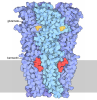
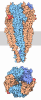
Journal: Acta Pharm Sin B / Year: 2026 Title: Deep learning-driven discovery and mechanism of action study of a minimalist conopeptide targeting 7 nicotinic acetylcholine receptor. Authors: Jinghui Zhang / Zhengji Yin / Yue Li / Cheng Ge / Zixuan Zhang / Pu Yuan / Tao Jiang / David J Craik / Yan Zhao / Rilei Yu / Abstract: Despite extensive structural and functional characterization of the 7 nicotinic acetylcholine receptor, valuable structural insights into its interactions with conopeptides remain limited, thereby ...Despite extensive structural and functional characterization of the 7 nicotinic acetylcholine receptor, valuable structural insights into its interactions with conopeptides remain limited, thereby hindering the rational development of peptide-based modulators for this clinically important receptor subtype. Here, we present an integrated pipeline combining deep learning, structural biology, computational modeling and electrophysiology to accelerate the discovery and optimization of 7 nAChR-targeting conopeptides. To overcome data scarcity, we developed a deep learning model using the ESM-2 protein language framework, enabling efficient screening of 689 disulfide-poor conopeptides. This approach identified SS1, a novel antagonist of 7 nAChR, which was systematically optimized structure-activity relationship studies to yield [ΔQP,S8R]SS1-a minimalist peptide with nanomolar potency (IC = 49.2 nmol/L), enhanced selectivity, and improved stability. Cryo-EM and computational modeling resolved the 3.3 Å resolution structure of 7 nAChR bound to [S8R]SS1, revealing a unique binding mode stabilized by hydrogen bonds, hydrophobic interactions, and glycan contacts, while hybrid receptor conformations (closed/desensitized) elucidated its inhibitory mechanism. This work establishes a transformative deep learning-to-experiment framework for accelerating the discovery and optimization of nature-inspired peptide therapeutics.
In the structure databanks used in Yorodumi, some data are registered as the other names, "COVID-19 virus" and "2019-nCoV". Here are the details of the virus and the list of structure data.
Jan 31, 2019. EMDB accession codes are about to change! (news from PDBe EMDB page)
EMDB accession codes are about to change! (news from PDBe EMDB page)
The allocation of 4 digits for EMDB accession codes will soon come to an end. Whilst these codes will remain in use, new EMDB accession codes will include an additional digit and will expand incrementally as the available range of codes is exhausted. The current 4-digit format prefixed with “EMD-” (i.e. EMD-XXXX) will advance to a 5-digit format (i.e. EMD-XXXXX), and so on. It is currently estimated that the 4-digit codes will be depleted around Spring 2019, at which point the 5-digit format will come into force.
The EM Navigator/Yorodumi systems omit the EMD- prefix.
Related info.:Q: What is EMD? / ID/Accession-code notation in Yorodumi/EM Navigator
Yorodumi is a browser for structure data from EMDB, PDB, SASBDB, etc.
This page is also the successor to EM Navigator detail page, and also detail information page/front-end page for Omokage search.
The word "yorodu" (or yorozu) is an old Japanese word meaning "ten thousand". "mi" (miru) is to see.
Related info.:EMDB / PDB / SASBDB / Comparison of 3 databanks / Yorodumi Search / Aug 31, 2016. New EM Navigator & Yorodumi / Yorodumi Papers / Jmol/JSmol / Function and homology information / Changes in new EM Navigator and Yorodumi
 Movie
Movie Controller

 Yorodumi
 Open data
 Basic information
 Map data
 Sample
 Keywords
 Function and homology information
 Homo sapiens (human)
 Authors
 China, 1 items
  Citation
 Structure visualization
 Downloads & links
 emd_61108.png
 https://data.pdbj.org/pub/emdb/structures/EMD-61108
 Z (Sec.)
 Y (Row.)
 X (Col.)


 Sample components
 Processing
 Electron microscopy
 FIELD EMISSION GUN

