National Natural Science Foundation of China (NSFC)
中国
引用
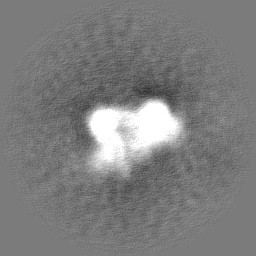
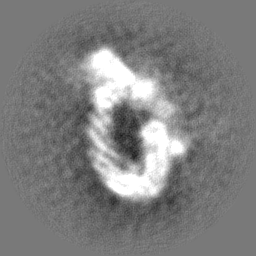
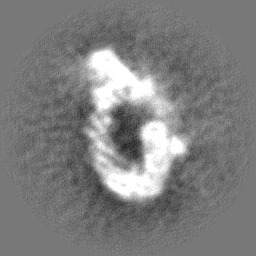
ジャーナル: J Am Chem Soc / 年: 2025 タイトル: Design and Semisynthesis of Ubiquitin Extension Probes for Structural Analysis of Cullin1-Mediated Substrate Polyubiquitination. 著者: Chuntong Li / Fangyu Zhao / Chong Zuo / Liying Zhang / Yangwode Jing / Xu Li / Guo-Chao Chu / Luyu Shi / Yingyue Zhang / Han Wang / Shuzhe Sun / Maoshen Sun / Huasong Ai / Lu-Jun Liang / Jinghong Li / 要旨: Chemical trapping strategies have recently emerged as powerful approaches for investigating the structural dynamics of E3 ligase-catalyzed substrate ubiquitination. However, current ubiquitination- ...Chemical trapping strategies have recently emerged as powerful approaches for investigating the structural dynamics of E3 ligase-catalyzed substrate ubiquitination. However, current ubiquitination-derived probes are limited to studying substrate mono- or diubiquitination events. Probes capable of investigating how E3 ligases accommodate E2-Ub conjugates and ubiquitinated substrates to generate longer ubiquitin chains remain unexplored. In this work, we report the development of two Cullin1 E3 ligase (CRL1)-dependent probes, Extension Probe and Extension Probe, which mimic transient intermediates formed during CRL1-catalyzed K48-linked diubiquitin and tetraubiquitin chain formation on substrate p27. Notably, a chemoenzymatic semisynthetic strategy was devised to generate Extension Probe, involving the enzymatic conjugation of a preformed K48-linked diubiquitin to a synthetic Ub-p27-degron construct using the E2 conjugating enzyme UBE2K. Both Extension Probe and Extension Probe formed stable complexes with N8-CRL1 (comprising neddylated Cullin1-Rbx1 and the substrate receptor complex Skp1-Skp2-Cks1), facilitating structural analysis by chemical cross-linking mass spectrometry (CX-MS) and cryo-electron microscopy (cryo-EM). Our results indicate the presence of multiple distinct conformations of the catalytic module (comprising the RING domain of Rbx1, CDC34-Ub, and the acceptor ubiquitin) within the di- and tetraubiquitination complexes, while the conformation of the Cullin1-Skp1-Skp2-Cks1 subunit remains unchanged. In conclusion, this work expands the toolkit available for chemical trapping strategies and provides advanced insights into CRL-catalyzed substrate polyubiquitination.
 ムービー
ムービー コントローラー


 データを開く
 基本情報
基本情報
 マップデータ
 試料
試料 キーワード
キーワード Homo sapiens (ヒト)
 データ登録者
 中国, 1件
  引用
引用
 構造の表示
構造の表示
 ダウンロードとリンク
 EMDBマップデータ形式
 emd_60258.png
 http://ftp.pdbj.org/pub/emdb/structures/EMD-60258


 Z (Sec.)
 Y (Row.)
 X (Col.)







 試料の構成要素
 解析
解析 電子顕微鏡法
 FIELD EMISSION GUN

