National Natural Science Foundation of China (NSFC)
China
Citation
Journal: J Am Chem Soc / Year: 2025 Title: Design and Semisynthesis of Ubiquitin Extension Probes for Structural Analysis of Cullin1-Mediated Substrate Polyubiquitination. Authors: Chuntong Li / Fangyu Zhao / Chong Zuo / Liying Zhang / Yangwode Jing / Xu Li / Guo-Chao Chu / Luyu Shi / Yingyue Zhang / Han Wang / Shuzhe Sun / Maoshen Sun / Huasong Ai / Lu-Jun Liang / Jinghong Li / Abstract: Chemical trapping strategies have recently emerged as powerful approaches for investigating the structural dynamics of E3 ligase-catalyzed substrate ubiquitination. However, current ubiquitination- ...Chemical trapping strategies have recently emerged as powerful approaches for investigating the structural dynamics of E3 ligase-catalyzed substrate ubiquitination. However, current ubiquitination-derived probes are limited to studying substrate mono- or diubiquitination events. Probes capable of investigating how E3 ligases accommodate E2-Ub conjugates and ubiquitinated substrates to generate longer ubiquitin chains remain unexplored. In this work, we report the development of two Cullin1 E3 ligase (CRL1)-dependent probes, Extension Probe and Extension Probe, which mimic transient intermediates formed during CRL1-catalyzed K48-linked diubiquitin and tetraubiquitin chain formation on substrate p27. Notably, a chemoenzymatic semisynthetic strategy was devised to generate Extension Probe, involving the enzymatic conjugation of a preformed K48-linked diubiquitin to a synthetic Ub-p27-degron construct using the E2 conjugating enzyme UBE2K. Both Extension Probe and Extension Probe formed stable complexes with N8-CRL1 (comprising neddylated Cullin1-Rbx1 and the substrate receptor complex Skp1-Skp2-Cks1), facilitating structural analysis by chemical cross-linking mass spectrometry (CX-MS) and cryo-electron microscopy (cryo-EM). Our results indicate the presence of multiple distinct conformations of the catalytic module (comprising the RING domain of Rbx1, CDC34-Ub, and the acceptor ubiquitin) within the di- and tetraubiquitination complexes, while the conformation of the Cullin1-Skp1-Skp2-Cks1 subunit remains unchanged. In conclusion, this work expands the toolkit available for chemical trapping strategies and provides advanced insights into CRL-catalyzed substrate polyubiquitination.
In the structure databanks used in Yorodumi, some data are registered as the other names, "COVID-19 virus" and "2019-nCoV". Here are the details of the virus and the list of structure data.
Jan 31, 2019. EMDB accession codes are about to change! (news from PDBe EMDB page)
EMDB accession codes are about to change! (news from PDBe EMDB page)
The allocation of 4 digits for EMDB accession codes will soon come to an end. Whilst these codes will remain in use, new EMDB accession codes will include an additional digit and will expand incrementally as the available range of codes is exhausted. The current 4-digit format prefixed with “EMD-” (i.e. EMD-XXXX) will advance to a 5-digit format (i.e. EMD-XXXXX), and so on. It is currently estimated that the 4-digit codes will be depleted around Spring 2019, at which point the 5-digit format will come into force.
The EM Navigator/Yorodumi systems omit the EMD- prefix.
Related info.:Q: What is EMD? / ID/Accession-code notation in Yorodumi/EM Navigator
Yorodumi is a browser for structure data from EMDB, PDB, SASBDB, etc.
This page is also the successor to EM Navigator detail page, and also detail information page/front-end page for Omokage search.
The word "yorodu" (or yorozu) is an old Japanese word meaning "ten thousand". "mi" (miru) is to see.
Related info.:EMDB / PDB / SASBDB / Comparison of 3 databanks / Yorodumi Search / Aug 31, 2016. New EM Navigator & Yorodumi / Yorodumi Papers / Jmol/JSmol / Function and homology information / Changes in new EM Navigator and Yorodumi
 Movie
Movie Controller

 Yorodumi
 Open data
 Basic information
 Map data
 Sample
 Keywords
 Homo sapiens (human)
 Authors
 China, 1 items
  Citation
 Structure visualization
 Downloads & links
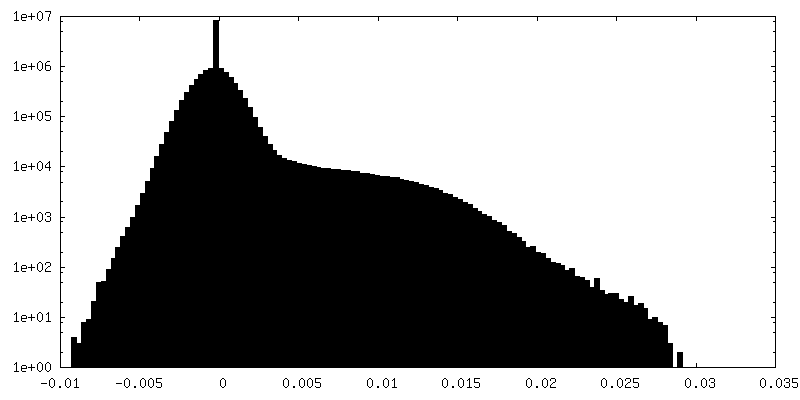
 EMDB map data format
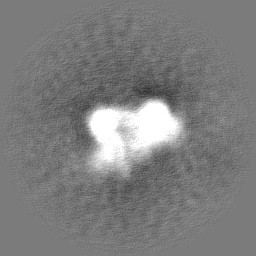
 emd_60258.png
 https://data.pdbj.org/pub/emdb/structures/EMD-60258


 Z (Sec.)
 Y (Row.)
 X (Col.)







 Sample components
 Processing
 Electron microscopy
 FIELD EMISSION GUN

