Swiss State Secretariat for Education, Research and Innovation
M822.00045
Switzerland
Citation
Journal: bioRxiv / Year: 2026 Title: Chloroplast-encoded small subunit extensions reshape the Chlamydomonas chlororibosome. Authors: Florent Waltz / Philippe A Lehner / Philippe Van der Stappen / Lukas Kater / Stefan Pfeffer / Benjamin D Engel / Abstract: Chloroplast ribosomes (chlororibosomes) synthesize the core protein components of the photosynthetic apparatus, yet their structural diversity outside flowering plants remains largely unexplored. ...Chloroplast ribosomes (chlororibosomes) synthesize the core protein components of the photosynthetic apparatus, yet their structural diversity outside flowering plants remains largely unexplored. Here, we combine in situ cryo-electron tomography (cryo-ET) with single-particle cryo-electron microscopy (cryo-EM) to determine the structure of the chlororibosome from the unicellular green alga . Subtomogram averaging of chlororibosomes in their native environment, resolved to ~5 Å resolution and in distinct translational states, reveals particles both free in the stroma and loosely tethered to thylakoid membranes. These reconstructions uncover an additional "arm" domain on the small subunit. High-resolution single-particle reconstruction of isolated chlororibosomes to ~2.5 Å, in states bound either to the inhibitory translation factor pY or to a nascent chain-linked P-site tRNA, reveals that this domain is built primarily from extensive chloroplast-encoded insertions and extensions of conserved small subunit proteins, supported by chlororibosome-specific ribosomal proteins. The arm domain is located around the mRNA entry and exit channels, suggesting a role in stabilizing the mRNA trajectory through the small subunit and organizing chloroplast polysomes. Together, these data reveal unexpected structural variation of algal chlororibosomes and suggest that chloroplast translation has diversified substantially even among relatively closely related photosynthetic lineages.
In the structure databanks used in Yorodumi, some data are registered as the other names, "COVID-19 virus" and "2019-nCoV". Here are the details of the virus and the list of structure data.
Jan 31, 2019. EMDB accession codes are about to change! (news from PDBe EMDB page)
EMDB accession codes are about to change! (news from PDBe EMDB page)
The allocation of 4 digits for EMDB accession codes will soon come to an end. Whilst these codes will remain in use, new EMDB accession codes will include an additional digit and will expand incrementally as the available range of codes is exhausted. The current 4-digit format prefixed with “EMD-” (i.e. EMD-XXXX) will advance to a 5-digit format (i.e. EMD-XXXXX), and so on. It is currently estimated that the 4-digit codes will be depleted around Spring 2019, at which point the 5-digit format will come into force.
The EM Navigator/Yorodumi systems omit the EMD- prefix.
Related info.:Q: What is EMD? / ID/Accession-code notation in Yorodumi/EM Navigator
Yorodumi is a browser for structure data from EMDB, PDB, SASBDB, etc.
This page is also the successor to EM Navigator detail page, and also detail information page/front-end page for Omokage search.
The word "yorodu" (or yorozu) is an old Japanese word meaning "ten thousand". "mi" (miru) is to see.
Related info.:EMDB / PDB / SASBDB / Comparison of 3 databanks / Yorodumi Search / Aug 31, 2016. New EM Navigator & Yorodumi / Yorodumi Papers / Jmol/JSmol / Function and homology information / Changes in new EM Navigator and Yorodumi
 Movie
Movie Controller

 Yorodumi
 Open data
 Basic information
 Map data
 Sample
 Keywords
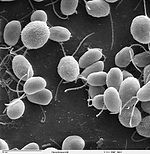 Chlamydomonas reinhardtii (plant)
 Authors
 Switzerland, 2 items
  Citation
 Structure visualization
 Downloads & links
 EMDB map data format
 emd_56561.png
 https://data.pdbj.org/pub/emdb/structures/EMD-56561


 Z (Sec.)
 Y (Row.)
 X (Col.)


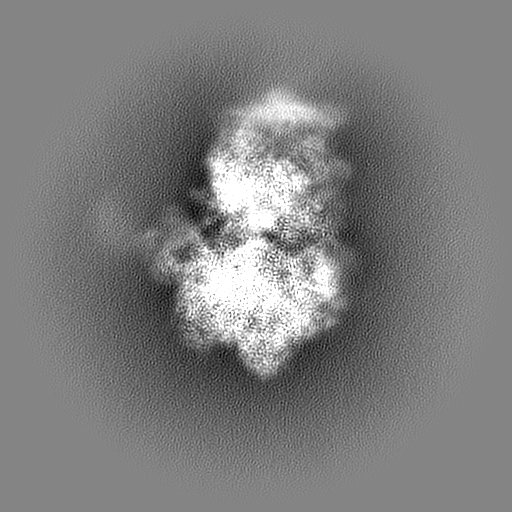


 Sample components
 Processing
 Electron microscopy
 FIELD EMISSION GUN

