 Movie
Movie Controller


+ Open data

- Basic information
| Entry |  | |||||||||
|---|---|---|---|---|---|---|---|---|---|---|
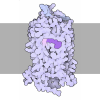
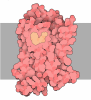
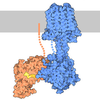
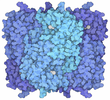
| Title | Quinpirole-bound Dopamine D3 Receptor - Gi Protein Complex | |||||||||
 Map data Map data | ||||||||||
 Sample Sample |
| |||||||||
 Keywords Keywords | Dopamine D3 Receptor / GPCR / MEMBRANE PROTEIN | |||||||||
| Function / homology |  Function and homology information Function and homology informationmusculoskeletal movement, spinal reflex action / acid secretion / dopamine neurotransmitter receptor activity, coupled via Gi/Go / response to histamine / adenylate cyclase-inhibiting dopamine receptor signaling pathway / regulation of potassium ion transport / Dopamine receptors / regulation of dopamine uptake involved in synaptic transmission / positive regulation of dopamine receptor signaling pathway / phospholipase C-activating dopamine receptor signaling pathway ...musculoskeletal movement, spinal reflex action / acid secretion / dopamine neurotransmitter receptor activity, coupled via Gi/Go / response to histamine / adenylate cyclase-inhibiting dopamine receptor signaling pathway / regulation of potassium ion transport / Dopamine receptors / regulation of dopamine uptake involved in synaptic transmission / positive regulation of dopamine receptor signaling pathway / phospholipase C-activating dopamine receptor signaling pathway / negative regulation of oligodendrocyte differentiation / G protein-coupled receptor internalization / negative regulation of synaptic transmission, glutamatergic / arachidonate secretion / positive regulation of cytokinesis / response to morphine / negative regulation of cytosolic calcium ion concentration / dopamine metabolic process / regulation of dopamine secretion / negative regulation of protein secretion / social behavior / prepulse inhibition / negative regulation of blood pressure / behavioral response to cocaine / adenylate cyclase inhibitor activity / positive regulation of mitotic nuclear division / positive regulation of protein localization to cell cortex / T cell migration / positive regulation of relaxation of smooth muscle / Adenylate cyclase inhibitory pathway / D2 dopamine receptor binding / adenylate cyclase-inhibiting serotonin receptor signaling pathway / G protein-coupled serotonin receptor binding / negative regulation of phosphatidylinositol 3-kinase/protein kinase B signal transduction / cellular response to forskolin / regulation of mitotic spindle organization / chemokine-mediated signaling pathway / learning / circadian regulation of gene expression / response to cocaine / Regulation of insulin secretion / neuropeptide signaling pathway / locomotory behavior / response to prostaglandin E / electron transport chain / positive regulation of cholesterol biosynthetic process / negative regulation of insulin secretion / visual learning / G protein-coupled receptor binding / response to peptide hormone / G protein-coupled receptor activity / intracellular calcium ion homeostasis / centriolar satellite / G-protein beta/gamma-subunit complex binding / adenylate cyclase-modulating G protein-coupled receptor signaling pathway / adenylate cyclase-inhibiting G protein-coupled receptor signaling pathway / Olfactory Signaling Pathway / Activation of the phototransduction cascade / G protein-coupled acetylcholine receptor signaling pathway / G beta:gamma signalling through PLC beta / Presynaptic function of Kainate receptors / Thromboxane signalling through TP receptor / Activation of G protein gated Potassium channels / Inhibition of voltage gated Ca2+ channels via Gbeta/gamma subunits / G-protein activation / Glucagon signaling in metabolic regulation / G beta:gamma signalling through CDC42 / Prostacyclin signalling through prostacyclin receptor / Synthesis, secretion, and inactivation of Glucagon-like Peptide-1 (GLP-1) / G beta:gamma signalling through BTK / photoreceptor disc membrane / ADP signalling through P2Y purinoceptor 12 / GDP binding / Glucagon-type ligand receptors / Sensory perception of sweet, bitter, and umami (glutamate) taste / Adrenaline,noradrenaline inhibits insulin secretion / Vasopressin regulates renal water homeostasis via Aquaporins / Glucagon-like Peptide-1 (GLP1) regulates insulin secretion / G alpha (z) signalling events / cellular response to catecholamine stimulus / ADP signalling through P2Y purinoceptor 1 / G beta:gamma signalling through PI3Kgamma / ADORA2B mediated anti-inflammatory cytokines production / adenylate cyclase-activating dopamine receptor signaling pathway / Cooperation of PDCL (PhLP1) and TRiC/CCT in G-protein beta folding / GPER1 signaling / cellular response to prostaglandin E stimulus / heterotrimeric G-protein complex / G alpha (12/13) signalling events / Inactivation, recovery and regulation of the phototransduction cascade / G-protein beta-subunit binding / extracellular vesicle / sensory perception of taste / Thrombin signalling through proteinase activated receptors (PARs) / sperm principal piece / adenylate cyclase-activating G protein-coupled receptor signaling pathway / signaling receptor complex adaptor activity / retina development in camera-type eye / fibroblast proliferation / GTPase binding Similarity search - Function | |||||||||
| Biological species |  Homo sapiens (human) Homo sapiens (human) | |||||||||
| Method | single particle reconstruction / cryo EM / Resolution: 3.24 Å | |||||||||
 Authors Authors | Schneider J / Gmeiner P / Hove T / Boettcher B | |||||||||
| Funding support | 1 items
| |||||||||
 Citation Citation | Journal: To Be Published Title: Quinpirole-bound Dopamine D3 Receptor - Gi Protein Complex Authors: Schneider J / Gmeiner P / Hove T / Boettcher B | |||||||||
| History |
|
- Structure visualization
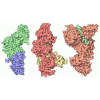
| Supplemental images |
|---|

- Downloads & links
-EMDB archive
| Map data | emd_53562.map.gz | 176.6 MB | EMDB map data format | |
|---|---|---|---|---|
| Header (meta data) | emd-53562-v30.xmlemd-53562.xml | 20.8 KB 20.8 KB | Display Display | EMDB header |
| Images |  emd_53562.png emd_53562.png | 41.8 KB | ||
| Filedesc metadata | emd-53562.cif.gz | 6.7 KB | ||
| Others | emd_53562_half_map_1.map.gzemd_53562_half_map_2.map.gz | 200.7 MB 200.7 MB | ||
| Archive directory |  http://ftp.pdbj.org/pub/emdb/structures/EMD-53562ftp://ftp.pdbj.org/pub/emdb/structures/EMD-53562 http://ftp.pdbj.org/pub/emdb/structures/EMD-53562ftp://ftp.pdbj.org/pub/emdb/structures/EMD-53562 | HTTPS FTP |
-Related structure data
| Related structure data |  9r42MC M: atomic model generated by this map C: citing same article ( |
|---|---|
| Similar structure data |
-Links
| EMDB pages | EMDB (EBI/PDBe) / EMDataResource |
|---|---|
| Related items in Molecule of the Month |

-Map
| File | Download / File: emd_53562.map.gz / Format: CCP4 / Size: 216 MB / Type: IMAGE STORED AS FLOATING POINT NUMBER (4 BYTES) | ||||||||||||||||||||||||||||||||||||
|---|---|---|---|---|---|---|---|---|---|---|---|---|---|---|---|---|---|---|---|---|---|---|---|---|---|---|---|---|---|---|---|---|---|---|---|---|---|
| Projections & slices | Image control
Images are generated by Spider. | ||||||||||||||||||||||||||||||||||||
| Voxel size | X=Y=Z: 0.946 Å | ||||||||||||||||||||||||||||||||||||
| Density |
| ||||||||||||||||||||||||||||||||||||
| Symmetry | Space group: 1 | ||||||||||||||||||||||||||||||||||||
| Details | EMDB XML:
|
 Z (Sec.)
 Y (Row.)
 X (Col.)


-Supplemental data
-Half map: #2
| File | emd_53562_half_map_1.map | ||||||||||||
|---|---|---|---|---|---|---|---|---|---|---|---|---|---|
| Projections & Slices |
| ||||||||||||
| Density Histograms |


-Half map: #1
| File | emd_53562_half_map_2.map | ||||||||||||
|---|---|---|---|---|---|---|---|---|---|---|---|---|---|
| Projections & Slices |
| ||||||||||||
| Density Histograms |


- Sample components
-Entire : Quinpirole-bound dopamine D3 receptor in complex with Gi protein
| Entire | Name: Quinpirole-bound dopamine D3 receptor in complex with Gi protein |
|---|---|
| Components |
|
-Supramolecule #1: Quinpirole-bound dopamine D3 receptor in complex with Gi protein
| Supramolecule | Name: Quinpirole-bound dopamine D3 receptor in complex with Gi protein type: complex / ID: 1 / Parent: 0 / Macromolecule list: #1-#4 |
|---|---|
| Source (natural) | Organism: Homo sapiens (human) |
-Macromolecule #1: Guanine nucleotide-binding protein G(i) subunit alpha-1
| Macromolecule | Name: Guanine nucleotide-binding protein G(i) subunit alpha-1 type: protein_or_peptide / ID: 1 / Number of copies: 1 / Enantiomer: LEVO |
|---|---|
| Source (natural) | Organism: Homo sapiens (human) |
| Molecular weight | Theoretical: 40.414047 KDa |
| Recombinant expression | Organism:   Spodoptera frugiperda (fall armyworm) Spodoptera frugiperda (fall armyworm) |
| Sequence | String: MGCTLSAEDK AAVERSKMID RNLREDGEKA AREVKLLLLG AGESGKNTIV KQMKIIHEAG YSEEECKQYK AVVYSNTIQS IIAIIRAMG RLKIDFGDSA RADDARQLFV LAGAAEEGFM TAELAGVIKR LWKDSGVQAC FNRSREYQLN DSAAYYLNDL D RIAQPNYI ...String: MGCTLSAEDK AAVERSKMID RNLREDGEKA AREVKLLLLG AGESGKNTIV KQMKIIHEAG YSEEECKQYK AVVYSNTIQS IIAIIRAMG RLKIDFGDSA RADDARQLFV LAGAAEEGFM TAELAGVIKR LWKDSGVQAC FNRSREYQLN DSAAYYLNDL D RIAQPNYI PTQQDVLRTR VKTTGIVETH FTFKDLHFKM FDVGAQRSER KKWIHCFEGV TAIIFCVALS DYDLVLAEDE EM NRMHASM KLFDSICNNK WFTDTSIILF LNKKDLFEEK IKKSPLTICY PEYAGSNTYE EAAAYIQCQF EDLNKRKDTK EIY THFTCS TDTKNVQFVF DAVTDVIIKN NLKDCGLF UniProtKB: Guanine nucleotide-binding protein G(i) subunit alpha-1 |
-Macromolecule #2: Guanine nucleotide-binding protein G(I)/G(S)/G(T) subunit beta-1
| Macromolecule | Name: Guanine nucleotide-binding protein G(I)/G(S)/G(T) subunit beta-1 type: protein_or_peptide / ID: 2 / Number of copies: 1 / Enantiomer: LEVO |
|---|---|
| Source (natural) | Organism: Homo sapiens (human) |
| Molecular weight | Theoretical: 38.810352 KDa |
| Recombinant expression | Organism: Spodoptera frugiperda (fall armyworm) |
| Sequence | String: MHHHHHHHHG SSGSELDQLR QEAEQLKNQI RDARKACADA TLSQITNNID PVGRIQMRTR RTLRGHLAKI YAMHWGTDSR LLVSASQDG KLIIWDSYTT NKVHAIPLRS SWVMTCAYAP SGNYVACGGL DNICSIYNLK TREGNVRVSR ELAGHTGYLS C CRFLDDNQ ...String: MHHHHHHHHG SSGSELDQLR QEAEQLKNQI RDARKACADA TLSQITNNID PVGRIQMRTR RTLRGHLAKI YAMHWGTDSR LLVSASQDG KLIIWDSYTT NKVHAIPLRS SWVMTCAYAP SGNYVACGGL DNICSIYNLK TREGNVRVSR ELAGHTGYLS C CRFLDDNQ IVTSSGDTTC ALWDIETGQQ TTTFTGHTGD VMSLSLAPDT RLFVSGACDA SAKLWDVREG MCRQTFTGHE SD INAICFF PNGNAFATGS DDATCRLFDL RADQELMTYS HDNIICGITS VSFSKSGRLL LAGYDDFNCN VWDALKADRA GVL AGHDNR VSCLGVTDDG MAVATGSWDS FLKIWN UniProtKB: Guanine nucleotide-binding protein G(I)/G(S)/G(T) subunit beta-1 |
-Macromolecule #3: Guanine nucleotide-binding protein G(I)/G(S)/G(O) subunit gamma-2
| Macromolecule | Name: Guanine nucleotide-binding protein G(I)/G(S)/G(O) subunit gamma-2 type: protein_or_peptide / ID: 3 / Number of copies: 1 / Enantiomer: LEVO |
|---|---|
| Source (natural) | Organism: Homo sapiens (human) |
| Molecular weight | Theoretical: 7.861143 KDa |
| Recombinant expression | Organism: Spodoptera frugiperda (fall armyworm) |
| Sequence | String: MASNNTASIA QARKLVEQLK MEANIDRIKV SKAAADLMAY CEAHAKEDPL LTPVPASENP FREKKFFCAI L UniProtKB: Guanine nucleotide-binding protein G(I)/G(S)/G(O) subunit gamma-2 |
-Macromolecule #4: Soluble cytochrome b562,D(3) dopamine receptor
| Macromolecule | Name: Soluble cytochrome b562,D(3) dopamine receptor / type: protein_or_peptide / ID: 4 / Number of copies: 1 / Enantiomer: LEVO |
|---|---|
| Source (natural) | Organism: Homo sapiens (human) |
| Molecular weight | Theoretical: 62.633105 KDa |
| Recombinant expression | Organism: Spodoptera frugiperda (fall armyworm) |
| Sequence | String: MKTIIALSYI FCLVFADYKD DDDAKLQTMH HHHHHHHHHH HHHHADLEDN WETLNDNLKV IEKADNAAQV KDALTKMRAA ALDAQKATP PKLEDKSPDS PEMKDFRHGF DILVGQIDDA LKLANEGKVK EAQAAAEQLK TTRNAYIQKY LASENLYFQG G TMASLSQL ...String: MKTIIALSYI FCLVFADYKD DDDAKLQTMH HHHHHHHHHH HHHHADLEDN WETLNDNLKV IEKADNAAQV KDALTKMRAA ALDAQKATP PKLEDKSPDS PEMKDFRHGF DILVGQIDDA LKLANEGKVK EAQAAAEQLK TTRNAYIQKY LASENLYFQG G TMASLSQL SSHLNYTCGA ENSTGASQAR PHAYYALSYC ALILAIVFGN GLVCMAVLKE RALQTTTNYL VVSLAVADLL VA TLVMPWV VYLEVTGGVW NFSRICCDVF VTLDVMMCTA SILNLCAISI DRYTAVVMPV HYQHGTGQSS CRRVALMITA VWV LAFAVS CPLLFGFNTT GDPTVCSISN PDFVIYSSVV SFYLPFGVTV LVYARIYVVL KQRRRKRILT RQNSQCNSVR PGFP QQTLS PDPAHLELKR YYSICQDTAL GGPGFQERGG ELKREEKTRN SLSPTIAPKL SLEVRKLSNG RLSTSLKLGP LQPRG VPLR EKKATQMVAI VLGAFIVCWL PFFLTHVLNT HCQTCHVSPE LYSATTWLGY VNSALNPVIY TTFNIEFRKA FLKILS C UniProtKB: Soluble cytochrome b562, D(3) dopamine receptor |
-Macromolecule #5: (4aR,8aR)-5-propyl-1,4,4a,6,7,8,8a,9-octahydropyrazolo[3,4-g]quinoline
| Macromolecule | Name: (4aR,8aR)-5-propyl-1,4,4a,6,7,8,8a,9-octahydropyrazolo[3,4-g]quinoline type: ligand / ID: 5 / Number of copies: 1 / Formula: A1JDS |
|---|---|
| Molecular weight | Theoretical: 219.326 Da |
-Macromolecule #6: water
| Macromolecule | Name: water / type: ligand / ID: 6 / Number of copies: 2 / Formula: HOH |
|---|---|
| Molecular weight | Theoretical: 18.015 Da |
| Chemical component information | 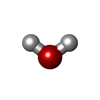 ChemComp-HOH: |
-Experimental details
-Structure determination
| Method | cryo EM |
|---|---|
 Processing Processing | single particle reconstruction |
| Aggregation state | particle |
-Sample preparation
| Buffer | pH: 7.4 |
|---|---|
| Vitrification | Cryogen name: ETHANE |
- Electron microscopy
| Microscope | TFS KRIOS |
|---|---|
| Details | The original data (e.g., STAR files or micrograph metadata) are not available for this dataset. Therefore, the reported minimum and maximum defocus values (800 nm and 2500 nm, respectively) are based on standard cryo-EM data collection practices for similar resolution and instrumentation at the time of acquisition. |
| Image recording | Film or detector model: FEI FALCON IV (4k x 4k) / Average electron dose: 70.0 e/Å2 |
| Electron beam | Acceleration voltage: 300 kV / Electron source:  FIELD EMISSION GUN FIELD EMISSION GUN |
| Electron optics | Illumination mode: FLOOD BEAM / Imaging mode: BRIGHT FIELD / Nominal defocus max: 2.5 µm / Nominal defocus min: 0.8 µm / Nominal magnification: 130000 |
| Experimental equipment |  Model: Titan Krios / Image courtesy: FEI Company |
