 Movie
Movie Controller


+ Open data

- Basic information
| Entry |  | |||||||||
|---|---|---|---|---|---|---|---|---|---|---|
| Title | Structure of Teneurin-Like Protein (TLP) | |||||||||
 Map data Map data | ||||||||||
 Sample Sample |
| |||||||||
 Keywords Keywords | RHS/YD-repeat protein / Toxin / CELL ADHESION | |||||||||
| Biological species |   Bacillus inaquosorum (bacteria) Bacillus inaquosorum (bacteria) | |||||||||
| Method | single particle reconstruction / cryo EM / Resolution: 2.1 Å | |||||||||
 Authors Authors | Raoelijaona F / Zhou J / El-Omari K / Lowe ED / Seiradake E | |||||||||
| Funding support |  United Kingdom, 2 items United Kingdom, 2 items
| |||||||||
 Citation Citation | Journal: Nat Commun / Year: 2026 Title: Ancestral neuronal receptors are bacterial accessory toxins. Authors: Finaritra Raoelijaona / Joanna Szczepaniak / Adrien Schahl / James E Bray / Jin Chuan Zhou / Lindsay Baker / Kamel El Omari / Edward Lowe / Yu Shang Low / Chandra M Rodriguez / Michael J ...Authors: Finaritra Raoelijaona / Joanna Szczepaniak / Adrien Schahl / James E Bray / Jin Chuan Zhou / Lindsay Baker / Kamel El Omari / Edward Lowe / Yu Shang Low / Chandra M Rodriguez / Michael J Landsberg / J Shaun Lott / Colin Kleanthous / Matthieu Chavent / Martin Cj Maiden / Elena Seiradake /    Abstract: Horizontal gene transfer events were crucial in the emergence of multicellular life. A striking example is the acquisition of Teneurins, putative surface-exposed toxins in bacteria that function as ...Horizontal gene transfer events were crucial in the emergence of multicellular life. A striking example is the acquisition of Teneurins, putative surface-exposed toxins in bacteria that function as cell adhesion receptors in metazoan neuronal development. Here, we demonstrate the evolutionary relationships between metazoan and bacterial Teneurins. We use cryogenic electron microscopy and bioinformatic analysis to show that bacterial Teneurins harbour a toxic protein in a proteinaceous shell. They are rare but widely distributed across bacterial taxa and are predominantly seen in species with complex social behaviours, suggesting roles in cell-to-cell interaction. This work confirms that metazoan Teneurins are repurposed bacterial toxins that have evolved to be essential mediators of intercellular communication in all advanced nervous systems. Their acquisition was a key event in the evolution of metazoans. | |||||||||
| History |
|
- Structure visualization
| Supplemental images |
|---|

- Downloads & links
-EMDB archive
| Map data | emd_52847.map.gz | 64.8 MB |  EMDB map data format EMDB map data format | |
|---|---|---|---|---|
| Header (meta data) | emd-52847-v30.xmlemd-52847.xml | 23 KB 23 KB | Display Display | EMDB header |
| FSC (resolution estimation) | emd_52847_fsc.xml | 11.9 KB | Display | FSC data file |
| Images |  emd_52847.png emd_52847.png | 64.6 KB | ||
| Filedesc metadata | emd-52847.cif.gz | 7.3 KB | ||
| Others | emd_52847_additional_1.map.gzemd_52847_half_map_1.map.gzemd_52847_half_map_2.map.gz | 63.1 MB 116 MB 116 MB | ||
| Archive directory |  https://data.pdbj.org/pub/emdb/structures/EMD-52847ftp://data.pdbj.org/pub/emdb/structures/EMD-52847 https://data.pdbj.org/pub/emdb/structures/EMD-52847ftp://data.pdbj.org/pub/emdb/structures/EMD-52847 | HTTPS FTP |
-Related structure data


-Links
| EMDB pages | EMDB (EBI/PDBe) / EMDataResource |
|---|
-Map
| File | Download / File: emd_52847.map.gz / Format: CCP4 / Size: 125 MB / Type: IMAGE STORED AS FLOATING POINT NUMBER (4 BYTES) | ||||||||||||||||||||||||||||||||||||
|---|---|---|---|---|---|---|---|---|---|---|---|---|---|---|---|---|---|---|---|---|---|---|---|---|---|---|---|---|---|---|---|---|---|---|---|---|---|
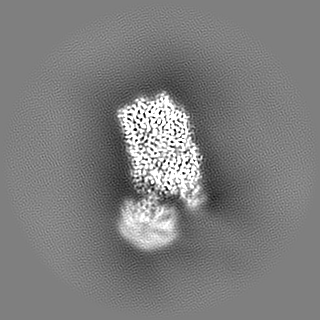
| Projections & slices | Image control
Images are generated by Spider. | ||||||||||||||||||||||||||||||||||||
| Voxel size | X=Y=Z: 0.832 Å | ||||||||||||||||||||||||||||||||||||
| Density |
| ||||||||||||||||||||||||||||||||||||
| Symmetry | Space group: 1 | ||||||||||||||||||||||||||||||||||||
| Details | EMDB XML:
|
 Z (Sec.)
 Y (Row.)
 X (Col.)




-Supplemental data
-Additional map: #1
| File | emd_52847_additional_1.map | ||||||||||||
|---|---|---|---|---|---|---|---|---|---|---|---|---|---|
| Projections & Slices |
| ||||||||||||
| Density Histograms |


-Half map: #2
| File | emd_52847_half_map_1.map | ||||||||||||
|---|---|---|---|---|---|---|---|---|---|---|---|---|---|
| Projections & Slices |
| ||||||||||||
| Density Histograms |


-Half map: #1
| File | emd_52847_half_map_2.map | ||||||||||||
|---|---|---|---|---|---|---|---|---|---|---|---|---|---|
| Projections & Slices |
| ||||||||||||
| Density Histograms |


- Sample components
-Entire : Teneurin-like protein
| Entire | Name: Teneurin-like protein |
|---|---|
| Components |
|
-Supramolecule #1: Teneurin-like protein
| Supramolecule | Name: Teneurin-like protein / type: organelle_or_cellular_component / ID: 1 / Parent: 0 / Macromolecule list: #1 / Details: Monomeric structure of teneurin-like protein |
|---|---|
| Source (natural) | Organism: Bacillus inaquosorum (bacteria) |
| Molecular weight | Theoretical: 184 KDa |
-Macromolecule #1: Teneurin-Like Protein
| Macromolecule | Name: Teneurin-Like Protein / type: protein_or_peptide / ID: 1 Details: A2144/A2145 break - result of autoproteolytic cleavage Number of copies: 1 / Enantiomer: LEVO |
|---|---|
| Source (natural) | Organism: Bacillus inaquosorum (bacteria) |
| Molecular weight | Theoretical: 229.323328 KDa |
| Recombinant expression | Organism:  Escherichia coli (E. coli) Escherichia coli (E. coli) |
| Sequence | String: MEERPSPPHL VALTIIPASI VLDVGETHQF QVMGNFSDGS SKDLTKRARY KSSNSNIVKV NNSSHNKGLA TAITAGESEI TARVRQFKV VANIRVQAAV NLTGITIEPT SVILPVGNTQ QFTVTGQFSD GSTQDLTDQA SYLSSSTNVV TVYNNGLATA V SSGTAQIT ...String: MEERPSPPHL VALTIIPASI VLDVGETHQF QVMGNFSDGS SKDLTKRARY KSSNSNIVKV NNSSHNKGLA TAITAGESEI TARVRQFKV VANIRVQAAV NLTGITIEPT SVILPVGNTQ QFTVTGQFSD GSTQDLTDQA SYLSSSTNVV TVYNNGLATA V SSGTAQIT AAVNGFTAIA SLEVQAAVTL TGITIEPTSV ILPAGNTQQF TVTGQFSDGS TQDLTDQASY LSSNTNVVTV DN NGLATAV SSGTAQITAA VNSFTAIASL EVQAAVTLIG ITIEPTSVVL KVEETQQFTV TGRFSDGSTQ DVTEQASYAS SNP NVVTIA NTGLATAVAL GSATITATAD GFTAIATLNV HTIVVPPLDM SGATSVFSSS AFLYTGENPI QTGVQPGTIE LRRA AVLRG QVFNRDGEPL SRVNISILDH PEFGSTFTRE DGQFDMAVNG GELLIVRYEK NGLRPVQRRI EVPWEDFVIL PDVQM IALD PVVTTIDLSQ PDIQTARGSE ILDVEGTRQA TLLFPPGNKA TMILPDGTTQ EISTLNVRAT EYSVGEGGPN AMPALL PPT SAYTYCVEFS ADEELAAGAR EVRFDQPIVF YVENFLEFPV GGAVPTGFYD RIQGEWIASR NGQVIQIVSI TGGLADL DI DGDGAADSAD DLAELGITNA ERQRLANLYQ TGQSLWRVPI THFSAPWDCN WPYGFPDDSD RPRNPDPFDK PKPDDDCN K EGSIIGALAQ TLGEEVQVTG TPFRMHYHSD RVRGRKEAYS LEIPLSGTNI PQSVQRIRLD IFVAGRCITE SFPPATNLT HTFVWDGKDA YGRVLQGSHP ITVRIRYEYQ LVYLTPAAFR TSFGRITGEG GGSGGGGAGT PLIIARRGDP NASLTQEFKG SIGLFDTRE QGLGAWTLSV HHFYDPISRV LFLGDGQRRS AESLSTVIAT VAGTNYGFSG DGGPATQAQL RAPRDMAVGS D GSLYIADT ENERIRRVGP DGIITTVAGT GVQGFSGDGG PATQAQLGSP RGVAVGSDGS LYIVDAGNVR IRRVGPDGII TT VAGTGVS GFSGDGGPAT QAQLSFPPGG VAVGSDGSLF IADTLNNRIR RVGPDGIITT VAGTGDFGFS GDGGPAAQAT LRI PGDVSV GSDGSLYIAD SQNVRIRRVG PDGIINTVAG TGVQGFSGDG GPATQAQLRL PRGVDVGSDG YLYIVDESRT RRVR DGIIT TVVGTGVQGF SGDGGPATQA TLWVPADVAV GSDGSLFIAD TGNNRIRRVA SVLPGTTRTD ILIPSADGSE VVIFN ESGK HLRTLDALTG AIRFRFIYNN DGHLVQVQDV DGNSTIIERD STGNPISIVA PGGQRTALTL DANGFLASIT NPAREA FQF EYNPDGLMTS QIDPRGNISR FEYDSGGHLI RDEHPTGGVT TLMRTNSTNG FVVTLTSPLG RVSTFQLERL TTGTLKQ VV IDSNGGRTES LTGTDGKQQI TYPDGTQLVD QVGPDPRFGM LAHIVRRRTV TTPGGLSFLH VTDRQAVLSD PTNLLSLQ K LTTTVSINDR IFRTIFDAGT RETTITTPVG RKSVIGFDSI GRVNRQILAT GVDPILFTYN NQGQLTERQQ GNVITNLIY DSLLRLQAIV DNAGRESRFS YDNADRVIQI TRCGGDIERL TYDSNGNPTQ VIRPNGSVHT LSYTPVNLLG GYTPPGNPGY TFLYNVERQ IRRKILPTGR TIDLTYDSGG RLTDVIYPEA AVTLVYTAGD PTQRVNRLLR TPIGGGPTQE MELTYDASLI T GMTFTGIS QGAFTYTYDS NFSLVNVGLV SGSDQVQVGI SRNADGLITG LGSFTITRSG PDGKISRISD GALNRTMSYD TI ARLSSYN DTVGGQQIYR SDFQYDNASR LQRKTETVGS AAHTLEYSYD TSCNLIEVTK DGMVVESYTY DANGNRTSRQ VMG GPVEMA TYDNQDRLVH RDGINYEFNA DGFMVSRGSD TFEYSALGEL LQATVGGKTI TYVYDGLGRR VSRTESTGTT QYLY GNPEN LLQVTAIRDP SGQLNMLFYD DNDFLFAFDR DGTKFYVTTD LVGTPRVVTN GTGTVLRELE HDSFGNIIAD SNPRF VLPI GFAGGLADPD TELVRFGYRD YEPASGRWTA QDPILFRSGD FNLYAYVHNN PVTLRDPSGL |
-Macromolecule #2: Teneurin-Like Protein
| Macromolecule | Name: Teneurin-Like Protein / type: protein_or_peptide / ID: 2 Details: A2144/A2145 break - result of autoproteolytic cleavage Number of copies: 1 / Enantiomer: LEVO |
|---|---|
| Source (natural) | Organism: Bacillus inaquosorum (bacteria) |
| Molecular weight | Theoretical: 6.647664 KDa |
| Recombinant expression | Organism: Escherichia coli (E. coli) |
| Sequence | String: ICLSKADITT LKEINDVIKI VGGFLFANPY ATAAGIGISN SLIIDAIDEC PQEPPKPANK CPE |
-Experimental details
-Structure determination
| Method | cryo EM |
|---|---|
 Processing Processing | single particle reconstruction |
| Aggregation state | particle |
-Sample preparation
| Buffer | pH: 7.5 |
|---|---|
| Grid | Model: Quantifoil R1.2/1.3 / Material: COPPER |
| Vitrification | Cryogen name: ETHANE / Instrument: FEI VITROBOT MARK IV |
- Electron microscopy
| Microscope | TFS KRIOS |
|---|---|
| Image recording | Film or detector model: GATAN K3 (6k x 4k) / Average electron dose: 38.3 e/Å2 |
| Electron beam | Acceleration voltage: 300 kV / Electron source:  FIELD EMISSION GUN FIELD EMISSION GUN |
| Electron optics | Illumination mode: FLOOD BEAM / Imaging mode: BRIGHT FIELD / Nominal defocus max: 2.2 µm / Nominal defocus min: 0.8 µm |
| Experimental equipment |  Model: Titan Krios / Image courtesy: FEI Company |

