National Institutes of Health/National Institute of General Medical Sciences (NIH/NIGMS)
R35GM132120
United States
National Institutes of Health/National Institute of Neurological Disorders and Stroke (NIH/NINDS)
R01NS120496
United States
National Institutes of Health/National Institute of General Medical Sciences (NIH/NIGMS)
K99GM123228
United States
National Institutes of Health/National Institute of General Medical Sciences (NIH/NIGMS)
R00GM123228
United States
National Institutes of Health/National Institute of General Medical Sciences (NIH/NIGMS)
R35GM150831
United States
Citation
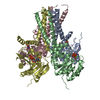
Journal: Nat Commun / Year: 2025 Title: Mechanistic snapshots of lipid-linked sugar transfer. Authors: Ryan T Morgan / Stefano Motta / Eva Gil-Iturbe / Biddut Bhattacharjee / Mohammad T Anwar / Giovanni Di Muccio / Alice Romagnoli / Bedangshu Mishra / Khuram U Ashraf / Injin Bang / Daniele Di ...Authors: Ryan T Morgan / Stefano Motta / Eva Gil-Iturbe / Biddut Bhattacharjee / Mohammad T Anwar / Giovanni Di Muccio / Alice Romagnoli / Bedangshu Mishra / Khuram U Ashraf / Injin Bang / Daniele Di Marino / Todd L Lowary / Matthias Quick / Vasileios I Petrou / Michael H B Stowell / Rie Nygaard / Filippo Mancia / Abstract: Enzymes undergo dynamic conformational changes during catalysis, yet conventional high-resolution structural methods typically capture only the most stable states. Here, we address this gap using ...Enzymes undergo dynamic conformational changes during catalysis, yet conventional high-resolution structural methods typically capture only the most stable states. Here, we address this gap using rapid UV photolysis of a chemically caged substrate with cryogenic time-resolved electron microscopy (cryo-TREM). We elucidate the catalytic mechanism of GtrB, a membrane-bound glycosyltransferase that transfers glucose from UDP-glucose to the lipid carrier undecaprenyl phosphate. We visualized how GtrB, which has an active site ~15 Å from the membrane, transitions during the catalytic cycle to move each substrate in proximity for catalysis. From a single dataset, we resolved distinct conformational states: the initial substrate-bound state, a catalytically poised intermediate, and the product-bound state. Through molecular dynamics simulations and biochemical analyses, we identify coordinated movements within the active site that drive catalysis. These findings provide a molecular framework for understanding how glycosyltransferases function and highlight a broadly applicable strategy for capturing dynamic enzymatic states in native-like environments.
Cryogen name: ETHANE / Chamber humidity: 100 % / Chamber temperature: 277.15 K / Instrument: FEI VITROBOT MARK IV
-
Electron microscopy
Microscope
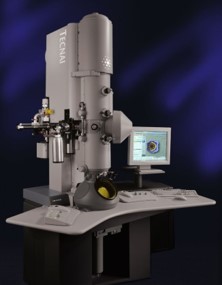
FEI POLARA 300
Image recording
Film or detector model: GATAN K3 BIOQUANTUM (6k x 4k) / Number grids imaged: 1 / Number real images: 3757 / Average exposure time: 4.0 sec. / Average electron dose: 70.91 e/Å2
Electron beam
Acceleration voltage: 300 kV / Electron source: FIELD EMISSION GUN
In the structure databanks used in Yorodumi, some data are registered as the other names, "COVID-19 virus" and "2019-nCoV". Here are the details of the virus and the list of structure data.
Jan 31, 2019. EMDB accession codes are about to change! (news from PDBe EMDB page)
EMDB accession codes are about to change! (news from PDBe EMDB page)
The allocation of 4 digits for EMDB accession codes will soon come to an end. Whilst these codes will remain in use, new EMDB accession codes will include an additional digit and will expand incrementally as the available range of codes is exhausted. The current 4-digit format prefixed with “EMD-” (i.e. EMD-XXXX) will advance to a 5-digit format (i.e. EMD-XXXXX), and so on. It is currently estimated that the 4-digit codes will be depleted around Spring 2019, at which point the 5-digit format will come into force.
The EM Navigator/Yorodumi systems omit the EMD- prefix.
Related info.:Q: What is EMD? / ID/Accession-code notation in Yorodumi/EM Navigator
Yorodumi is a browser for structure data from EMDB, PDB, SASBDB, etc.
This page is also the successor to EM Navigator detail page, and also detail information page/front-end page for Omokage search.
The word "yorodu" (or yorozu) is an old Japanese word meaning "ten thousand". "mi" (miru) is to see.
Related info.:EMDB / PDB / SASBDB / Comparison of 3 databanks / Yorodumi Search / Aug 31, 2016. New EM Navigator & Yorodumi / Yorodumi Papers / Jmol/JSmol / Function and homology information / Changes in new EM Navigator and Yorodumi
 Movie
Movie Controller

 Yorodumi
 Open data
 Basic information
 Map data
 Sample
 Keywords
 Function and homology information
 Synechocystis sp. PCC 6803 substr. Kazusa (bacteria)
 Authors
 United States, 5 items
  Citation

 Structure visualization
 Downloads & links
 emd_49932.png
 http://ftp.pdbj.org/pub/emdb/structures/EMD-49932


 Z (Sec.)
 Y (Row.)
 X (Col.)


 Sample components
 Escherichia coli 'BL21-Gold(DE3)pLysS AG' (bacteria)
 Processing
 Electron microscopy
 FIELD EMISSION GUN