Journal: Sci Adv / Year: 2026 Title: An engineered insulin analog with dual insulin and IGF-1 receptor agonism and distinct signaling. Authors: Irena Selicharová / Nicholas S Kirk / Anna Kertisová / Marta Lubos / Katarína Mitrová / Terezie Ticháčková / Lenka Žáková / Martina Chrudinová / Jana Březinová / Karel Harant / ...Authors: Irena Selicharová / Nicholas S Kirk / Anna Kertisová / Marta Lubos / Katarína Mitrová / Terezie Ticháčková / Lenka Žáková / Martina Chrudinová / Jana Březinová / Karel Harant / Jan Voldřich / Miroslav Hájek / Derek M Huffman / Jiří Jiráček / Abstract: Insulin and insulin-like growth factors (IGF-1 and IGF-2) regulate metabolism, growth, and development via related receptors. In contexts such as brain function or fetal development, coordinated ...Insulin and insulin-like growth factors (IGF-1 and IGF-2) regulate metabolism, growth, and development via related receptors. In contexts such as brain function or fetal development, coordinated signaling by all three hormones is essential. We report the engineering of [GluB10, D-HisB24, GlyB31, TyrB32]-insulin (), an analog with high affinity for IR-A, IR-B, and especially IGF-1R. binds IGF-1R ~1000-fold more strongly than native insulin, approaching IGF-1 levels. Cryo-electron microscopy structures reveal how minimal substitutions in enable effective binding to both IR-A and IGF-1R. In neuronal cells, robustly activates both IR and IGF-1R pathways, promotes survival, and exceeds native ligands in neuroprotective assays. In vivo, regulates glucose effectively in mice and rats. Phosphoproteomic profiling confirms dual pathway activation and identifies targets specific to . These findings demonstrate that rational design of dual-receptor agonists can yield potent, versatile ligands with therapeutic promise in metabolic control, neuroprotection, and regeneration.
In the structure databanks used in Yorodumi, some data are registered as the other names, "COVID-19 virus" and "2019-nCoV". Here are the details of the virus and the list of structure data.
Jan 31, 2019. EMDB accession codes are about to change! (news from PDBe EMDB page)
EMDB accession codes are about to change! (news from PDBe EMDB page)
The allocation of 4 digits for EMDB accession codes will soon come to an end. Whilst these codes will remain in use, new EMDB accession codes will include an additional digit and will expand incrementally as the available range of codes is exhausted. The current 4-digit format prefixed with “EMD-” (i.e. EMD-XXXX) will advance to a 5-digit format (i.e. EMD-XXXXX), and so on. It is currently estimated that the 4-digit codes will be depleted around Spring 2019, at which point the 5-digit format will come into force.
The EM Navigator/Yorodumi systems omit the EMD- prefix.
Related info.:Q: What is EMD? / ID/Accession-code notation in Yorodumi/EM Navigator
Yorodumi is a browser for structure data from EMDB, PDB, SASBDB, etc.
This page is also the successor to EM Navigator detail page, and also detail information page/front-end page for Omokage search.
The word "yorodu" (or yorozu) is an old Japanese word meaning "ten thousand". "mi" (miru) is to see.
Related info.:EMDB / PDB / SASBDB / Comparison of 3 databanks / Yorodumi Search / Aug 31, 2016. New EM Navigator & Yorodumi / Yorodumi Papers / Jmol/JSmol / Function and homology information / Changes in new EM Navigator and Yorodumi
 Movie
Movie Controller


 Open data
 Basic information
 Map data
 Sample
 Keywords
 Function and homology information
 Homo sapiens (human) / synthetic construct (others)
 Authors
 Czech Republic, 2 items
  Citation

 Structure visualization
 Downloads & links
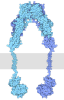
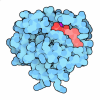
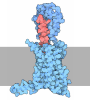
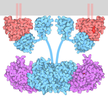
 emd_49261.png
 https://data.pdbj.org/pub/emdb/structures/EMD-49261
 Z (Sec.)
 Y (Row.)
 X (Col.)




 Sample components
 Cricetulus griseus (Chinese hamster)
 Processing
 Electron microscopy
 FIELD EMISSION GUN

