National Institutes of Health/National Institute of General Medical Sciences (NIH/NIGMS)
R01GM147628
United States
The Pew Charitable Trusts
United States
Citation
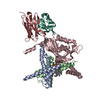
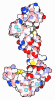
Journal: Nat Chem Biol / Year: 2026 Title: Topogenic sequence recognition at TIM complexes revealed by a stendomycin-bound structure. Authors: Yuanyuan Chen / Antony Lurie / Kevin Wu / Kihong Nam / Samantha N Garcia / Nathaniel W M Dempsey / Esben B Svenningsen / Thomas Tørring / Thomas B Poulsen / Alban Ordureau / Eunyong Park / Abstract: In the mitochondrial inner membrane (IM), topogenesis of imported proteins is mediated by TIM23 and TIM22 complexes. TIM23 translocates soluble polypeptides across the IM into the matrix, whereas ...In the mitochondrial inner membrane (IM), topogenesis of imported proteins is mediated by TIM23 and TIM22 complexes. TIM23 translocates soluble polypeptides across the IM into the matrix, whereas TIM22 inserts polytopic membrane proteins into the IM. Although functionally distinct, both rely on homologous subunits, Tim17 in TIM23 and Tim22 in TIM22. The underlying mechanisms, however, remain elusive. Here we use structural and functional approaches with yeast Tim17, Tim22 and the TIM23 inhibitor stendomycin. Cryogenic-electron microscopy shows that stendomycin binds to the protein translocation cavity of Tim17, mimicking α-helical topogenic sequences. While Tim22 does not bind stendomycin, a single mutation in its equivalent cavity suffices to enable binding. The cavities of Tim17 and Tim22 are largely interchangeable without disrupting their functions. Lastly, stendomycin triggers a collapse of the membrane potential, likely via its Tim17- or Tim22-dependent translocation across the IM. These findings reveal a mechanistic overlap between protein translocases and insertases.
In the structure databanks used in Yorodumi, some data are registered as the other names, "COVID-19 virus" and "2019-nCoV". Here are the details of the virus and the list of structure data.
Jan 31, 2019. EMDB accession codes are about to change! (news from PDBe EMDB page)
EMDB accession codes are about to change! (news from PDBe EMDB page)
The allocation of 4 digits for EMDB accession codes will soon come to an end. Whilst these codes will remain in use, new EMDB accession codes will include an additional digit and will expand incrementally as the available range of codes is exhausted. The current 4-digit format prefixed with “EMD-” (i.e. EMD-XXXX) will advance to a 5-digit format (i.e. EMD-XXXXX), and so on. It is currently estimated that the 4-digit codes will be depleted around Spring 2019, at which point the 5-digit format will come into force.
The EM Navigator/Yorodumi systems omit the EMD- prefix.
Related info.:Q: What is EMD? / ID/Accession-code notation in Yorodumi/EM Navigator
Yorodumi is a browser for structure data from EMDB, PDB, SASBDB, etc.
This page is also the successor to EM Navigator detail page, and also detail information page/front-end page for Omokage search.
The word "yorodu" (or yorozu) is an old Japanese word meaning "ten thousand". "mi" (miru) is to see.
Related info.:EMDB / PDB / SASBDB / Comparison of 3 databanks / Yorodumi Search / Aug 31, 2016. New EM Navigator & Yorodumi / Yorodumi Papers / Jmol/JSmol / Function and homology information / Changes in new EM Navigator and Yorodumi
 Movie
Movie Controller


 Open data
 Basic information
 Map data
 Sample
 Keywords
 Function and homology information
 Saccharomyces cerevisiae (brewer's yeast) /
 Mus musculus (house mouse) / synthetic construct (others)
 Authors
 United States, 2 items
  Citation
 Structure visualization
 Downloads & links
 emd_49111.png
 https://data.pdbj.org/pub/emdb/structures/EMD-49111
 Z (Sec.)
 Y (Row.)
 X (Col.)


 Sample components

 Processing
 Electron microscopy
 FIELD EMISSION GUN