National Institutes of Health/National Institute of General Medical Sciences (NIH/NIGMS)
GM120137
United States
National Institutes of Health/National Heart, Lung, and Blood Institute (NIH/NHLBI)
HL160966
United States
Citation
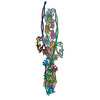
Journal: PLoS Biol / Year: 2025 Title: Interaction of cardiac leiomodin with the native cardiac thin filament. Authors: Madison Little / Cristina M Risi / Tania M Larrinaga / Mason D Summers / Tyler Nguyen / Garry E Smith / Jennifer Atherton / Carol C Gregorio / Alla S Kostyukova / Vitold E Galkin / Abstract: Every heartbeat depends on cyclical contraction-relaxation produced by the interactions between myosin-containing thick and actin-based thin filaments (TFs) arranged into a crystalline-like lattice ...Every heartbeat depends on cyclical contraction-relaxation produced by the interactions between myosin-containing thick and actin-based thin filaments (TFs) arranged into a crystalline-like lattice in the cardiac sarcomere. Therefore, the maintenance of thin filament length is crucial for myocardium function. The thin filament is comprised of an actin backbone, the regulatory troponin complex and tropomyosin that controls interactions between thick and thin filaments. Thin filament length is controlled by the tropomodulin family of proteins; tropomodulin caps pointed ends of thin filaments, and leiomodin (Lmod) promotes elongation of thin filaments by a "leaky-cap" mechanism. The broader distribution of Lmod on the thin filament implied to the possibility of its interaction with the sides of thin filaments. Here, we use biochemical and structural approaches to show that cardiac Lmod (Lmod2) binds to a specific region on the native cardiac thin filament in a Ca2+-dependent manner. We demonstrate that Lmod2's unique C-terminal extension is required for binding to the thin filament actin backbone and suggest that interactions with the troponin complex assist Lmod2's localization on the surface of thin filaments. We propose that Lmod2 regulates the length of cardiac thin filaments in a working myocardium by protecting newly formed thin filament units during systole and promoting actin polymerization at thin filament pointed ends during diastole.
In the structure databanks used in Yorodumi, some data are registered as the other names, "COVID-19 virus" and "2019-nCoV". Here are the details of the virus and the list of structure data.
Jan 31, 2019. EMDB accession codes are about to change! (news from PDBe EMDB page)
EMDB accession codes are about to change! (news from PDBe EMDB page)
The allocation of 4 digits for EMDB accession codes will soon come to an end. Whilst these codes will remain in use, new EMDB accession codes will include an additional digit and will expand incrementally as the available range of codes is exhausted. The current 4-digit format prefixed with “EMD-” (i.e. EMD-XXXX) will advance to a 5-digit format (i.e. EMD-XXXXX), and so on. It is currently estimated that the 4-digit codes will be depleted around Spring 2019, at which point the 5-digit format will come into force.
The EM Navigator/Yorodumi systems omit the EMD- prefix.
Related info.:Q: What is EMD? / ID/Accession-code notation in Yorodumi/EM Navigator
Yorodumi is a browser for structure data from EMDB, PDB, SASBDB, etc.
This page is also the successor to EM Navigator detail page, and also detail information page/front-end page for Omokage search.
The word "yorodu" (or yorozu) is an old Japanese word meaning "ten thousand". "mi" (miru) is to see.
Related info.:EMDB / PDB / SASBDB / Comparison of 3 databanks / Yorodumi Search / Aug 31, 2016. New EM Navigator & Yorodumi / Yorodumi Papers / Jmol/JSmol / Function and homology information / Changes in new EM Navigator and Yorodumi
 Movie
Movie Controller

 Yorodumi
 Open data
 Basic information
 Map data
 Sample
 Keywords
 Sus scrofa (pig) /
  Mus musculus (house mouse)
 Authors
 United States, 2 items
  Citation
 Structure visualization
 Downloads & links
 EMDB map data format
 emd_47714.png
 https://data.pdbj.org/pub/emdb/structures/EMD-47714
 Z (Sec.)
 Y (Row.)
 X (Col.)


 Sample components
 Processing
 Electron microscopy
 FIELD EMISSION GUN