[English] 日本語
Yorodumi
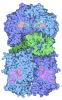
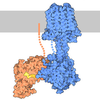
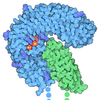
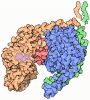
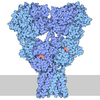
- EMDB-47328: Human GC-A bound to ANP and XX16 -

+
Open data


ID or keywords:

Loading...

-
Basic information

Entry
Database: EMDB / ID: EMD-47328
TitleHuman GC-A bound to ANP and XX16
Map data
Sample
  • Complex: XX16 bound to NPR1-ANP
    • Protein or peptide: Atrial natriuretic peptide receptor 1
    • Protein or peptide: Atrial natriuretic peptide
    • Protein or peptide: XX16 - Heavy chain
    • Protein or peptide: XX16 - Light chain
  • Ligand: CHLORIDE ION
  • Ligand: water
Keywordsreceptor / MEMBRANE PROTEIN
Function / homology
Function and homology information


negative regulation of collecting lymphatic vessel constriction / body fluid secretion / natriuretic peptide receptor activity / cell growth involved in cardiac muscle cell development / neuropeptide receptor binding / mast cell granule / response to 3-methylcholanthrene / peptide receptor activity / positive regulation of potassium ion export across plasma membrane / guanylate cyclase ...negative regulation of collecting lymphatic vessel constriction / body fluid secretion / natriuretic peptide receptor activity / cell growth involved in cardiac muscle cell development / neuropeptide receptor binding / mast cell granule / response to 3-methylcholanthrene / peptide receptor activity / positive regulation of potassium ion export across plasma membrane / guanylate cyclase / receptor guanylyl cyclase signaling pathway / guanylate cyclase activity / negative regulation of JUN kinase activity / synaptic signaling via neuropeptide / regulation of atrial cardiac muscle cell membrane repolarization / cGMP biosynthetic process / Physiological factors / cardiac conduction system development / positive regulation of renal sodium excretion / YAP1- and WWTR1 (TAZ)-stimulated gene expression / neuropeptide hormone activity / hormone receptor binding / regulation of vascular permeability / glycinergic synapse / G protein-coupled peptide receptor activity / negative regulation of systemic arterial blood pressure / aortic valve morphogenesis / regulation of calcium ion transmembrane transport via high voltage-gated calcium channel / positive regulation of urine volume / dopamine metabolic process / cellular response to angiotensin / peptide hormone binding / hormone binding / brush border / response to muscle stretch / positive regulation of heart rate / cell projection / positive regulation of cardiac muscle contraction / negative regulation of angiogenesis / blood vessel diameter maintenance / negative regulation of smooth muscle cell proliferation / cellular response to glucose stimulus / female pregnancy / neuropeptide signaling pathway / cellular response to mechanical stimulus / response to insulin / hormone activity / negative regulation of cell growth / vasodilation / regulation of blood pressure / cellular response to hydrogen peroxide / nuclear membrane / protein folding / response to hypoxia / perikaryon / protein kinase activity / signaling receptor complex / cell surface receptor signaling pathway / intracellular signal transduction / Amyloid fiber formation / signaling receptor binding / endoplasmic reticulum membrane / GTP binding / perinuclear region of cytoplasm / protein-containing complex / : / extracellular region / ATP binding / plasma membrane / cytoplasm
Similarity search - Function
Natriuretic peptide, atrial type / : / Natriuretic peptide, conserved site / Atrial natriuretic peptide / Natriuretic peptides signature. / Natriuretic peptide / Natriuretic peptide / Adenylyl cyclase class-4/guanylyl cyclase / Natriuretic peptides receptors signature. / : ...Natriuretic peptide, atrial type / : / Natriuretic peptide, conserved site / Atrial natriuretic peptide / Natriuretic peptides signature. / Natriuretic peptide / Natriuretic peptide / Adenylyl cyclase class-4/guanylyl cyclase / Natriuretic peptides receptors signature. / : / Adenylyl cyclase class-4/guanylyl cyclase, conserved site / Guanylate cyclase signature. / Adenylyl- / guanylyl cyclase, catalytic domain / Adenylate and Guanylate cyclase catalytic domain / Adenylyl cyclase class-3/4/guanylyl cyclase / Guanylate cyclase domain profile. / Nucleotide cyclase / Receptor, ligand binding region / Receptor family ligand binding region / Periplasmic binding protein-like I / Protein tyrosine and serine/threonine kinase / Serine-threonine/tyrosine-protein kinase, catalytic domain / Protein kinase domain profile. / Protein kinase domain / Protein kinase-like domain superfamily
Similarity search - Domain/homology
Natriuretic peptides A / Atrial natriuretic peptide receptor 1
Similarity search - Component
Biological speciesHomo sapiens (human) / Mus musculus (house mouse)
Methodsingle particle reconstruction / cryo EM / Resolution: 2.7 Å
AuthorsLiu S / Huang X-Y
Funding support United States, 1 items
OrganizationGrant numberCountry
National Institutes of Health/National Institute of General Medical Sciences (NIH/NIGMS) United States
CitationJournal: Nat Commun / Year: 2026
Title: Structural insights into single-pass transmembrane receptor GC-A activation by distinct antihypertensive antibodies.
Authors: Shian Liu / Onorina Manzo / Jinan Wang / Lan Zhu / Fu Xiao / Yi-Chen Su / Devanshu Kurre / Wei Liu / Yinglong Miao / Annarita Di Lorenzo / Xin-Yun Huang /
Abstract: The single-pass transmembrane receptor guanylyl cyclase A (GC-A), also known as natriuretic peptide receptor A (NPR-A) or NPR1, regulates blood pressure through vasodilation and natriuresis, making ...The single-pass transmembrane receptor guanylyl cyclase A (GC-A), also known as natriuretic peptide receptor A (NPR-A) or NPR1, regulates blood pressure through vasodilation and natriuresis, making it a promising therapeutic target for hypertension and heart failure. We describe two monoclonal antibodies, XX16 and REGN5308, that differentially activate GC-A. Using cryo-electron microscopy and molecular dynamics simulations, we reveal that XX16 stabilizes GC-A in an active conformation even without its ligand ANP, whereas REGN5308 requires ANP to fully promote receptor activation. Both antibodies increase ANP binding affinity to GC-A and enhance GC-A-mediated cGMP signaling, although XX16 exerts a stronger stabilizing influence on ATP and GTP binding. In a mouse model of obesity-induced hypertension, XX16 treatment significantly reduces blood pressure, underscoring its therapeutic potential. These findings outline the structural and functional basis of GC-A activation by antibody positive allosteric modulators, offering strategies for durable antihypertensive therapies and improved management of cardiovascular diseases.
History
DepositionOct 16, 2024-
Header (metadata) releaseJan 21, 2026-
Map releaseJan 21, 2026-
UpdateAug 5, 2026-
Current statusAug 5, 2026Processing site: RCSB / Status: Released

-
Structure visualization

Supplemental images

Downloads & links

-
Map

FileDownload / File: emd_47328.map.gz / Format: CCP4 / Size: 64 MB / Type: IMAGE STORED AS FLOATING POINT NUMBER (4 BYTES)
Projections & slices

Image control

Size
Brightness
Contrast
Others
AxesZ (Sec.)Y (Row.)X (Col.)
1.08 Å/pix.
x 256 pix.
= 277.248 Å
1.08 Å/pix.
x 256 pix.
= 277.248 Å
1.08 Å/pix.
x 256 pix.
= 277.248 Å

Surface

Projections

Slices (1/3)

Slices (1/2)

Slices (2/3)

Images are generated by Spider.

Voxel sizeX=Y=Z: 1.083 Å
Density
Contour Level1: 0.8
Minimum - Maximum-9.330511 - 10.569222999999999
Average (Standard dev.)-0.00043332687 (±0.1916832)
SymmetrySpace group: 1
Details

EMDB XML:

Map geometry
Axis orderXYZ
Origin000
Dimensions256256256
Spacing256256256
CellA=B=C: 277.248 Å
α=β=γ: 90.0 °

-
Supplemental data

-
Half map: #2

Fileemd_47328_half_map_1.map
Projections & Slices
AxesZYX

Projections

Slices (1/2)
Density Histograms

-
Half map: #1

Fileemd_47328_half_map_2.map
Projections & Slices
AxesZYX

Projections

Slices (1/2)
Density Histograms

-
Sample components

-
Entire : XX16 bound to NPR1-ANP

EntireName: XX16 bound to NPR1-ANP
Components
  • Complex: XX16 bound to NPR1-ANP
    • Protein or peptide: Atrial natriuretic peptide receptor 1
    • Protein or peptide: Atrial natriuretic peptide
    • Protein or peptide: XX16 - Heavy chain
    • Protein or peptide: XX16 - Light chain
  • Ligand: CHLORIDE ION
  • Ligand: water

-
Supramolecule #1: XX16 bound to NPR1-ANP

SupramoleculeName: XX16 bound to NPR1-ANP / type: complex / ID: 1 / Parent: 0 / Macromolecule list: #1-#4
Source (natural)Organism: Homo sapiens (human)

-
Macromolecule #1: Atrial natriuretic peptide receptor 1

MacromoleculeName: Atrial natriuretic peptide receptor 1 / type: protein_or_peptide / ID: 1 / Number of copies: 2 / Enantiomer: LEVO / EC number: guanylate cyclase
Source (natural)Organism: Homo sapiens (human)
Molecular weightTheoretical: 115.560688 KDa
Recombinant expressionOrganism: Spodoptera frugiperda (fall armyworm)
SequenceString: GNLTVAVVLP LANTSYPWSW ARVGPAVELA LAQVKARPDL LPGWTVRTVL GSSENALGVC SDTAAPLAAV DLKWEHNPAV FLGPGCVYA AAPVGRFTAH WRVPLLTAGA PALGFGVKDE YALTTRAGPS YAKLGDFVAA LHRRLGWERQ ALMLYAYRPG D EEHCFFLV ...String:
GNLTVAVVLP LANTSYPWSW ARVGPAVELA LAQVKARPDL LPGWTVRTVL GSSENALGVC SDTAAPLAAV DLKWEHNPAV FLGPGCVYA AAPVGRFTAH WRVPLLTAGA PALGFGVKDE YALTTRAGPS YAKLGDFVAA LHRRLGWERQ ALMLYAYRPG D EEHCFFLV EGLFMRVRDR LNITVDHLEF AEDDLSHYTR LLRTMPRKGR VIYICSSPDA FRTLMLLALE AGLCGEDYVF FH LDIFGQS LQGGQGPAPR RPWERGDGQD VSARQAFQAA KIITYKDPDN PEYLEFLKQL KHLAYEQFNF TMEDGLVNTI PAS FHDGLL LYIQAVTETL AHGGTVTDGE NITQRMWNRS FQGVTGYLKI DSSGDRETDF SLWDMDPENG AFRVVLNYNG TSQE LVAVS GRKLNWPLGY PPPDIPKCGF DNEDPACNQD HLSTLEVLAL VGSLSLLGIL IVSFFIYRKM QLEKELASEL WRVRW EDVE PSSLERHLRS AGSRLTLSGR GSNYGSLLTT EGQFQVFAKT AYYKGNLVAV KRVNRKRIEL TRKVLFELKH MRDVQN EHL TRFVGACTDP PNICILTEYC PRGSLQDILE NESITLDWMF RYSLTNDIVK GMLFLHNGAI CSHGNLKSSN CVVDGRF VL KITDYGLESF RDLDPEQGHT VYAKKLWTAP ELLRMASPPV RGSQAGDVYS FGIILQEIAL RSGVFHVEGL DLSPKEII E RVTRGEQPPF RPSLALQSHL EELGLLMQRC WAEDPQERPP FQQIRLTLRK FNRENSSNIL DNLLSRMEQY ANNLEELVE ERTQAYLEEK RKAEALLYQI LPHSVAEQLK RGETVQAEAF DSVTIYFSDI VGFTALSAES TPMQVVTLLN DLYTCFDAVI DNFDVYKVE TIGDAYMVVS GLPVRNGRLH ACEVARMALA LLDAVRSFRI RHRPQEQLRL RIGIHTGPVC AGVVGLKMPR Y CLFGDTVN TASRMESNGE ALKIHLSSET KAVLEEFGGF ELELRGDVEM KGKGKVRTYW LLGERGSSTR G

UniProtKB: Atrial natriuretic peptide receptor 1

-
Macromolecule #2: Atrial natriuretic peptide

MacromoleculeName: Atrial natriuretic peptide / type: protein_or_peptide / ID: 2 / Number of copies: 1 / Enantiomer: LEVO
Source (natural)Organism: Homo sapiens (human)
Molecular weightTheoretical: 3.087505 KDa
Recombinant expressionOrganism: Homo sapiens (human)
SequenceString:
SLRRSSCFGG RMDRIGAQSG LGCNSFRY

UniProtKB: Natriuretic peptides A

-
Macromolecule #3: XX16 - Heavy chain

MacromoleculeName: XX16 - Heavy chain / type: protein_or_peptide / ID: 3 / Number of copies: 1 / Enantiomer: LEVO
Source (natural)Organism: Mus musculus (house mouse)
Molecular weightTheoretical: 24.483457 KDa
Recombinant expressionOrganism: Spodoptera frugiperda (fall armyworm)
SequenceString: QVQLLESGGG LVQPGGSLRL SCAASGFTFS SYWMNWVRQA PGKGLEWVSV IESKGNYIFY ADSVKGRFTI SRDNSKNTLY LQMNSLRAE DTAVYYCARD RYSMIYSYGA GAFDYWGQGT LVTVSSASTK GPSVFPLAPS SKSTSGGTAA LGCLVKDYFP E PVTVSWNS ...String:
QVQLLESGGG LVQPGGSLRL SCAASGFTFS SYWMNWVRQA PGKGLEWVSV IESKGNYIFY ADSVKGRFTI SRDNSKNTLY LQMNSLRAE DTAVYYCARD RYSMIYSYGA GAFDYWGQGT LVTVSSASTK GPSVFPLAPS SKSTSGGTAA LGCLVKDYFP E PVTVSWNS GALTSGVHTF PAVLQSSGLY SLSSVVTVPS SSLGTQTYIC NVNHKPSNTK VDKRVEPKSC

-
Macromolecule #4: XX16 - Light chain

MacromoleculeName: XX16 - Light chain / type: protein_or_peptide / ID: 4 / Number of copies: 1 / Enantiomer: LEVO
Source (natural)Organism: Mus musculus (house mouse)
Molecular weightTheoretical: 23.450102 KDa
Recombinant expressionOrganism: Spodoptera frugiperda (fall armyworm)
SequenceString: DIQMTQSPSS LSASVGDRVT ITCRASQGIS SYLAWYQQKP GKAPKLLIYT ASTLQSGVPS RFSGSGSGTD FTLTISSLQP EDFATYYCQ QTWRKPRTFG QGTKVEIKRT VAAPSVFIFP PSDEQLKSGT ASVVCLLNNF YPREAKVQWK VDNALQSGNS Q ESVTEQDS ...String:
DIQMTQSPSS LSASVGDRVT ITCRASQGIS SYLAWYQQKP GKAPKLLIYT ASTLQSGVPS RFSGSGSGTD FTLTISSLQP EDFATYYCQ QTWRKPRTFG QGTKVEIKRT VAAPSVFIFP PSDEQLKSGT ASVVCLLNNF YPREAKVQWK VDNALQSGNS Q ESVTEQDS KDSTYSLSST LTLSKADYEK HKVYACEVTH QGLSSPVTKS FNRGEC

-
Macromolecule #7: CHLORIDE ION

MacromoleculeName: CHLORIDE ION / type: ligand / ID: 7 / Number of copies: 2 / Formula: CL
Molecular weightTheoretical: 35.453 Da

-
Macromolecule #8: water

MacromoleculeName: water / type: ligand / ID: 8 / Number of copies: 139 / Formula: HOH
Molecular weightTheoretical: 18.015 Da
Chemical component information

ChemComp-HOH:
WATER

-
Experimental details

-
Structure determination

Methodcryo EM
Processingsingle particle reconstruction
Aggregation stateparticle

-
Sample preparation

BufferpH: 8
VitrificationCryogen name: ETHANE

-
Electron microscopy

MicroscopeTFS KRIOS
Image recordingFilm or detector model: GATAN K3 (6k x 4k) / Average electron dose: 51.0 e/Å2
Electron beamAcceleration voltage: 300 kV / Electron source: FIELD EMISSION GUN
Electron opticsIllumination mode: FLOOD BEAM / Imaging mode: BRIGHT FIELD / Nominal defocus max: 2.0 µm / Nominal defocus min: 0.8 µm
Experimental equipment
Model: Titan Krios / Image courtesy: FEI Company

+
Image processing

CTF correctionType: PHASE FLIPPING AND AMPLITUDE CORRECTION
Startup modelType of model: INSILICO MODEL
Final reconstructionResolution.type: BY AUTHOR / Resolution: 2.7 Å / Resolution method: FSC 0.143 CUT-OFF / Number images used: 1700000
Initial angle assignmentType: ANGULAR RECONSTITUTION
Final angle assignmentType: ANGULAR RECONSTITUTION

+
About Yorodumi

-
News

-
Feb 9, 2022. New format data for meta-information of EMDB entries

New format data for meta-information of EMDB entries

  • Version 3 of the EMDB header file is now the official format.
  • The previous official version 1.9 will be removed from the archive.

Related info.:EMDB header

External links:wwPDB to switch to version 3 of the EMDB data model

-
Aug 12, 2020. Covid-19 info

Covid-19 info

URL: https://pdbj.org/emnavi/covid19.php

New page: Covid-19 featured information page in EM Navigator.

Related info.:Covid-19 info / Mar 5, 2020. Novel coronavirus structure data

+
Mar 5, 2020. Novel coronavirus structure data

Novel coronavirus structure data

Related info.:Yorodumi Speices / Aug 12, 2020. Covid-19 info

External links:COVID-19 featured content - PDBj / Molecule of the Month (242):Coronavirus Proteases

+
Jan 31, 2019. EMDB accession codes are about to change! (news from PDBe EMDB page)

EMDB accession codes are about to change! (news from PDBe EMDB page)

  • The allocation of 4 digits for EMDB accession codes will soon come to an end. Whilst these codes will remain in use, new EMDB accession codes will include an additional digit and will expand incrementally as the available range of codes is exhausted. The current 4-digit format prefixed with “EMD-” (i.e. EMD-XXXX) will advance to a 5-digit format (i.e. EMD-XXXXX), and so on. It is currently estimated that the 4-digit codes will be depleted around Spring 2019, at which point the 5-digit format will come into force.
  • The EM Navigator/Yorodumi systems omit the EMD- prefix.

Related info.:Q: What is EMD? / ID/Accession-code notation in Yorodumi/EM Navigator

External links:EMDB Accession Codes are Changing Soon! / Contact to PDBj

+
Jul 12, 2017. Major update of PDB

Major update of PDB

  • wwPDB released updated PDB data conforming to the new PDBx/mmCIF dictionary.
  • This is a major update changing the version number from 4 to 5, and with Remediation, in which all the entries are updated.
  • In this update, many items about electron microscopy experimental information are reorganized (e.g. em_software).
  • Now, EM Navigator and Yorodumi are based on the updated data.

External links:wwPDB Remediation / Enriched Model Files Conforming to OneDep Data Standards Now Available in the PDB FTP Archive

-
Yorodumi

Thousand views of thousand structures

  • Yorodumi is a browser for structure data from EMDB, PDB, SASBDB, etc.
  • This page is also the successor to EM Navigator detail page, and also detail information page/front-end page for Omokage search.
  • The word "yorodu" (or yorozu) is an old Japanese word meaning "ten thousand". "mi" (miru) is to see.

Related info.:EMDB / PDB / SASBDB / Comparison of 3 databanks / Yorodumi Search / Aug 31, 2016. New EM Navigator & Yorodumi / Yorodumi Papers / Jmol/JSmol / Function and homology information / Changes in new EM Navigator and Yorodumi

Read more