National Institutes of Health/National Institute of General Medical Sciences (NIH/NIGMS)
R35GM144121
United States
National Institutes of Health/National Institute of General Medical Sciences (NIH/NIGMS)
R35GM118290
United States
Biotechnology and Biological Sciences Research Council (BBSRC)
BB/W017385/1
United Kingdom
Citation
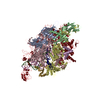
Journal: Nat Struct Mol Biol / Year: 2026 Title: Mechanism and reconstitution of circadian transcription in cyanobacteria. Authors: Mingxu Fang / Yajie Gu / Miron Leanca / Mariusz Matyszewski / Andy LiWang / Yulia Yuzenkova / Kevin D Corbett / Susan S Golden / Abstract: Circadian biological clocks evolved across kingdoms of life as an adaptation to predictable cycles of sunrise and sunset. In the cyanobacterium Synechococcus elongatus, a protein-based clock ...Circadian biological clocks evolved across kingdoms of life as an adaptation to predictable cycles of sunrise and sunset. In the cyanobacterium Synechococcus elongatus, a protein-based clock precisely controls when different genes are turned on and off during the 24-h day but the phasing mechanism remains unclear. Here we show the molecular basis of this regulation and reconstitute clock-controlled transcription in vitro using purified components. Biochemical and structural analyses revealed that the clock-regulated transcription factor RpaA can function as either an activator or a repressor of cyanobacterial RNA polymerase, depending on its binding position relative to core promoter elements. Leveraging the repressor mechanism, we developed a heterologous in vitro system driven by bacteriophage T7 RNA polymerase that sustains circadian transcription for multiple days. These findings explain how a single clock output generates opposite phases of gene expression and define the minimal components for circadian clock function, enabling synthetic or biotechnological applications.
In the structure databanks used in Yorodumi, some data are registered as the other names, "COVID-19 virus" and "2019-nCoV". Here are the details of the virus and the list of structure data.
Jan 31, 2019. EMDB accession codes are about to change! (news from PDBe EMDB page)
EMDB accession codes are about to change! (news from PDBe EMDB page)
The allocation of 4 digits for EMDB accession codes will soon come to an end. Whilst these codes will remain in use, new EMDB accession codes will include an additional digit and will expand incrementally as the available range of codes is exhausted. The current 4-digit format prefixed with “EMD-” (i.e. EMD-XXXX) will advance to a 5-digit format (i.e. EMD-XXXXX), and so on. It is currently estimated that the 4-digit codes will be depleted around Spring 2019, at which point the 5-digit format will come into force.
The EM Navigator/Yorodumi systems omit the EMD- prefix.
Related info.:Q: What is EMD? / ID/Accession-code notation in Yorodumi/EM Navigator
Yorodumi is a browser for structure data from EMDB, PDB, SASBDB, etc.
This page is also the successor to EM Navigator detail page, and also detail information page/front-end page for Omokage search.
The word "yorodu" (or yorozu) is an old Japanese word meaning "ten thousand". "mi" (miru) is to see.
Related info.:EMDB / PDB / SASBDB / Comparison of 3 databanks / Yorodumi Search / Aug 31, 2016. New EM Navigator & Yorodumi / Yorodumi Papers / Jmol/JSmol / Function and homology information / Changes in new EM Navigator and Yorodumi
 Movie
Movie Controller

 Yorodumi
 Open data
 Basic information
 Map data
 Sample
 Keywords
 Synechococcus elongatus (bacteria)
 Authors
 United States,
  United Kingdom, 3 items
  Citation
 Structure visualization
 Downloads & links
 EMDB map data format
 emd_47312.png
 http://ftp.pdbj.org/pub/emdb/structures/EMD-47312


 Z (Sec.)
 Y (Row.)
 X (Col.)


 Sample components
 Processing
 Electron microscopy
 FIELD EMISSION GUN