 Movie
Movie Controller


+ Open data

- Basic information
| Entry |  | |||||||||
|---|---|---|---|---|---|---|---|---|---|---|
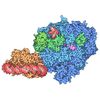
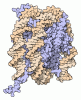
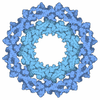
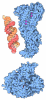
| Title | Cryo-EM structure of NRCAM nucleosome aided by scFv | |||||||||
 Map data Map data | ||||||||||
 Sample Sample |
| |||||||||
 Keywords Keywords | nucleosome / pioneer transcription factors / DNA binding proteins / transcription / NUCLEAR PROTEIN | |||||||||
| Function / homology |  Function and homology information Function and homology informationnegative regulation of tumor necrosis factor-mediated signaling pathway / negative regulation of megakaryocyte differentiation / protein localization to CENP-A containing chromatin / Chromatin modifying enzymes / Replacement of protamines by nucleosomes in the male pronucleus / CENP-A containing nucleosome / Packaging Of Telomere Ends / Recognition and association of DNA glycosylase with site containing an affected purine / Cleavage of the damaged purine / telomere organization ...negative regulation of tumor necrosis factor-mediated signaling pathway / negative regulation of megakaryocyte differentiation / protein localization to CENP-A containing chromatin / Chromatin modifying enzymes / Replacement of protamines by nucleosomes in the male pronucleus / CENP-A containing nucleosome / Packaging Of Telomere Ends / Recognition and association of DNA glycosylase with site containing an affected purine / Cleavage of the damaged purine / telomere organization / Interleukin-7 signaling / ChAHP complex assembly / Deposition of new CENPA-containing nucleosomes at the centromere / Recognition and association of DNA glycosylase with site containing an affected pyrimidine / Cleavage of the damaged pyrimidine / RNA Polymerase I Promoter Opening / Inhibition of DNA recombination at telomere / Assembly of the ORC complex at the origin of replication / FXIIa activates plasma kallikrein-kinin system / SUMOylation of chromatin organization proteins / Regulation of endogenous retroelements by the Human Silencing Hub (HUSH) complex / Meiotic synapsis / DNA methylation / Condensation of Prophase Chromosomes / Chromatin modifications during the maternal to zygotic transition (MZT) / HCMV Late Events / SIRT1 negatively regulates rRNA expression / ERCC6 (CSB) and EHMT2 (G9a) positively regulate rRNA expression / PRC2 methylates histones and DNA / NuRD complex assembly / Regulation of endogenous retroelements by KRAB-ZFP proteins / Interaction of NuRD complexes with transcription factors / Defective pyroptosis / HDACs deacetylate histones / CHD1 and CHD2 subfamily / Transcriptional regulation by small RNAs / lipopolysaccharide binding / Regulation of endogenous retroelements by Piwi-interacting RNAs (piRNAs) / RNA Polymerase I Promoter Escape / Nonhomologous End-Joining (NHEJ) / epigenetic regulation of gene expression / CHD6, CHD7, CHD8, CHD9 subfamily / HDMs demethylate histones / Activated PKN1 stimulates transcription of AR (androgen receptor) regulated genes KLK2 and KLK3 / RUNX1 regulates genes involved in megakaryocyte differentiation and platelet function / Negative Regulation of CDH1 Gene Transcription / NoRC negatively regulates rRNA expression / PKMTs methylate histone lysines / G2/M DNA damage checkpoint / Formation of the beta-catenin:TCF transactivating complex / B-WICH complex positively regulates rRNA expression / DNA Damage/Telomere Stress Induced Senescence / Meiotic recombination / Pre-NOTCH Transcription and Translation / Activation of anterior HOX genes in hindbrain development during early embryogenesis / Transcriptional regulation of granulopoiesis / RMTs methylate histone arginines / HCMV Early Events / Metalloprotease DUBs / nucleosomal DNA binding / innate immune response in mucosa / structural constituent of chromatin / nucleosome assembly / Regulation of PD-L1(CD274) transcription / UCH proteinases / nucleosome / HATs acetylate histones / E3 ubiquitin ligases ubiquitinate target proteins / killing of cells of another organism / Recruitment and ATM-mediated phosphorylation of repair and signaling proteins at DNA double strand breaks / Factors involved in megakaryocyte development and platelet production / MLL4 and MLL3 complexes regulate expression of PPARG target genes in adipogenesis and hepatic steatosis / RUNX1 regulates transcription of genes involved in differentiation of HSCs / chromatin organization / Processing of DNA double-strand break ends / Dengue Virus-Host Interactions / antimicrobial humoral immune response mediated by antimicrobial peptide / Senescence-Associated Secretory Phenotype (SASP) / heterochromatin formation / defense response to Gram-negative bacterium / Oxidative Stress Induced Senescence / antibacterial humoral response / Estrogen-dependent gene expression / chromosome, telomeric region / defense response to Gram-positive bacterium / Ub-specific processing proteases / cadherin binding / negative regulation of cell population proliferation / Amyloid fiber formation / protein heterodimerization activity / chromatin / protein-containing complex / DNA binding / RNA binding / extracellular exosome / nucleoplasm / extracellular region / membrane / nucleus Similarity search - Function | |||||||||
| Biological species |  Homo sapiens (human) / Homo sapiens (human) /   Mus musculus (house mouse) Mus musculus (house mouse) | |||||||||
| Method | single particle reconstruction / cryo EM / Resolution: 2.6 Å | |||||||||
 Authors Authors | Zhou BR / Bai Y | |||||||||
| Funding support |  United States, 1 items United States, 1 items
| |||||||||
 Citation Citation | Journal: Mol Cell / Year: 2026 Title: Distinct associations of pioneer factor Ascl1-E12a with nucleosomes drive changes in cell fate. Authors: Bing-Rui Zhou / Edgar Luzete-Monteiro / Jingchao Zhang / Naomi Takenaka / Hsin-Yao Tang / Meilin Fernandez Garcia / Mariel Coradin / Megan Frederick / Greg Donahue / Benjamin Garcia / Yawen ...Authors: Bing-Rui Zhou / Edgar Luzete-Monteiro / Jingchao Zhang / Naomi Takenaka / Hsin-Yao Tang / Meilin Fernandez Garcia / Mariel Coradin / Megan Frederick / Greg Donahue / Benjamin Garcia / Yawen Bai / Kenneth S Zaret / Abstract: Understanding how pioneer transcription factors target nucleosomal DNA and initiate chromatin accessibility reveals the earliest events in cell fate changes. We integrated structural, biochemical, ...Understanding how pioneer transcription factors target nucleosomal DNA and initiate chromatin accessibility reveals the earliest events in cell fate changes. We integrated structural, biochemical, and genomic approaches to assess how the pioneer factor Ascl1-E12a heterodimer perturbs nucleosomes in vitro and in vivo to induce a neural cell fate. Two Ascl1-E12a heterodimers shift and unwrap 15 bp of nucleosomal DNA in a stepwise manner while eliciting solvent exchanges within the octamer. Nucleosome binding, but not free DNA binding, by Ascl1-E12a is enhanced by two types of associations with the nucleosome that differentially affect the kinetics of DNA unwrapping and shifting. Nucleosome association mutants of Ascl1 perturb chromatin opening on linker histone-compacted nucleosome arrays-independent of nucleosome remodelers-and targeting of closed chromatin in vivo, with consequent deficiencies in cellular reprogramming. Our findings establish that distinct associations with nucleosomes are essential for the pioneer factor Ascl1 to overcome chromatin barriers to reprogram cell fate. | |||||||||
| History |
|
- Structure visualization
| Supplemental images |
|---|

- Downloads & links
-EMDB archive
| Map data | emd_42040.map.gz | 118 MB | EMDB map data format | |
|---|---|---|---|---|
| Header (meta data) | emd-42040-v30.xmlemd-42040.xml | 25.3 KB 25.3 KB | Display Display | EMDB header |
| FSC (resolution estimation) | emd_42040_fsc.xml | 10.6 KB | Display | FSC data file |
| Images |  emd_42040.png emd_42040.png | 108.4 KB | ||
| Masks | emd_42040_msk_1.map | 125 MB | Mask map | |
| Filedesc metadata | emd-42040.cif.gz | 7 KB | ||
| Others | emd_42040_half_map_1.map.gzemd_42040_half_map_2.map.gz | 116 MB 116 MB | ||
| Archive directory |  https://data.pdbj.org/pub/emdb/structures/EMD-42040ftp://data.pdbj.org/pub/emdb/structures/EMD-42040 https://data.pdbj.org/pub/emdb/structures/EMD-42040ftp://data.pdbj.org/pub/emdb/structures/EMD-42040 | HTTPS FTP |
-Related structure data
| Related structure data |  8u9sMC  8ubiC  8ubjC  8ubkC  8ublC M: atomic model generated by this map C: citing same article ( |
|---|---|
| Similar structure data |


-Links
| EMDB pages | EMDB (EBI/PDBe) / EMDataResource |
|---|---|
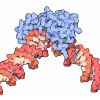
| Related items in Molecule of the Month |
-Map
| File | Download / File: emd_42040.map.gz / Format: CCP4 / Size: 125 MB / Type: IMAGE STORED AS FLOATING POINT NUMBER (4 BYTES) | ||||||||||||||||||||||||||||||||||||
|---|---|---|---|---|---|---|---|---|---|---|---|---|---|---|---|---|---|---|---|---|---|---|---|---|---|---|---|---|---|---|---|---|---|---|---|---|---|
| Projections & slices | Image control
Images are generated by Spider. | ||||||||||||||||||||||||||||||||||||
| Voxel size | X=Y=Z: 1.0164 Å | ||||||||||||||||||||||||||||||||||||
| Density |
| ||||||||||||||||||||||||||||||||||||
| Symmetry | Space group: 1 | ||||||||||||||||||||||||||||||||||||
| Details | EMDB XML:
|
 Z (Sec.)
 Y (Row.)
 X (Col.)


-Supplemental data
-Mask #1
| File | emd_42040_msk_1.map | ||||||||||||
|---|---|---|---|---|---|---|---|---|---|---|---|---|---|
| Projections & Slices |
| ||||||||||||
| Density Histograms |


-Half map: #2
| File | emd_42040_half_map_1.map | ||||||||||||
|---|---|---|---|---|---|---|---|---|---|---|---|---|---|
| Projections & Slices |
| ||||||||||||
| Density Histograms |


-Half map: #1
| File | emd_42040_half_map_2.map | ||||||||||||
|---|---|---|---|---|---|---|---|---|---|---|---|---|---|
| Projections & Slices |
| ||||||||||||
| Density Histograms |


- Sample components
-Entire : 162bp NRCAM nucleosome in complex with scFv
| Entire | Name: 162bp NRCAM nucleosome in complex with scFv |
|---|---|
| Components |
|
-Supramolecule #1: 162bp NRCAM nucleosome in complex with scFv
| Supramolecule | Name: 162bp NRCAM nucleosome in complex with scFv / type: complex / ID: 1 / Parent: 0 / Macromolecule list: #1-#7 |
|---|---|
| Source (natural) | Organism: Homo sapiens (human) |
-Macromolecule #1: Histone H3.1
| Macromolecule | Name: Histone H3.1 / type: protein_or_peptide / ID: 1 / Number of copies: 2 / Enantiomer: LEVO |
|---|---|
| Source (natural) | Organism: Homo sapiens (human) |
| Molecular weight | Theoretical: 15.437167 KDa |
| Recombinant expression | Organism:   Escherichia coli (E. coli) Escherichia coli (E. coli) |
| Sequence | String: MARTKQTARK STGGKAPRKQ LATKAARKSA PATGGVKKPH RYRPGTVALR EIRRYQKSTE LLIRKLPFQR LVREIAQDFK TDLRFQSSA VMALQEACEA YLVGLFEDTN LCAIHAKRVT IMPKDIQLAR RIRGERA UniProtKB: Histone H3.1 |
-Macromolecule #2: Histone H4
| Macromolecule | Name: Histone H4 / type: protein_or_peptide / ID: 2 / Number of copies: 2 / Enantiomer: LEVO |
|---|---|
| Source (natural) | Organism: Homo sapiens (human) |
| Molecular weight | Theoretical: 11.394426 KDa |
| Recombinant expression | Organism: Escherichia coli (E. coli) |
| Sequence | String: MSGRGKGGKG LGKGGAKRHR KVLRDNIQGI TKPAIRRLAR RGGVKRISGL IYEETRGVLK VFLENVIRDA VTYTEHAKRK TVTAMDVVY ALKRQGRTLY GFGG UniProtKB: Histone H4 |
-Macromolecule #3: Histone H2A type 1-B/E
| Macromolecule | Name: Histone H2A type 1-B/E / type: protein_or_peptide / ID: 3 / Number of copies: 2 / Enantiomer: LEVO |
|---|---|
| Source (natural) | Organism: Homo sapiens (human) |
| Molecular weight | Theoretical: 14.165551 KDa |
| Recombinant expression | Organism: Escherichia coli (E. coli) |
| Sequence | String: MSGRGKQGGK ARAKAKTRSS RAGLQFPVGR VHRLLRKGNY SERVGAGAPV YLAAVLEYLT AEILELAGNA ARDNKKTRII PRHLQLAIR NDEELNKLLG RVTIAQGGVL PNIQAVLLPK KTESHHKAKG K UniProtKB: Histone H2A type 1-B/E |
-Macromolecule #4: Histone H2B type 1-J
| Macromolecule | Name: Histone H2B type 1-J / type: protein_or_peptide / ID: 4 / Number of copies: 2 / Enantiomer: LEVO |
|---|---|
| Source (natural) | Organism: Homo sapiens (human) |
| Molecular weight | Theoretical: 13.935239 KDa |
| Recombinant expression | Organism: Escherichia coli (E. coli) |
| Sequence | String: MPEPAKSAPA PKKGSKKAVT KAQKKDGKKR KRSRKESYSI YVYKVLKQVH PDTGISSKAM GIMNSFVNDI FERIAGEASR LAHYNKRST ITSREIQTAV RLLLPGELAK HAVSEGTKAV TKYTSAK UniProtKB: Histone H2B type 1-J |
-Macromolecule #7: scFv20
| Macromolecule | Name: scFv20 / type: protein_or_peptide / ID: 7 / Number of copies: 2 / Enantiomer: LEVO |
|---|---|
| Source (natural) | Organism: Mus musculus (house mouse) |
| Molecular weight | Theoretical: 29.34542 KDa |
| Recombinant expression | Organism: Escherichia coli (E. coli) |
| Sequence | String: MKSSHHHHHH ENLYFQSNAM DIKMTQSPSS MHASLGERVT ITCKASQDIR SYLSWYQQKP WKSPKTLIYY ATSLADGVPS RFSGSGSGQ DFSLTINNLE SDDTATYYCL QHGESPYTFG SGTKLEIKRA GGGGSGGGGS GGGGSGGGGS MEVQLQQSGP E LVEPGTSV ...String: MKSSHHHHHH ENLYFQSNAM DIKMTQSPSS MHASLGERVT ITCKASQDIR SYLSWYQQKP WKSPKTLIYY ATSLADGVPS RFSGSGSGQ DFSLTINNLE SDDTATYYCL QHGESPYTFG SGTKLEIKRA GGGGSGGGGS GGGGSGGGGS MEVQLQQSGP E LVEPGTSV KMPCKASGYT FTSYTIQWVK QTPRQGLEWI GYIYPYNAGT KYNEKFKGKA TLTSDKSSST VYMELSSLTS ED SAVYYCA RKSSRLRSTL DYWGQGTSVT VSS |
-Macromolecule #5: NRCAM DNA (162-MER)
| Macromolecule | Name: NRCAM DNA (162-MER) / type: dna / ID: 5 / Number of copies: 1 / Classification: DNA |
|---|---|
| Source (natural) | Organism: Mus musculus (house mouse) |
| Molecular weight | Theoretical: 49.86582 KDa |
| Sequence | String: (DG)(DA)(DT)(DC)(DC)(DA)(DT)(DT)(DA)(DC) (DT)(DT)(DC)(DT)(DG)(DA)(DA)(DA)(DC)(DA) (DG)(DA)(DT)(DG)(DA)(DC)(DT)(DC)(DC) (DC)(DA)(DG)(DC)(DA)(DG)(DC)(DT)(DG)(DC) (DT) (DG)(DC)(DC)(DT)(DG)(DT) ...String: (DG)(DA)(DT)(DC)(DC)(DA)(DT)(DT)(DA)(DC) (DT)(DT)(DC)(DT)(DG)(DA)(DA)(DA)(DC)(DA) (DG)(DA)(DT)(DG)(DA)(DC)(DT)(DC)(DC) (DC)(DA)(DG)(DC)(DA)(DG)(DC)(DT)(DG)(DC) (DT) (DG)(DC)(DC)(DT)(DG)(DT)(DG)(DG) (DC)(DC)(DC)(DA)(DC)(DA)(DG)(DG)(DG)(DC) (DT)(DT) (DC)(DC)(DT)(DG)(DC)(DC)(DC) (DT)(DG)(DC)(DA)(DT)(DG)(DA)(DC)(DA)(DG) (DC)(DT)(DG) (DC)(DA)(DC)(DA)(DT)(DC) (DA)(DC)(DA)(DT)(DC)(DC)(DT)(DG)(DT)(DG) (DG)(DT)(DC)(DA) (DT)(DA)(DC)(DT)(DA) (DC)(DT)(DT)(DC)(DA)(DG)(DC)(DC)(DG)(DC) (DT)(DT)(DC)(DT)(DA) (DC)(DG)(DG)(DC) (DC)(DA)(DG)(DA)(DT)(DA)(DC)(DA)(DA)(DA) (DA)(DG)(DT)(DG)(DG)(DG) (DT)(DG)(DG) (DG)(DG)(DA)(DA)(DC)(DA)(DT)(DA)(DG)(DG) (DC)(DA)(DA)(DG)(DG)(DG)(DA) (DT)(DC) |
-Macromolecule #6: NRCAM DNA (162-MER) complementary chain
| Macromolecule | Name: NRCAM DNA (162-MER) complementary chain / type: dna / ID: 6 / Number of copies: 1 / Classification: DNA |
|---|---|
| Source (natural) | Organism: Mus musculus (house mouse) |
| Molecular weight | Theoretical: 50.149953 KDa |
| Sequence | String: (DG)(DA)(DT)(DC)(DC)(DC)(DT)(DT)(DG)(DC) (DC)(DT)(DA)(DT)(DG)(DT)(DT)(DC)(DC)(DC) (DC)(DA)(DC)(DC)(DC)(DA)(DC)(DT)(DT) (DT)(DT)(DG)(DT)(DA)(DT)(DC)(DT)(DG)(DG) (DC) (DC)(DG)(DT)(DA)(DG)(DA) ...String: (DG)(DA)(DT)(DC)(DC)(DC)(DT)(DT)(DG)(DC) (DC)(DT)(DA)(DT)(DG)(DT)(DT)(DC)(DC)(DC) (DC)(DA)(DC)(DC)(DC)(DA)(DC)(DT)(DT) (DT)(DT)(DG)(DT)(DA)(DT)(DC)(DT)(DG)(DG) (DC) (DC)(DG)(DT)(DA)(DG)(DA)(DA)(DG) (DC)(DG)(DG)(DC)(DT)(DG)(DA)(DA)(DG)(DT) (DA)(DG) (DT)(DA)(DT)(DG)(DA)(DC)(DC) (DA)(DC)(DA)(DG)(DG)(DA)(DT)(DG)(DT)(DG) (DA)(DT)(DG) (DT)(DG)(DC)(DA)(DG)(DC) (DT)(DG)(DT)(DC)(DA)(DT)(DG)(DC)(DA)(DG) (DG)(DG)(DC)(DA) (DG)(DG)(DA)(DA)(DG) (DC)(DC)(DC)(DT)(DG)(DT)(DG)(DG)(DG)(DC) (DC)(DA)(DC)(DA)(DG) (DG)(DC)(DA)(DG) (DC)(DA)(DG)(DC)(DT)(DG)(DC)(DT)(DG)(DG) (DG)(DA)(DG)(DT)(DC)(DA) (DT)(DC)(DT) (DG)(DT)(DT)(DT)(DC)(DA)(DG)(DA)(DA)(DG) (DT)(DA)(DA)(DT)(DG)(DG)(DA) (DT)(DC) |
-Experimental details
-Structure determination
| Method | cryo EM |
|---|---|
 Processing Processing | single particle reconstruction |
| Aggregation state | particle |
-Sample preparation
| Buffer | pH: 7.5 |
|---|---|
| Vitrification | Cryogen name: ETHANE |
- Electron microscopy
| Microscope | TFS KRIOS |
|---|---|
| Image recording | Film or detector model: GATAN K2 SUMMIT (4k x 4k) / Average electron dose: 1.0 e/Å2 |
| Electron beam | Acceleration voltage: 300 kV / Electron source:  FIELD EMISSION GUN FIELD EMISSION GUN |
| Electron optics | Illumination mode: OTHER / Imaging mode: OTHER / Nominal defocus max: 1.8 µm / Nominal defocus min: 0.8 µm |
| Experimental equipment |  Model: Titan Krios / Image courtesy: FEI Company |

