National Institutes of Health/National Institute of General Medical Sciences (NIH/NIGMS)
GM128867
米国
National Institutes of Health/National Institute of General Medical Sciences (NIH/NIGMS)
GM1295410
米国
National Institutes of Health/National Institute of General Medical Sciences (NIH/NIGMS)
GM007185
米国
National Science Foundation (NSF, United States)
DMR-1548924
米国
The Pew Charitable Trusts
JAR
米国
David and Lucile Packard Foundation
JAR
米国
引用
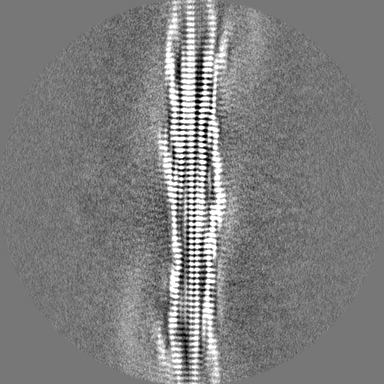
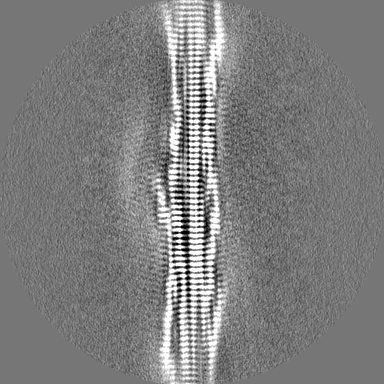
ジャーナル: Structure / 年: 2025 タイトル: Structural insights into functional regulation of the human CPEB3 prion by an amyloid-forming segment. 著者: Maria D Flores / Michael R Sawaya / David R Boyer / Samantha Zink / Susanna Tovmasyan / Adrian Saucedo / Logan S Richards / Chih-Te Zee / Jorge Cardenas / Luana Fioriti / Jose A Rodriguez / 要旨: The cytoplasmic polyadenylation-element-binding-protein-3 (CPEB3) is a functional prion thought to modulate protein synthesis and enable consolidation of long-term memory in neurons. We report a ...The cytoplasmic polyadenylation-element-binding-protein-3 (CPEB3) is a functional prion thought to modulate protein synthesis and enable consolidation of long-term memory in neurons. We report a cryoelectron microscopy (cryo-EM) structure of amyloid fibrils grown in vitro from the first prion-like domain of human CPEB3 (hCPEB3), revealing their ordered 49-residue core, spanning L103 to F151. CPEB3 lacking that segment coalesces into abnormal puncta in cells compared to wild-type CPEB3, localizes away from dormant p-bodies and toward stress granules, and lacks the ability to influence protein synthesis in neurons. Fluorescence-guided cryo-focused ion beam (cryo-FIB) milling and cryo-electron tomography (cryo-ET) applied to neuronal cells expressing CPEB3 reveal CPEB3-GFP signal from lamellae enriched in multivesicular bodies (MVBs), cavernous multilamellar compartments, and bundled filaments, suggesting a state of induced cellular stress. Accordingly, cells expressing wild-type CPEB3 are less viable than those expressing CPEB3 without its amyloid core, suggesting human CPEB3 regulation may be required to overcome the liability associated with its self-assembly in cells.
 ムービー
ムービー コントローラー


 データを開く
 基本情報
基本情報
 マップデータ
 試料
試料 キーワード
キーワード 機能・相同性情報
 Homo sapiens (ヒト)
 データ登録者
 米国, 6件
  引用
引用 構造の表示
構造の表示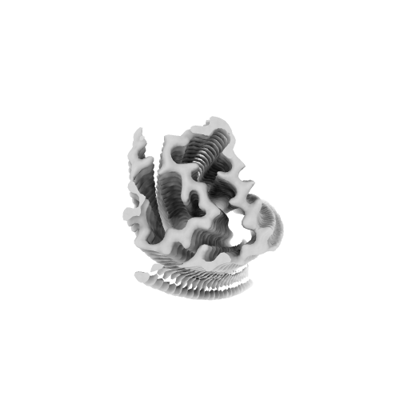
 ダウンロードとリンク
 emd_40677.png
 http://ftp.pdbj.org/pub/emdb/structures/EMD-40677
 Z (Sec.)
 Y (Row.)
 X (Col.)


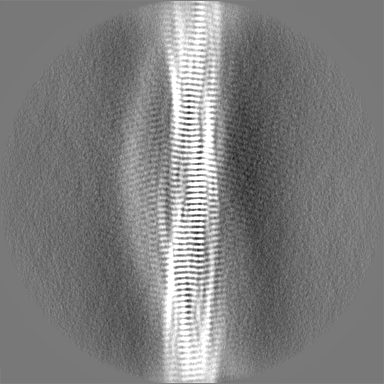

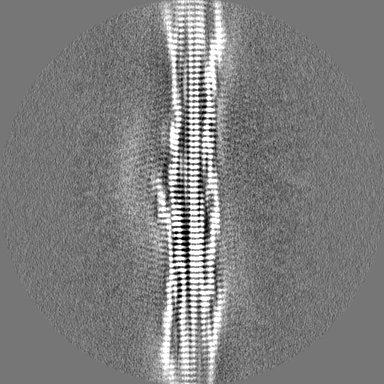
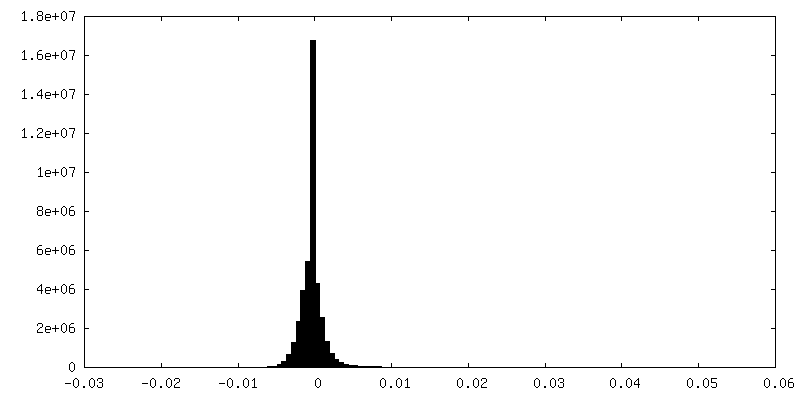
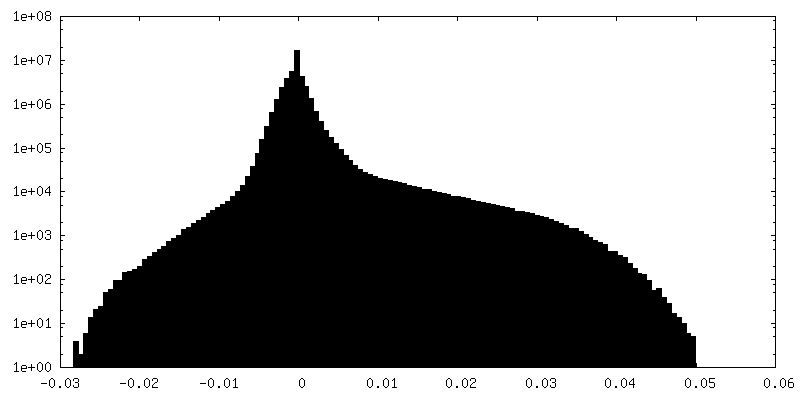
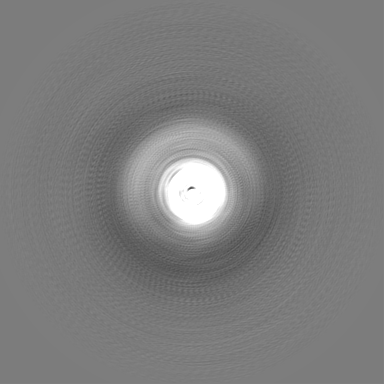
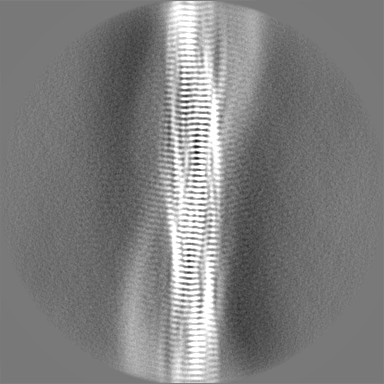

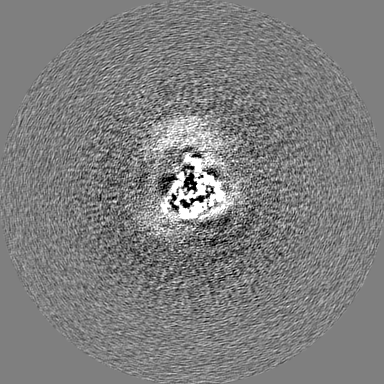
 試料の構成要素
 Escherichia coli 'BL21-Gold(DE3)pLysS AG' (大腸菌)
 解析
解析 電子顕微鏡法
 FIELD EMISSION GUN