Japan Agency for Medical Research and Development (AMED)
日本
Japan Society for the Promotion of Science (JSPS)
日本
引用
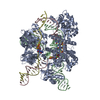
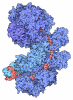
ジャーナル: Nat Commun / 年: 2026 タイトル: Engineering a compact high-fidelity Staphylococcus aureus Cas9 variant with broader targeting range and mechanistic insights into its activation. 著者: Satoshi N Omura / Ryoya Nakagawa / Shohei Kajimoto / Sae Okazaki / Soh Ishiguro / Hideto Mori / Kosuke Onishi / Yuji Kashiwakura / Takafumi Hiramoto / Kio Horinaka / Mamoru Tanaka / Hisato ...著者: Satoshi N Omura / Ryoya Nakagawa / Shohei Kajimoto / Sae Okazaki / Soh Ishiguro / Hideto Mori / Kosuke Onishi / Yuji Kashiwakura / Takafumi Hiramoto / Kio Horinaka / Mamoru Tanaka / Hisato Hirano / Kasey Jividen / Keitaro Yamashita / Shengdar Q Tsai / Nozomu Yachie / Tsukasa Ohmori / Hiroshi Nishimasu / Osamu Nureki / 要旨: Staphylococcus aureus Cas9 (SaCas9) is smaller than the widely used Streptococcus pyogenes Cas9 (SpCas9) and has been harnessed for gene therapy using an adeno-associated virus vector. However, ...Staphylococcus aureus Cas9 (SaCas9) is smaller than the widely used Streptococcus pyogenes Cas9 (SpCas9) and has been harnessed for gene therapy using an adeno-associated virus vector. However, SaCas9 requires a longer NNGRRT (where N is any nucleotide and R is A or G) protospacer adjacent motif (PAM) for target DNA recognition, thereby restricting the targeting range. Although PAM-relaxed Cas9 variants have been developed, expanded targeting is often accompanied by compromised target specificity. Here, we report the rational engineering of eSaCas9-NNG, a SaCas9 variant that recognizes relaxed NNG PAMs while maintaining high target fidelity, thereby overcoming a fundamental trade-off in Cas9-based genome editing. eSaCas9-NNG efficiently induces indels and base conversions at endogenous sites bearing NNG PAMs in human cells and mice, with editing efficiencies comparable to those of other PAM-relaxed nucleases, including SpRY, SpG, and iGeoCas9, but with reduced off-target activity. We further determine the cryo-electron microscopy structures of eSaCas9-NNG in five distinct functional states, revealing the structural basis for its relaxed PAM recognition, improved target specificity, and nuclease activation. Overall, our findings demonstrate that eSaCas9-NNG could be used as a versatile genome editing tool for in vivo gene therapy, and improve our mechanistic understanding of the diverse CRISPR-Cas9 nucleases.
 ムービー
ムービー コントローラー


 データを開く
 基本情報
基本情報
 マップデータ
 試料
試料 キーワード
キーワード 機能・相同性情報
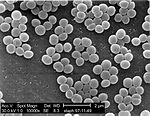 Staphylococcus aureus (黄色ブドウ球菌)
 データ登録者
 日本, 2件
  引用
引用

 構造の表示
構造の表示
 ダウンロードとリンク
 emd_39941.png
 http://ftp.pdbj.org/pub/emdb/structures/EMD-39941


 Z (Sec.)
 Y (Row.)
 X (Col.)


 試料の構成要素
 Escherichia coli (大腸菌)
 解析
解析 電子顕微鏡法
 FIELD EMISSION GUN

