National Natural Science Foundation of China (NSFC)
China
Citation
Journal: Nat Commun / Year: 2025 Title: Understanding interspecies drug response variations between human and rodent P2X7 receptors. Authors: Chang-Run Guo / Danqi Sheng / Ji-Yuan Li / Tian-Tian Li / Jia-Bao Yao / Rui Zhang / Ye Huang / Ying-Ying Zhao / Dong-Ping Wang / Jie Chen / Jian Li / Jiang Wang / Yu Zhou / Cheng Shen / Fei ...Authors: Chang-Run Guo / Danqi Sheng / Ji-Yuan Li / Tian-Tian Li / Jia-Bao Yao / Rui Zhang / Ye Huang / Ying-Ying Zhao / Dong-Ping Wang / Jie Chen / Jian Li / Jiang Wang / Yu Zhou / Cheng Shen / Fei Jin / Peng Cao / Motoyuki Hattori / Hong Liu / Ye Yu / Abstract: Despite intensive development, P2X7 modulators have struggled in translation due to human genetic variability and species-dependent drug responses. Here, we identify PSFL1191, a portal-of-central- ...Despite intensive development, P2X7 modulators have struggled in translation due to human genetic variability and species-dependent drug responses. Here, we identify PSFL1191, a portal-of-central-pocket (PCP)-site inhibitor selective for human and panda P2X7, but inactive against rodents. Cryo-EM structures revealed two distinct PCP sub-pockets: PCP1, a rigid base pocket demanding precise steric complementarity with PSFL1191, and PCP2, a conserved middle cavity targeted by JNJ-54175446, a clinical candidate unaffected by species differences. Species selectivity maps to a deep PCP1 motif (V312-Y295-M105-F103-P96). In P2rx7 mice, PSFL1191 markedly altered macrophage-mediated bacterial clearance and wound healing while preserving basal physiology, effects absent in wild-type animals. Our findings establish the structural basis for interspecies pharmacological divergence in P2X7 modulation and highlight transgenic models as powerful tools for predicting therapeutic efficacy, thereby enabling more precise and efficient drug discovery.
In the structure databanks used in Yorodumi, some data are registered as the other names, "COVID-19 virus" and "2019-nCoV". Here are the details of the virus and the list of structure data.
Jan 31, 2019. EMDB accession codes are about to change! (news from PDBe EMDB page)
EMDB accession codes are about to change! (news from PDBe EMDB page)
The allocation of 4 digits for EMDB accession codes will soon come to an end. Whilst these codes will remain in use, new EMDB accession codes will include an additional digit and will expand incrementally as the available range of codes is exhausted. The current 4-digit format prefixed with “EMD-” (i.e. EMD-XXXX) will advance to a 5-digit format (i.e. EMD-XXXXX), and so on. It is currently estimated that the 4-digit codes will be depleted around Spring 2019, at which point the 5-digit format will come into force.
The EM Navigator/Yorodumi systems omit the EMD- prefix.
Related info.:Q: What is EMD? / ID/Accession-code notation in Yorodumi/EM Navigator
Yorodumi is a browser for structure data from EMDB, PDB, SASBDB, etc.
This page is also the successor to EM Navigator detail page, and also detail information page/front-end page for Omokage search.
The word "yorodu" (or yorozu) is an old Japanese word meaning "ten thousand". "mi" (miru) is to see.
Related info.:EMDB / PDB / SASBDB / Comparison of 3 databanks / Yorodumi Search / Aug 31, 2016. New EM Navigator & Yorodumi / Yorodumi Papers / Jmol/JSmol / Function and homology information / Changes in new EM Navigator and Yorodumi
 Movie
Movie Controller

 Yorodumi
 Open data
 Basic information
 Map data
 Sample
 Keywords
 Function and homology information
 Ailuropoda melanoleuca (giant panda)
 Authors
 China, 1 items
  Citation
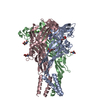
 Structure visualization
 Downloads & links
 emd_39723.png
 https://data.pdbj.org/pub/emdb/structures/EMD-39723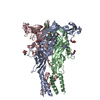

 Z (Sec.)
 Y (Row.)
 X (Col.)


 Sample components
 Spodoptera frugiperda (fall armyworm)
 Processing
 Electron microscopy
 FIELD EMISSION GUN

