 Movie
Movie Controller

[English] 日本語
 Yorodumi
- EMDB-19782: M. tuberculosis gyrase holocomplex with 150 bp DNA and BDM71403 -
+ Open data

- Basic information
| Entry |  | ||||||||||||
|---|---|---|---|---|---|---|---|---|---|---|---|---|---|
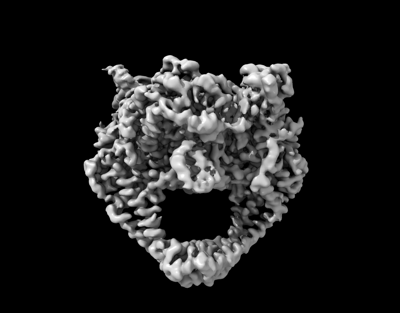
| Title | M. tuberculosis gyrase holocomplex with 150 bp DNA and BDM71403 | ||||||||||||
 Map data Map data | |||||||||||||
 Sample Sample |
| ||||||||||||
 Keywords Keywords | Mycobacterium tuberculosis / DNA gyrase / Novel Bacterial Topoisomerase II Inhibitors / antibiotic resistance / structure-activity relation / DNA BINDING PROTEIN | ||||||||||||
| Function / homology |  Function and homology information Function and homology informationDNA topoisomerase type II (double strand cut, ATP-hydrolyzing) complex / DNA negative supercoiling activity / DNA topoisomerase type II (double strand cut, ATP-hydrolyzing) activity / DNA topoisomerase (ATP-hydrolysing) / DNA topological change / peptidoglycan-based cell wall / DNA-templated DNA replication / chromosome / response to antibiotic / magnesium ion binding ...DNA topoisomerase type II (double strand cut, ATP-hydrolyzing) complex / DNA negative supercoiling activity / DNA topoisomerase type II (double strand cut, ATP-hydrolyzing) activity / DNA topoisomerase (ATP-hydrolysing) / DNA topological change / peptidoglycan-based cell wall / DNA-templated DNA replication / chromosome / response to antibiotic / magnesium ion binding / ATP hydrolysis activity / DNA binding / ATP binding / plasma membrane / cytoplasm Similarity search - Function | ||||||||||||
| Biological species |   Mycobacterium tuberculosis (bacteria) / synthetic construct (others) Mycobacterium tuberculosis (bacteria) / synthetic construct (others) | ||||||||||||
| Method | single particle reconstruction / cryo EM / Resolution: 2.8 Å | ||||||||||||
 Authors Authors | Gedeon A / Yab E / Dinut A / Sadowski E / Capton E / Dreneau A / Gioia B / Piveteau C / Djaout K / Lecat E ...Gedeon A / Yab E / Dinut A / Sadowski E / Capton E / Dreneau A / Gioia B / Piveteau C / Djaout K / Lecat E / Wehenkel AM / Gubellini F / Mechaly A / Alzari PM / Deprez B / Baulard A / Aubry A / Willand N / Petrella S | ||||||||||||
| Funding support |  France, 3 items France, 3 items
| ||||||||||||
 Citation Citation | Journal: iScience / Year: 2024 Title: Molecular mechanism of a triazole-containing inhibitor of DNA gyrase. Authors: Antoine Gedeon / Emilie Yab / Aurelia Dinut / Elodie Sadowski / Estelle Capton / Aurore Dreneau / Julienne Petit / Bruna Gioia / Catherine Piveteau / Kamel Djaout / Estelle Lecat / Anne ...Authors: Antoine Gedeon / Emilie Yab / Aurelia Dinut / Elodie Sadowski / Estelle Capton / Aurore Dreneau / Julienne Petit / Bruna Gioia / Catherine Piveteau / Kamel Djaout / Estelle Lecat / Anne Marie Wehenkel / Francesca Gubellini / Ariel Mechaly / Pedro M Alzari / Benoît Deprez / Alain Baulard / Alexandra Aubry / Nicolas Willand / Stéphanie Petrella / Abstract: Antimicrobial resistance remains a persistent and pressing public health concern. Here, we describe the synthesis of original triazole-containing inhibitors targeting the DNA gyrase, a well-validated ...Antimicrobial resistance remains a persistent and pressing public health concern. Here, we describe the synthesis of original triazole-containing inhibitors targeting the DNA gyrase, a well-validated drug target for developing new antibiotics. Our compounds demonstrate potent antibacterial activity against various pathogenic bacteria, with notable potency against (). Moreover, one hit, compound , named BDM71403, was shown to be more potent in than the NBTI of reference, gepotidacin. Mechanistic enzymology assays reveal a competitive interaction of BDM71403 with fluoroquinolones within the gyrase cleavage core. High-resolution cryo-electron microscopy structural analysis provides detailed insights into the ternary complex formed by the gyrase, double-stranded DNA, and either BDM71403 or gepotidacin, providing a rational framework to understand the superior efficacy on . This study highlights the potential of triazole-based scaffolds as promising gyrase inhibitors, offering new avenues for drug development in the fight against antimicrobial resistance. | ||||||||||||
| History |
|
- Structure visualization
| Supplemental images |
|---|
- Downloads & links
-EMDB archive
| Map data | emd_19782.map.gz | 108.2 MB | EMDB map data format | |
|---|---|---|---|---|
| Header (meta data) | emd-19782-v30.xmlemd-19782.xml | 29 KB 29 KB | Display Display | EMDB header |
| FSC (resolution estimation) | emd_19782_fsc.xml | 12.6 KB | Display | FSC data file |
| Images |  emd_19782.png emd_19782.png | 53.2 KB | ||
| Filedesc metadata | emd-19782.cif.gz | 8 KB | ||
| Others | emd_19782_additional_1.map.gzemd_19782_half_map_1.map.gzemd_19782_half_map_2.map.gz | 189.1 MB 200.3 MB 200.3 MB | ||
| Archive directory |  https://data.pdbj.org/pub/emdb/structures/EMD-19782ftp://data.pdbj.org/pub/emdb/structures/EMD-19782 https://data.pdbj.org/pub/emdb/structures/EMD-19782ftp://data.pdbj.org/pub/emdb/structures/EMD-19782 | HTTPS FTP |
-Related structure data
| Related structure data |  8s7oMC  8s7kC M: atomic model generated by this map C: citing same article ( |
|---|---|
| Similar structure data |

-Links
| EMDB pages | EMDB (EBI/PDBe) / EMDataResource |
|---|---|
| Related items in Molecule of the Month |

-Map
| File | Download / File: emd_19782.map.gz / Format: CCP4 / Size: 216 MB / Type: IMAGE STORED AS FLOATING POINT NUMBER (4 BYTES) | ||||||||||||||||||||||||||||||||||||
|---|---|---|---|---|---|---|---|---|---|---|---|---|---|---|---|---|---|---|---|---|---|---|---|---|---|---|---|---|---|---|---|---|---|---|---|---|---|
| Projections & slices | Image control
Images are generated by Spider. | ||||||||||||||||||||||||||||||||||||
| Voxel size | X=Y=Z: 0.86 Å | ||||||||||||||||||||||||||||||||||||
| Density |
| ||||||||||||||||||||||||||||||||||||
| Symmetry | Space group: 1 | ||||||||||||||||||||||||||||||||||||
| Details | EMDB XML:
|
 Z (Sec.)
 Y (Row.)
 X (Col.)


-Supplemental data
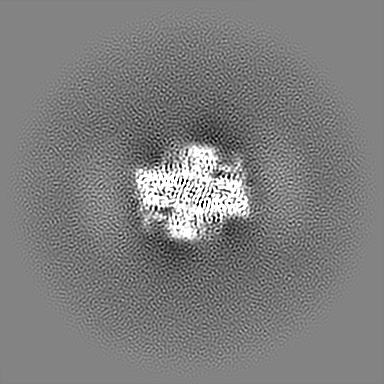
-Additional map: #1
| File | emd_19782_additional_1.map | ||||||||||||
|---|---|---|---|---|---|---|---|---|---|---|---|---|---|
| Projections & Slices |
| ||||||||||||
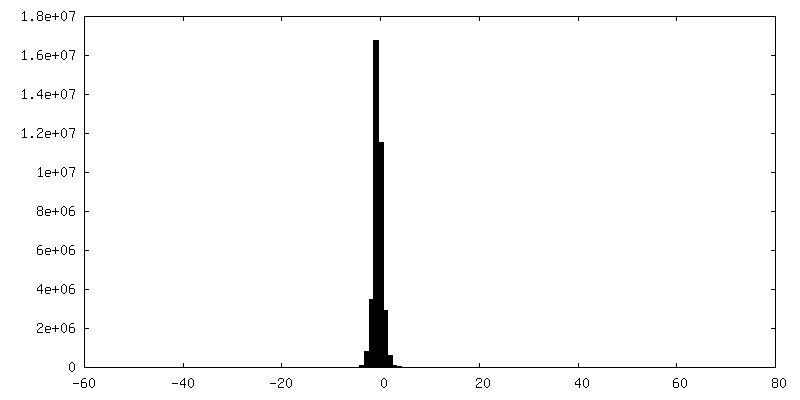
| Density Histograms |





-Half map: #1
| File | emd_19782_half_map_1.map | ||||||||||||
|---|---|---|---|---|---|---|---|---|---|---|---|---|---|
| Projections & Slices |
| ||||||||||||
| Density Histograms |



-Half map: #2
| File | emd_19782_half_map_2.map | ||||||||||||
|---|---|---|---|---|---|---|---|---|---|---|---|---|---|
| Projections & Slices |
| ||||||||||||
| Density Histograms |




- Sample components
-Entire : Cryo-EM structure of Mtb DNA Gyrase in complex with DNA and BDM71403
| Entire | Name: Cryo-EM structure of Mtb DNA Gyrase in complex with DNA and BDM71403 |
|---|---|
| Components |
|
-Supramolecule #1: Cryo-EM structure of Mtb DNA Gyrase in complex with DNA and BDM71403
| Supramolecule | Name: Cryo-EM structure of Mtb DNA Gyrase in complex with DNA and BDM71403 type: complex / ID: 1 / Parent: 0 / Macromolecule list: #1-#4 |
|---|
-Supramolecule #2: DNA gyrase
| Supramolecule | Name: DNA gyrase / type: complex / ID: 2 / Parent: 1 / Macromolecule list: #1-#2 |
|---|---|
| Source (natural) | Organism: Mycobacterium tuberculosis (bacteria) |
-Supramolecule #3: DNA
| Supramolecule | Name: DNA / type: complex / ID: 3 / Parent: 1 / Macromolecule list: #3-#4 |
|---|---|
| Source (natural) | Organism: synthetic construct (others) |
-Macromolecule #1: DNA gyrase subunit A
| Macromolecule | Name: DNA gyrase subunit A / type: protein_or_peptide / ID: 1 / Number of copies: 2 / Enantiomer: LEVO / EC number: DNA topoisomerase (ATP-hydrolysing) |
|---|---|
| Source (natural) | Organism: Mycobacterium tuberculosis (bacteria) |
| Molecular weight | Theoretical: 92.30418 KDa |
| Recombinant expression | Organism:  Escherichia coli (E. coli) Escherichia coli (E. coli) |
| Sequence | String: TDTTLPPDDS LDRIEPVDIE QEMQRSYIDY AMSVIVGRAL PEVRDGLKPV HRRVLYAMFD SGFRPDRSHA KSARSVAETM GNYHPHGDA SIYDSLVRMA QPWSLRYPLV DGQGNFGSPG NDPPAAMRYT EARLTPLAME MLREIDEETV DFIPNYDGRV Q EPTVLPSR ...String: TDTTLPPDDS LDRIEPVDIE QEMQRSYIDY AMSVIVGRAL PEVRDGLKPV HRRVLYAMFD SGFRPDRSHA KSARSVAETM GNYHPHGDA SIYDSLVRMA QPWSLRYPLV DGQGNFGSPG NDPPAAMRYT EARLTPLAME MLREIDEETV DFIPNYDGRV Q EPTVLPSR FPNLLANGSG GIAVGMATNI PPHNLRELAD AVFWALENHD ADEEETLAAV MGRVKGPDFP TAGLIVGSQG TA DAYKTGR GSIRMRGVVE VEEDSRGRTS LVITELPYQV NHDNFITSIA EQVRDGKLAG ISNIEDQSSD RVGLRIVIEI KRD AVAKVV INNLYKHTQL QTSFGANMLA IVDGVPRTLR LDQLIRYYVD HQLDVIVRRT TYRLRKANER AHILRGLVKA LDAL DEVIA LIRASETVDI ARAGLIELLD IDEIQAQAIL DMQLRRLAAL ERQRIIDDLA KIEAEIADLE DILAKPERQR GIVRD ELAE IVDRHGDDRR TRIIAIDGDV SDEDLIARED VVVTITETGY AKRTKTDLYR SQKRGGKGVQ GAGLKQDDIV AHFFVC STH DLILFFTTQG RVYRAKAYDL PEASRTARGQ HVANLLAFQP EERIAQVIQI RGYTDAPYLV LATRNGLVKK SKLTDFD SN RSGGIVAVNL RDNDELVGAV LCSAGDDLLL VSANGQSIRF SATDEALRPM GRATSGVQGM RFNIDDRLLS LNVVREGT Y LLVATSGGYA KRTAIEEYPV QGRGGKGVLT VMYDRRRGRL VGALIVDDDS ELYAVTSGGG VIRTAARQVR KAGRQTKGV RLMNLGEGDT LLAIARNAEE SGDDNAVDAN GADQTGN UniProtKB: DNA gyrase subunit A |
-Macromolecule #2: DNA gyrase subunit B
| Macromolecule | Name: DNA gyrase subunit B / type: protein_or_peptide / ID: 2 / Number of copies: 2 / Enantiomer: LEVO / EC number: DNA topoisomerase (ATP-hydrolysing) |
|---|---|
| Source (natural) | Organism: Mycobacterium tuberculosis (bacteria) |
| Molecular weight | Theoretical: 74.423953 KDa |
| Recombinant expression | Organism: Escherichia coli (E. coli) |
| Sequence | String: GAMVAAQKKK AQDEYGAASI TILEGLEAVR KRPGMYIGST GERGLHHLIW EVVDNAVDEA MAGYATTVNV VLLEDGGVEV ADDGRGIPV ATHASGIPTV DVVMTQLHAG GKFDSDAYAI SGGLHGVGVS VVNALSTRLE VEIKRDGYEW SQVYEKSEPL G LKQGAPTK ...String: GAMVAAQKKK AQDEYGAASI TILEGLEAVR KRPGMYIGST GERGLHHLIW EVVDNAVDEA MAGYATTVNV VLLEDGGVEV ADDGRGIPV ATHASGIPTV DVVMTQLHAG GKFDSDAYAI SGGLHGVGVS VVNALSTRLE VEIKRDGYEW SQVYEKSEPL G LKQGAPTK KTGSTVRFWA DPAVFETTEY DFETVARRLQ EMAFLNKGLT INLTDERVTQ DEVVDEVVSD VAEAPKSASE RA AESTAPH KVKSRTFHYP GGLVDFVKHI NRTKNAIHSS IVDFSGKGTG HEVEIAMQWN AGYSESVHTF ANTINTHEGG THE EGFRSA LTSVVNKYAK DRKLLKDKDP NLTGDDIREG LAAVISVKVS EPQFEGQTKT KLGNTEVKSF VQKVCNEQLT HWFE ANPTD AKVVVNKAVS SAQARIAARK ARELVRRKSA TDIGGLPGKL ADCRSTDPRK SELYVVEGDS AGGSAKSGRD SMFQA ILPL RGKIINVEKA RIDRVLKNTE VQAIITALGT GIHDEFDIGK LRYHKIVLMA DADVDGQHIS TLLLTLLFRF MRPLIE NGH VFLAQPPLYK LKWQRSDPEF AYSDRERDGL LEAGLKAGKK INKEDGIQRY KGLGEMDAKE LWETTMDPSV RVLRQVT LD DAAAADELFS ILMGEDVDAR RSFITRNAKD VRFLDV UniProtKB: DNA gyrase subunit B |
-Macromolecule #3: DNA (5'-D(*CP*CP*GP*GP*AP*AP*GP*GP*GP*GP*TP*AP*AP*TP*AP*CP*T)-3')
| Macromolecule | Name: DNA (5'-D(*CP*CP*GP*GP*AP*AP*GP*GP*GP*GP*TP*AP*AP*TP*AP*CP*T)-3') type: dna / ID: 3 / Number of copies: 1 / Classification: DNA |
|---|---|
| Source (natural) | Organism: synthetic construct (others) |
| Molecular weight | Theoretical: 46.325371 KDa |
| Sequence | String: (DG)(DT)(DA)(DC)(DC)(DG)(DG)(DA)(DC)(DG) (DT)(DT)(DG)(DC)(DG)(DC)(DC)(DC)(DG)(DT) (DA)(DG)(DG)(DG)(DC)(DT)(DA)(DC)(DG) (DG)(DC)(DG)(DG)(DC)(DC)(DT)(DT)(DC)(DG) (DC) (DT)(DC)(DT)(DT)(DC)(DT) ...String: (DG)(DT)(DA)(DC)(DC)(DG)(DG)(DA)(DC)(DG) (DT)(DT)(DG)(DC)(DG)(DC)(DC)(DC)(DG)(DT) (DA)(DG)(DG)(DG)(DC)(DT)(DA)(DC)(DG) (DG)(DC)(DG)(DG)(DC)(DC)(DT)(DT)(DC)(DG) (DC) (DT)(DC)(DT)(DT)(DC)(DT)(DT)(DA) (DG)(DT)(DA)(DT)(DT)(DA)(DC)(DC)(DC)(DC) (DT)(DT) (DC)(DC)(DG)(DG)(DT)(DA)(DG) (DG)(DT)(DC)(DG)(DG)(DA)(DG)(DC)(DG)(DC) (DA)(DG)(DC) (DG)(DC)(DT)(DT)(DG)(DC) (DG)(DG)(DT)(DC)(DG)(DT)(DT)(DC)(DT)(DG) (DC)(DA)(DT)(DC) (DG)(DG)(DG)(DT)(DC) (DG)(DC)(DG)(DC)(DA)(DG)(DC)(DC)(DG)(DG) (DC)(DG)(DG)(DT)(DA) (DC)(DG)(DG)(DC) (DC)(DG)(DC)(DT)(DA)(DT)(DT)(DA)(DC)(DC) (DG)(DG)(DA)(DC)(DG)(DA) (DA)(DG)(DA) (DG)(DC)(DG)(DG)(DC)(DT)(DT) |
-Macromolecule #4: DNA (5'-D(*CP*CP*GP*GP*AP*AP*GP*GP*GP*GP*TP*AP*AP*TP*AP*CP*T)-3')
| Macromolecule | Name: DNA (5'-D(*CP*CP*GP*GP*AP*AP*GP*GP*GP*GP*TP*AP*AP*TP*AP*CP*T)-3') type: dna / ID: 4 / Number of copies: 1 / Classification: DNA |
|---|---|
| Source (natural) | Organism: synthetic construct (others) |
| Molecular weight | Theoretical: 46.29148 KDa |
| Sequence | String: (DA)(DA)(DG)(DC)(DC)(DG)(DC)(DT)(DC)(DT) (DT)(DC)(DG)(DT)(DC)(DC)(DG)(DG)(DT)(DA) (DA)(DT)(DA)(DG)(DC)(DG)(DG)(DC)(DC) (DG)(DT)(DA)(DC)(DC)(DG)(DC)(DC)(DG)(DG) (DC) (DT)(DG)(DC)(DG)(DC)(DG) ...String: (DA)(DA)(DG)(DC)(DC)(DG)(DC)(DT)(DC)(DT) (DT)(DC)(DG)(DT)(DC)(DC)(DG)(DG)(DT)(DA) (DA)(DT)(DA)(DG)(DC)(DG)(DG)(DC)(DC) (DG)(DT)(DA)(DC)(DC)(DG)(DC)(DC)(DG)(DG) (DC) (DT)(DG)(DC)(DG)(DC)(DG)(DA)(DC) (DC)(DC)(DG)(DA)(DT)(DG)(DC)(DA)(DG)(DA) (DA)(DC) (DG)(DA)(DC)(DC)(DG)(DC)(DA) (DA)(DG)(DC)(DG)(DC)(DT)(DG)(DC)(DG)(DC) (DT)(DC)(DC) (DG)(DA)(DC)(DC)(DT)(DA) (DC)(DC)(DG)(DG)(DA)(DA)(DG)(DG)(DG)(DG) (DT)(DA)(DA)(DT) (DA)(DC)(DT)(DA)(DA) (DG)(DA)(DA)(DG)(DA)(DG)(DC)(DG)(DA)(DA) (DG)(DG)(DC)(DC)(DG) (DC)(DC)(DG)(DT) (DA)(DG)(DC)(DC)(DC)(DT)(DA)(DC)(DG)(DG) (DG)(DC)(DG)(DC)(DA)(DA) (DC)(DG)(DT) (DC)(DC)(DG)(DG)(DT)(DA)(DC) |
-Macromolecule #5: 6-[[2-[1-(6-methoxy-1,5-naphthyridin-4-yl)-1,2,3-triazol-4-yl]eth...
| Macromolecule | Name: 6-[[2-[1-(6-methoxy-1,5-naphthyridin-4-yl)-1,2,3-triazol-4-yl]ethylamino]methyl]-4H-1,4-benzothiazin-3-one type: ligand / ID: 5 / Number of copies: 1 / Formula: A1H5Q |
|---|---|
| Molecular weight | Theoretical: 447.513 Da |
-Experimental details
-Structure determination
| Method | cryo EM |
|---|---|
 Processing Processing | single particle reconstruction |
| Aggregation state | particle |
-Sample preparation
| Buffer | pH: 8 |
|---|---|
| Vitrification | Cryogen name: ETHANE |
- Electron microscopy
| Microscope | FEI TITAN KRIOS |
|---|---|
| Image recording | Film or detector model: GATAN K3 BIOQUANTUM (6k x 4k) / Average electron dose: 40.0 e/Å2 |
| Electron beam | Acceleration voltage: 300 kV / Electron source:  FIELD EMISSION GUN FIELD EMISSION GUN |
| Electron optics | Illumination mode: FLOOD BEAM / Imaging mode: BRIGHT FIELD / Nominal defocus max: 1.9000000000000001 µm / Nominal defocus min: 0.9 µm |
| Sample stage | Specimen holder model: FEI TITAN KRIOS AUTOGRID HOLDER |
| Experimental equipment |  Model: Titan Krios / Image courtesy: FEI Company |
+Image processing

-Atomic model buiding 1
| Refinement | Protocol: AB INITIO MODEL |
|---|---|
| Output model | PDB-8s7o: |
