 Movie
Movie Controller

[English] 日本語
 Yorodumi
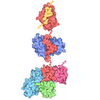
- PDB-9zzo: MP1104-bound Kappa Opioid Receptor in complex with beta-arrestin1 -
+ Open data

- Basic information
| Entry | Database: PDB / ID: 9zzo | ||||||||||||||||||||||||
|---|---|---|---|---|---|---|---|---|---|---|---|---|---|---|---|---|---|---|---|---|---|---|---|---|---|
| Title | MP1104-bound Kappa Opioid Receptor in complex with beta-arrestin1 | ||||||||||||||||||||||||
 Components Components |
| ||||||||||||||||||||||||
 Keywords Keywords | SIGNALING PROTEIN/IMMUNE SYSTEM / GPCR / KAPPA OPIOID Receptor / SIGNALING PROTEIN-IMMUNE SYSTEM complex | ||||||||||||||||||||||||
| Function / homology |  Function and homology information Function and homology informationresponse to acrylamide / dynorphin receptor activity / regulation of saliva secretion / renal water retention / Defective AVP does not bind AVPR2 and causes neurohypophyseal diabetes insipidus (NDI) / sensory perception of temperature stimulus / regulation of systemic arterial blood pressure by vasopressin / Vasopressin-like receptors / renal water absorption / vasopressin receptor activity ...response to acrylamide / dynorphin receptor activity / regulation of saliva secretion / renal water retention / Defective AVP does not bind AVPR2 and causes neurohypophyseal diabetes insipidus (NDI) / sensory perception of temperature stimulus / regulation of systemic arterial blood pressure by vasopressin / Vasopressin-like receptors / renal water absorption / vasopressin receptor activity / positive regulation of eating behavior / angiotensin receptor binding / adenylate cyclase-inhibiting opioid receptor signaling pathway / negative regulation of protein localization to ciliary membrane / negative regulation of luteinizing hormone secretion / TGFBR3 regulates TGF-beta signaling / telencephalon development / hemostasis / Activation of SMO / G protein-coupled opioid receptor activity / protein localization to non-motile cilium / maternal behavior / intraciliary retrograde transport / negative regulation of interleukin-8 production / G protein-coupled opioid receptor signaling pathway / positive regulation of dopamine secretion / desensitization of G protein-coupled receptor signaling pathway / positive regulation of potassium ion transmembrane transport / receptor serine/threonine kinase binding / positive regulation of p38MAPK cascade / arrestin family protein binding / G protein-coupled receptor internalization / stress fiber assembly / neuropeptide binding / mitogen-activated protein kinase kinase binding / negative regulation of Notch signaling pathway / sensory perception / eating behavior / Lysosome Vesicle Biogenesis / negative regulation of interleukin-6 production / Golgi Associated Vesicle Biogenesis / positive regulation of Rho protein signal transduction / positive regulation of systemic arterial blood pressure / pseudopodium / positive regulation of intracellular signal transduction / positive regulation of smoothened signaling pathway / positive regulation of receptor internalization / positive regulation of vasoconstriction / endocytic vesicle / estrous cycle / cysteine-type endopeptidase inhibitor activity / conditioned place preference / cellular response to hormone stimulus / activation of adenylate cyclase activity / MECP2 regulates neuronal receptors and channels / insulin-like growth factor receptor binding / behavioral response to cocaine / sensory perception of pain / clathrin-coated pit / negative regulation of protein ubiquitination / response to insulin / GTPase activator activity / T-tubule / locomotory behavior / cellular response to glucose stimulus / axon terminus / intracellular glucose homeostasis / enzyme inhibitor activity / negative regulation of canonical NF-kappaB signal transduction / Activated NOTCH1 Transmits Signal to the Nucleus / positive regulation of insulin secretion involved in cellular response to glucose stimulus / Peptide ligand-binding receptors / response to nicotine / sarcoplasmic reticulum / clathrin-coated endocytic vesicle membrane / neuropeptide signaling pathway / Signaling by high-kinase activity BRAF mutants / MAP2K and MAPK activation / cytoplasmic vesicle membrane / response to estrogen / positive regulation of protein phosphorylation / G protein-coupled receptor binding / adenylate cyclase-inhibiting G protein-coupled receptor signaling pathway / adenylate cyclase-modulating G protein-coupled receptor signaling pathway / Signaling by RAF1 mutants / Signaling by moderate kinase activity BRAF mutants / Paradoxical activation of RAF signaling by kinase inactive BRAF / Signaling downstream of RAS mutants / phospholipase C-activating G protein-coupled receptor signaling pathway / endocytic vesicle membrane / Signaling by BRAF and RAF1 fusions / synaptic vesicle membrane / cilium / Vasopressin regulates renal water homeostasis via Aquaporins / Cargo recognition for clathrin-mediated endocytosis / defense response to virus / Clathrin-mediated endocytosis / Thrombin signalling through proteinase activated receptors (PARs) / cellular response to lipopolysaccharide / adenylate cyclase-activating G protein-coupled receptor signaling pathway Similarity search - Function | ||||||||||||||||||||||||
| Biological species |   Lama glama (llama) Lama glama (llama) Homo sapiens (human) Homo sapiens (human)synthetic construct (others) | ||||||||||||||||||||||||
| Method | ELECTRON MICROSCOPY / single particle reconstruction / cryo EM / Resolution: 2.6 Å | ||||||||||||||||||||||||
 Authors Authors | Han, J. / Chen, M. / Che, T. | ||||||||||||||||||||||||
| Funding support |  United States, 1items United States, 1items
| ||||||||||||||||||||||||
 Citation Citation | Journal: Nat Commun / Year: 2026 Title: Structural dynamics of kappa opioid receptor interactions with β-arrestin 1. Authors: Jianming Han / Eve J Fine / Qianru Jiang / Yuxuan Zhuang / Carl-Mikael Suomivuori / Zi-Wei Chen / Elizabeth Denn / Kyle Whiddon / Kunpeng Li / Alex S Evers / James Fuller / Joshua Carter / ...Authors: Jianming Han / Eve J Fine / Qianru Jiang / Yuxuan Zhuang / Carl-Mikael Suomivuori / Zi-Wei Chen / Elizabeth Denn / Kyle Whiddon / Kunpeng Li / Alex S Evers / James Fuller / Joshua Carter / Jonathan F Fay / Muyuan Chen / Ron O Dror / Tao Che / Abstract: Opioid receptors signal through Gi/o protein and β-arrestin pathways that mediate distinct effects of opiate drugs. While opioid binding and G protein activation are well studied, β-arrestin ...Opioid receptors signal through Gi/o protein and β-arrestin pathways that mediate distinct effects of opiate drugs. While opioid binding and G protein activation are well studied, β-arrestin recruitment remains poorly understood. Here, we determine the complex structure of the kappa opioid receptor (KOR) with β-arrestin1 (βarr1) at 2.60 Å resolution using cryogenic electron microscopy. Structural and mass spectrometry analyses reveal multiple phosphorylation sites and a phospholipid-binding site that specifically enhances arrestin recruitment. The KOR-βarr1 complex adopts a core interaction and exhibits notable differences from other GPCR-βarr1 complexes. Comparisons with the structures of KOR-Nb39 and KOR-Gi1 complexes also reveal distinct structural features in the orthosteric binding site and the KOR-transducer interface that affect signaling bias. Using extensive 3D variation analysis and molecular dynamics simulations, we identify a range of conformational dynamics in both the receptor and βarr1, suggesting an allosteric pathway for arrestin's entry and exit. | ||||||||||||||||||||||||
| History |
|
- Structure visualization
| Structure viewer | Molecule: MolmilJmol/JSmol |
|---|
- Downloads & links
-Download
| PDBx/mmCIF format | 9zzo.cif.gz | 237.3 KB | Display | PDBx/mmCIF format |
|---|---|---|---|---|
| PDB format | pdb9zzo.ent.gz | 180.2 KB | Display | PDB format |
| PDBx/mmJSON format | 9zzo.json.gz | Tree view | PDBx/mmJSON format | |
| Others |  Other downloads Other downloads |
-Validation report
| Arichive directory | https://data.pdbj.org/pub/pdb/validation_reports/zz/9zzoftp://data.pdbj.org/pub/pdb/validation_reports/zz/9zzo | HTTPS FTP |
|---|
-Related structure data
| Related structure data |  75011MC M: map data used to model this data C: citing same article ( |
|---|---|
| Similar structure data |
-Links
 PDBj
PDBj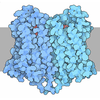
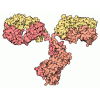
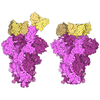
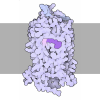


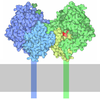
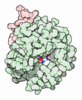
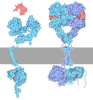
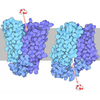
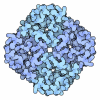
- Assembly
| Deposited unit | 
|
|---|---|
| 1 |
|
-Components
-Protein , 2 types, 2 molecules CA
| #2: Protein | Mass: 43358.164 Da / Num. of mol.: 1 Source method: isolated from a genetically manipulated source Source: (gene. exp.) Homo sapiens (human) / Gene: ARRB1, ARR1 / Production host:   Spodoptera frugiperda (fall armyworm) / References: UniProt: P49407 Spodoptera frugiperda (fall armyworm) / References: UniProt: P49407 |
|---|---|
| #3: Protein | Mass: 38723.129 Da / Num. of mol.: 1 Source method: isolated from a genetically manipulated source Source: (gene. exp.) Homo sapiens (human) / Gene: OPRK1, OPRK, AVPR2, ADHR, DIR, DIR3, V2R / Production host: Spodoptera frugiperda (fall armyworm) / References: UniProt: P41145, UniProt: P30518 |
-Antibody , 3 types, 3 molecules EHL
| #1: Antibody | Mass: 13665.136 Da / Num. of mol.: 1 Source method: isolated from a genetically manipulated source Source: (gene. exp.) Lama glama (llama) / Production host:   Escherichia coli BL21 (bacteria) Escherichia coli BL21 (bacteria) |
|---|---|
| #4: Antibody | Mass: 25754.586 Da / Num. of mol.: 1 Source method: isolated from a genetically manipulated source Source: (gene. exp.) synthetic construct (others) / Production host: Escherichia coli BL21 (bacteria) |
| #5: Antibody | Mass: 23435.064 Da / Num. of mol.: 1 Source method: isolated from a genetically manipulated source Source: (gene. exp.) synthetic construct (others) / Production host: Escherichia coli BL21 (bacteria) |
-Non-polymers , 2 types, 2 molecules 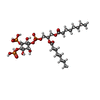
| #6: Chemical | ChemComp-PIO / [( Mass: 746.566 Da / Num. of mol.: 1 / Source method: obtained synthetically / Formula: C25H49O19P3 Mass: 746.566 Da / Num. of mol.: 1 / Source method: obtained synthetically / Formula: C25H49O19P3 |
|---|---|
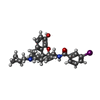
| #7: Chemical | ChemComp-CVV / 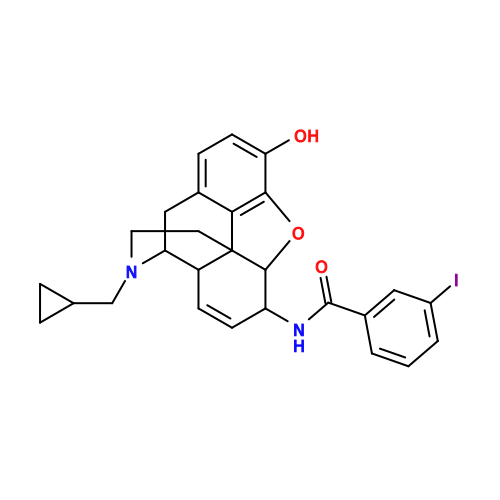 Mass: 554.419 Da / Num. of mol.: 1 / Source method: obtained synthetically / Formula: C27H27IN2O3 / Feature type: SUBJECT OF INVESTIGATION Mass: 554.419 Da / Num. of mol.: 1 / Source method: obtained synthetically / Formula: C27H27IN2O3 / Feature type: SUBJECT OF INVESTIGATION |
-Details
| Has ligand of interest | Y |
|---|---|
| Has protein modification | Y |
-Experimental details
-Experiment
| Experiment | Method: ELECTRON MICROSCOPY |
|---|---|
| EM experiment | Aggregation state: PARTICLE / 3D reconstruction method: single particle reconstruction |
- Sample preparation
| Component | Name: MP1104-bound Kappa Opioid Receptor in complex with beta-arrestin1 Type: COMPLEX / Entity ID: #1-#5 / Source: MULTIPLE SOURCES |
|---|---|
| Molecular weight | Experimental value: NO |
| Source (natural) | Organism: Homo sapiens (human) |
| Source (recombinant) | Organism: Spodoptera frugiperda (fall armyworm) |
| Buffer solution | pH: 7.5 |
| Specimen | Embedding applied: NO / Shadowing applied: NO / Staining applied: NO / Vitrification applied: YES |
| Vitrification | Cryogen name: ETHANE-PROPANE |
- Electron microscopy imaging
| Experimental equipment |  Model: Titan Krios / Image courtesy: FEI Company |
|---|---|
| Microscopy | Model: TFS KRIOS |
| Electron gun | Electron source:  FIELD EMISSION GUN / Accelerating voltage: 300 kV / Illumination mode: FLOOD BEAM FIELD EMISSION GUN / Accelerating voltage: 300 kV / Illumination mode: FLOOD BEAM |
| Electron lens | Mode: BRIGHT FIELD / Nominal defocus max: 1800 nm / Nominal defocus min: 800 nm |
| Image recording | Electron dose: 60 e/Å2 / Film or detector model: GATAN K3 BIOQUANTUM (6k x 4k) / Num. of real images: 16000 |
- Processing
| EM software |
| ||||||||||||||||||||||||
|---|---|---|---|---|---|---|---|---|---|---|---|---|---|---|---|---|---|---|---|---|---|---|---|---|---|
| CTF correction | Type: NONE | ||||||||||||||||||||||||
| 3D reconstruction | Resolution: 2.6 Å / Resolution method: FSC 0.143 CUT-OFF / Num. of particles: 163293 / Symmetry type: POINT | ||||||||||||||||||||||||
| Refinement | Highest resolution: 2.6 Å Stereochemistry target values: REAL-SPACE (WEIGHTED MAP SUM AT ATOM CENTERS) | ||||||||||||||||||||||||
| Refine LS restraints |
|
