 Movie
Movie Controller

[English] 日本語
 Yorodumi
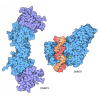
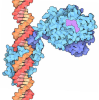
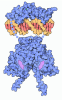
- PDB-9zqb: Nucleosome with an SSB at SHL -2.8 in complex with human PARP2 an... -
+ Open data

- Basic information
| Entry | Database: PDB / ID: 9zqb | ||||||||||||||||||||||||
|---|---|---|---|---|---|---|---|---|---|---|---|---|---|---|---|---|---|---|---|---|---|---|---|---|---|
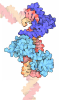
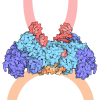
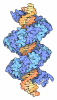
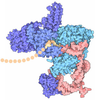
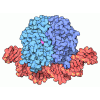
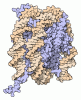
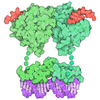
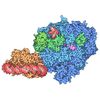
| Title | Nucleosome with an SSB at SHL -2.8 in complex with human PARP2 and HPF1, Class 1 | ||||||||||||||||||||||||
 Components Components |
| ||||||||||||||||||||||||
 Keywords Keywords | DNA BINDING PROTEIN/DNA / DNA damage binding protein / DNA BINDING PROTEIN / DNA BINDING PROTEIN-DNA complex | ||||||||||||||||||||||||
| Function / homology |  Function and homology information Function and homology informationHDMs demethylate histones / PKMTs methylate histone lysines / Interleukin-7 signaling / Chromatin modifying enzymes / SUMOylation of chromatin organization proteins / Recruitment and ATM-mediated phosphorylation of repair and signaling proteins at DNA double strand breaks / RMTs methylate histone arginines / E3 ubiquitin ligases ubiquitinate target proteins / RCAF complex / Factors involved in megakaryocyte development and platelet production ...HDMs demethylate histones / PKMTs methylate histone lysines / Interleukin-7 signaling / Chromatin modifying enzymes / SUMOylation of chromatin organization proteins / Recruitment and ATM-mediated phosphorylation of repair and signaling proteins at DNA double strand breaks / RMTs methylate histone arginines / E3 ubiquitin ligases ubiquitinate target proteins / RCAF complex / Factors involved in megakaryocyte development and platelet production / SIRT1 negatively regulates rRNA expression / NoRC negatively regulates rRNA expression / Activated PKN1 stimulates transcription of AR (androgen receptor) regulated genes KLK2 and KLK3 / polytene chromosome band / PRC2 methylates histones and DNA / Ub-specific processing proteases / Negative Regulation of CDH1 Gene Transcription / MLL4 and MLL3 complexes regulate expression of PPARG target genes in adipogenesis and hepatic steatosis / Regulation of PD-L1(CD274) transcription / larval somatic muscle development / RNA Polymerase I Promoter Escape / Regulation of endogenous retroelements by KRAB-ZFP proteins / RUNX1 regulates genes involved in megakaryocyte differentiation and platelet function / Senescence-Associated Secretory Phenotype (SASP) / Transcriptional regulation by small RNAs / Estrogen-dependent gene expression / HATs acetylate histones / Assembly of the ORC complex at the origin of replication / Oxidative Stress Induced Senescence / poly-ADP-D-ribose binding / polytene chromosome / NAD+-protein-serine ADP-ribosyltransferase activity / NAD DNA ADP-ribosyltransferase activity / DNA ADP-ribosylation / poly-ADP-D-ribose modification-dependent protein binding / HDR through MMEJ (alt-NHEJ) / NAD+ ADP-ribosyltransferase / protein auto-ADP-ribosylation / NAD+-protein-aspartate ADP-ribosyltransferase activity / protein poly-ADP-ribosylation / NAD+-protein-glutamate ADP-ribosyltransferase activity / decidualization / nuclear chromosome / NAD+-protein mono-ADP-ribosyltransferase activity / Transferases; Glycosyltransferases; Pentosyltransferases / POLB-Dependent Long Patch Base Excision Repair / NAD+ poly-ADP-ribosyltransferase activity / DNA repair-dependent chromatin remodeling / nucleosome binding / nucleotidyltransferase activity / site of DNA damage / nucleosomal DNA binding / DNA Damage Recognition in GG-NER / Dual Incision in GG-NER / Formation of Incision Complex in GG-NER / structural constituent of chromatin / nucleosome / double-strand break repair / nucleosome assembly / chromosome / heterochromatin formation / chromatin organization / damaged DNA binding / protein heterodimerization activity / DNA repair / chromatin binding / DNA damage response / nucleolus / chromatin / protein-containing complex binding / DNA binding / nucleoplasm / nucleus Similarity search - Function | ||||||||||||||||||||||||
| Biological species |   Drosophila melanogaster (fruit fly) Drosophila melanogaster (fruit fly)  Mus musculus (house mouse) Mus musculus (house mouse) Homo sapiens (human) Homo sapiens (human)synthetic construct (others) | ||||||||||||||||||||||||
| Method | ELECTRON MICROSCOPY / single particle reconstruction / cryo EM / Resolution: 2.1 Å | ||||||||||||||||||||||||
 Authors Authors | Kim, T.H. / Jayathilake, C. / Virk, R.K. / Gregory-Lott, E.R. | ||||||||||||||||||||||||
| Funding support |  United States, 2items United States, 2items
| ||||||||||||||||||||||||
 Citation Citation | Journal: J Mol Biol / Year: 2026 Title: High-Yield Production of Modified DNA Enables Structural Analysis of PARP2 Recognition of Nucleosomal Single-Strand Breaks. Authors: Chathuni Jayathilake / Clare E Mewhinney / Emily R Gregory-Lott / Rajbinder K Virk / Riya Nair / Junseo Yang / Eun Cho / Alexander G Day / Derek J Taylor / Tae Hun Kim / Abstract: Preparation of high-quality nucleosomal DNA substrates in milligram quantities remains a major bottleneck for mechanistic studies of chromatin-associated processes. Here, we present an optimized ...Preparation of high-quality nucleosomal DNA substrates in milligram quantities remains a major bottleneck for mechanistic studies of chromatin-associated processes. Here, we present an optimized large-scale PCR workflow that enables rapid, low-cost production of diverse nucleosomal DNAs suitable for biochemical assays and high-resolution cryo-EM. Systematic optimization of amplification conditions yields milligram quantities of homogeneous DNA that can be fluorescently or biotin-labeled and enzymatically modified to introduce site-specific single-strand breaks (SSBs) or epigenetic marks. We also engineered an improved Nt.BsmAI nickase variant (R386D) that minimizes undesired double-strand cleavage while maintaining robust nicking activity. Using nucleosomes reconstituted with these engineered DNAs, we demonstrate the versatility of this platform across EMSA, biolayer interferometry, and cryo-EM. Structural analysis reveals how the PARP2 WGR domain engages an SSB within the nucleosome and uncovers associated shifts in H2B tail conformation that facilitate access to lesions positioned near the tail. Overall, this workflow provides a robust and scalable method for generating precisely modified nucleosomal substrates, enabling quantitative and structural dissection of PARP2-mediated DNA damage recognition and the coupled histone H2B tail rearrangements that facilitate lesion accessibility in chromatin. | ||||||||||||||||||||||||
| History |
|
- Structure visualization
| Structure viewer | Molecule: MolmilJmol/JSmol |
|---|
- Downloads & links
-Download
| PDBx/mmCIF format | 9zqb.cif.gz | 770.7 KB | Display | PDBx/mmCIF format |
|---|---|---|---|---|
| PDB format | pdb9zqb.ent.gz | 623.9 KB | Display | PDB format |
| PDBx/mmJSON format | 9zqb.json.gz | Tree view | PDBx/mmJSON format | |
| Others |  Other downloads Other downloads |
-Validation report
| Arichive directory | https://data.pdbj.org/pub/pdb/validation_reports/zq/9zqbftp://data.pdbj.org/pub/pdb/validation_reports/zq/9zqb | HTTPS FTP |
|---|
-Related structure data
| Related structure data |  74563MC  9zq9C  9zqaC  9zqcC M: map data used to model this data C: citing same article ( |
|---|---|
| Similar structure data |


-Links
 PDBj
PDBj


- Assembly
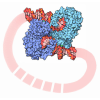
| Deposited unit | 
|
|---|---|
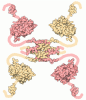
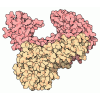
| 1 |
|
-Components
-Protein , 5 types, 9 molecules ABCDEFGHP
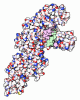
| #1: Protein | Mass: 13388.727 Da / Num. of mol.: 2 Source method: isolated from a genetically manipulated source Source: (gene. exp.) Drosophila melanogaster (fruit fly)Gene: His2A, H2a, His2A:CG31618, CG31618, His2A:CG33808, CG33808, His2A:CG33814, CG33814, His2A:CG33817, CG33817, His2A:CG33820, CG33820, His2A:CG33823, CG33823, His2A:CG33826, CG33826, His2A: ...Gene: His2A, H2a, His2A:CG31618, CG31618, His2A:CG33808, CG33808, His2A:CG33814, CG33814, His2A:CG33817, CG33817, His2A:CG33820, CG33820, His2A:CG33823, CG33823, His2A:CG33826, CG33826, His2A:CG33829, CG33829, His2A:CG33832, CG33832, His2A:CG33835, CG33835, His2A:CG33838, CG33838, His2A:CG33841, CG33841, His2A:CG33844, CG33844, His2A:CG33847, CG33847, His2A:CG33850, CG33850, His2A:CG33862, CG33862, His2A:CG33865, CG33865 Production host:   Escherichia coli (E. coli) / References: UniProt: P84051 Escherichia coli (E. coli) / References: UniProt: P84051#2: Protein | Mass: 13897.275 Da / Num. of mol.: 2 Source method: isolated from a genetically manipulated source Source: (gene. exp.) Drosophila melanogaster (fruit fly)Gene: His2B, His2B:CG17949, CG17949, His2B:CG33868, CG33868, His2B:CG33870, CG33870, His2B:CG33872, CG33872, His2B:CG33874, CG33874, His2B:CG33876, CG33876, His2B:CG33878, CG33878, His2B:CG33880, ...Gene: His2B, His2B:CG17949, CG17949, His2B:CG33868, CG33868, His2B:CG33870, CG33870, His2B:CG33872, CG33872, His2B:CG33874, CG33874, His2B:CG33876, CG33876, His2B:CG33878, CG33878, His2B:CG33880, CG33880, His2B:CG33882, CG33882, His2B:CG33884, CG33884, His2B:CG33886, CG33886, His2B:CG33888, CG33888, His2B:CG33890, CG33890, His2B:CG33892, CG33892, His2B:CG33894, CG33894, His2B:CG33896, CG33896, His2B:CG33898, CG33898, His2B:CG33900, CG33900, His2B:CG33902, CG33902, His2B:CG33904, CG33904, His2B:CG33906, CG33906, His2B:CG33908, CG33908, His2B:CG33910, CG33910 Production host: Escherichia coli (E. coli) / References: UniProt: P02283#3: Protein | Mass: 15405.036 Da / Num. of mol.: 2 Source method: isolated from a genetically manipulated source Source: (gene. exp.) Drosophila melanogaster (fruit fly)Gene: His3, His3:CG31613, CG31613, His3:CG33803, CG33803, His3:CG33806, CG33806, His3:CG33809, CG33809, His3:CG33812, CG33812, His3:CG33815, CG33815, His3:CG33818, CG33818, His3:CG33821, CG33821, ...Gene: His3, His3:CG31613, CG31613, His3:CG33803, CG33803, His3:CG33806, CG33806, His3:CG33809, CG33809, His3:CG33812, CG33812, His3:CG33815, CG33815, His3:CG33818, CG33818, His3:CG33821, CG33821, His3:CG33824, CG33824, His3:CG33827, CG33827, His3:CG33830, CG33830, His3:CG33833, CG33833, His3:CG33836, CG33836, His3:CG33839, CG33839, His3:CG33842, CG33842, His3:CG33845, CG33845, His3:CG33848, CG33848, His3:CG33851, CG33851, His3:CG33854, CG33854, His3:CG33857, CG33857, His3:CG33860, CG33860, His3:CG33863, CG33863, His3:CG33866, CG33866 Production host: Escherichia coli (E. coli) / References: UniProt: P02299#4: Protein | Mass: 11521.611 Da / Num. of mol.: 2 Source method: isolated from a genetically manipulated source Source: (gene. exp.) Drosophila melanogaster (fruit fly)Gene: His4, H4, His4r, H4r, CG3379, His4:CG31611, CG31611, His4:CG33869, CG33869, His4:CG33871, CG33871, His4:CG33873, CG33873, His4:CG33875, CG33875, His4:CG33877, CG33877, His4:CG33879, CG33879, ...Gene: His4, H4, His4r, H4r, CG3379, His4:CG31611, CG31611, His4:CG33869, CG33869, His4:CG33871, CG33871, His4:CG33873, CG33873, His4:CG33875, CG33875, His4:CG33877, CG33877, His4:CG33879, CG33879, His4:CG33881, CG33881, His4:CG33883, CG33883, His4:CG33885, CG33885, His4:CG33887, CG33887, His4:CG33889, CG33889, His4:CG33891, CG33891, His4:CG33893, CG33893, His4:CG33895, CG33895, His4:CG33897, CG33897, His4:CG33899, CG33899, His4:CG33901, CG33901, His4:CG33903, CG33903, His4:CG33905, CG33905, His4:CG33907, CG33907, His4:CG33909, CG33909 Production host: Escherichia coli (E. coli) / References: UniProt: P84040#9: Protein | | Mass: 56503.555 Da / Num. of mol.: 1 Source method: isolated from a genetically manipulated source Source: (gene. exp.) Homo sapiens (human) / Gene: PARP2, ADPRT2, ADPRTL2 / Production host: Escherichia coli (E. coli)References: UniProt: Q9UGN5, NAD+ ADP-ribosyltransferase, Transferases; Glycosyltransferases; Pentosyltransferases |
|---|
-DNA chain , 3 types, 3 molecules KLM
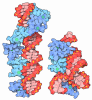
| #6: DNA chain | Mass: 21238.523 Da / Num. of mol.: 1 / Source method: obtained synthetically / Source: (synth.) synthetic construct (others) |
|---|---|
| #7: DNA chain | Mass: 39167.000 Da / Num. of mol.: 1 / Source method: obtained synthetically / Source: (synth.) synthetic construct (others) |
| #8: DNA chain | Mass: 61197.965 Da / Num. of mol.: 1 / Source method: obtained synthetically / Source: (synth.) synthetic construct (others) |
-Antibody , 1 types, 2 molecules IJ
| #5: Antibody | Mass: 29631.662 Da / Num. of mol.: 2 Source method: isolated from a genetically manipulated source Details: Sequence corresponds to GenBank IDs X60334 and X60341. Source: (gene. exp.) Mus musculus (house mouse) / Production host: Escherichia coli (E. coli) |
|---|
-Details
| Has protein modification | Y |
|---|
-Experimental details
-Experiment
| Experiment | Method: ELECTRON MICROSCOPY |
|---|---|
| EM experiment | Aggregation state: PARTICLE / 3D reconstruction method: single particle reconstruction |
- Sample preparation
| Component | Name: Nucleosome with an SSB at SHL -2.8 in complex with human PARP2 and HPF1, Class 1 Type: COMPLEX / Entity ID: all / Source: MULTIPLE SOURCES |
|---|---|
| Molecular weight | Experimental value: NO |
| Source (natural) | Organism: Drosophila melanogaster (fruit fly) |
| Source (recombinant) | Organism: Escherichia coli (E. coli) |
| Buffer solution | pH: 7.4 |
| Specimen | Embedding applied: NO / Shadowing applied: NO / Staining applied: NO / Vitrification applied: YES |
| Specimen support | Grid material: COPPER / Grid type: Quantifoil R2/1 |
| Vitrification | Cryogen name: ETHANE / Humidity: 100 % |
- Electron microscopy imaging
| Experimental equipment |  Model: Titan Krios / Image courtesy: FEI Company |
|---|---|
| Microscopy | Model: TFS KRIOS |
| Electron gun | Electron source:  FIELD EMISSION GUN / Accelerating voltage: 300 kV / Illumination mode: FLOOD BEAM FIELD EMISSION GUN / Accelerating voltage: 300 kV / Illumination mode: FLOOD BEAM |
| Electron lens | Mode: BRIGHT FIELD / Nominal defocus max: 1800 nm / Nominal defocus min: 800 nm |
| Image recording | Electron dose: 49 e/Å2 / Film or detector model: GATAN K3 BIOQUANTUM (6k x 4k) |
- Processing
| EM software |
| ||||||||||||||||||||||||||||||||
|---|---|---|---|---|---|---|---|---|---|---|---|---|---|---|---|---|---|---|---|---|---|---|---|---|---|---|---|---|---|---|---|---|---|
| CTF correction | Type: PHASE FLIPPING AND AMPLITUDE CORRECTION | ||||||||||||||||||||||||||||||||
| 3D reconstruction | Resolution: 2.1 Å / Resolution method: FSC 0.143 CUT-OFF / Num. of particles: 952082 / Symmetry type: POINT |
