 Movie
Movie Controller


+ Open data

- Basic information
| Entry | Database: PDB / ID: 9x74 | |||||||||||||||
|---|---|---|---|---|---|---|---|---|---|---|---|---|---|---|---|---|
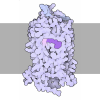
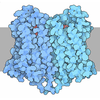
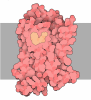
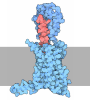
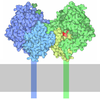
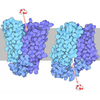
| Title | Human GPR30 -Gq complex | |||||||||||||||
 Components Components |
| |||||||||||||||
 Keywords Keywords | MEMBRANE PROTEIN / Receptor / GPCR / Complex | |||||||||||||||
| Function / homology |  Function and homology information Function and homology informationnegative regulation of leukocyte activation / nuclear fragmentation involved in apoptotic nuclear change / G protein-coupled estrogen receptor activity / positive regulation of cardiac vascular smooth muscle cell differentiation / negative regulation of cell cycle process / keratin filament / positive regulation of inositol trisphosphate biosynthetic process / apoptotic chromosome condensation / positive regulation of uterine smooth muscle contraction / negative regulation of lipid biosynthetic process ...negative regulation of leukocyte activation / nuclear fragmentation involved in apoptotic nuclear change / G protein-coupled estrogen receptor activity / positive regulation of cardiac vascular smooth muscle cell differentiation / negative regulation of cell cycle process / keratin filament / positive regulation of inositol trisphosphate biosynthetic process / apoptotic chromosome condensation / positive regulation of uterine smooth muscle contraction / negative regulation of lipid biosynthetic process / negative regulation of adenylate cyclase-activating adrenergic receptor signaling pathway / negative regulation of calcium ion-dependent exocytosis / positive regulation of neurotransmitter secretion / steroid hormone binding / cellular response to mineralocorticoid stimulus / sensory perception of chemical stimulus / positive regulation of G protein-coupled receptor signaling pathway / negative regulation of adenylate cyclase activity / mu-type opioid receptor binding / G protein-coupled adenosine receptor signaling pathway / corticotropin-releasing hormone receptor 1 binding / positive regulation of neural precursor cell proliferation / G-protein activation / Activation of the phototransduction cascade / Glucagon-type ligand receptors / Thromboxane signalling through TP receptor / Sensory perception of sweet, bitter, and umami (glutamate) taste / G beta:gamma signalling through PI3Kgamma / G beta:gamma signalling through CDC42 / Cooperation of PDCL (PhLP1) and TRiC/CCT in G-protein beta folding / Activation of G protein gated Potassium channels / Inhibition of voltage gated Ca2+ channels via Gbeta/gamma subunits / Ca2+ pathway / negative regulation of synaptic transmission / G alpha (z) signalling events / High laminar flow shear stress activates signaling by PIEZO1 and PECAM1:CDH5:KDR in endothelial cells / Glucagon-like Peptide-1 (GLP1) regulates insulin secretion / Vasopressin regulates renal water homeostasis via Aquaporins / Adrenaline,noradrenaline inhibits insulin secretion / ADP signalling through P2Y purinoceptor 12 / positive regulation of extrinsic apoptotic signaling pathway / positive regulation of neurogenesis / G alpha (q) signalling events / dendritic spine membrane / beta-2 adrenergic receptor binding / negative regulation of fat cell differentiation / G alpha (i) signalling events / positive regulation of urine volume / Thrombin signalling through proteinase activated receptors (PARs) / steroid hormone receptor signaling pathway / cellular response to peptide hormone stimulus / presynaptic active zone / dendritic spine head / nuclear estrogen receptor activity / gamma-aminobutyric acid signaling pathway / photoreceptor outer segment membrane / spectrin binding / positive regulation of epidermal growth factor receptor signaling pathway / sensory perception of taste / alkylglycerophosphoethanolamine phosphodiesterase activity / regulation of calcium ion transport / positive regulation of release of cytochrome c from mitochondria / negative regulation of apoptotic signaling pathway / retina development in camera-type eye / negative regulation of vascular associated smooth muscle cell proliferation / neuronal action potential / nuclear receptor-mediated steroid hormone signaling pathway / positive regulation of endothelial cell apoptotic process / cardiac muscle cell apoptotic process / photoreceptor outer segment / D1 dopamine receptor binding / positive regulation of vascular associated smooth muscle cell proliferation / regulation of cytosolic calcium ion concentration / neuronal dense core vesicle / adenylate cyclase-activating adrenergic receptor signaling pathway / steroid binding / insulin-like growth factor receptor binding / positive regulation of superoxide anion generation / response to nutrient / photoreceptor inner segment / Adenylate cyclase inhibitory pathway / ionotropic glutamate receptor binding / cytoplasmic vesicle membrane / positive regulation of release of sequestered calcium ion into cytosol / axon terminus / negative regulation of phosphatidylinositol 3-kinase/protein kinase B signal transduction / adenylate cyclase activator activity / hippocampal mossy fiber to CA3 synapse / Peptide ligand-binding receptors / dendritic shaft / cellular response to estradiol stimulus / positive regulation of protein localization to plasma membrane / cellular response to tumor necrosis factor / cellular response to glucose stimulus / positive regulation of insulin secretion / trans-Golgi network / Regulation of insulin secretion / negative regulation of ERK1 and ERK2 cascade / negative regulation of inflammatory response / vasodilation Similarity search - Function | |||||||||||||||
| Biological species |   Rattus norvegicus (Norway rat) Rattus norvegicus (Norway rat) Homo sapiens (human) Homo sapiens (human) Bos taurus (domestic cattle) Bos taurus (domestic cattle) Mus musculus (house mouse) Mus musculus (house mouse) | |||||||||||||||
| Method | ELECTRON MICROSCOPY / single particle reconstruction / cryo EM / Resolution: 3.15 Å | |||||||||||||||
 Authors Authors | Kaneda, S. / Oshima, H.S. / Akasaka, H. / Shihoya, W. / Nureki, O. | |||||||||||||||
| Funding support |  Japan, 1items Japan, 1items
| |||||||||||||||
 Citation Citation | Journal: Elife / Year: 2026 Title: Cryo-EM structure of the bicarbonate receptor GPR30. Authors: Shota Kaneda / Airi Jo-Watanabe / Hiroaki Akasaka / Hidetaka S Oshima / Takehiko Yokomizo / Wataru Shihoya / Osamu Nureki / Abstract: G-protein-coupled receptor 30 (GPR30) is a bicarbonate receptor that plays a vital role in cellular responses to extracellular pH and ion homeostasis. Despite its significance, the mechanisms by ...G-protein-coupled receptor 30 (GPR30) is a bicarbonate receptor that plays a vital role in cellular responses to extracellular pH and ion homeostasis. Despite its significance, the mechanisms by which GPR30 interacts with bicarbonate ions remain elusive. There is no consensus on a drug that targets GPR30, and difficulties in pharmacological analyses have limited biological and drug discovery research on GPR30. Here, we present the cryo-electron microscopy structure of human GPR30 in the presence of bicarbonate ions at 3.15 Å resolution. Our structure reveals unique extracellular pockets and critical residues for bicarbonate binding and activation. Functional assays demonstrate that mutations in these residues impair bicarbonate-induced GPR30 activation, underscoring their importance in receptor function. This study also provides insights into G-protein coupling, highlighting the structural divergence between GPR30 and other G-protein-coupled receptors (GPCRs). Our findings not only advance the understanding of the role of GPR30 in pH homeostasis but also pave the way for the development of high-affinity drugs targeting GPR30 for therapeutic interventions in diseases associated with acid-base imbalance. | |||||||||||||||
| History |
|
- Structure visualization
| Structure viewer | Molecule: MolmilJmol/JSmol |
|---|
- Downloads & links
-Download
| PDBx/mmCIF format | 9x74.cif.gz | 246.4 KB | Display | PDBx/mmCIF format |
|---|---|---|---|---|
| PDB format | pdb9x74.ent.gz | 179.9 KB | Display | PDB format |
| PDBx/mmJSON format | 9x74.json.gz | Tree view | PDBx/mmJSON format | |
| Others |  Other downloads Other downloads |
-Validation report
| Arichive directory | https://data.pdbj.org/pub/pdb/validation_reports/x7/9x74ftp://data.pdbj.org/pub/pdb/validation_reports/x7/9x74 | HTTPS FTP |
|---|
-Related structure data
| Related structure data |  66632MC C: citing same article ( M: map data used to model this data |
|---|---|
| Similar structure data |


-Links
 PDBj
PDBj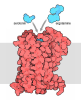
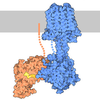
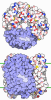
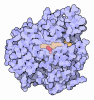
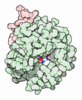
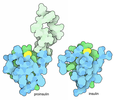
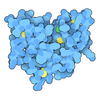
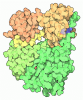
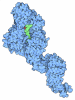
- Assembly
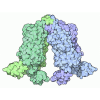
| Deposited unit | 
|
|---|---|
| 1 |
|
-Components
| #1: Protein | Mass: 40470.105 Da / Num. of mol.: 1 Source method: isolated from a genetically manipulated source Source: (gene. exp.) Rattus norvegicus (Norway rat) / Gene: Gnb1 / Production host:   Spodoptera frugiperda (fall armyworm) / References: UniProt: P54311 Spodoptera frugiperda (fall armyworm) / References: UniProt: P54311 |
|---|---|
| #2: Protein | Mass: 7563.750 Da / Num. of mol.: 1 Source method: isolated from a genetically manipulated source Source: (gene. exp.) Homo sapiens (human) / Gene: GNG2 / Production host: Spodoptera frugiperda (fall armyworm) / References: UniProt: P59768 |
| #3: Protein | Mass: 29027.848 Da / Num. of mol.: 1 Source method: isolated from a genetically manipulated source Source: (gene. exp.) Homo sapiens (human), (gene. exp.) Bos taurus (domestic cattle)Gene: GNAI2, GNAI2B, GNAS, GNAS1 / Production host: Spodoptera frugiperda (fall armyworm)References: UniProt: P04899, UniProt: P04896, Hydrolases; Acting on acid anhydrides; Acting on GTP to facilitate cellular and subcellular movement |
| #4: Protein | Mass: 94326.938 Da / Num. of mol.: 1 Source method: isolated from a genetically manipulated source Source: (gene. exp.) Homo sapiens (human) / Gene: GPER1, CEPR, CMKRL2, DRY12, GPER, GPR30 / Production host: Spodoptera frugiperda (fall armyworm) / References: UniProt: Q99527 |
| #5: Antibody | Mass: 27720.795 Da / Num. of mol.: 1 Source method: isolated from a genetically manipulated source Source: (gene. exp.) Mus musculus (house mouse) / Production host: Spodoptera frugiperda (fall armyworm) |
| Has protein modification | Y |
-Experimental details
-Experiment
| Experiment | Method: ELECTRON MICROSCOPY |
|---|---|
| EM experiment | Aggregation state: PARTICLE / 3D reconstruction method: single particle reconstruction |
- Sample preparation
| Component |
| ||||||||||||||||||||||||||||||||||||||||||
|---|---|---|---|---|---|---|---|---|---|---|---|---|---|---|---|---|---|---|---|---|---|---|---|---|---|---|---|---|---|---|---|---|---|---|---|---|---|---|---|---|---|---|---|
| Source (natural) |
| ||||||||||||||||||||||||||||||||||||||||||
| Source (recombinant) |
| ||||||||||||||||||||||||||||||||||||||||||
| Buffer solution | pH: 8 | ||||||||||||||||||||||||||||||||||||||||||
| Specimen | Embedding applied: NO / Shadowing applied: NO / Staining applied: NO / Vitrification applied: YES | ||||||||||||||||||||||||||||||||||||||||||
| Vitrification | Cryogen name: ETHANE |
- Electron microscopy imaging
| Experimental equipment |  Model: Titan Krios / Image courtesy: FEI Company |
|---|---|
| Microscopy | Model: TFS KRIOS |
| Electron gun | Electron source:  FIELD EMISSION GUN / Accelerating voltage: 300 kV / Illumination mode: FLOOD BEAM FIELD EMISSION GUN / Accelerating voltage: 300 kV / Illumination mode: FLOOD BEAM |
| Electron lens | Mode: BRIGHT FIELD / Nominal defocus max: 1600 nm / Nominal defocus min: 800 nm |
| Image recording | Electron dose: 50.66 e/Å2 / Film or detector model: GATAN K3 BIOQUANTUM (6k x 4k) |
- Processing
| EM software |
| ||||||||||||||||||||||||
|---|---|---|---|---|---|---|---|---|---|---|---|---|---|---|---|---|---|---|---|---|---|---|---|---|---|
| CTF correction | Type: PHASE FLIPPING AND AMPLITUDE CORRECTION | ||||||||||||||||||||||||
| 3D reconstruction | Resolution: 3.15 Å / Resolution method: FSC 0.143 CUT-OFF / Num. of particles: 522404 / Symmetry type: POINT | ||||||||||||||||||||||||
| Refinement | Highest resolution: 3.15 Å Stereochemistry target values: REAL-SPACE (WEIGHTED MAP SUM AT ATOM CENTERS) | ||||||||||||||||||||||||
| Refine LS restraints |
|
