 ムービー
ムービー コントローラー


+ データを開く

- 基本情報
基本情報
| 登録情報 | データベース: PDB / ID: 9wzb | ||||||||||||
|---|---|---|---|---|---|---|---|---|---|---|---|---|---|
| タイトル | K21E/K22E-ASC CARD filament | ||||||||||||
 要素 要素 | Apoptosis-associated speck-like protein containing a CARD | ||||||||||||
 キーワード キーワード | IMMUNE SYSTEM / filament / PYD / CARD | ||||||||||||
| 機能・相同性 |  機能・相同性情報 機能・相同性情報NLRP6 inflammasome complex / myosin I binding / negative regulation of protein serine/threonine kinase activity / Pyrin domain binding / myeloid dendritic cell activation involved in immune response / positive regulation of antigen processing and presentation of peptide antigen via MHC class II / regulation of intrinsic apoptotic signaling pathway / myeloid dendritic cell activation / IkappaB kinase complex / The AIM2 inflammasome ...NLRP6 inflammasome complex / myosin I binding / negative regulation of protein serine/threonine kinase activity / Pyrin domain binding / myeloid dendritic cell activation involved in immune response / positive regulation of antigen processing and presentation of peptide antigen via MHC class II / regulation of intrinsic apoptotic signaling pathway / myeloid dendritic cell activation / IkappaB kinase complex / The AIM2 inflammasome / AIM2 inflammasome complex / icosanoid biosynthetic process / NLRP1 inflammasome complex / macropinocytosis / canonical inflammasome complex / interleukin-6 receptor binding / BMP receptor binding / NLRP3 inflammasome complex / NLRP3 inflammasome complex assembly / positive regulation of adaptive immune response / cysteine-type endopeptidase activator activity / CLEC7A/inflammasome pathway / negative regulation of interferon-beta production / regulation of tumor necrosis factor-mediated signaling pathway / osmosensory signaling pathway / positive regulation of activated T cell proliferation / : / positive regulation of extrinsic apoptotic signaling pathway / positive regulation of macrophage cytokine production / pattern recognition receptor signaling pathway / pattern recognition receptor activity / tropomyosin binding / positive regulation of actin filament polymerization / positive regulation of release of cytochrome c from mitochondria / intrinsic apoptotic signaling pathway by p53 class mediator / positive regulation of interleukin-10 production / The NLRP3 inflammasome / : / intrinsic apoptotic signaling pathway in response to DNA damage by p53 class mediator / pyroptotic inflammatory response / cellular response to interleukin-1 / positive regulation of T cell migration / Purinergic signaling in leishmaniasis infection / positive regulation of defense response to virus by host / positive regulation of chemokine production / negative regulation of cytokine production involved in inflammatory response / activation of innate immune response / intrinsic apoptotic signaling pathway / positive regulation of phagocytosis / tumor necrosis factor-mediated signaling pathway / : / positive regulation of interleukin-1 beta production / positive regulation of interleukin-8 production / regulation of autophagy / negative regulation of canonical NF-kappaB signal transduction / apoptotic signaling pathway / regulation of protein stability / positive regulation of non-canonical NF-kappaB signal transduction / protein homooligomerization / positive regulation of interleukin-6 production / positive regulation of JNK cascade / cellular response to tumor necrosis factor / positive regulation of type II interferon production / positive regulation of T cell activation / positive regulation of tumor necrosis factor production / SARS-CoV-1 activates/modulates innate immune responses / positive regulation of inflammatory response / azurophil granule lumen / cellular response to lipopolysaccharide / regulation of inflammatory response / protease binding / secretory granule lumen / defense response to virus / defense response to Gram-negative bacterium / microtubule / transmembrane transporter binding / protein-macromolecule adaptor activity / positive regulation of canonical NF-kappaB signal transduction / positive regulation of ERK1 and ERK2 cascade / protein dimerization activity / defense response to Gram-positive bacterium / positive regulation of apoptotic process / inflammatory response / Golgi membrane / innate immune response / neuronal cell body / apoptotic process / Neutrophil degranulation / nucleolus / enzyme binding / endoplasmic reticulum / signal transduction / protein homodimerization activity / protein-containing complex / mitochondrion / extracellular region / nucleoplasm / identical protein binding / nucleus / cytoplasm 類似検索 - 分子機能 | ||||||||||||
| 生物種 |  Homo sapiens (ヒト) Homo sapiens (ヒト) | ||||||||||||
| 手法 | 電子顕微鏡法 / らせん対称体再構成法 / クライオ電子顕微鏡法 / 解像度: 2.67 Å | ||||||||||||
 データ登録者 データ登録者 | Xue, D. / Ni, F. / Liu, S. / Yan, H. / Luo, Z. / Fu, G. / Wang, Q. / Ma, J. | ||||||||||||
| 資金援助 |  中国, 3件 中国, 3件
| ||||||||||||
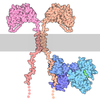
 引用 引用 | ジャーナル: Nat Commun / 年: 2025 タイトル: Atomic mechanisms of full-length ASC-mediated inflammasome assembly. 著者: Dongmei Xue / Fengyun Ni / Sheng Liu / Huifang Yan / Zhenwei Luo / Gang Fu / Qinghua Wang / Jianpeng Ma /  要旨: ASC (Apoptosis-associated Speck-like protein containing a CARD) is a key adaptor protein that assembles inflammasomes by linking sensors such as NLRP3 to effectors like Caspase-1 via its PYD and CARD ...ASC (Apoptosis-associated Speck-like protein containing a CARD) is a key adaptor protein that assembles inflammasomes by linking sensors such as NLRP3 to effectors like Caspase-1 via its PYD and CARD Death Domains. Due to ASC's propensity to self-aggregate, most high-resolution structural studies focused on isolated PYD or CARD domains, leaving the atomic basis of full-length ASC assembly unknown. Here we determine atomic-resolution cryo-EM structures of PYD and CARD filaments from full-length ASC, revealing characteristic multitrack bundles composed of alternating ASC and ASC filaments that expose multiple interfaces for flexible assembly and efficient signaling. We further show that Caspase-1 filaments nucleate specifically from the B-end of ASC filaments, and that the interdomain linker modulates bundle formation. The ASC isoform ASCb, with a four-residue linker, adopts a distinct architecture, correlating with reduced Caspase-1 activation efficiency. In ASC THP-1 cells, only wild-type ASC, not interface-disrupting mutants, restored ASC speck formation and Caspase-1 activation, underscoring the requirement for intact multitrack bundles. Cryo-electron tomography captures snapshots of higher-order inflammasome structures. These findings collectively define the structural and functional principles by which ASC organizes inflammasomes to amplify immune signaling. | ||||||||||||
| 履歴 |
|
- 構造の表示
構造の表示
| 構造ビューア | 分子: MolmilJmol/JSmol |
|---|
- ダウンロードとリンク
-ダウンロード
| PDBx/mmCIF形式 | 9wzb.cif.gz | 200.2 KB | 表示 | PDBx/mmCIF形式 |
|---|---|---|---|---|
| PDB形式 | pdb9wzb.ent.gz | 153.4 KB | 表示 | PDB形式 |
| PDBx/mmJSON形式 | 9wzb.json.gz | ツリー表示 | PDBx/mmJSON形式 | |
| その他 |  その他のダウンロード その他のダウンロード |
-検証レポート
| アーカイブディレクトリ | https://data.pdbj.org/pub/pdb/validation_reports/wz/9wzbftp://data.pdbj.org/pub/pdb/validation_reports/wz/9wzb | HTTPS FTP |
|---|
-関連構造データ
| 関連構造データ |  66387MC  9wz4C  9wz5C  9wz6C  9wz7C  9wz8C  9wzcC  9wzdC  9wzgC  9wzhC  9wziC M: このデータのモデリングに利用したマップデータ C: 同じ文献を引用 ( |
|---|---|
| 類似構造データ |


-リンク
 PDBj
PDBj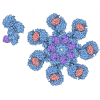


- 集合体
集合体
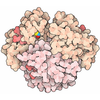
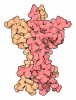
| 登録構造単位 | 
|
|---|---|
| 1 |
|
-要素
| #1: タンパク質 | 分子量: 21651.648 Da / 分子数: 12 / 変異: K21E,K22E / 由来タイプ: 組換発現 / 由来: (組換発現) Homo sapiens (ヒト) / 遺伝子: PYCARD, ASC, CARD5, TMS1 / 発現宿主: Homo sapiens (ヒト) / 参照: UniProt: Q9ULZ3Has protein modification | N | |
|---|
-実験情報
-実験
| 実験 | 手法: 電子顕微鏡法 |
|---|---|
| EM実験 | 試料の集合状態: FILAMENT / 3次元再構成法: らせん対称体再構成法 |
- 試料調製
試料調製
| 構成要素 | 名称: Filament / タイプ: CELL / Entity ID: all / 由来: RECOMBINANT |
|---|---|
| 由来(天然) | 生物種: Homo sapiens (ヒト) |
| 由来(組換発現) | 生物種: Homo sapiens (ヒト) |
| 緩衝液 | pH: 7.8 |
| 試料 | 包埋: NO / シャドウイング: NO / 染色: NO / 凍結: YES |
| 急速凍結 | 凍結剤: ETHANE |
- 電子顕微鏡撮影
| 実験機器 |  モデル: Titan Krios / 画像提供: FEI Company |
|---|---|
| 顕微鏡 | モデル: TFS KRIOS |
| 電子銃 | 電子線源:  FIELD EMISSION GUN / 加速電圧: 300 kV / 照射モード: SPOT SCAN FIELD EMISSION GUN / 加速電圧: 300 kV / 照射モード: SPOT SCAN |
| 電子レンズ | モード: BRIGHT FIELD / 最大 デフォーカス(公称値): 2000 nm / 最小 デフォーカス(公称値): 600 nm |
| 撮影 | 電子線照射量: 50 e/Å2 フィルム・検出器のモデル: GATAN K3 BIOQUANTUM (6k x 4k) |
- 解析
解析
| EMソフトウェア |
| ||||||||||||||||||||||||
|---|---|---|---|---|---|---|---|---|---|---|---|---|---|---|---|---|---|---|---|---|---|---|---|---|---|
| CTF補正 | タイプ: PHASE FLIPPING AND AMPLITUDE CORRECTION | ||||||||||||||||||||||||
| らせん対称 | 回転角度/サブユニット: -100.6 ° / 軸方向距離/サブユニット: 5.1 Å / らせん対称軸の対称性: C5 | ||||||||||||||||||||||||
| 3次元再構成 | 解像度: 2.67 Å / 解像度の算出法: FSC 0.143 CUT-OFF / 粒子像の数: 1118167 / 対称性のタイプ: HELICAL | ||||||||||||||||||||||||
| 精密化 | 最高解像度: 2.67 Å 立体化学のターゲット値: REAL-SPACE (WEIGHTED MAP SUM AT ATOM CENTERS) | ||||||||||||||||||||||||
| 拘束条件 |
|
