 Movie
Movie Controller

[English] 日本語
 Yorodumi
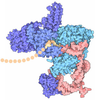
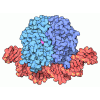
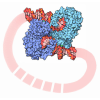
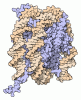
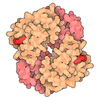
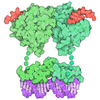
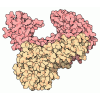
- PDB-9v2v: Cryo-EM structure of the histone deacetylase complex Rpd3L in com... -
+ Open data

- Basic information
| Entry | Database: PDB / ID: 9v2v | ||||||||||||||||||||||||||||||
|---|---|---|---|---|---|---|---|---|---|---|---|---|---|---|---|---|---|---|---|---|---|---|---|---|---|---|---|---|---|---|---|
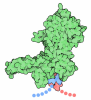
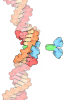
| Title | Cryo-EM structure of the histone deacetylase complex Rpd3L in complex with mono-nucleosome | ||||||||||||||||||||||||||||||
 Components Components |
| ||||||||||||||||||||||||||||||
 Keywords Keywords | GENE REGULATION/DNA / Histone deacetylase complex / Histone modification / Rpd3L / Cryo-EM / mono-nucleosome / GENE REGULATION-DNA complex | ||||||||||||||||||||||||||||||
| Function / homology |  Function and homology information Function and homology informationnegative regulation of phosphatidylserine biosynthetic process / negative regulation of inositol biosynthetic process / positive regulation of phosphatidylserine biosynthetic process / negative regulation of phosphatidylcholine biosynthetic process / positive regulation of inositol biosynthetic process / regulation of invasive growth in response to glucose limitation / conjugation with cellular fusion / PI5P Regulates TP53 Acetylation / positive regulation of phosphatidylcholine biosynthetic process / Snt2C complex ...negative regulation of phosphatidylserine biosynthetic process / negative regulation of inositol biosynthetic process / positive regulation of phosphatidylserine biosynthetic process / negative regulation of phosphatidylcholine biosynthetic process / positive regulation of inositol biosynthetic process / regulation of invasive growth in response to glucose limitation / conjugation with cellular fusion / PI5P Regulates TP53 Acetylation / positive regulation of phosphatidylcholine biosynthetic process / Snt2C complex / negative regulation of silent mating-type cassette heterochromatin formation / positive regulation of invasive growth in response to glucose limitation / Rpd3L complex / protein localization to nucleolar rDNA repeats / negative regulation of reciprocal meiotic recombination / HDACs deacetylate histones / negative regulation of rDNA heterochromatin formation / Rpd3L-Expanded complex / invasive growth in response to glucose limitation / Rpd3S complex / rDNA chromatin condensation / nucleophagy / SUMOylation of transcription cofactors / histone deacetylase activity, hydrolytic mechanism / histone deacetylase / SUMOylation of chromatin organization proteins / cell adhesion involved in single-species biofilm formation / negative regulation of transcription by RNA polymerase I / histone H3K4me3 reader activity / histone deacetylase activity / cellular response to nitrogen starvation / regulation of DNA-templated DNA replication initiation / Sin3-type complex / histone deacetylase complex / positive regulation of macroautophagy / Ub-specific processing proteases / nucleosomal DNA binding / nuclear periphery / transcription coregulator activity / G1/S transition of mitotic cell cycle / innate immune response in mucosa / meiotic cell cycle / transcription elongation by RNA polymerase II / double-strand break repair via nonhomologous end joining / G2/M transition of mitotic cell cycle / histone deacetylase binding / structural constituent of chromatin / transcription corepressor activity / nucleosome / nucleosome assembly / antimicrobial humoral immune response mediated by antimicrobial peptide / cellular response to heat / antibacterial humoral response / chromatin organization / heterochromatin formation / response to oxidative stress / transcription coactivator activity / protein heterodimerization activity / cell division / regulation of transcription by RNA polymerase II / regulation of DNA-templated transcription / positive regulation of DNA-templated transcription / chromatin / negative regulation of transcription by RNA polymerase II / positive regulation of transcription by RNA polymerase II / mitochondrion / DNA-templated transcription / DNA binding / : / zinc ion binding / identical protein binding / nucleus / cytosol / cytoplasm Similarity search - Function | ||||||||||||||||||||||||||||||
| Biological species |   Saccharomyces cerevisiae S288C (yeast) Saccharomyces cerevisiae S288C (yeast) Xenopus laevis (African clawed frog) Xenopus laevis (African clawed frog)synthetic construct (others) | ||||||||||||||||||||||||||||||
| Method | ELECTRON MICROSCOPY / single particle reconstruction / cryo EM / Resolution: 3 Å | ||||||||||||||||||||||||||||||
 Authors Authors | Zhao, H. / Li, H. / Wang, C. / Yang, X. / Li, H. / Zou, B. / Dong, S. / Zhang, N. / Zhou, Y. / Yi, L. ...Zhao, H. / Li, H. / Wang, C. / Yang, X. / Li, H. / Zou, B. / Dong, S. / Zhang, N. / Zhou, Y. / Yi, L. / Zhang, Y. / Xie, Y. / Qin, D. / Chao, W. / Pei, D. / He, J. | ||||||||||||||||||||||||||||||
| Funding support |  China, 5items China, 5items
| ||||||||||||||||||||||||||||||
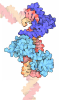
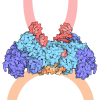
 Citation Citation | Journal: Nucleic Acids Res / Year: 2026 Title: Chromatin context-dependent deacetylation by the asymmetric Rpd3L. Authors: Heyu Zhao / Huadong Li / Chi Wang / Xuechen Yang / Binqian Zou / Shuqi Dong / Nan Zhang / Yuxing Zhou / Li Yi / Ying Zhang / Yixuan Xie / Dajiang Qin / William Chong Hang Chao / Duanqing Pei / Jun He / Abstract: The regulation of gene expression requires precise control of chromatin-associated complexes that respond to diverse structural and epigenetic cues. The Rpd3 Large (Rpd3L) complex is a Sin3 histone ...The regulation of gene expression requires precise control of chromatin-associated complexes that respond to diverse structural and epigenetic cues. The Rpd3 Large (Rpd3L) complex is a Sin3 histone deacetylase complex (HDAC) that dynamically adapt to chromatin states to reinforce transcriptional silencing, yet the mechanisms governing the catalytic activation in chromatin context-dependent manner remain unclear. Here we present the cryo-electron microscopy structure of Rpd3L bound to both mono- and di-nucleosome substrate at near-atomic resolution, uncovering a substrate-guided allosteric activation mechanism. Rpd3L adopts an asymmetric architecture, in which the proximal catalytic module anchors the first nucleosome, while the Sin3 PAH domains engage linker DNA to reposition a second nucleosome. This spatial configuration brings the distal catalytic module into proximity with chromatin and unlocks its latent deacetylase activity. Biochemical and mass spectrometry analyses confirm that dual nucleosome engagement selectively enhances Rpd3L activity and broadens substrate specificity. Together, these findings establish a hierarchical mechanism by which Rpd3L interprets histone modifications and nucleosome organization to modulate its enzymatic output at promoter regions. Our study provides a framework for understanding higher-order chromatin repression mechanisms by chromatin-regulation complexes and co-repressors. | ||||||||||||||||||||||||||||||
| History |
|
- Structure visualization
| Structure viewer | Molecule: MolmilJmol/JSmol |
|---|
- Downloads & links
-Download
| PDBx/mmCIF format | 9v2v.cif.gz | 781.1 KB | Display | PDBx/mmCIF format |
|---|---|---|---|---|
| PDB format | pdb9v2v.ent.gz | 613.4 KB | Display | PDB format |
| PDBx/mmJSON format | 9v2v.json.gz | Tree view | PDBx/mmJSON format | |
| Others |  Other downloads Other downloads |
-Validation report
| Arichive directory | https://data.pdbj.org/pub/pdb/validation_reports/v2/9v2vftp://data.pdbj.org/pub/pdb/validation_reports/v2/9v2v | HTTPS FTP |
|---|
-Related structure data
| Related structure data |  64741MC  9v2wC M: map data used to model this data C: citing same article ( |
|---|---|
| Similar structure data |

-Links
 PDBj
PDBj

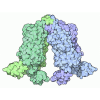
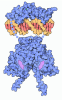
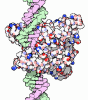

- Assembly
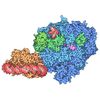
| Deposited unit | 
|
|---|---|
| 1 |
|
-Components
-Transcriptional regulatory protein ... , 7 types, 8 molecules ABEFGHIJ
| #1: Protein | Mass: 80758.352 Da / Num. of mol.: 2 Source method: isolated from a genetically manipulated source Source: (gene. exp.) Saccharomyces cerevisiae S288C (yeast) / Gene: SIN3, CPE1, GAM2, RPD1, SDI1, SDS16, UME4, YOL004W / Production host:  Trichoplusia ni (cabbage looper) / References: UniProt: P22579 Trichoplusia ni (cabbage looper) / References: UniProt: P22579#3: Protein | | Mass: 14553.604 Da / Num. of mol.: 1 Source method: isolated from a genetically manipulated source Source: (gene. exp.) Saccharomyces cerevisiae S288C (yeast) / Gene: DEP1, FUN54, YAL013W / Production host: Trichoplusia ni (cabbage looper) / References: UniProt: P31385#4: Protein | | Mass: 35851.199 Da / Num. of mol.: 1 Source method: isolated from a genetically manipulated source Source: (gene. exp.) Saccharomyces cerevisiae S288C (yeast) / Gene: SDS3, YIL084C / Production host: Trichoplusia ni (cabbage looper) / References: UniProt: P40505#5: Protein | | Mass: 14480.324 Da / Num. of mol.: 1 Source method: isolated from a genetically manipulated source Source: (gene. exp.) Saccharomyces cerevisiae S288C (yeast) / Gene: SAP30, YMR263W, YM8156.05 / Production host: Trichoplusia ni (cabbage looper) / References: UniProt: P38429#6: Protein | | Mass: 23933.775 Da / Num. of mol.: 1 Source method: isolated from a genetically manipulated source Source: (gene. exp.) Saccharomyces cerevisiae S288C (yeast) / Gene: RXT3, YDL076C / Production host: Trichoplusia ni (cabbage looper) / References: UniProt: Q07458#7: Protein | | Mass: 12360.187 Da / Num. of mol.: 1 Source method: isolated from a genetically manipulated source Source: (gene. exp.) Saccharomyces cerevisiae S288C (yeast) / Gene: PHO23, YNL097C, N2205 / Production host: Trichoplusia ni (cabbage looper) / References: UniProt: P50947#8: Protein | | Mass: 24683.771 Da / Num. of mol.: 1 Source method: isolated from a genetically manipulated source Source: (gene. exp.) Saccharomyces cerevisiae S288C (yeast) / Gene: RXT2, RAF60, YBR095C, YBR0822 / Production host: Trichoplusia ni (cabbage looper) / References: UniProt: P38255 |
|---|
-Histone deacetylase ... , 2 types, 3 molecules CDK
| #2: Protein | Mass: 43524.289 Da / Num. of mol.: 2 Source method: isolated from a genetically manipulated source Source: (gene. exp.) Saccharomyces cerevisiae S288C (yeast) / Gene: RPD3, MOF6, REC3, SDI2, SDS6, YNL330C, N0305 / Production host: Trichoplusia ni (cabbage looper) / References: UniProt: P32561, histone deacetylase#9: Protein | | Mass: 28742.312 Da / Num. of mol.: 1 Source method: isolated from a genetically manipulated source Source: (gene. exp.) Saccharomyces cerevisiae S288C (yeast) / Gene: CTI6, RXT1, YPL181W / Production host: Trichoplusia ni (cabbage looper) / References: UniProt: Q08923 |
|---|
-Protein , 4 types, 8 molecules OSPTQURV
| #10: Protein | Mass: 11722.664 Da / Num. of mol.: 2 Source method: isolated from a genetically manipulated source Source: (gene. exp.) Xenopus laevis (African clawed frog) / Gene: LOC494591, h2ac14.L, hist1h2aj, hist1h2aj.L / Production host:   Escherichia coli (E. coli) / References: UniProt: Q6AZJ8 Escherichia coli (E. coli) / References: UniProt: Q6AZJ8#11: Protein | Mass: 10406.954 Da / Num. of mol.: 2 Source method: isolated from a genetically manipulated source Source: (gene. exp.) Xenopus laevis (African clawed frog) / Gene: LOC108704302 / Production host: Escherichia coli (E. coli) / References: UniProt: A0A8J1LZU9#12: Protein | Mass: 11560.538 Da / Num. of mol.: 2 Source method: isolated from a genetically manipulated source Source: (gene. exp.) Xenopus laevis (African clawed frog) / Gene: LOC121398065, LOC108703785, LOC121398067 / Production host: Escherichia coli (E. coli) / References: UniProt: A0A310TTQ1#13: Protein | Mass: 9066.641 Da / Num. of mol.: 2 Source method: isolated from a genetically manipulated source Source: (gene. exp.) Xenopus laevis (African clawed frog) / Production host: Escherichia coli (E. coli) / References: UniProt: P62799 |
|---|
-DNA chain , 2 types, 2 molecules XY
| #14: DNA chain | Mass: 48115.652 Da / Num. of mol.: 1 Source method: isolated from a genetically manipulated source Source: (gene. exp.) synthetic construct (others) / Production host: Escherichia coli (E. coli) |
|---|---|
| #15: DNA chain | Mass: 47577.309 Da / Num. of mol.: 1 Source method: isolated from a genetically manipulated source Source: (gene. exp.) synthetic construct (others) / Production host: Escherichia coli (E. coli) |
-Non-polymers , 1 types, 1 molecules 
| #16: Chemical | ChemComp-ZN /  Mass: 65.409 Da / Num. of mol.: 1 / Source method: obtained synthetically / Formula: Zn Mass: 65.409 Da / Num. of mol.: 1 / Source method: obtained synthetically / Formula: Zn |
|---|
-Details
| Has ligand of interest | Y |
|---|---|
| Has protein modification | N |
-Experimental details
-Experiment
| Experiment | Method: ELECTRON MICROSCOPY |
|---|---|
| EM experiment | Aggregation state: PARTICLE / 3D reconstruction method: single particle reconstruction |
- Sample preparation
| Component | Name: Cryo-EM structure of the histone deacetylase complex Rpd3L in complex with mono-nucleosome Type: COMPLEX / Entity ID: #1, #3-#15 / Source: MULTIPLE SOURCES |
|---|---|
| Source (natural) | Organism: Saccharomyces cerevisiae S288C (yeast) |
| Buffer solution | pH: 7.5 |
| Specimen | Embedding applied: NO / Shadowing applied: NO / Staining applied: NO / Vitrification applied: YES |
| Vitrification | Cryogen name: ETHANE |
- Electron microscopy imaging
| Experimental equipment |  Model: Titan Krios / Image courtesy: FEI Company |
|---|---|
| Microscopy | Model: TFS KRIOS |
| Electron gun | Electron source:  FIELD EMISSION GUN / Accelerating voltage: 300 kV / Illumination mode: FLOOD BEAM FIELD EMISSION GUN / Accelerating voltage: 300 kV / Illumination mode: FLOOD BEAM |
| Electron lens | Mode: BRIGHT FIELD / Nominal defocus max: 2400 nm / Nominal defocus min: 800 nm |
| Image recording | Electron dose: 50 e/Å2 / Film or detector model: FEI FALCON IV (4k x 4k) |
- Processing
| EM software |
| |||||||||
|---|---|---|---|---|---|---|---|---|---|---|
| CTF correction | Type: PHASE FLIPPING AND AMPLITUDE CORRECTION | |||||||||
| 3D reconstruction | Resolution: 3 Å / Resolution method: FSC 0.143 CUT-OFF / Num. of particles: 451544 / Symmetry type: POINT |
