 Movie
Movie Controller


+ Open data

- Basic information
| Entry | Database: PDB / ID: 9rtw | ||||||||||||||||||||||||||||||
|---|---|---|---|---|---|---|---|---|---|---|---|---|---|---|---|---|---|---|---|---|---|---|---|---|---|---|---|---|---|---|---|
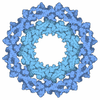
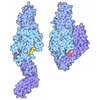
| Title | Mammalian AP3 complex on tubular membranes (AP3 centered) | ||||||||||||||||||||||||||||||
 Components Components |
| ||||||||||||||||||||||||||||||
 Keywords Keywords | ENDOCYTOSIS / Cargo adapter / Coat / trafficking | ||||||||||||||||||||||||||||||
| Function / homology |  Function and homology information Function and homology informationneurotransmitter receptor transport, postsynaptic endosome to lysosome / synaptic vesicle coating / synaptic vesicle membrane organization / clathrin-coated vesicle cargo loading, AP-3-mediated / zinc ion import into lysosome / AP-type membrane coat adaptor complex / AP-3 adaptor complex / anterograde synaptic vesicle transport / synaptic vesicle budding from endosome / endosome to melanosome transport ...neurotransmitter receptor transport, postsynaptic endosome to lysosome / synaptic vesicle coating / synaptic vesicle membrane organization / clathrin-coated vesicle cargo loading, AP-3-mediated / zinc ion import into lysosome / AP-type membrane coat adaptor complex / AP-3 adaptor complex / anterograde synaptic vesicle transport / synaptic vesicle budding from endosome / endosome to melanosome transport / mitotic cleavage furrow ingression / trans-Golgi Network Vesicle Budding / platelet dense granule organization / melanosome assembly / Glycosphingolipid transport / regulation of receptor internalization / Intra-Golgi traffic / presynaptic endosome / clathrin adaptor complex / synaptic vesicle recycling / regulation of Arp2/3 complex-mediated actin nucleation / Synthesis of PIPs at the Golgi membrane / Golgi to vacuole transport / clathrin-coated vesicle membrane / protein targeting to vacuole / melanosome organization / anterograde axonal transport / long-term synaptic depression / Nef Mediated CD4 Down-regulation / dendritic spine organization / protein localization to membrane / COPI-dependent Golgi-to-ER retrograde traffic / Lysosome Vesicle Biogenesis / Golgi Associated Vesicle Biogenesis / Synthesis of PIPs at the plasma membrane / cell leading edge / intracellular copper ion homeostasis / transport vesicle / COPI-mediated anterograde transport / vesicle-mediated transport / axon cytoplasm / MHC class II antigen presentation / Gene and protein expression by JAK-STAT signaling after Interleukin-12 stimulation / cytoplasmic vesicle membrane / small monomeric GTPase / sarcomere / cellular response to virus / intracellular protein transport / insulin receptor signaling pathway / terminal bouton / presynapse / G protein activity / early endosome / postsynapse / endosome membrane / postsynaptic density / neuron projection / protein domain specific binding / Golgi membrane / focal adhesion / lysosomal membrane / GTPase activity / GTP binding / glutamatergic synapse / Golgi apparatus / magnesium ion binding / protein-containing complex / RNA binding / extracellular exosome / membrane / plasma membrane / cytosol / cytoplasm Similarity search - Function | ||||||||||||||||||||||||||||||
| Biological species |   Pan troglodytes (chimpanzee) Pan troglodytes (chimpanzee) Homo sapiens (human) Homo sapiens (human) Rattus norvegicus (Norway rat) Rattus norvegicus (Norway rat) | ||||||||||||||||||||||||||||||
| Method | ELECTRON MICROSCOPY / subtomogram averaging / cryo EM / Resolution: 7.4 Å | ||||||||||||||||||||||||||||||
 Authors Authors | Kaufman, J.G.G. / Tagiltsev, G. / Briggs, J.A.G. / Owen, D.J. | ||||||||||||||||||||||||||||||
| Funding support |  United Kingdom, United Kingdom,  Germany, European Union, 9items Germany, European Union, 9items
| ||||||||||||||||||||||||||||||
 Citation Citation | Journal: Sci Adv / Year: 2026 Title: Architecture of clathrin-independent AP3:ARF1-coated carriers. Authors: Jonathan G G Kaufman / Grigory Tagiltsev / Danièle S Stalder / Rebecca J Taylor / Ioana Sava / Hui Guo / Katarzyna A Ciazynska / Nathan R Zaccai / Sally R Gray / Yvonne Vallis / Stefan ...Authors: Jonathan G G Kaufman / Grigory Tagiltsev / Danièle S Stalder / Rebecca J Taylor / Ioana Sava / Hui Guo / Katarzyna A Ciazynska / Nathan R Zaccai / Sally R Gray / Yvonne Vallis / Stefan Höning / Bernard T Kelly / David C Gershlick / John A G Briggs / David J Owen /  Abstract: The AP3 complex mediates cargo sorting and carrier assembly for the trafficking of transmembrane proteins from endosomes to lysosomes. AP3 is generally believed to localize to clathrin-free, ARF1- ...The AP3 complex mediates cargo sorting and carrier assembly for the trafficking of transmembrane proteins from endosomes to lysosomes. AP3 is generally believed to localize to clathrin-free, ARF1-positive, elongated carriers in cells, but the architecture of AP3-based coats was unknown. Using in vitro reconstitution and cryo-electron tomography, we demonstrate that AP3:ARF1 spontaneously remodels membranes containing cargo and the phosphoinositide PI(3,5)P into tubular structures coated in spiraling rows of AP3 arches and ARF1 dimers. Targeted point mutations disrupting critical AP3:ARF1 and AP3:AP3 lattice interfaces disrupt AP3 recruitment, carrier formation, and lysosomal cargo trafficking in cells. We propose that AP3 generates tubular carriers on endosomes by organizing ARF1 dimers into elongated membrane-deforming arrays while simultaneously selecting cargo. By demonstrating that AP3:ARF1 can generate carriers without using a clathrin lattice, we explain the clathrin independence of AP3-mediated trafficking. | ||||||||||||||||||||||||||||||
| History |
|
- Structure visualization
| Structure viewer | Molecule: MolmilJmol/JSmol |
|---|
- Downloads & links
-Download
| PDBx/mmCIF format | 9rtw.cif.gz | 331 KB | Display | PDBx/mmCIF format |
|---|---|---|---|---|
| PDB format | pdb9rtw.ent.gz | 204.2 KB | Display | PDB format |
| PDBx/mmJSON format | 9rtw.json.gz | Tree view | PDBx/mmJSON format | |
| Others |  Other downloads Other downloads |
-Validation report
| Arichive directory | https://data.pdbj.org/pub/pdb/validation_reports/rt/9rtwftp://data.pdbj.org/pub/pdb/validation_reports/rt/9rtw | HTTPS FTP |
|---|
-Related structure data
| Related structure data |  54255MC  9rtxC  9rtyC  9rtzC M: map data used to model this data C: citing same article ( |
|---|---|
| Similar structure data |


-Links
 PDBj
PDBj
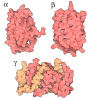
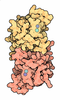

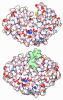
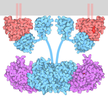
- Assembly
| Deposited unit | 
|
|---|---|
| 1 |
|
-Components
| #1: Protein | Mass: 63956.988 Da / Num. of mol.: 1 Source method: isolated from a genetically manipulated source Source: (gene. exp.) Pan troglodytes (chimpanzee) / Gene: AP3B1 / Production host:   Spodoptera frugiperda (fall armyworm) / References: UniProt: A0A2I3SW12 Spodoptera frugiperda (fall armyworm) / References: UniProt: A0A2I3SW12 | ||||||
|---|---|---|---|---|---|---|---|
| #2: Protein | Mass: 69061.336 Da / Num. of mol.: 1 Source method: isolated from a genetically manipulated source Source: (gene. exp.) Homo sapiens (human) / Gene: AP3D1, PRO0039 / Production host: Spodoptera frugiperda (fall armyworm) / References: UniProt: O14617 | ||||||
| #3: Protein | Mass: 19209.930 Da / Num. of mol.: 4 Source method: isolated from a genetically manipulated source Source: (gene. exp.) Homo sapiens (human) / Gene: ARF1 / Production host:   Escherichia coli BL21(DE3) (bacteria) / References: UniProt: P84077, small monomeric GTPase Escherichia coli BL21(DE3) (bacteria) / References: UniProt: P84077, small monomeric GTPase#4: Protein | | Mass: 47017.980 Da / Num. of mol.: 1 Source method: isolated from a genetically manipulated source Source: (gene. exp.) Rattus norvegicus (Norway rat) / Gene: Ap3m1 / Production host: Spodoptera frugiperda (fall armyworm) / References: UniProt: A6KKR5#5: Protein | | Mass: 17566.105 Da / Num. of mol.: 1 Source method: isolated from a genetically manipulated source Source: (gene. exp.) Homo sapiens (human) / Gene: AP3S1, CLAPS3 / Production host: Spodoptera frugiperda (fall armyworm) / References: UniProt: Q92572Has protein modification | N | |
-Experimental details
-Experiment
| Experiment | Method: ELECTRON MICROSCOPY |
|---|---|
| EM experiment | Aggregation state: HELICAL ARRAY / 3D reconstruction method: subtomogram averaging |
- Sample preparation
| Component | Name: Mammalian AP-3 complex assembled on tubular membranes / Type: COMPLEX / Details: helical / Entity ID: all / Source: RECOMBINANT | ||||||||||||||||||||
|---|---|---|---|---|---|---|---|---|---|---|---|---|---|---|---|---|---|---|---|---|---|
| Molecular weight | Value: 1592.786 kDa/nm / Experimental value: YES | ||||||||||||||||||||
| Source (natural) | Organism: Homo sapiens (human) | ||||||||||||||||||||
| Source (recombinant) | Organism: Spodoptera frugiperda (fall armyworm) | ||||||||||||||||||||
| Buffer solution | pH: 7.4 | ||||||||||||||||||||
| Buffer component |
| ||||||||||||||||||||
| Specimen | Embedding applied: NO / Shadowing applied: NO / Staining applied: NO / Vitrification applied: YES Details: Purified recombinant AP3 complex was reconstituted with mystoylated ARF1 GTPase on GUV containing lipidated cargo motif sequences (TGN38:CKVTRRPKASDYQRL and MFSD12:GEHTPLLAPATC). ...Details: Purified recombinant AP3 complex was reconstituted with mystoylated ARF1 GTPase on GUV containing lipidated cargo motif sequences (TGN38:CKVTRRPKASDYQRL and MFSD12:GEHTPLLAPATC). Reconstituted AP3 spontaneously assembled to tubulate membranes. | ||||||||||||||||||||
| Specimen support | Grid material: COPPER / Grid type: C-flat-2/2 | ||||||||||||||||||||
| Vitrification | Instrument: FEI VITROBOT MARK IV / Cryogen name: ETHANE-PROPANE / Humidity: 100 % / Chamber temperature: 284 K |
- Electron microscopy imaging
| Experimental equipment |  Model: Titan Krios / Image courtesy: FEI Company |
|---|---|
| Microscopy | Model: TFS KRIOS |
| Electron gun | Electron source:  FIELD EMISSION GUN / Accelerating voltage: 300 kV / Illumination mode: FLOOD BEAM FIELD EMISSION GUN / Accelerating voltage: 300 kV / Illumination mode: FLOOD BEAM |
| Electron lens | Mode: BRIGHT FIELD / Nominal defocus max: 6000 nm / Nominal defocus min: 3000 nm |
| Specimen holder | Cryogen: NITROGEN / Specimen holder model: FEI TITAN KRIOS AUTOGRID HOLDER |
| Image recording | Electron dose: 3 e/Å2 / Avg electron dose per subtomogram: 120 e/Å2 / Film or detector model: TFS FALCON 4i (4k x 4k) / Num. of real images: 1 |
| EM imaging optics | Energyfilter name: TFS Selectris X |
- Processing
| EM software |
| ||||||||||||||||||||||||||||||||||||
|---|---|---|---|---|---|---|---|---|---|---|---|---|---|---|---|---|---|---|---|---|---|---|---|---|---|---|---|---|---|---|---|---|---|---|---|---|---|
| CTF correction | Details: 3DCTF in WARP / Type: PHASE FLIPPING AND AMPLITUDE CORRECTION | ||||||||||||||||||||||||||||||||||||
| Symmetry | Point symmetry: C1 (asymmetric) | ||||||||||||||||||||||||||||||||||||
| 3D reconstruction | Resolution: 7.4 Å / Resolution method: FSC 0.143 CUT-OFF / Num. of particles: 42469 / Symmetry type: POINT | ||||||||||||||||||||||||||||||||||||
| EM volume selection | Num. of tomograms: 32 / Num. of volumes extracted: 121939 / Reference model: reference free STA | ||||||||||||||||||||||||||||||||||||
| Atomic model building | Protocol: RIGID BODY FIT / Space: REAL Details: Alphafold 3 (AF3), was used to generate 5 models of mammalian AP3 in complex with two copies of ARF1 in the GTP bound conformation. As the structure from STA was in a much more extended ...Details: Alphafold 3 (AF3), was used to generate 5 models of mammalian AP3 in complex with two copies of ARF1 in the GTP bound conformation. As the structure from STA was in a much more extended conformation than AF3 models or previous structures, direct rigid body docking of the complete AF3 model into the STA density was not possible. To create the C1 model the predicted complex was separated into three submodels, each of which was independently fitted into the map as a rigid body. Submodel 1 consisted of sigma3 (1-193), delta (1-387), delta-ARF1 (1-181). Submodel 2 consisted of mu3 (1-418), beta3 (1-472), beta3-ARF1. Submodel 3 consisted of beta3 (473-636) and delta (388-638) formed submodel 3. Rigid body fitting was performed using ChimeraX. This positioned truncated regions of submodels 1 and 2 in close proximity to their adjoining regions in submodel3, thus the split beta3 and delta chains were rejoined into single chains before real-space refinement in COOT to correct bond angles, distances and torsions. Using the previously resolved ARF1 dimer (PDBID: 9C5A), ARF1 was first superimposed with the existing ARF1 on beta3 and delta before rigid docking into the EM density. Flexible regions not accounted for sufficiently by modellable density were removed, these regions are listed as follows; beta3 (1-42), beta3 (259-292), delta (1-17), sigma3 (154-193) and ARF1 (1-13). Side chains and rotamers were not modelled and were therefore removed in ChimeraX. | ||||||||||||||||||||||||||||||||||||
| Atomic model building | Source name: AlphaFold / Type: in silico model |
