National Institutes of Health/National Institute of General Medical Sciences (NIH/NIGMS)
United States
National Science Foundation (NSF, United States)
DBI-1828765
United States
National Institutes of Health/National Institute of General Medical Sciences (NIH/NIGMS)
P30GM140963
United States
Citation
Journal: EMBO J / Year: 2025 Title: Commensal gut bacteria employ de-chelatase HmuS to harvest iron from heme. Authors: Arnab Kumar Nath / Ronivaldo Rodrigues da Silva / Colin C Gauvin / Emmanuel Akpoto / Mensur Dlakić / C Martin Lawrence / Jennifer L DuBois / Abstract: Iron is essential for almost all organisms, which have evolved different strategies for ensuring a sufficient supply from their environment and using it in different forms, including heme. The hmu ...Iron is essential for almost all organisms, which have evolved different strategies for ensuring a sufficient supply from their environment and using it in different forms, including heme. The hmu operon, primarily found in Bacteroidota and ubiquitous in gastrointestinal tract metagenomes of healthy humans, encodes proteins involved in heme acquisition. Here, we provide direct physiological, biochemical, and structural evidence for the anaerobic removal of iron from heme by HmuS, a membrane-bound, NADH-dependent de-chelatase that deconstructs heme to protoporphyrin IX (PPIX) and Fe(II). Heme can serve as the sole iron source for the model gastrointestinal bacterium Bacteroidetes thetaiotaomicron, when active HmuS is present. Heterologously expressed HmuS was isolated with bound heme molecules under saturating conditions. Its cryo-EM structure at 2.6 Å resolution revealed binding of heme and a pair of cations at distant sites. These sites are conserved across the HmuS family and chelatase superfamily, respectively. The proposed structure-based mechanism for iron removal by HmuS is chemically analogous to the chelatases in both unrelated heme biosynthetic pathways and homologous enzymes in the biosynthetic pathways for chlorophyll and vitamin B12, although the reaction proceeds in the opposite direction. Taken together, our study identifies a widespread mechanism via which anaerobic bacteria can extract nutritional iron from heme.
History
Deposition
Jun 17, 2025
Deposition site: RCSB / Processing site: RCSB
Revision 1.0
Sep 24, 2025
Provider: repository / Type: Initial release
Revision 1.0
Sep 24, 2025
Data content type: EM metadata / Data content type: EM metadata / Provider: repository / Type: Initial release
Revision 1.0
Sep 24, 2025
Data content type: FSC / Data content type: FSC / Provider: repository / Type: Initial release
Revision 1.0
Sep 24, 2025
Data content type: Half map / Part number: 1 / Data content type: Half map / Provider: repository / Type: Initial release
Revision 1.0
Sep 24, 2025
Data content type: Half map / Part number: 2 / Data content type: Half map / Provider: repository / Type: Initial release
Revision 1.0
Sep 24, 2025
Data content type: Image / Data content type: Image / Provider: repository / Type: Initial release
Revision 1.0
Sep 24, 2025
Data content type: Mask / Part number: 1 / Data content type: Mask / Provider: repository / Type: Initial release
Revision 1.0
Sep 24, 2025
Data content type: Primary map / Data content type: Primary map / Provider: repository / Type: Initial release
Data content type: EM metadata / Data content type: EM metadata / EM metadata / Group: Database references / Experimental summary / Data content type: EM metadata / EM metadata / EM metadata / Category: citation / citation_author / em_admin Data content type: EM metadata / EM metadata ...EM metadata / EM metadata / EM metadata / EM metadata / EM metadata / EM metadata / EM metadata / EM metadata / EM metadata / EM metadata / EM metadata / EM metadata / EM metadata Item: _citation.country / _citation.journal_abbrev ..._citation.country / _citation.journal_abbrev / _citation.journal_id_ASTM / _citation.journal_id_CSD / _citation.journal_id_ISSN / _citation.journal_volume / _citation.page_first / _citation.page_last / _citation.pdbx_database_id_DOI / _citation.pdbx_database_id_PubMed / _citation.title / _citation.year / _em_admin.last_update
Average exposure time: 3.06 sec. / Electron dose: 56 e/Å2 / Film or detector model: GATAN K3 (6k x 4k) / Num. of grids imaged: 1 / Num. of real images: 12602
-
Processing
EM software
ID
Name
Version
Category
1
cryoSPARC
4
particleselection
2
SerialEM
imageacquisition
4
cryoSPARC
4
CTFcorrection
7
PHENIX
1.20.1
modelfitting
9
PHENIX
1.20.1
modelrefinement
10
cryoSPARC
4
initialEulerassignment
11
cryoSPARC
4
finalEulerassignment
12
cryoSPARC
4
classification
13
cryoSPARC
4
3Dreconstruction
CTF correction
Type: PHASE FLIPPING ONLY
Particle selection
Num. of particles selected: 18955798 / Details: Blob picked, then particles washed to give
Symmetry
Point symmetry: C1 (asymmetric)
3D reconstruction
Resolution: 2.55 Å / Resolution method: FSC 0.143 CUT-OFF / Num. of particles: 3795134 / Symmetry type: POINT
In the structure databanks used in Yorodumi, some data are registered as the other names, "COVID-19 virus" and "2019-nCoV". Here are the details of the virus and the list of structure data.
Jan 31, 2019. EMDB accession codes are about to change! (news from PDBe EMDB page)
EMDB accession codes are about to change! (news from PDBe EMDB page)
The allocation of 4 digits for EMDB accession codes will soon come to an end. Whilst these codes will remain in use, new EMDB accession codes will include an additional digit and will expand incrementally as the available range of codes is exhausted. The current 4-digit format prefixed with “EMD-” (i.e. EMD-XXXX) will advance to a 5-digit format (i.e. EMD-XXXXX), and so on. It is currently estimated that the 4-digit codes will be depleted around Spring 2019, at which point the 5-digit format will come into force.
The EM Navigator/Yorodumi systems omit the EMD- prefix.
Related info.:Q: What is EMD? / ID/Accession-code notation in Yorodumi/EM Navigator
Yorodumi is a browser for structure data from EMDB, PDB, SASBDB, etc.
This page is also the successor to EM Navigator detail page, and also detail information page/front-end page for Omokage search.
The word "yorodu" (or yorozu) is an old Japanese word meaning "ten thousand". "mi" (miru) is to see.
Related info.:EMDB / PDB / SASBDB / Comparison of 3 databanks / Yorodumi Search / Aug 31, 2016. New EM Navigator & Yorodumi / Yorodumi Papers / Jmol/JSmol / Function and homology information / Changes in new EM Navigator and Yorodumi
 Movie
Movie Controller


 Open data
 Basic information
 Components
 Keywords
 Function and homology information
 Bacteroides thetaiotaomicron (bacteria)
 Authors
 United States, 3items
  Citation
 Structure visualization
 Downloads & links
 Other downloads


 PDBj
PDBj Assembly
 Escherichia coli (E. coli) / References: UniProt: A0A0P0FP54
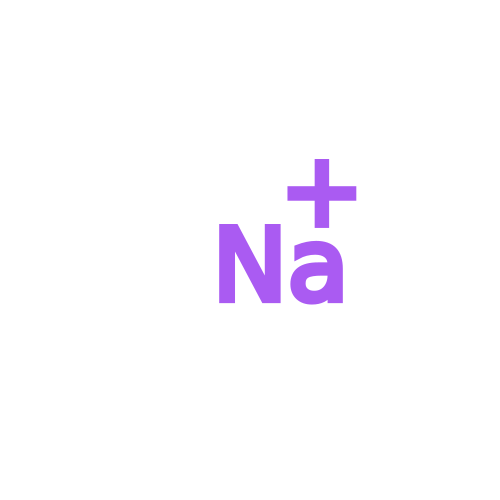 Mass: 22.990 Da / Num. of mol.: 2 / Source method: obtained synthetically / Formula: Na
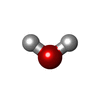 Mass: 18.015 Da / Num. of mol.: 95 / Source method: isolated from a natural source / Formula: H2O
 Sample preparation
 Electron microscopy imaging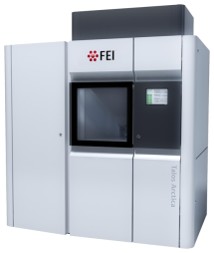
 FIELD EMISSION GUN / Accelerating voltage: 200 kV / Illumination mode: FLOOD BEAM
 Processing