 Movie
Movie Controller

[English] 日本語
 Yorodumi
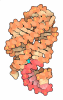
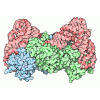
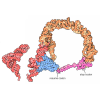
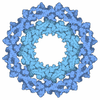
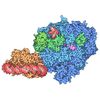
- PDB-9oxs: CRYO-EM STRUCTURE OF the human mPSF IN COMPLEX WITH THE AAUAAU po... -
+ Open data

- Basic information
| Entry | Database: PDB / ID: 9oxs | ||||||
|---|---|---|---|---|---|---|---|
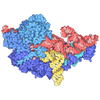
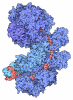
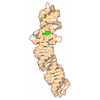
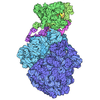
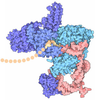
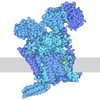
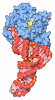
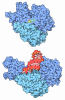
| Title | CRYO-EM STRUCTURE OF the human mPSF IN COMPLEX WITH THE AAUAAU poly(A) signal | ||||||
 Components Components |
| ||||||
 Keywords Keywords | RNA BINDING PROTEIN/RNA / polyadenylation signal / RNA BINDING PROTEIN / RNA BINDING PROTEIN-RNA complex | ||||||
| Function / homology |  Function and homology information Function and homology informationco-transcriptional RNA 3'-end processing, cleavage and polyadenylation pathway / Inhibition of Host mRNA Processing and RNA Silencing / Processing of Intronless Pre-mRNAs / mRNA cleavage and polyadenylation specificity factor complex / Transport of Mature mRNA Derived from an Intronless Transcript / mRNA 3'-end processing / mRNA 3'-UTR AU-rich region binding / DNA damage tolerance / mRNA 3'-end processing / tRNA processing in the nucleus ...co-transcriptional RNA 3'-end processing, cleavage and polyadenylation pathway / Inhibition of Host mRNA Processing and RNA Silencing / Processing of Intronless Pre-mRNAs / mRNA cleavage and polyadenylation specificity factor complex / Transport of Mature mRNA Derived from an Intronless Transcript / mRNA 3'-end processing / mRNA 3'-UTR AU-rich region binding / DNA damage tolerance / mRNA 3'-end processing / tRNA processing in the nucleus / RNA Polymerase II Transcription Termination / fibrillar center / mRNA Polyadenylation / sequence-specific double-stranded DNA binding / Dengue Virus-Host Interactions / spermatogenesis / enzyme binding / RNA binding / nucleoplasm / zinc ion binding / nucleus Similarity search - Function | ||||||
| Biological species |  Homo sapiens (human) Homo sapiens (human) | ||||||
| Method | ELECTRON MICROSCOPY / single particle reconstruction / cryo EM / Resolution: 3.07 Å | ||||||
 Authors Authors | Huang, L. / Tong, L. / Chu, H.-F. | ||||||
| Funding support |  United States, 1items United States, 1items
| ||||||
 Citation Citation | Journal: Nucleic Acids Res / Year: 2025 Title: Molecular basis for the recognition of low-frequency polyadenylation signals by mPSF. Authors: Lin Huang / Hsu-Feng Chu / Liang Tong / Abstract: The 3'-end cleavage and polyadenylation of pre-mRNAs is dependent on a key hexanucleotide motif known as the polyadenylation signal (PAS). The PAS hexamer is recognized by the mammalian ...The 3'-end cleavage and polyadenylation of pre-mRNAs is dependent on a key hexanucleotide motif known as the polyadenylation signal (PAS). The PAS hexamer is recognized by the mammalian polyadenylation specificity factor (mPSF). AAUAAA is the most frequent PAS hexamer and together with AUUAAA, the second most frequent hexamer, account for ∼75% of the poly(A) signals. The remaining hexamers are at low frequency (<3%), and the molecular basis for their recognition is still not known. Here, we have determined the binding affinities for most of the PAS hexamers, showing that the Kd values are generally inversely correlated with their frequency. We also observed good cleavage activity for two low-frequency hexamers, AAGAAA and AACAAA. We have determined the cryo-electron microscopy structures of human mPSF in complex with AAUAAU and AGUAAA, at 3.1 and 2.5 Å resolution, respectively. The overall binding modes of the two low-frequency hexamers are similar to that of AAUAAA, although the U3-A6 Hoogsteen base pair is disrupted in the AAUAAU hexamer. For AGUAAA, the G2 base undergoes a large conformational change, which allows it to maintain the hydrogen-bonding interaction with CPSF30 as observed with A2 and establish a new hydrogen bond to CPSF30. | ||||||
| History |
|
- Structure visualization
| Structure viewer | Molecule: MolmilJmol/JSmol |
|---|
- Downloads & links
-Download
| PDBx/mmCIF format | 9oxs.cif.gz | 355.6 KB | Display | PDBx/mmCIF format |
|---|---|---|---|---|
| PDB format | pdb9oxs.ent.gz | 270 KB | Display | PDB format |
| PDBx/mmJSON format | 9oxs.json.gz | Tree view | PDBx/mmJSON format | |
| Others |  Other downloads Other downloads |
-Validation report
| Arichive directory | https://data.pdbj.org/pub/pdb/validation_reports/ox/9oxsftp://data.pdbj.org/pub/pdb/validation_reports/ox/9oxs | HTTPS FTP |
|---|
-Related structure data
| Related structure data |  70993MC  9oxeC M: map data used to model this data C: citing same article ( |
|---|---|
| Similar structure data |

-Links
 PDBj
PDBj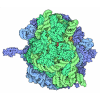
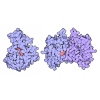
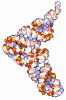
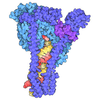
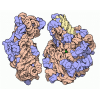

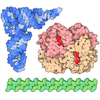
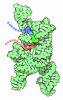
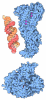
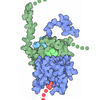
- Assembly
| Deposited unit | 
|
|---|---|
| 1 |
|
-Components
| #1: Protein | Mass: 161074.234 Da / Num. of mol.: 1 Source method: isolated from a genetically manipulated source Source: (gene. exp.) Homo sapiens (human) / Gene: CPSF1, CPSF160 / Production host:  Trichoplusia ni (cabbage looper) / References: UniProt: Q10570 Trichoplusia ni (cabbage looper) / References: UniProt: Q10570 | ||||
|---|---|---|---|---|---|
| #2: Protein | Mass: 66053.102 Da / Num. of mol.: 1 Source method: isolated from a genetically manipulated source Source: (gene. exp.) Homo sapiens (human) / Gene: WDR33, WDC146 / Production host: Trichoplusia ni (cabbage looper) / References: UniProt: Q9C0J8 | ||||
| #3: Protein | Mass: 27589.004 Da / Num. of mol.: 1 Source method: isolated from a genetically manipulated source Source: (gene. exp.) Homo sapiens (human) / Gene: CPSF4, CPSF30, NAR, NEB1 / Production host: Trichoplusia ni (cabbage looper) / References: UniProt: O95639 | ||||
| #4: RNA chain | Mass: 3804.344 Da / Num. of mol.: 1 / Source method: obtained synthetically / Source: (synth.) Homo sapiens (human) | ||||
| #5: Chemical |   Mass: 65.409 Da / Num. of mol.: 3 / Source method: obtained synthetically / Formula: Zn / Feature type: SUBJECT OF INVESTIGATION Mass: 65.409 Da / Num. of mol.: 3 / Source method: obtained synthetically / Formula: Zn / Feature type: SUBJECT OF INVESTIGATIONHas ligand of interest | Y | Has protein modification | N | |
-Experimental details
-Experiment
| Experiment | Method: ELECTRON MICROSCOPY |
|---|---|
| EM experiment | Aggregation state: PARTICLE / 3D reconstruction method: single particle reconstruction |
- Sample preparation
| Component | Name: human mPSF in complex with the AAUAAU poly(A) signal / Type: COMPLEX / Entity ID: #1-#4 / Source: RECOMBINANT |
|---|---|
| Source (natural) | Organism: Homo sapiens (human) |
| Source (recombinant) | Organism: Trichoplusia ni (cabbage looper) |
| Buffer solution | pH: 8 |
| Specimen | Embedding applied: NO / Shadowing applied: NO / Staining applied: NO / Vitrification applied: YES |
| Vitrification | Cryogen name: ETHANE |
- Electron microscopy imaging
| Experimental equipment |  Model: Titan Krios / Image courtesy: FEI Company |
|---|---|
| Microscopy | Model: TFS KRIOS |
| Electron gun | Electron source:  FIELD EMISSION GUN / Accelerating voltage: 300 kV / Illumination mode: OTHER FIELD EMISSION GUN / Accelerating voltage: 300 kV / Illumination mode: OTHER |
| Electron lens | Mode: OTHER / Nominal magnification: 81000 X / Nominal defocus max: 2000 nm / Nominal defocus min: 500 nm |
| Image recording | Electron dose: 51.15 e/Å2 / Film or detector model: GATAN K3 (6k x 4k) |
- Processing
| EM software |
| ||||||||||||||||||||||||
|---|---|---|---|---|---|---|---|---|---|---|---|---|---|---|---|---|---|---|---|---|---|---|---|---|---|
| CTF correction | Type: PHASE FLIPPING AND AMPLITUDE CORRECTION | ||||||||||||||||||||||||
| 3D reconstruction | Resolution: 3.07 Å / Resolution method: FSC 0.143 CUT-OFF / Num. of particles: 292202 / Symmetry type: POINT | ||||||||||||||||||||||||
| Atomic model building | Protocol: AB INITIO MODEL | ||||||||||||||||||||||||
| Atomic model building | PDB-ID: 9OXE Accession code: 9OXE / Source name: PDB / Type: experimental model | ||||||||||||||||||||||||
| Refinement | Highest resolution: 3.07 Å Stereochemistry target values: REAL-SPACE (WEIGHTED MAP SUM AT ATOM CENTERS) | ||||||||||||||||||||||||
| Refine LS restraints |
|
