 Movie
Movie Controller


+ Open data

- Basic information
| Entry | Database: PDB / ID: 9n29 | |||||||||||||||||||||||||||
|---|---|---|---|---|---|---|---|---|---|---|---|---|---|---|---|---|---|---|---|---|---|---|---|---|---|---|---|---|
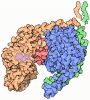
| Title | hM4Di(GRANPA) in complex with mGsI and diphenhydramine | |||||||||||||||||||||||||||
 Components Components |
| |||||||||||||||||||||||||||
 Keywords Keywords | SIGNALING PROTEIN / G protein-coupled receptor / acetylcholine binding / seven transmembrane protein / MEMBRANE PROTEIN | |||||||||||||||||||||||||||
| Function / homology |  Function and homology information Function and homology informationMuscarinic acetylcholine receptors / G protein-coupled acetylcholine receptor activity / regulation of locomotion / adenylate cyclase-inhibiting G protein-coupled acetylcholine receptor signaling pathway / G-protein activation / Activation of the phototransduction cascade / Glucagon-type ligand receptors / Thromboxane signalling through TP receptor / Sensory perception of sweet, bitter, and umami (glutamate) taste / G beta:gamma signalling through PI3Kgamma ...Muscarinic acetylcholine receptors / G protein-coupled acetylcholine receptor activity / regulation of locomotion / adenylate cyclase-inhibiting G protein-coupled acetylcholine receptor signaling pathway / G-protein activation / Activation of the phototransduction cascade / Glucagon-type ligand receptors / Thromboxane signalling through TP receptor / Sensory perception of sweet, bitter, and umami (glutamate) taste / G beta:gamma signalling through PI3Kgamma / G beta:gamma signalling through CDC42 / Cooperation of PDCL (PhLP1) and TRiC/CCT in G-protein beta folding / Activation of G protein gated Potassium channels / Inhibition of voltage gated Ca2+ channels via Gbeta/gamma subunits / Ca2+ pathway / G alpha (z) signalling events / High laminar flow shear stress activates signaling by PIEZO1 and PECAM1:CDH5:KDR in endothelial cells / Glucagon-like Peptide-1 (GLP1) regulates insulin secretion / Vasopressin regulates renal water homeostasis via Aquaporins / Adrenaline,noradrenaline inhibits insulin secretion / ADP signalling through P2Y purinoceptor 12 / G alpha (q) signalling events / G alpha (i) signalling events / Thrombin signalling through proteinase activated receptors (PARs) / photoreceptor outer segment membrane / spectrin binding / sensory perception of taste / alkylglycerophosphoethanolamine phosphodiesterase activity / retina development in camera-type eye / cardiac muscle cell apoptotic process / photoreceptor outer segment / G protein-coupled receptor signaling pathway, coupled to cyclic nucleotide second messenger / photoreceptor inner segment / cell population proliferation / phospholipase C-activating G protein-coupled receptor signaling pathway / G protein-coupled acetylcholine receptor signaling pathway / G beta:gamma signalling through PLC beta / Presynaptic function of Kainate receptors / Thromboxane signalling through TP receptor / Activation of G protein gated Potassium channels / Inhibition of voltage gated Ca2+ channels via Gbeta/gamma subunits / G-protein activation / Glucagon signaling in metabolic regulation / G beta:gamma signalling through CDC42 / Prostacyclin signalling through prostacyclin receptor / G beta:gamma signalling through BTK / ADP signalling through P2Y purinoceptor 12 / Glucagon-type ligand receptors / Adrenaline,noradrenaline inhibits insulin secretion / Vasopressin regulates renal water homeostasis via Aquaporins / G alpha (z) signalling events / Glucagon-like Peptide-1 (GLP1) regulates insulin secretion / cellular response to catecholamine stimulus / ADP signalling through P2Y purinoceptor 1 / G beta:gamma signalling through PI3Kgamma / ADORA2B mediated anti-inflammatory cytokines production / adenylate cyclase-activating dopamine receptor signaling pathway / cellular response to prostaglandin E stimulus / Cooperation of PDCL (PhLP1) and TRiC/CCT in G-protein beta folding / positive regulation of cytosolic calcium ion concentration / GPER1 signaling / heterotrimeric G-protein complex / G alpha (12/13) signalling events / G-protein beta-subunit binding / Thrombin signalling through proteinase activated receptors (PARs) / signaling receptor complex adaptor activity / cell body / GTPase binding / chemical synaptic transmission / cellular response to hypoxia / Ca2+ pathway / High laminar flow shear stress activates signaling by PIEZO1 and PECAM1:CDH5:KDR in endothelial cells / G alpha (i) signalling events / G alpha (s) signalling events / G alpha (q) signalling events / cell surface receptor signaling pathway / postsynaptic membrane / Extra-nuclear estrogen signaling / G protein-coupled receptor signaling pathway / GTPase activity / dendrite / synapse / protein-containing complex binding / signal transduction / extracellular exosome / membrane / plasma membrane / cytoplasm Similarity search - Function | |||||||||||||||||||||||||||
| Biological species |   Rattus norvegicus (Norway rat) Rattus norvegicus (Norway rat) Homo sapiens (human) Homo sapiens (human) Lama glama (llama) Lama glama (llama) | |||||||||||||||||||||||||||
| Method | ELECTRON MICROSCOPY / single particle reconstruction / cryo EM / Resolution: 2.6 Å | |||||||||||||||||||||||||||
 Authors Authors | Mobbs, J.I. / Thal, D.M. | |||||||||||||||||||||||||||
| Funding support |  Australia, 1items Australia, 1items
| |||||||||||||||||||||||||||
 Citation Citation | Journal: Signal Transduct Target Ther / Year: 2026 Title: Next-generation chemogenetic inhibition using a brain-permeant non-prescription agent. Authors: Steven O Devenish / Sahil D Patel / Laura V Ussingkær / Luiz F Almeida Silva / Olivia Goff / Amy Richardson / Jesse I Mobbs / Hariprasad Venugopal / David M Thal / Dimitri M Kullmann /  Abstract: Chemogenetics allows the controllable manipulation of brain circuits upon delivery of a selective activating ligand, and has been invaluable in dissecting brain circuits underlying many behaviours. ...Chemogenetics allows the controllable manipulation of brain circuits upon delivery of a selective activating ligand, and has been invaluable in dissecting brain circuits underlying many behaviours. The Gαi/o-coupled designer muscarinic receptor hM4Di is an especially versatile tool for on-demand inhibition, and has proven effective not only in fundamental neuroscience but also as a therapeutic transgene in preclinical models of epilepsy and other CNS disorders. Indeed, by placing the circuit modulation under the control of an exogenous ligand, chemogenetics mitigates the potential risk of overdosage intrinsic to viral-vector mediated gene therapy. An obstacle to clinical translation, however, is the absence of an activating ligand with favourable biodistribution and side effect profile. Here we show that mutation of hM4Di at two sites (S85 and Y416) imparts full and potent agonism to the widely used over-the-counter antihistamine diphenhydramine. We complement medium-throughput screening in human embryonic kidney cells with in vitro electrophysiological characterization in neuronal circuits, and reveal the interaction of diphenhydramine with key residues using cryo-electron microscopy. Administration of diphenhydramine to mice expressing the modified receptor in the ventral hippocampus reversibly modulated anxiety-related behaviour and attenuated the severity of chemoconvulsant-induced seizures. We further demonstrate on-demand seizure suppression in a chronic epilepsy model. G protein-coupled Receptors Activated by Non-Prescription Agents (GRANPAs) lower the barrier to clinical translation of a powerful chemogenetic approach to brain circuit manipulation. | |||||||||||||||||||||||||||
| History |
|
- Structure visualization
| Structure viewer | Molecule: MolmilJmol/JSmol |
|---|
- Downloads & links
-Download
| PDBx/mmCIF format | 9n29.cif.gz | 214.4 KB | Display | PDBx/mmCIF format |
|---|---|---|---|---|
| PDB format | pdb9n29.ent.gz | 162.7 KB | Display | PDB format |
| PDBx/mmJSON format | 9n29.json.gz | Tree view | PDBx/mmJSON format | |
| Others |  Other downloads Other downloads |
-Validation report
| Arichive directory | https://data.pdbj.org/pub/pdb/validation_reports/n2/9n29ftp://data.pdbj.org/pub/pdb/validation_reports/n2/9n29 | HTTPS FTP |
|---|
-Related structure data
| Related structure data |  48827MC C: citing same article ( M: map data used to model this data |
|---|---|
| Similar structure data |

-Links
 PDBj
PDBj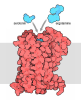

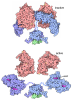
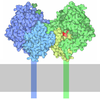
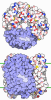
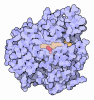
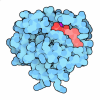
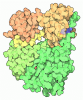
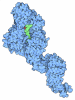
- Assembly
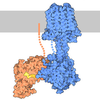
| Deposited unit | 
|
|---|---|
| 1 |
|
-Components
-Guanine nucleotide-binding protein ... , 3 types, 3 molecules BGA
| #1: Protein | Mass: 38744.371 Da / Num. of mol.: 1 Source method: isolated from a genetically manipulated source Source: (gene. exp.) Rattus norvegicus (Norway rat) / Gene: Gnb1 / Production host:  Trichoplusia ni (cabbage looper) / References: UniProt: P54311 Trichoplusia ni (cabbage looper) / References: UniProt: P54311 |
|---|---|
| #2: Protein | Mass: 7563.750 Da / Num. of mol.: 1 Source method: isolated from a genetically manipulated source Source: (gene. exp.) Homo sapiens (human) / Gene: GNG2 / Production host: Trichoplusia ni (cabbage looper) / References: UniProt: P59768 |
| #4: Protein | Mass: 27915.672 Da / Num. of mol.: 1 Source method: isolated from a genetically manipulated source Source: (gene. exp.) Homo sapiens (human) / Production host: Trichoplusia ni (cabbage looper) |
-Antibody / Protein / Non-polymers , 3 types, 3 molecules NR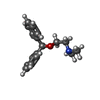
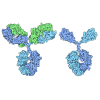
| #3: Antibody | Mass: 15140.742 Da / Num. of mol.: 1 Source method: isolated from a genetically manipulated source Source: (gene. exp.) Lama glama (llama) / Production host:   Escherichia coli (E. coli) Escherichia coli (E. coli) |
|---|---|
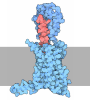
| #5: Protein | Mass: 52896.785 Da / Num. of mol.: 1 Source method: isolated from a genetically manipulated source Source: (gene. exp.) Homo sapiens (human) / Gene: CHRM4 / Production host: Trichoplusia ni (cabbage looper) / References: UniProt: P08173 |
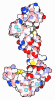
| #6: Chemical | ChemComp-2PM / 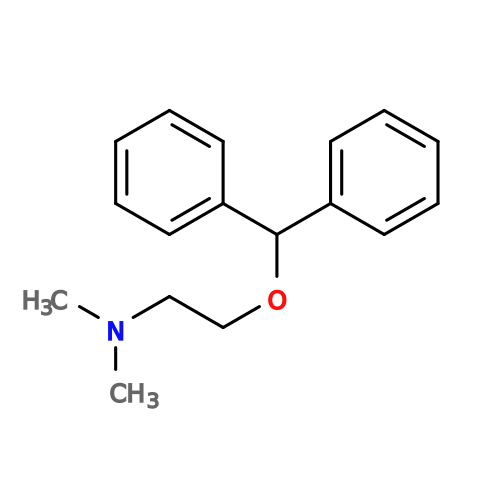 Mass: 255.355 Da / Num. of mol.: 1 / Source method: obtained synthetically / Formula: C17H21NO / Feature type: SUBJECT OF INVESTIGATION Mass: 255.355 Da / Num. of mol.: 1 / Source method: obtained synthetically / Formula: C17H21NO / Feature type: SUBJECT OF INVESTIGATION |
-Details
| Has ligand of interest | Y |
|---|---|
| Has protein modification | Y |
-Experimental details
-Experiment
| Experiment | Method: ELECTRON MICROSCOPY |
|---|---|
| EM experiment | Aggregation state: PARTICLE / 3D reconstruction method: single particle reconstruction |
- Sample preparation
| Component | Name: Human M4Di(GRANPA)-miniGsI-Gb1g2 complex / Type: COMPLEX / Entity ID: #1-#5 / Source: MULTIPLE SOURCES |
|---|---|
| Molecular weight | Experimental value: NO |
| Source (natural) | Organism: Homo sapiens (human) |
| Source (recombinant) | Organism: Trichoplusia ni (cabbage looper) |
| Buffer solution | pH: 7.4 |
| Specimen | Embedding applied: NO / Shadowing applied: NO / Staining applied: NO / Vitrification applied: YES |
| Vitrification | Cryogen name: ETHANE |
- Electron microscopy imaging
| Experimental equipment |  Model: Titan Krios / Image courtesy: FEI Company |
|---|---|
| Microscopy | Model: TFS KRIOS |
| Electron gun | Electron source:  FIELD EMISSION GUN / Accelerating voltage: 300 kV / Illumination mode: FLOOD BEAM FIELD EMISSION GUN / Accelerating voltage: 300 kV / Illumination mode: FLOOD BEAM |
| Electron lens | Mode: BRIGHT FIELD / Nominal defocus max: 1500 nm / Nominal defocus min: 500 nm |
| Image recording | Electron dose: 60 e/Å2 / Film or detector model: GATAN K3 (6k x 4k) |
- Processing
| EM software | Name: PHENIX / Version: 1.20.1_4487 / Category: model refinement | ||||||||||||||||||||||||
|---|---|---|---|---|---|---|---|---|---|---|---|---|---|---|---|---|---|---|---|---|---|---|---|---|---|
| CTF correction | Type: PHASE FLIPPING AND AMPLITUDE CORRECTION | ||||||||||||||||||||||||
| 3D reconstruction | Resolution: 2.6 Å / Resolution method: FSC 0.143 CUT-OFF / Num. of particles: 189628 / Symmetry type: POINT | ||||||||||||||||||||||||
| Refinement | Highest resolution: 2.6 Å Stereochemistry target values: REAL-SPACE (WEIGHTED MAP SUM AT ATOM CENTERS) | ||||||||||||||||||||||||
| Refine LS restraints |
|
