 Movie
Movie Controller


+ Open data

- Basic information
| Entry | Database: PDB / ID: 9i2e | ||||||||||||||||||||||||||||||
|---|---|---|---|---|---|---|---|---|---|---|---|---|---|---|---|---|---|---|---|---|---|---|---|---|---|---|---|---|---|---|---|
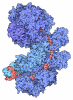
| Title | NMT1-NAC bound human ribosome (combined translational states) | ||||||||||||||||||||||||||||||
 Components Components |
| ||||||||||||||||||||||||||||||
 Keywords Keywords | RIBOSOME / myristoylation / NMT1 / co-translational / NAC / RNC | ||||||||||||||||||||||||||||||
| Function / homology |  Function and homology information Function and homology informationSynthesis of diphthamide-EEF2 / myristoyltransferase activity / CoA-dependent peptidyl-lysine N6-myristoyltransferase activity / protein myristoylation / peptidyl-lysine N6-myristoyltransferase activity / negative regulation of striated muscle cell apoptotic process / Late Phase of HIV Life Cycle / N-terminal protein myristoylation / regulation of skeletal muscle fiber development / N-terminal peptidyl-glycine N-myristoylation ...Synthesis of diphthamide-EEF2 / myristoyltransferase activity / CoA-dependent peptidyl-lysine N6-myristoyltransferase activity / protein myristoylation / peptidyl-lysine N6-myristoyltransferase activity / negative regulation of striated muscle cell apoptotic process / Late Phase of HIV Life Cycle / N-terminal protein myristoylation / regulation of skeletal muscle fiber development / N-terminal peptidyl-glycine N-myristoylation / ketone metabolic process / positive regulation of skeletal muscle tissue growth / regulation of opsin-mediated signaling pathway / positive regulation of cell proliferation involved in heart morphogenesis / cardiac ventricle development / translation at postsynapse / PML body organization / Activation, myristolyation of BID and translocation to mitochondria / glial cell proliferation / negative regulation of protein localization to endoplasmic reticulum / nascent polypeptide-associated complex / skeletal muscle cell differentiation / translation elongation factor binding / heart trabecula morphogenesis / ribosome hibernation / glycylpeptide N-tetradecanoyltransferase / glycylpeptide N-tetradecanoyltransferase activity / response to folic acid / SUMO binding / skeletal muscle tissue regeneration / positive regulation of cytoplasmic translation / male meiosis I / translation at presynapse / response to insecticide / negative regulation of endoplasmic reticulum unfolded protein response / eukaryotic 80S initiation complex / protein localization to membrane / ribosomal protein import into nucleus / regulation of G1 to G0 transition / oxidized pyrimidine DNA binding / response to TNF agonist / positive regulation of base-excision repair / positive regulation of intrinsic apoptotic signaling pathway in response to DNA damage / positive regulation of protein localization to mitochondrion / positive regulation of respiratory burst involved in inflammatory response / positive regulation of gastrulation / regulation of adenylate cyclase-activating G protein-coupled receptor signaling pathway / protein tyrosine kinase inhibitor activity / IRE1-RACK1-PP2A complex / TNFR1-mediated ceramide production / positive regulation of Golgi to plasma membrane protein transport / G1 to G0 transition / negative regulation of formation of translation preinitiation complex / nucleolus organization / positive regulation of ubiquitin-protein transferase activity / positive regulation of DNA-templated transcription initiation / negative regulation of RNA splicing / GAIT complex / negative regulation of DNA repair / TORC2 complex binding / erythrocyte homeostasis / supercoiled DNA binding / regulation of establishment of cell polarity / rRNA modification in the nucleus and cytosol / oxidized purine DNA binding / NF-kappaB complex / negative regulation of intrinsic apoptotic signaling pathway in response to hydrogen peroxide / negative regulation of phagocytosis / Uptake and function of diphtheria toxin / ubiquitin-like protein conjugating enzyme binding / cytoplasmic translational initiation / cytoplasmic side of rough endoplasmic reticulum membrane / regulation of translation involved in cellular response to UV / A band / Formation of the ternary complex, and subsequently, the 43S complex / laminin receptor activity / ion channel inhibitor activity / positive regulation of intrinsic apoptotic signaling pathway in response to DNA damage by p53 class mediator / response to aldosterone / negative regulation of myoblast fusion / protein-DNA complex disassembly / lncRNA binding / Ribosomal scanning and start codon recognition / protein kinase A binding / Translation initiation complex formation / negative regulation of Wnt signaling pathway / positive regulation of DNA damage response, signal transduction by p53 class mediator / fibroblast growth factor binding / BH3 domain binding / Protein hydroxylation / TOR signaling / mTORC1-mediated signalling / negative regulation of translational frameshifting / monocyte chemotaxis / PELO:HBS1L and ABCE1 dissociate a ribosome on a non-stop mRNA / SRC activates STAT3 in a quantitative manner, through Cadherin-11 (CDH11), RAC1 and gp130 (IL6ST) / SARS-CoV-1 modulates host translation machinery / regulation of cell division / positive regulation of GTPase activity / protein localization to nucleus Similarity search - Function | ||||||||||||||||||||||||||||||
| Biological species |  Homo sapiens (human) Homo sapiens (human) | ||||||||||||||||||||||||||||||
| Method | ELECTRON MICROSCOPY / single particle reconstruction / cryo EM / Resolution: 2.95 Å | ||||||||||||||||||||||||||||||
 Authors Authors | Denk, T. / Berninghausen, O. / Beckmann, R. | ||||||||||||||||||||||||||||||
| Funding support |  Germany, 1items Germany, 1items
| ||||||||||||||||||||||||||||||
 Citation Citation | Journal: Nat Commun / Year: 2026 Title: Structural basis of co-translational N-myristoylation in humans. Authors: Timo Denk / Paul Monassa / Joanna Musial / Otto Berninghausen / Birgitta Beatrix / Carmela Giglione / Thierry Meinnel / Roland Beckmann /  Abstract: Modifications of proteins occurring during translation are critical for protein localization, stability and function. N-myristoylation is an essential N-terminal lipid modification catalyzed co- ...Modifications of proteins occurring during translation are critical for protein localization, stability and function. N-myristoylation is an essential N-terminal lipid modification catalyzed co-translationally by N-myristoyltransferases (NMTs) which have been identified as promising drug targets. However, its molecular basis in the context of the translating ribosome is not known. Here, we reveal the structural basis for co-translational N-myristoylation by NMT1 on the human ribosome by cryo-electron microscopy (cryo-EM). We show that NMT1 binds near the peptide tunnel exit and interacts with the nascent polypeptide-associated complex (NAC). Unlike other multi-enzyme complexes that act simultaneously, we find that methionine excision by methionine aminopeptidases and N-myristoylation occur sequentially via consecutive binding to the ribosome. Furthermore, our data suggest that NMT1 remains associated with elongating nascent chains, indicating a co-translational chaperone-like function in partnership with NAC. These insights provide a molecular foundation for the understanding of the co-translational N-myristoylation mechanism in humans. #1: Journal: Acta Crystallogr D Struct Biol / Year: 2019 Title: Macromolecular structure determination using X-rays, neutrons and electrons: recent developments in Phenix. Authors: Dorothee Liebschner / Pavel V Afonine / Matthew L Baker / Gábor Bunkóczi / Vincent B Chen / Tristan I Croll / Bradley Hintze / Li Wei Hung / Swati Jain / Airlie J McCoy / Nigel W Moriarty ...Authors: Dorothee Liebschner / Pavel V Afonine / Matthew L Baker / Gábor Bunkóczi / Vincent B Chen / Tristan I Croll / Bradley Hintze / Li Wei Hung / Swati Jain / Airlie J McCoy / Nigel W Moriarty / Robert D Oeffner / Billy K Poon / Michael G Prisant / Randy J Read / Jane S Richardson / David C Richardson / Massimo D Sammito / Oleg V Sobolev / Duncan H Stockwell / Thomas C Terwilliger / Alexandre G Urzhumtsev / Lizbeth L Videau / Christopher J Williams / Paul D Adams /   Abstract: Diffraction (X-ray, neutron and electron) and electron cryo-microscopy are powerful methods to determine three-dimensional macromolecular structures, which are required to understand biological ...Diffraction (X-ray, neutron and electron) and electron cryo-microscopy are powerful methods to determine three-dimensional macromolecular structures, which are required to understand biological processes and to develop new therapeutics against diseases. The overall structure-solution workflow is similar for these techniques, but nuances exist because the properties of the reduced experimental data are different. Software tools for structure determination should therefore be tailored for each method. Phenix is a comprehensive software package for macromolecular structure determination that handles data from any of these techniques. Tasks performed with Phenix include data-quality assessment, map improvement, model building, the validation/rebuilding/refinement cycle and deposition. Each tool caters to the type of experimental data. The design of Phenix emphasizes the automation of procedures, where possible, to minimize repetitive and time-consuming manual tasks, while default parameters are chosen to encourage best practice. A graphical user interface provides access to many command-line features of Phenix and streamlines the transition between programs, project tracking and re-running of previous tasks. | ||||||||||||||||||||||||||||||
| History |
|
- Structure visualization
| Structure viewer | Molecule: MolmilJmol/JSmol |
|---|
- Downloads & links
-Download
| PDBx/mmCIF format | 9i2e.cif.gz | 5.6 MB | Display | PDBx/mmCIF format |
|---|---|---|---|---|
| PDB format | pdb9i2e.ent.gz | Display | PDB format | |
| PDBx/mmJSON format | 9i2e.json.gz | Tree view | PDBx/mmJSON format | |
| Others |  Other downloads Other downloads |
-Validation report
| Arichive directory | https://data.pdbj.org/pub/pdb/validation_reports/i2/9i2eftp://data.pdbj.org/pub/pdb/validation_reports/i2/9i2e | HTTPS FTP |
|---|
-Related structure data
| Related structure data |  52582MC  9i2dC  9qloC  9qlpC  9qlqC  9s3bC  9s3cC  9s3dC M: map data used to model this data C: citing same article ( |
|---|---|
| Similar structure data |


-Links
 PDBj
PDBj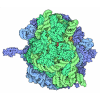
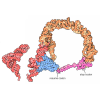
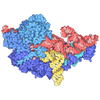
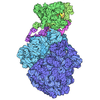
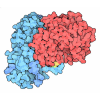
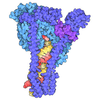

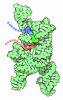



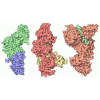
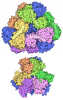
- Assembly
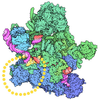
| Deposited unit | 
|
|---|---|
| 1 |
|
-Components
-Protein , 8 types, 8 molecules CBLILmNANMSeSfSg
| #1: Protein | Mass: 95463.211 Da / Num. of mol.: 1 / Source method: isolated from a natural source / Source: (natural) Homo sapiens (human) / References: UniProt: P13639 |
|---|---|
| #15: Protein | Mass: 24570.949 Da / Num. of mol.: 1 / Source method: isolated from a natural source / Source: (natural) Homo sapiens (human) / References: UniProt: Q96L21 |
| #44: Protein | Mass: 14758.394 Da / Num. of mol.: 1 / Source method: isolated from a natural source / Source: (natural) Homo sapiens (human) / References: UniProt: P62987 |
| #50: Protein | Mass: 23406.824 Da / Num. of mol.: 1 / Source method: isolated from a natural source / Source: (natural) Homo sapiens (human) / References: UniProt: Q13765 |
| #52: Protein | Mass: 56884.023 Da / Num. of mol.: 1 / Source method: isolated from a natural source / Source: (natural) Homo sapiens (human)References: UniProt: P30419, glycylpeptide N-tetradecanoyltransferase, Transferases; Acyltransferases; Transferring groups other than aminoacyl groups |
| #84: Protein | Mass: 14415.724 Da / Num. of mol.: 1 / Source method: isolated from a natural source / Source: (natural) Homo sapiens (human) / References: UniProt: P62861 |
| #85: Protein | Mass: 18004.041 Da / Num. of mol.: 1 / Source method: isolated from a natural source / Source: (natural) Homo sapiens (human) / References: UniProt: P62979 |
| #86: Protein | Mass: 35115.652 Da / Num. of mol.: 1 / Source method: isolated from a natural source / Source: (natural) Homo sapiens (human) / References: UniProt: P63244 |
-RNA chain , 5 types, 5 molecules CCL5L7L8S2
| #2: RNA chain | Mass: 27379.225 Da / Num. of mol.: 1 / Source method: isolated from a natural source / Source: (natural) Homo sapiens (human) |
|---|---|
| #4: RNA chain | Mass: 1640222.125 Da / Num. of mol.: 1 / Source method: isolated from a natural source / Source: (natural) Homo sapiens (human) / References: GenBank: NR_003287 |
| #5: RNA chain | Mass: 38998.078 Da / Num. of mol.: 1 / Source method: isolated from a natural source / Source: (natural) Homo sapiens (human) / References: GenBank: 23898 |
| #6: RNA chain | Mass: 50449.812 Da / Num. of mol.: 1 / Source method: isolated from a natural source / Source: (natural) Homo sapiens (human) / References: GenBank: 555853 |
| #53: RNA chain | Mass: 602777.875 Da / Num. of mol.: 1 / Source method: isolated from a natural source / Source: (natural) Homo sapiens (human) / References: GenBank: 151415227 |
-Isoform 2 of ... , 2 types, 2 molecules CDNB
| #3: Protein | Mass: 44341.781 Da / Num. of mol.: 1 / Source method: isolated from a natural source / Source: (natural) Homo sapiens (human) / References: UniProt: Q8NC51 |
|---|---|
| #51: Protein | Mass: 17724.037 Da / Num. of mol.: 1 / Source method: isolated from a natural source / Source: (natural) Homo sapiens (human) / References: UniProt: P20290 |
+60S ribosomal protein ... , 39 types, 39 molecules LALBLCLDLGLHLJLLLMLNLOLPLQLRLSLTLULVLWLXLYLZLaLbLcLdLeLfLgLh...
-Large ribosomal subunit protein ... , 2 types, 2 molecules LELF
| #11: Protein | Mass: 32810.176 Da / Num. of mol.: 1 / Source method: isolated from a natural source / Source: (natural) Homo sapiens (human) / References: UniProt: Q02878 |
|---|---|
| #12: Protein | Mass: 29290.973 Da / Num. of mol.: 1 / Source method: isolated from a natural source / Source: (natural) Homo sapiens (human) / References: UniProt: P18124 |
+40S ribosomal protein ... , 30 types, 30 molecules SASBSCSDSESFSGSHSISJSKSLSMSNSOSPSQSRSSSTSUSVSWSXSYSZSaSbScSd
-Non-polymers , 2 types, 264 molecules 

| #87: Chemical | ChemComp-MG /  Mass: 24.305 Da / Num. of mol.: 256 / Source method: obtained synthetically / Formula: Mg Mass: 24.305 Da / Num. of mol.: 256 / Source method: obtained synthetically / Formula: Mg#88: Chemical | ChemComp-ZN /  Mass: 65.409 Da / Num. of mol.: 8 / Source method: obtained synthetically / Formula: Zn Mass: 65.409 Da / Num. of mol.: 8 / Source method: obtained synthetically / Formula: Zn |
|---|
-Details
| Has ligand of interest | N |
|---|---|
| Has protein modification | N |
-Experimental details
-Experiment
| Experiment | Method: ELECTRON MICROSCOPY |
|---|---|
| EM experiment | Aggregation state: PARTICLE / 3D reconstruction method: single particle reconstruction |
- Sample preparation
| Component | Name: NMT1-NAC bound human ribosome (combined translational states) Type: RIBOSOME / Entity ID: #1-#86 / Source: NATURAL |
|---|---|
| Source (natural) | Organism: Homo sapiens (human) |
| Buffer solution | pH: 7.5 |
| Specimen | Embedding applied: NO / Shadowing applied: NO / Staining applied: NO / Vitrification applied: YES |
| Vitrification | Cryogen name: ETHANE |
- Electron microscopy imaging
| Experimental equipment |  Model: Titan Krios / Image courtesy: FEI Company |
|---|---|
| Microscopy | Model: TFS KRIOS |
| Electron gun | Electron source:  FIELD EMISSION GUN / Accelerating voltage: 300 kV / Illumination mode: FLOOD BEAM FIELD EMISSION GUN / Accelerating voltage: 300 kV / Illumination mode: FLOOD BEAM |
| Electron lens | Mode: BRIGHT FIELD / Nominal defocus max: 3500 nm / Nominal defocus min: 500 nm |
| Image recording | Electron dose: 45.6 e/Å2 / Film or detector model: GATAN K2 SUMMIT (4k x 4k) |
- Processing
| EM software | Name: PHENIX / Version: 1.21.2_5419 / Category: model refinement |
|---|---|
| CTF correction | Type: PHASE FLIPPING AND AMPLITUDE CORRECTION |
| 3D reconstruction | Resolution: 2.95 Å / Resolution method: FSC 0.143 CUT-OFF / Num. of particles: 60808 / Symmetry type: POINT |
