 Movie
Movie Controller

[English] 日本語
 Yorodumi
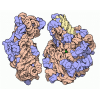
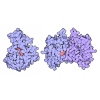
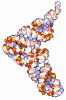
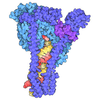
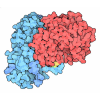
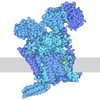
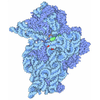
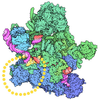
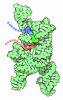
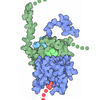
- PDB-9gul: Structure of FLuc-XBP1u+ stalled human 60S ribosome nascent chain... -
+ Open data

- Basic information
| Entry | Database: PDB / ID: 9gul | |||||||||||||||||||||||||||||||||||||||||||||||||||||||||
|---|---|---|---|---|---|---|---|---|---|---|---|---|---|---|---|---|---|---|---|---|---|---|---|---|---|---|---|---|---|---|---|---|---|---|---|---|---|---|---|---|---|---|---|---|---|---|---|---|---|---|---|---|---|---|---|---|---|---|
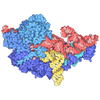
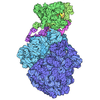
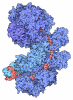
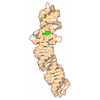
| Title | Structure of FLuc-XBP1u+ stalled human 60S ribosome nascent chain complex | |||||||||||||||||||||||||||||||||||||||||||||||||||||||||
 Components Components |
| |||||||||||||||||||||||||||||||||||||||||||||||||||||||||
 Keywords Keywords | TRANSLATION / Ribosome-nascent chain / luciferase / folding | |||||||||||||||||||||||||||||||||||||||||||||||||||||||||
| Function / homology |  Function and homology information Function and homology informationtranslation at presynapse / response to insecticide / regulation of translation involved in cellular response to UV / eukaryotic 80S initiation complex / ribosomal protein import into nucleus / regulation of G1 to G0 transition / positive regulation of intrinsic apoptotic signaling pathway in response to DNA damage by p53 class mediator / protein-DNA complex disassembly / negative regulation of formation of translation preinitiation complex / positive regulation of DNA damage response, signal transduction by p53 class mediator ...translation at presynapse / response to insecticide / regulation of translation involved in cellular response to UV / eukaryotic 80S initiation complex / ribosomal protein import into nucleus / regulation of G1 to G0 transition / positive regulation of intrinsic apoptotic signaling pathway in response to DNA damage by p53 class mediator / protein-DNA complex disassembly / negative regulation of formation of translation preinitiation complex / positive regulation of DNA damage response, signal transduction by p53 class mediator / GAIT complex / TORC2 complex binding / G1 to G0 transition / PD-L1(CD274) glycosylation and translocation to plasma membrane / Enterobacterial factors antagonize host defense / cytoplasmic side of rough endoplasmic reticulum membrane / negative regulation of myoblast fusion / male meiosis I / PELO:HBS1L and ABCE1 dissociate a ribosome on a non-stop mRNA / Dengue Virus Genome Translation and Replication / Maturation of DENV proteins / ZNF598 and the Ribosome-associated Quality Trigger (RQT) complex dissociate a ribosome stalled on a no-go mRNA / Protein hydroxylation / Peptide chain elongation / protein targeting / Selenocysteine synthesis / Formation of a pool of free 40S subunits / Eukaryotic Translation Termination / protein localization to nucleus / SRP-dependent cotranslational protein targeting to membrane / Response of EIF2AK4 (GCN2) to amino acid deficiency / AMPK-induced ERAD and lysosome mediated degradation of PD-L1(CD274) / negative regulation of ubiquitin-dependent protein catabolic process / ubiquitin ligase inhibitor activity / Viral mRNA Translation / Nonsense Mediated Decay (NMD) independent of the Exon Junction Complex (EJC) / positive regulation of signal transduction by p53 class mediator / GTP hydrolysis and joining of the 60S ribosomal subunit / embryo implantation / L13a-mediated translational silencing of Ceruloplasmin expression / Major pathway of rRNA processing in the nucleolus and cytosol / GSK3B-mediated proteasomal degradation of PD-L1(CD274) / SPOP-mediated proteasomal degradation of PD-L1(CD274) / maturation of LSU-rRNA / Nonsense Mediated Decay (NMD) enhanced by the Exon Junction Complex (EJC) / protein-RNA complex assembly / rough endoplasmic reticulum / Ribosome Quality Control (RQC) complex extracts and degrades nascent peptide / mRNA Polyadenylation / negative regulation of proteasomal ubiquitin-dependent protein catabolic process / Maturation of protein E / MDM2/MDM4 family protein binding / Maturation of protein E / ER Quality Control Compartment (ERQC) / Myoclonic epilepsy of Lafora / FLT3 signaling by CBL mutants / IRAK2 mediated activation of TAK1 complex / Alpha-protein kinase 1 signaling pathway / Glycogen synthesis / IRAK1 recruits IKK complex / IRAK1 recruits IKK complex upon TLR7/8 or 9 stimulation / Prevention of phagosomal-lysosomal fusion / Endosomal Sorting Complex Required For Transport (ESCRT) / Membrane binding and targetting of GAG proteins / Regulation of TBK1, IKKε (IKBKE)-mediated activation of IRF3, IRF7 / Negative regulation of FLT3 / PTK6 Regulates RTKs and Their Effectors AKT1 and DOK1 / Regulation of TBK1, IKKε-mediated activation of IRF3, IRF7 upon TLR3 ligation / IRAK2 mediated activation of TAK1 complex upon TLR7/8 or 9 stimulation / Constitutive Signaling by NOTCH1 HD Domain Mutants / NOTCH2 Activation and Transmission of Signal to the Nucleus / TICAM1,TRAF6-dependent induction of TAK1 complex / TICAM1-dependent activation of IRF3/IRF7 / APC/C:Cdc20 mediated degradation of Cyclin B / Downregulation of ERBB4 signaling / APC-Cdc20 mediated degradation of Nek2A / Regulation of FZD by ubiquitination / p75NTR recruits signalling complexes / regulation of signal transduction by p53 class mediator / InlA-mediated entry of Listeria monocytogenes into host cells / TRAF6 mediated IRF7 activation in TLR7/8 or 9 signaling / NF-kB is activated and signals survival / TRAF6-mediated induction of TAK1 complex within TLR4 complex / Regulation of pyruvate metabolism / Pexophagy / Downregulation of ERBB2:ERBB3 signaling / protein modification process / NRIF signals cell death from the nucleus / Regulation of PTEN localization / Regulation of innate immune responses to cytosolic DNA / DNA damage response, signal transduction by p53 class mediator / VLDLR internalisation and degradation / Activated NOTCH1 Transmits Signal to the Nucleus / Synthesis of active ubiquitin: roles of E1 and E2 enzymes / Translesion synthesis by REV1 / TICAM1, RIP1-mediated IKK complex recruitment / Regulation of BACH1 activity / ribosomal large subunit biogenesis / positive regulation of translation / Translesion synthesis by POLK Similarity search - Function | |||||||||||||||||||||||||||||||||||||||||||||||||||||||||
| Biological species |  Photinus pyralis (common eastern firefly) Photinus pyralis (common eastern firefly) Homo sapiens (human) Homo sapiens (human) | |||||||||||||||||||||||||||||||||||||||||||||||||||||||||
| Method | ELECTRON MICROSCOPY / single particle reconstruction / cryo EM / Resolution: 2.2 Å | |||||||||||||||||||||||||||||||||||||||||||||||||||||||||
 Authors Authors | Voisin, T.B. / Pellowe, G.A. / Balchin, D. | |||||||||||||||||||||||||||||||||||||||||||||||||||||||||
| Funding support |  United Kingdom, 4items United Kingdom, 4items
| |||||||||||||||||||||||||||||||||||||||||||||||||||||||||
 Citation Citation | Journal: Nat Struct Mol Biol / Year: 2025 Title: The human ribosome modulates multidomain protein biogenesis by delaying cotranslational domain docking. Authors: Grant A Pellowe / Tomas B Voisin / Laura Karpauskaite / Sarah L Maslen / Alžběta Roeselová / J Mark Skehel / Chloe Roustan / Roger George / Andrea Nans / Svend Kjær / Ian A Taylor / David Balchin / Abstract: Proteins with multiple domains are intrinsically prone to misfold, yet fold efficiently during their synthesis on the ribosome. This is especially important in eukaryotes, where multidomain proteins ...Proteins with multiple domains are intrinsically prone to misfold, yet fold efficiently during their synthesis on the ribosome. This is especially important in eukaryotes, where multidomain proteins predominate. Here we sought to understand how multidomain protein folding is modulated by the eukaryotic ribosome. We used hydrogen-deuterium exchange mass spectrometry and cryo-electron microscopy to characterize the structure and dynamics of partially synthesized intermediates of a model multidomain protein. We find that nascent subdomains fold progressively during synthesis on the human ribosome, templated by interactions across domain interfaces. The conformational ensemble of the nascent chain is tuned by its unstructured C-terminal segments, which keep interfaces between folded domains in dynamic equilibrium until translation termination. This contrasts with the bacterial ribosome, on which domain interfaces form early and remain stable during synthesis. Delayed domain docking may avoid interdomain misfolding to promote the maturation of multidomain proteins in eukaryotes. #1: Journal: Acta Crystallogr D Struct Biol / Year: 2019 Title: Macromolecular structure determination using X-rays, neutrons and electrons: recent developments in Phenix. Authors: Dorothee Liebschner / Pavel V Afonine / Matthew L Baker / Gábor Bunkóczi / Vincent B Chen / Tristan I Croll / Bradley Hintze / Li Wei Hung / Swati Jain / Airlie J McCoy / Nigel W Moriarty ...Authors: Dorothee Liebschner / Pavel V Afonine / Matthew L Baker / Gábor Bunkóczi / Vincent B Chen / Tristan I Croll / Bradley Hintze / Li Wei Hung / Swati Jain / Airlie J McCoy / Nigel W Moriarty / Robert D Oeffner / Billy K Poon / Michael G Prisant / Randy J Read / Jane S Richardson / David C Richardson / Massimo D Sammito / Oleg V Sobolev / Duncan H Stockwell / Thomas C Terwilliger / Alexandre G Urzhumtsev / Lizbeth L Videau / Christopher J Williams / Paul D Adams /   Abstract: Diffraction (X-ray, neutron and electron) and electron cryo-microscopy are powerful methods to determine three-dimensional macromolecular structures, which are required to understand biological ...Diffraction (X-ray, neutron and electron) and electron cryo-microscopy are powerful methods to determine three-dimensional macromolecular structures, which are required to understand biological processes and to develop new therapeutics against diseases. The overall structure-solution workflow is similar for these techniques, but nuances exist because the properties of the reduced experimental data are different. Software tools for structure determination should therefore be tailored for each method. Phenix is a comprehensive software package for macromolecular structure determination that handles data from any of these techniques. Tasks performed with Phenix include data-quality assessment, map improvement, model building, the validation/rebuilding/refinement cycle and deposition. Each tool caters to the type of experimental data. The design of Phenix emphasizes the automation of procedures, where possible, to minimize repetitive and time-consuming manual tasks, while default parameters are chosen to encourage best practice. A graphical user interface provides access to many command-line features of Phenix and streamlines the transition between programs, project tracking and re-running of previous tasks. | |||||||||||||||||||||||||||||||||||||||||||||||||||||||||
| History |
|
- Structure visualization
| Structure viewer | Molecule: MolmilJmol/JSmol |
|---|
- Downloads & links
-Download
| PDBx/mmCIF format | 9gul.cif.gz | 3.4 MB | Display | PDBx/mmCIF format |
|---|---|---|---|---|
| PDB format | pdb9gul.ent.gz | Display | PDB format | |
| PDBx/mmJSON format | 9gul.json.gz | Tree view | PDBx/mmJSON format | |
| Others |  Other downloads Other downloads |
-Validation report
| Arichive directory | https://data.pdbj.org/pub/pdb/validation_reports/gu/9gulftp://data.pdbj.org/pub/pdb/validation_reports/gu/9gul | HTTPS FTP |
|---|
-Related structure data
| Related structure data |  51611MC M: map data used to model this data C: citing same article ( |
|---|---|
| Similar structure data |
-Links
 PDBj
PDBj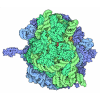
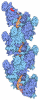
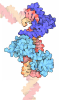
- Assembly
| Deposited unit | 
|
|---|---|
| 1 |
|
-Components
-Protein , 2 types, 2 molecules 1LI
| #1: Protein | Mass: 30171.441 Da / Num. of mol.: 1 Source method: isolated from a genetically manipulated source Source: (gene. exp.) Photinus pyralis (common eastern firefly)Production host: Homo sapiens (human) |
|---|---|
| #14: Protein | Mass: 24570.949 Da / Num. of mol.: 1 / Source method: isolated from a natural source / Source: (natural) Homo sapiens (human) / References: UniProt: Q96L21 |
-RNA chain , 4 types, 4 molecules 2L5L7L8
| #2: RNA chain | Mass: 894.612 Da / Num. of mol.: 1 / Source method: isolated from a natural source / Source: (natural) Homo sapiens (human) |
|---|---|
| #3: RNA chain | Mass: 1641095.500 Da / Num. of mol.: 1 / Source method: isolated from a natural source / Source: (natural) Homo sapiens (human) |
| #4: RNA chain | Mass: 38998.078 Da / Num. of mol.: 1 / Source method: isolated from a natural source / Source: (natural) Homo sapiens (human) / References: GenBank: 23898 |
| #5: RNA chain | Mass: 50465.812 Da / Num. of mol.: 1 / Source method: isolated from a natural source / Source: (natural) Homo sapiens (human) |
+60S ribosomal protein ... , 36 types, 36 molecules LALBLDLGLHLJLLLMLNLOLPLQLRLSLTLULVLWLXLYLZLaLbLcLdLeLfLgLhLi...
-Large ribosomal subunit protein ... , 4 types, 4 molecules LCLELFLm
| #8: Protein | Mass: 47817.641 Da / Num. of mol.: 1 / Source method: isolated from a natural source / Source: (natural) Homo sapiens (human) / References: UniProt: P36578 |
|---|---|
| #10: Protein | Mass: 32810.176 Da / Num. of mol.: 1 / Source method: isolated from a natural source / Source: (natural) Homo sapiens (human) / References: UniProt: Q02878 |
| #11: Protein | Mass: 29290.973 Da / Num. of mol.: 1 / Source method: isolated from a natural source / Source: (natural) Homo sapiens (human) / References: UniProt: P18124 |
| #43: Protein | Mass: 14771.411 Da / Num. of mol.: 1 / Source method: isolated from a natural source / Source: (natural) Homo sapiens (human) / References: UniProt: P62987 |
-Non-polymers , 3 types, 382 molecules 


| #47: Chemical | ChemComp-MG /  Mass: 24.305 Da / Num. of mol.: 284 / Source method: obtained synthetically / Formula: Mg Mass: 24.305 Da / Num. of mol.: 284 / Source method: obtained synthetically / Formula: Mg#48: Chemical | ChemComp-ZN /  Mass: 65.409 Da / Num. of mol.: 4 / Source method: obtained synthetically / Formula: Zn Mass: 65.409 Da / Num. of mol.: 4 / Source method: obtained synthetically / Formula: Zn#49: Water | ChemComp-HOH / | Mass: 18.015 Da / Num. of mol.: 94 / Source method: isolated from a natural source / Formula: H2O |
|---|
-Details
| Has ligand of interest | N |
|---|---|
| Has protein modification | Y |
-Experimental details
-Experiment
| Experiment | Method: ELECTRON MICROSCOPY |
|---|---|
| EM experiment | Aggregation state: PARTICLE / 3D reconstruction method: single particle reconstruction |
- Sample preparation
| Component | Name: Structure of FLuc-XBP1u+ stalled human 60S ribosome nascent chain complex Type: RIBOSOME / Entity ID: #1-#46 / Source: NATURAL |
|---|---|
| Molecular weight | Experimental value: NO |
| Source (natural) | Organism: Homo sapiens (human) |
| Buffer solution | pH: 7.4 |
| Specimen | Embedding applied: NO / Shadowing applied: NO / Staining applied: NO / Vitrification applied: YES |
| Vitrification | Cryogen name: ETHANE |
- Electron microscopy imaging
| Experimental equipment |  Model: Titan Krios / Image courtesy: FEI Company |
|---|---|
| Microscopy | Model: TFS KRIOS |
| Electron gun | Electron source:  FIELD EMISSION GUN / Accelerating voltage: 300 kV / Illumination mode: FLOOD BEAM FIELD EMISSION GUN / Accelerating voltage: 300 kV / Illumination mode: FLOOD BEAM |
| Electron lens | Mode: BRIGHT FIELD / Nominal defocus max: 2300 nm / Nominal defocus min: 500 nm |
| Image recording | Electron dose: 40.8 e/Å2 / Film or detector model: FEI FALCON IV (4k x 4k) |
- Processing
| EM software |
| ||||||||||||||||||||||||
|---|---|---|---|---|---|---|---|---|---|---|---|---|---|---|---|---|---|---|---|---|---|---|---|---|---|
| CTF correction | Type: NONE | ||||||||||||||||||||||||
| 3D reconstruction | Resolution: 2.2 Å / Resolution method: FSC 0.143 CUT-OFF / Num. of particles: 788554 / Symmetry type: POINT |
