 Movie
Movie Controller


+ Open data

- Basic information
| Entry | Database: PDB / ID: 9ast | ||||||
|---|---|---|---|---|---|---|---|
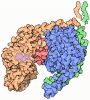
| Title | Cryo-EM structure of XCR1 signaling complex | ||||||
 Components Components |
| ||||||
 Keywords Keywords | SIGNALING PROTEIN / GPCR / XCL1 / Membrane protein | ||||||
| Function / homology |  Function and homology information Function and homology informationmature natural killer cell chemotaxis / positive regulation of granzyme A production / negative regulation of T-helper 1 cell activation / positive regulation of immunoglobulin production in mucosal tissue / positive regulation of granzyme B production / positive regulation of thymocyte migration / positive regulation of B cell chemotaxis / negative regulation of T-helper 1 type immune response / negative regulation of T cell cytokine production / positive regulation of natural killer cell chemotaxis ...mature natural killer cell chemotaxis / positive regulation of granzyme A production / negative regulation of T-helper 1 cell activation / positive regulation of immunoglobulin production in mucosal tissue / positive regulation of granzyme B production / positive regulation of thymocyte migration / positive regulation of B cell chemotaxis / negative regulation of T-helper 1 type immune response / negative regulation of T cell cytokine production / positive regulation of natural killer cell chemotaxis / positive regulation of T-helper 1 cell cytokine production / chemokine receptor binding / positive regulation of transforming growth factor beta production / chemokine receptor activity / positive regulation of T-helper 2 cell cytokine production / CCR chemokine receptor binding / positive regulation of T cell chemotaxis / positive regulation of leukocyte chemotaxis / negative regulation of CD4-positive, alpha-beta T cell proliferation / positive regulation of CD4-positive, alpha-beta T cell proliferation / C-C chemokine binding / C-C chemokine receptor activity / positive regulation of neutrophil chemotaxis / chemokine activity / Chemokine receptors bind chemokines / positive regulation of CD8-positive, alpha-beta T cell proliferation / negative regulation of interleukin-2 production / negative regulation of type II interferon production / positive regulation of interleukin-10 production / cellular response to transforming growth factor beta stimulus / G protein-coupled receptor signaling pathway, coupled to cyclic nucleotide second messenger / neutrophil chemotaxis / release of sequestered calcium ion into cytosol / adenylate cyclase inhibitor activity / positive regulation of protein localization to cell cortex / T cell migration / positive regulation of relaxation of smooth muscle / Adenylate cyclase inhibitory pathway / D2 dopamine receptor binding / cellular response to interleukin-4 / adenylate cyclase-inhibiting serotonin receptor signaling pathway / G protein-coupled serotonin receptor binding / cellular response to forskolin / positive regulation of release of sequestered calcium ion into cytosol / regulation of mitotic spindle organization / chemokine-mediated signaling pathway / cell chemotaxis / Regulation of insulin secretion / calcium-mediated signaling / neuropeptide signaling pathway / response to prostaglandin E / positive regulation of T cell cytokine production / positive regulation of cholesterol biosynthetic process / negative regulation of insulin secretion / positive regulation of T cell mediated cytotoxicity / G protein-coupled receptor binding / response to peptide hormone / chemotaxis / response to virus / centriolar satellite / G-protein beta/gamma-subunit complex binding / adenylate cyclase-modulating G protein-coupled receptor signaling pathway / adenylate cyclase-inhibiting G protein-coupled receptor signaling pathway / Olfactory Signaling Pathway / Activation of the phototransduction cascade / G protein-coupled acetylcholine receptor signaling pathway / G beta:gamma signalling through PLC beta / Presynaptic function of Kainate receptors / Thromboxane signalling through TP receptor / Activation of G protein gated Potassium channels / Inhibition of voltage gated Ca2+ channels via Gbeta/gamma subunits / G-protein activation / Glucagon signaling in metabolic regulation / Prostacyclin signalling through prostacyclin receptor / G beta:gamma signalling through CDC42 / Synthesis, secretion, and inactivation of Glucagon-like Peptide-1 (GLP-1) / G beta:gamma signalling through BTK / photoreceptor disc membrane / ADP signalling through P2Y purinoceptor 12 / Glucagon-type ligand receptors / GDP binding / Sensory perception of sweet, bitter, and umami (glutamate) taste / Adrenaline,noradrenaline inhibits insulin secretion / Vasopressin regulates renal water homeostasis via Aquaporins / Glucagon-like Peptide-1 (GLP1) regulates insulin secretion / G alpha (z) signalling events / cellular response to catecholamine stimulus / ADP signalling through P2Y purinoceptor 1 / cell-cell signaling / ADORA2B mediated anti-inflammatory cytokines production / G beta:gamma signalling through PI3Kgamma / antimicrobial humoral immune response mediated by antimicrobial peptide / adenylate cyclase-activating dopamine receptor signaling pathway / Cooperation of PDCL (PhLP1) and TRiC/CCT in G-protein beta folding / GPER1 signaling / cellular response to prostaglandin E stimulus / heterotrimeric G-protein complex / G alpha (12/13) signalling events / Inactivation, recovery and regulation of the phototransduction cascade / G-protein beta-subunit binding Similarity search - Function | ||||||
| Biological species |  Homo sapiens (human) Homo sapiens (human)  Mus musculus (house mouse) Mus musculus (house mouse) | ||||||
| Method | ELECTRON MICROSCOPY / single particle reconstruction / cryo EM / Resolution: 3.07 Å | ||||||
 Authors Authors | Zhang, X. / Zhang, C. | ||||||
| Funding support |  United States, 1items United States, 1items
| ||||||
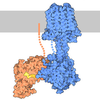
 Citation Citation | Journal: Proc Natl Acad Sci U S A / Year: 2024 Title: Molecular basis for chemokine recognition and activation of XCR1. Authors: Xuan Zhang / Roman R Schlimgen / Stephanie Singh / Michael P Tomani / Brian F Volkman / Cheng Zhang / Abstract: The X-C motif chemokine receptor XCR1, which selectively binds to the chemokine XCL1, is highly expressed in conventional dendritic cells subtype 1 (cDC1s) and crucial for their activation. ...The X-C motif chemokine receptor XCR1, which selectively binds to the chemokine XCL1, is highly expressed in conventional dendritic cells subtype 1 (cDC1s) and crucial for their activation. Modulating XCR1 signaling in cDC1s could offer novel opportunities in cancer immunotherapy and vaccine development by enhancing the antigen presentation function of cDC1s. To investigate the molecular mechanism of XCL-induced XCR1 signaling, we determined a high-resolution structure of the human XCR1 and G complex with an engineered form of XCL1, XCL1 CC3, by cryoelectron microscopy. Through mutagenesis and structural analysis, we elucidated the molecular details for the binding of the N-terminal segment of XCL1 CC3, which is vital for activating XCR1. The unique arrangement within the XCL1 CC3 binding site confers specificity for XCL1 in XCR1. We propose an activation mechanism for XCR1 involving structural alterations of key residues at the bottom of the XCL1 binding pocket. These detailed insights into XCL1 CC3-XCR1 interaction and XCR1 activation pave the way for developing novel XCR1-targeted therapeutics. | ||||||
| History |
|
- Structure visualization
| Structure viewer | Molecule: MolmilJmol/JSmol |
|---|
- Downloads & links
-Download
| PDBx/mmCIF format | 9ast.cif.gz | 245.2 KB | Display | PDBx/mmCIF format |
|---|---|---|---|---|
| PDB format | pdb9ast.ent.gz | 185.8 KB | Display | PDB format |
| PDBx/mmJSON format | 9ast.json.gz | Tree view | PDBx/mmJSON format | |
| Others |  Other downloads Other downloads |
-Validation report
| Arichive directory | https://data.pdbj.org/pub/pdb/validation_reports/as/9astftp://data.pdbj.org/pub/pdb/validation_reports/as/9ast | HTTPS FTP |
|---|
-Related structure data
| Related structure data |  43825MC M: map data used to model this data C: citing same article ( |
|---|---|
| Similar structure data |
-Links
 PDBj
PDBj
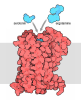

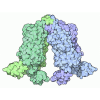
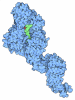
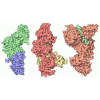
- Assembly
| Deposited unit | 
|
|---|---|
| 1 |
|
-Components
-Guanine nucleotide-binding protein ... , 3 types, 3 molecules ABG
| #1: Protein | Mass: 40414.047 Da / Num. of mol.: 1 / Mutation: S47N, G203A, E245A, A326S Source method: isolated from a genetically manipulated source Source: (gene. exp.) Homo sapiens (human) / Gene: GNAI1 / Production host:  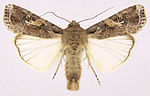 Spodoptera frugiperda (fall armyworm) / References: UniProt: P63096 Spodoptera frugiperda (fall armyworm) / References: UniProt: P63096 |
|---|---|
| #4: Protein | Mass: 38744.371 Da / Num. of mol.: 1 Source method: isolated from a genetically manipulated source Source: (gene. exp.) Homo sapiens (human) / Gene: GNB1 / Production host: Spodoptera frugiperda (fall armyworm) / References: UniProt: P62873 |
| #5: Protein | Mass: 7859.173 Da / Num. of mol.: 1 Source method: isolated from a genetically manipulated source Source: (gene. exp.) Homo sapiens (human) / Gene: GNG2 / Production host: Spodoptera frugiperda (fall armyworm) / References: UniProt: P59768 |
-Protein , 2 types, 2 molecules LR
| #2: Protein | Mass: 13905.371 Da / Num. of mol.: 1 Source method: isolated from a genetically manipulated source Source: (gene. exp.) Homo sapiens (human) / Gene: XCL1, LTN, SCYC1 / Production host: Spodoptera frugiperda (fall armyworm) / References: UniProt: P47992 |
|---|---|
| #3: Protein | Mass: 60383.625 Da / Num. of mol.: 1 Source method: isolated from a genetically manipulated source Source: (gene. exp.) Homo sapiens (human) / Gene: XCR1, CCXCR1, GPR5 / Production host: Spodoptera frugiperda (fall armyworm) / References: UniProt: P46094, UniProt: A0A482LYE4 |
-Antibody , 1 types, 1 molecules E
| #6: Antibody | Mass: 28634.797 Da / Num. of mol.: 1 Source method: isolated from a genetically manipulated source Source: (gene. exp.) Mus musculus (house mouse) / Production host: Spodoptera frugiperda (fall armyworm) |
|---|
-Details
| Has protein modification | Y |
|---|
-Experimental details
-Experiment
| Experiment | Method: ELECTRON MICROSCOPY |
|---|---|
| EM experiment | Aggregation state: PARTICLE / 3D reconstruction method: single particle reconstruction |
- Sample preparation
| Component | Name: XCL1-XCR1-Gi complex / Type: COMPLEX / Entity ID: all / Source: RECOMBINANT |
|---|---|
| Molecular weight | Experimental value: NO |
| Source (natural) | Organism: Spodoptera frugiperda (fall armyworm) |
| Source (recombinant) | Organism:  Baculovirus expression vector pFastBac1-HM Baculovirus expression vector pFastBac1-HM |
| Buffer solution | pH: 7.5 |
| Specimen | Embedding applied: NO / Shadowing applied: NO / Staining applied: NO / Vitrification applied: YES |
| Vitrification | Cryogen name: ETHANE |
- Electron microscopy imaging
| Experimental equipment | 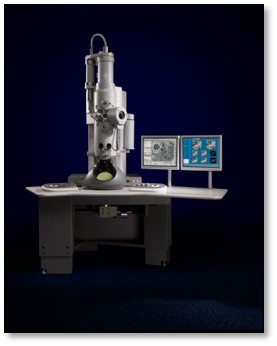 Model: Tecnai Spirit / Image courtesy: FEI Company |
|---|---|
| Microscopy | Model: FEI TECNAI SPIRIT |
| Electron gun | Electron source:  FIELD EMISSION GUN / Accelerating voltage: 300 kV / Illumination mode: FLOOD BEAM FIELD EMISSION GUN / Accelerating voltage: 300 kV / Illumination mode: FLOOD BEAM |
| Electron lens | Mode: BRIGHT FIELD / Nominal defocus max: 2000 nm / Nominal defocus min: 1000 nm |
| Image recording | Electron dose: 55 e/Å2 / Film or detector model: GATAN K3 BIOQUANTUM (6k x 4k) |
- Processing
| CTF correction | Type: PHASE FLIPPING AND AMPLITUDE CORRECTION |
|---|---|
| 3D reconstruction | Resolution: 3.07 Å / Resolution method: FSC 0.143 CUT-OFF / Num. of particles: 255110 / Symmetry type: POINT |
