 Movie
Movie Controller


+ Open data

- Basic information
| Entry | Database: PDB / ID: 8xml | |||||||||||||||||||||
|---|---|---|---|---|---|---|---|---|---|---|---|---|---|---|---|---|---|---|---|---|---|---|
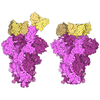
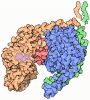
| Title | Cryo-EM structure of the Apo CCR8-Gi complex | |||||||||||||||||||||
 Components Components |
| |||||||||||||||||||||
 Keywords Keywords | STRUCTURAL PROTEIN / Cryo-EM / CCR8 / GPCR | |||||||||||||||||||||
| Function / homology |  Function and homology information Function and homology informationchemokine receptor activity / C-C chemokine binding / C-C chemokine receptor activity / Chemokine receptors bind chemokines / coreceptor activity / regulation of eating behavior / adenylate cyclase inhibitor activity / T cell migration / positive regulation of protein localization to cell cortex / positive regulation of relaxation of smooth muscle ...chemokine receptor activity / C-C chemokine binding / C-C chemokine receptor activity / Chemokine receptors bind chemokines / coreceptor activity / regulation of eating behavior / adenylate cyclase inhibitor activity / T cell migration / positive regulation of protein localization to cell cortex / positive regulation of relaxation of smooth muscle / Adenylate cyclase inhibitory pathway / D2 dopamine receptor binding / adenylate cyclase-inhibiting dopamine receptor signaling pathway / adenylate cyclase-inhibiting serotonin receptor signaling pathway / G protein-coupled serotonin receptor binding / regulation of G protein-coupled receptor signaling pathway / cellular response to forskolin / regulation of mitotic spindle organization / mast cell degranulation / calcium-mediated signaling / chemokine-mediated signaling pathway / cell chemotaxis / establishment of mitotic spindle orientation / neuropeptide signaling pathway / Regulation of insulin secretion / response to prostaglandin E / positive regulation of cholesterol biosynthetic process / electron transport chain / chemotaxis / G protein-coupled receptor binding / response to peptide hormone / G protein-coupled receptor activity / G-protein beta/gamma-subunit complex binding / adenylate cyclase-inhibiting G protein-coupled receptor signaling pathway / adenylate cyclase-modulating G protein-coupled receptor signaling pathway / Olfactory Signaling Pathway / Activation of the phototransduction cascade / G protein-coupled acetylcholine receptor signaling pathway / cell division / G beta:gamma signalling through PLC beta / Presynaptic function of Kainate receptors / Thromboxane signalling through TP receptor / Activation of G protein gated Potassium channels / Inhibition of voltage gated Ca2+ channels via Gbeta/gamma subunits / G-protein activation / Glucagon signaling in metabolic regulation / G beta:gamma signalling through CDC42 / Prostacyclin signalling through prostacyclin receptor / GDP binding / Synthesis, secretion, and inactivation of Glucagon-like Peptide-1 (GLP-1) / photoreceptor disc membrane / G beta:gamma signalling through BTK / ADP signalling through P2Y purinoceptor 12 / Sensory perception of sweet, bitter, and umami (glutamate) taste / Glucagon-type ligand receptors / Adrenaline,noradrenaline inhibits insulin secretion / Vasopressin regulates renal water homeostasis via Aquaporins / G alpha (z) signalling events / Glucagon-like Peptide-1 (GLP1) regulates insulin secretion / ADP signalling through P2Y purinoceptor 1 / cellular response to catecholamine stimulus / G beta:gamma signalling through PI3Kgamma / ADORA2B mediated anti-inflammatory cytokines production / adenylate cyclase-activating dopamine receptor signaling pathway / heterotrimeric G-protein complex / cellular response to prostaglandin E stimulus / Cooperation of PDCL (PhLP1) and TRiC/CCT in G-protein beta folding / GPER1 signaling / G alpha (12/13) signalling events / Inactivation, recovery and regulation of the phototransduction cascade / G-protein beta-subunit binding / spindle pole / extracellular vesicle / positive regulation of cytosolic calcium ion concentration / Thrombin signalling through proteinase activated receptors (PARs) / adenylate cyclase-activating G protein-coupled receptor signaling pathway / signaling receptor complex adaptor activity / cell adhesion / ciliary basal body / GTPase binding / midbody / G protein activity / cell cortex / Ca2+ pathway / High laminar flow shear stress activates signaling by PIEZO1 and PECAM1:CDH5:KDR in endothelial cells / G alpha (i) signalling events / G alpha (s) signalling events / G alpha (q) signalling events / Hydrolases; Acting on acid anhydrides; Acting on GTP to facilitate cellular and subcellular movement / cytoplasmic side of plasma membrane / Ras protein signal transduction / electron transfer activity / Extra-nuclear estrogen signaling / periplasmic space / immune response / iron ion binding / G protein-coupled receptor signaling pathway / external side of plasma membrane / lysosomal membrane / centrosome Similarity search - Function | |||||||||||||||||||||
| Biological species |   Escherichia coli (E. coli) Escherichia coli (E. coli) Homo sapiens (human) Homo sapiens (human) | |||||||||||||||||||||
| Method | ELECTRON MICROSCOPY / single particle reconstruction / cryo EM / Resolution: 2.58 Å | |||||||||||||||||||||
 Authors Authors | Peng, Q. / Jiang, H.H. / Cheng, X.Y. / Li, J. / Zhang, J. | |||||||||||||||||||||
| Funding support |  China, 1items China, 1items
| |||||||||||||||||||||
 Citation Citation | Journal: Biochemistry / Year: 2024 Title: Cryo-EM Structure and Biochemical Analysis of the Human Chemokine Receptor CCR8. Authors: Qi Peng / Haihai Jiang / Xinyu Cheng / Na Wang / Sili Zhou / Yuting Zhang / Tingting Yang / Yixiang Chen / Wei Zhang / Sijia Lv / Weiwei Nan / JianFei Wang / Guo-Huang Fan / Jian Li / Jin Zhang / Abstract: The C-C motif chemokine receptor 8 (CCR8) is a class A G-protein-coupled receptor that has emerged as a promising therapeutic target in cancer and autoimmune diseases. In the present study, we solved ...The C-C motif chemokine receptor 8 (CCR8) is a class A G-protein-coupled receptor that has emerged as a promising therapeutic target in cancer and autoimmune diseases. In the present study, we solved the cryo-electron microscopy (cryo-EM) structure of the human CCR8-G complex in the absence of a ligand at 2.58 Å. Structural analysis and comparison revealed that our apo CCR8 structure undergoes some conformational changes and is similar to that in the CCL1-CCR8 complex structure, indicating an active state. In addition, the key residues of CCR8 involved in the recognition of LMD-009, a potent nonpeptide agonist, were investigated by mutating CCR8 and testing the calcium flux induced by LMD-009-CCR8 interaction. Three mutants of CCR8, Y113A, Y172A, and E286A, showed a dramatically decreased ability in mediating calcium mobilization, indicating their key interaction with LMD-009 and key roles in activation. These structural and biochemical analyses enrich molecular insights into the agonism and activation of CCR8 and will facilitate CCR8-targeted therapy. | |||||||||||||||||||||
| History |
|
- Structure visualization
| Structure viewer | Molecule: MolmilJmol/JSmol |
|---|
- Downloads & links
-Download
| PDBx/mmCIF format | 8xml.cif.gz | 206.5 KB | Display | PDBx/mmCIF format |
|---|---|---|---|---|
| PDB format | pdb8xml.ent.gz | 154.5 KB | Display | PDB format |
| PDBx/mmJSON format | 8xml.json.gz | Tree view | PDBx/mmJSON format | |
| Others |  Other downloads Other downloads |
-Validation report
| Arichive directory | https://data.pdbj.org/pub/pdb/validation_reports/xm/8xmlftp://data.pdbj.org/pub/pdb/validation_reports/xm/8xml | HTTPS FTP |
|---|
-Related structure data
| Related structure data |  38481MC M: map data used to model this data C: citing same article ( |
|---|---|
| Similar structure data |
-Links
 PDBj
PDBj

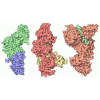
- Assembly
| Deposited unit | 
|
|---|---|
| 1 |
|
-Components
| #1: Protein | Mass: 52685.398 Da / Num. of mol.: 1 Source method: isolated from a genetically manipulated source Source: (gene. exp.) Escherichia coli (E. coli), (gene. exp.) Homo sapiens (human)Gene: cybC, CCR8, CKRL1, CMKBR8, CMKBRL2 / Production host:   Spodoptera frugiperda (fall armyworm) / References: UniProt: P0ABE7, UniProt: P51685 Spodoptera frugiperda (fall armyworm) / References: UniProt: P0ABE7, UniProt: P51685 |
|---|---|
| #2: Protein | Mass: 40447.141 Da / Num. of mol.: 1 / Mutation: S47C, G202T, G203A, E245A, A326S Source method: isolated from a genetically manipulated source Source: (gene. exp.) Homo sapiens (human) / Gene: GNAI1 / Production host: Spodoptera frugiperda (fall armyworm) / References: UniProt: P63096 |
| #3: Protein | Mass: 37416.930 Da / Num. of mol.: 1 Source method: isolated from a genetically manipulated source Source: (gene. exp.) Homo sapiens (human) / Gene: GNB1 / Production host: Spodoptera frugiperda (fall armyworm) / References: UniProt: P62873 |
| #4: Protein | Mass: 7861.143 Da / Num. of mol.: 1 Source method: isolated from a genetically manipulated source Source: (gene. exp.) Homo sapiens (human) / Gene: GNG2 / Production host: Spodoptera frugiperda (fall armyworm) / References: UniProt: P59768 |
| #5: Antibody | Mass: 28668.922 Da / Num. of mol.: 1 Source method: isolated from a genetically manipulated source Source: (gene. exp.) Homo sapiens (human) / Production host: Spodoptera frugiperda (fall armyworm) |
| Has protein modification | Y |
-Experimental details
-Experiment
| Experiment | Method: ELECTRON MICROSCOPY |
|---|---|
| EM experiment | Aggregation state: PARTICLE / 3D reconstruction method: single particle reconstruction |
- Sample preparation
| Component | Name: CCR8-DNGi-scFv16 / Type: COMPLEX / Entity ID: all / Source: RECOMBINANT |
|---|---|
| Molecular weight | Value: 180 kDa/nm / Experimental value: YES |
| Source (natural) | Organism: Homo sapiens (human) |
| Source (recombinant) | Organism: Spodoptera frugiperda (fall armyworm) |
| Buffer solution | pH: 7.5 |
| Specimen | Embedding applied: NO / Shadowing applied: NO / Staining applied: NO / Vitrification applied: YES |
| Vitrification | Cryogen name: ETHANE |
- Electron microscopy imaging
| Experimental equipment |  Model: Titan Krios / Image courtesy: FEI Company |
|---|---|
| Microscopy | Model: FEI TITAN KRIOS |
| Electron gun | Electron source:  FIELD EMISSION GUN / Accelerating voltage: 300 kV / Illumination mode: FLOOD BEAM FIELD EMISSION GUN / Accelerating voltage: 300 kV / Illumination mode: FLOOD BEAM |
| Electron lens | Mode: BRIGHT FIELD / Nominal defocus max: 2000 nm / Nominal defocus min: 1000 nm |
| Image recording | Electron dose: 45 e/Å2 / Film or detector model: GATAN K3 (6k x 4k) |
- Processing
| EM software | Name: PHENIX / Category: model refinement | ||||||||||||||||||||||||
|---|---|---|---|---|---|---|---|---|---|---|---|---|---|---|---|---|---|---|---|---|---|---|---|---|---|
| CTF correction | Type: PHASE FLIPPING AND AMPLITUDE CORRECTION | ||||||||||||||||||||||||
| 3D reconstruction | Resolution: 2.58 Å / Resolution method: FSC 0.143 CUT-OFF / Num. of particles: 275730 / Symmetry type: POINT | ||||||||||||||||||||||||
| Refine LS restraints |
|
