 Movie
Movie Controller


+ Open data

- Basic information
| Entry | Database: PDB / ID: 31ck | |||||||||||||||||||||||||||
|---|---|---|---|---|---|---|---|---|---|---|---|---|---|---|---|---|---|---|---|---|---|---|---|---|---|---|---|---|
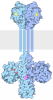
| Title | Oxidized E.coli aerotaxis receptor in MH-cap free state | |||||||||||||||||||||||||||
 Components Components | Aerotaxis receptor | |||||||||||||||||||||||||||
 Keywords Keywords | FLAVOPROTEIN / Chemotaxis / Energy Taxis / Redox Sensing / Transmembrane Signaling / Cryo-EM / DdEER Spectroscopy | |||||||||||||||||||||||||||
| Function / homology |  Function and homology information Function and homology informationpositive aerotaxis / chemotaxis / transmembrane signaling receptor activity / signal transduction / identical protein binding / plasma membrane Similarity search - Function | |||||||||||||||||||||||||||
| Biological species |   Escherichia coli K-12 (bacteria) Escherichia coli K-12 (bacteria) | |||||||||||||||||||||||||||
| Method | ELECTRON MICROSCOPY / single particle reconstruction / cryo EM / Resolution: 3.5 Å | |||||||||||||||||||||||||||
 Authors Authors | Olsthoorn, F.A. / Muok, A.R. / Xu, Y. / Crane, B.R. | |||||||||||||||||||||||||||
| Funding support |  United States, 1items United States, 1items
| |||||||||||||||||||||||||||
 Citation Citation | Journal: bioRxiv / Year: 2026 Title: Signaling mechanism of the transmembrane energy receptor Aer. Authors: Flory A Olsthoorn / Alise R Muok / Zachary A Maschmann / Yajie Xu / Siddarth Chandrasekaran / Robert Dunleavy / Brian R Crane / Abstract: The aerotaxis receptor Aer is a bacterial chemoreceptor that senses intracellular redox changes via an N-terminal PAS domain bound to a flavin adenine dinucleotide (FAD) cofactor. Distinct from ...The aerotaxis receptor Aer is a bacterial chemoreceptor that senses intracellular redox changes via an N-terminal PAS domain bound to a flavin adenine dinucleotide (FAD) cofactor. Distinct from canonical methyl-accepting chemotaxis proteins (MCPs) such as Tar/Tsr, Aer lacks a periplasmic ligand-binding domain and adaptive methylation, transmitting conformational signals laterally from the PAS domain to the HAMP domain and the methylation helix cap (MH-cap) of the kinase control domain (KCD). To elucidate the Aer signalling mechanism, we determined cryo-electron microscopy (cryo-EM) structures of full-length Aer in oxidized flavin quinone (kinase-on) and anionic semiquinone (kinase-off) states. Structural comparison revealed redox-linked rearrangements of the FAD-binding pocket, reorientation of PAS-HAMP interactions, and strikingly altered MH-cap stability. PAS-MH-cap contact in the oxidized state compressed the receptor and stabilized proximal KCD helices, whereas reduction disrupted these contacts, increasing KCD flexibility. To probe distal effects on KCD architecture, we performed nanodisc reconstitution and pulse dipolar ESR spectroscopy on spin-labelled positions along the four-helix bundle. Distance distributions indicated redox-dependent changes in helix separation, particularly at the C-terminal MH2 region, consistent with PAS-driven loosening of KCD packing in kinase-off states. These data support a model in which FAD redox chemistry reorganizes flavin pocket residues that in turn subtly alter PAS conformation to influence PAS-HAMP and PAS-MH-cap packing and hence KCD conformational stability. The findings reveal an Aer-specific signaling axis distinct from periplasmic-ligand binding MCPs that has adapted MCP architecture for lateral PAS input and and cytoplasmic redox sensing. | |||||||||||||||||||||||||||
| History |
|
- Structure visualization
| Structure viewer | Molecule: MolmilJmol/JSmol |
|---|
- Downloads & links
-Download
| PDBx/mmCIF format | 31ck.cif.gz | 186.6 KB | Display | PDBx/mmCIF format |
|---|---|---|---|---|
| PDB format | pdb31ck.ent.gz | 143.5 KB | Display | PDB format |
| PDBx/mmJSON format | 31ck.json.gz | Tree view | PDBx/mmJSON format | |
| Others |  Other downloads Other downloads |
-Validation report
| Arichive directory | https://data.pdbj.org/pub/pdb/validation_reports/1c/31ckftp://data.pdbj.org/pub/pdb/validation_reports/1c/31ck | HTTPS FTP |
|---|
-Related structure data
| Related structure data |  58291MC  31cjC M: map data used to model this data C: citing same article ( |
|---|---|
| Similar structure data |

-Links
 PDBj
PDBj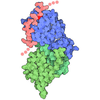
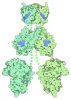
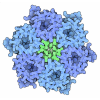
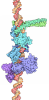
- Assembly
| Deposited unit | 
|
|---|---|
| 1 |
|
-Components
| #1: Protein | Mass: 58002.648 Da / Num. of mol.: 2 Source method: isolated from a genetically manipulated source Source: (gene. exp.) Escherichia coli K-12 (bacteria) / Gene: aer, air, yqjJ, b3072, JW3043 / Plasmid: pET28 / Production host: Escherichia coli BL21(DE3) (bacteria) / References: UniProt: P50466#2: Chemical |  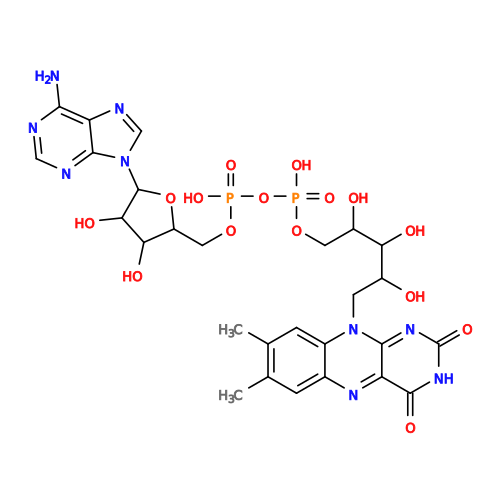 Mass: 785.550 Da / Num. of mol.: 2 / Source method: obtained synthetically / Formula: C27H33N9O15P2 / Feature type: SUBJECT OF INVESTIGATION / Comment: FAD*YM Mass: 785.550 Da / Num. of mol.: 2 / Source method: obtained synthetically / Formula: C27H33N9O15P2 / Feature type: SUBJECT OF INVESTIGATION / Comment: FAD*YMHas ligand of interest | Y | Has protein modification | N | |
|---|
-Experimental details
-Experiment
| Experiment | Method: ELECTRON MICROSCOPY |
|---|---|
| EM experiment | Aggregation state: PARTICLE / 3D reconstruction method: single particle reconstruction |
- Sample preparation
| Component | Name: LMNG-solubilized Aer bound to cofactor FAD in a Q MH-cap free state Type: COMPLEX / Entity ID: #1 / Source: RECOMBINANT | |||||||||||||||||||||||||
|---|---|---|---|---|---|---|---|---|---|---|---|---|---|---|---|---|---|---|---|---|---|---|---|---|---|---|
| Molecular weight | Value: 0.11 MDa / Experimental value: NO | |||||||||||||||||||||||||
| Source (natural) | Organism: Escherichia coli K-12 (bacteria) | |||||||||||||||||||||||||
| Source (recombinant) | Organism: Escherichia coli BL21(DE3) (bacteria) / Plasmid: pET28 | |||||||||||||||||||||||||
| Buffer solution | pH: 7.5 / Details: 25 mM Tris, 150 mM NaCl, 5% glycerol, 0.002% LMNG | |||||||||||||||||||||||||
| Buffer component |
| |||||||||||||||||||||||||
| Specimen | Embedding applied: NO / Shadowing applied: NO / Staining applied: NO / Vitrification applied: YES | |||||||||||||||||||||||||
| Specimen support | Grid material: COPPER / Grid mesh size: 200 divisions/in. / Grid type: Quantifoil | |||||||||||||||||||||||||
| Vitrification | Instrument: FEI VITROBOT MARK IV / Cryogen name: ETHANE / Humidity: 90 % / Chamber temperature: 277 K |
- Electron microscopy imaging
| Experimental equipment | 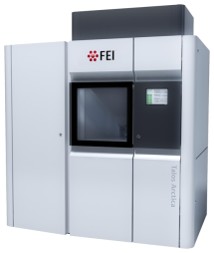 Model: Talos Arctica / Image courtesy: FEI Company |
|---|---|
| Microscopy | Model: FEI TALOS ARCTICA |
| Electron gun | Electron source:  FIELD EMISSION GUN / Accelerating voltage: 200 kV / Illumination mode: FLOOD BEAM FIELD EMISSION GUN / Accelerating voltage: 200 kV / Illumination mode: FLOOD BEAM |
| Electron lens | Mode: BRIGHT FIELD / Nominal defocus max: 2200 nm / Nominal defocus min: 600 nm / Cs: 2.7 mm |
| Specimen holder | Cryogen: NITROGEN |
| Image recording | Electron dose: 50 e/Å2 / Film or detector model: GATAN K3 (6k x 4k) |
| EM imaging optics | Energyfilter name: GIF Bioquantum / Energyfilter slit width: 20 eV |
- Processing
| EM software |
| ||||||||||||||||||||||||||||||||||||||||||||||||
|---|---|---|---|---|---|---|---|---|---|---|---|---|---|---|---|---|---|---|---|---|---|---|---|---|---|---|---|---|---|---|---|---|---|---|---|---|---|---|---|---|---|---|---|---|---|---|---|---|---|
| CTF correction | Type: PHASE FLIPPING AND AMPLITUDE CORRECTION | ||||||||||||||||||||||||||||||||||||||||||||||||
| Symmetry | Point symmetry: C2 (2 fold cyclic) | ||||||||||||||||||||||||||||||||||||||||||||||||
| 3D reconstruction | Resolution: 3.5 Å / Resolution method: FSC 0.143 CUT-OFF / Num. of particles: 90018 / Symmetry type: POINT | ||||||||||||||||||||||||||||||||||||||||||||||||
| Atomic model building | B value: 147.2 / Protocol: FLEXIBLE FIT / Space: REAL | ||||||||||||||||||||||||||||||||||||||||||||||||
| Atomic model building | Source name: AlphaFold / Type: in silico model | ||||||||||||||||||||||||||||||||||||||||||||||||
| Refinement | Highest resolution: 3.5 Å Stereochemistry target values: REAL-SPACE (WEIGHTED MAP SUM AT ATOM CENTERS) | ||||||||||||||||||||||||||||||||||||||||||||||||
| Refine LS restraints |
|
