 Movie
Movie Controller


+ Open data

- Basic information
| Entry | Database: PDB / ID: 21kt | ||||||||||||||||||||||||
|---|---|---|---|---|---|---|---|---|---|---|---|---|---|---|---|---|---|---|---|---|---|---|---|---|---|
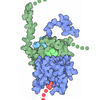
| Title | Wnt3a signalosome extracellular complex | ||||||||||||||||||||||||
 Components Components |
| ||||||||||||||||||||||||
 Keywords Keywords | SIGNALING PROTEIN / Wnt3a-Fzd8-LRP6 extracellular complex / cryo-EM structure / FKBP-independent Wnt3a homodimer | ||||||||||||||||||||||||
| Function / homology |  Function and homology information Function and homology informationpositive regulation of dermatome development / calcium ion transmembrane transport via low voltage-gated calcium channel / positive regulation of collateral sprouting in absence of injury / positive regulation of mesodermal cell fate specification / paraxial mesodermal cell fate commitment / axis elongation involved in somitogenesis / cell proliferation in midbrain / WNT ligand biogenesis and trafficking / spinal cord association neuron differentiation / positive regulation of biosynthetic process ...positive regulation of dermatome development / calcium ion transmembrane transport via low voltage-gated calcium channel / positive regulation of collateral sprouting in absence of injury / positive regulation of mesodermal cell fate specification / paraxial mesodermal cell fate commitment / axis elongation involved in somitogenesis / cell proliferation in midbrain / WNT ligand biogenesis and trafficking / spinal cord association neuron differentiation / positive regulation of biosynthetic process / negative regulation of axon extension involved in axon guidance / Disassembly of the destruction complex and recruitment of AXIN to the membrane / positive regulation of multicellular organismal process / Wnt-Frizzled-LRP5/6 complex / Negative regulation of TCF-dependent signaling by WNT ligand antagonists / positive regulation of cell-cell adhesion mediated by cadherin / Signaling by RNF43 mutants / COP9 signalosome assembly / TCF dependent signaling in response to WNT / Transcriptional and post-translational regulation of MITF-M expression and activity / Regulation of FZD by ubiquitination / cell proliferation in forebrain / neural crest formation / kinase inhibitor activity / positive regulation of skeletal muscle tissue development / somatic stem cell division / secondary palate development / regulation of RNA biosynthetic process / cardiac muscle cell fate commitment / Wnt receptor activity / co-receptor binding / regulation of phosphatidylinositol 3-kinase/protein kinase B signal transduction / macrolide binding / toxin transmembrane transporter activity / non-canonical Wnt signaling pathway / low-density lipoprotein particle receptor activity / positive regulation of hepatocyte proliferation / activin receptor binding / TORC1 complex / neural crest cell differentiation / negative regulation of dopaminergic neuron differentiation / regulation of postsynapse to nucleus signaling pathway / Wnt-protein binding / regulation of skeletal muscle contraction by regulation of release of sequestered calcium ion / post-anal tail morphogenesis / dopaminergic neuron differentiation / cytoplasmic side of membrane / cellular response to cholesterol / transforming growth factor beta receptor binding / anterior/posterior pattern specification / positive regulation of cardiac muscle cell differentiation / TGFBR1 LBD Mutants in Cancer / heart trabecula formation / mammary gland development / regulation of cellular response to stress / determination of left/right symmetry / type I transforming growth factor beta receptor binding / negative regulation of activin receptor signaling pathway / midbrain dopaminergic neuron differentiation / signaling receptor inhibitor activity / frizzled binding / I-SMAD binding / Wnt signalosome / positive regulation of neural precursor cell proliferation / Class B/2 (Secretin family receptors) / inner ear morphogenesis / dorsal/ventral neural tube patterning / regulation of amyloid precursor protein catabolic process / terminal cisterna / ryanodine receptor complex / Disassembly of the destruction complex and recruitment of AXIN to the membrane / negative regulation of fat cell differentiation / midbrain development / regulation of cell size / 'de novo' protein folding / heart looping / FK506 binding / regulation of axonogenesis / ventricular cardiac muscle tissue morphogenesis / regulation of synapse organization / skeletal muscle cell differentiation / mesoderm development / hemopoiesis / canonical Wnt signaling pathway / negative regulation of smooth muscle cell apoptotic process / regulation of cell differentiation / TGF-beta receptor signaling activates SMADs / somitogenesis / regulation of lipid metabolic process / cell fate commitment / positive regulation of receptor internalization / BMP signaling pathway / mTORC1-mediated signalling / Calcineurin activates NFAT / heart morphogenesis / regulation of immune response / protein serine/threonine kinase inhibitor activity / regulation of presynapse assembly / neuronal dense core vesicle / coreceptor activity Similarity search - Function | ||||||||||||||||||||||||
| Biological species |   Mus musculus (house mouse) Mus musculus (house mouse) Homo sapiens (human) Homo sapiens (human) | ||||||||||||||||||||||||
| Method | ELECTRON MICROSCOPY / single particle reconstruction / cryo EM / Resolution: 3.33 Å | ||||||||||||||||||||||||
 Authors Authors | Yue, D. / Sun, G. / Zhang, L. / Wang, Z. / Xu, W. | ||||||||||||||||||||||||
| Funding support |  China, 3items China, 3items
| ||||||||||||||||||||||||
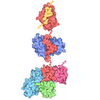
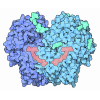
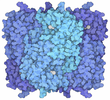
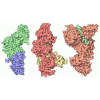
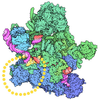
 Citation Citation | Journal: Cell / Year: 2026 Title: Structural basis of Wnt signalosome extracellular complex assembly. Authors: Dan Yue / Gangyu Sun / Yunlong Cao / Hongyue Li / Yufeng Yang / Zirun Pan / Lulu Xue / Lu Zhang / Zhizhi Wang / Wenqing Xu / Abstract: Recognition of Wnt proteins by Frizzled (Fzd) receptors and the low-density lipoprotein receptor-related protein 5/6 (LRP5/6) co-receptor is essential for canonical Wnt signaling. It remains ...Recognition of Wnt proteins by Frizzled (Fzd) receptors and the low-density lipoprotein receptor-related protein 5/6 (LRP5/6) co-receptor is essential for canonical Wnt signaling. It remains enigmatic how Wnt simultaneously interacts with Fzd and LRP5/6 and activates intracellular Wnt/β-catenin signaling. Here, we report cryo-electron microscopy (cryo-EM) structures of Wnt3a/Fzd8/LRP6 extracellular complexes captured in a 2:4:2 stoichiometry, consisting of a Wnt3a-Wnt3a homodimer, whereby each Wnt3a monomer binds to two Fzd8 receptors and one LRP6 co-receptor. This implies that Wnt3a induces Fzd cystine-rich domain (Fzd-CRD) tetramerization, which in turn could promote recruitment of oligomeric Disheveled (Dvl) to Fzd on the cytoplasmic side. Indeed, mutations of key Wnt3a-Wnt3a interface residues abolish Fzd-LRP clustering and downstream signaling, supporting a critical role of Wnt3a-Wnt3a dimerization in Wnt signalosome assembly and signaling. Our structures also show how the Wnt3a N-helical domain recognizes the LRP6 extracellular domain (LRP6-ECD) E3 β-propeller, while the Wnt3a N-C hairpin interacts with the valley between LRP6-E3 and -E4 propellers, underpinning the development of targeted Wnt therapeutics. | ||||||||||||||||||||||||
| History |
|
- Structure visualization
| Structure viewer | Molecule: MolmilJmol/JSmol |
|---|
- Downloads & links
-Download
| PDBx/mmCIF format | 21kt.cif.gz | 448.1 KB | Display | PDBx/mmCIF format |
|---|---|---|---|---|
| PDB format | pdb21kt.ent.gz | 350.7 KB | Display | PDB format |
| PDBx/mmJSON format | 21kt.json.gz | Tree view | PDBx/mmJSON format | |
| Others |  Other downloads Other downloads |
-Validation report
| Arichive directory | https://data.pdbj.org/pub/pdb/validation_reports/1k/21ktftp://data.pdbj.org/pub/pdb/validation_reports/1k/21kt | HTTPS FTP |
|---|
-Related structure data
| Related structure data |  67780MC  21krC  21ksC M: map data used to model this data C: citing same article ( |
|---|---|
| Similar structure data |


-Links
 PDBj
PDBj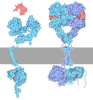

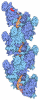
- Assembly
| Deposited unit | 
|
|---|---|
| 1 |
|
-Components
| #1: Protein | Mass: 37438.258 Da / Num. of mol.: 2 Source method: isolated from a genetically manipulated source Source: (gene. exp.) Mus musculus (house mouse) / Gene: Wnt3a, Wnt-3a / Cell line (production host): L-Wnt3a cells / Production host: Mus musculus (house mouse) / References: UniProt: P27467#2: Protein | Mass: 29762.502 Da / Num. of mol.: 4 / Mutation: Q159A,E161A,C178S,Q221A Source method: isolated from a genetically manipulated source Source: (gene. exp.) Homo sapiens (human) / Gene: FZD8, FKBP1A, FKBP1, FKBP12 / Production host: Homo sapiens (human)References: UniProt: Q9H461, UniProt: P62942, peptidylprolyl isomerase #3: Protein | Mass: 85227.797 Da / Num. of mol.: 2 / Mutation: C715S Source method: isolated from a genetically manipulated source Source: (gene. exp.) Homo sapiens (human) / Gene: LRP6, MTOR / Production host: Homo sapiens (human)References: UniProt: O75581, UniProt: A0A8V8TRG9, non-specific serine/threonine protein kinase #4: Polysaccharide | Source method: isolated from a genetically manipulated source #5: Sugar | ChemComp-NAG / 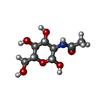 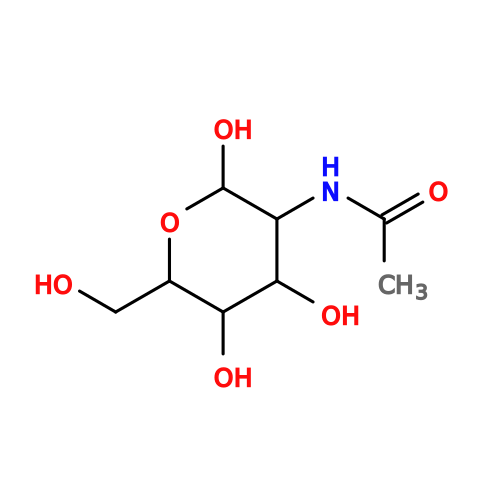 Type: D-saccharide, beta linking / Mass: 221.208 Da / Num. of mol.: 4 / Source method: obtained synthetically / Formula: C8H15NO6 / Feature type: SUBJECT OF INVESTIGATION Type: D-saccharide, beta linking / Mass: 221.208 Da / Num. of mol.: 4 / Source method: obtained synthetically / Formula: C8H15NO6 / Feature type: SUBJECT OF INVESTIGATIONHas ligand of interest | Y | Has protein modification | Y | |
|---|
-Experimental details
-Experiment
| Experiment | Method: ELECTRON MICROSCOPY |
|---|---|
| EM experiment | Aggregation state: PARTICLE / 3D reconstruction method: single particle reconstruction |
- Sample preparation
| Component |
| ||||||||||||||||||||||||
|---|---|---|---|---|---|---|---|---|---|---|---|---|---|---|---|---|---|---|---|---|---|---|---|---|---|
| Source (natural) |
| ||||||||||||||||||||||||
| Source (recombinant) |
| ||||||||||||||||||||||||
| Buffer solution | pH: 7.5 | ||||||||||||||||||||||||
| Specimen | Conc.: 1 mg/ml / Embedding applied: NO / Shadowing applied: NO / Staining applied: NO / Vitrification applied: YES | ||||||||||||||||||||||||
| Specimen support | Grid material: COPPER / Grid mesh size: 300 divisions/in. / Grid type: Quantifoil R1.2/1.3 | ||||||||||||||||||||||||
| Vitrification | Instrument: FEI VITROBOT MARK IV / Cryogen name: ETHANE / Humidity: 100 % / Chamber temperature: 283.15 K |
- Electron microscopy imaging
| Experimental equipment |  Model: Titan Krios / Image courtesy: FEI Company |
|---|---|
| Microscopy | Model: TFS KRIOS |
| Electron gun | Electron source:  FIELD EMISSION GUN / Accelerating voltage: 300 kV / Illumination mode: FLOOD BEAM FIELD EMISSION GUN / Accelerating voltage: 300 kV / Illumination mode: FLOOD BEAM |
| Electron lens | Mode: BRIGHT FIELD / Nominal defocus max: 2200 nm / Nominal defocus min: 1200 nm |
| Specimen holder | Cryogen: NITROGEN |
| Image recording | Electron dose: 60 e/Å2 / Film or detector model: GATAN K3 BIOQUANTUM (6k x 4k) |
- Processing
| EM software |
| ||||||||||||||||||||||||
|---|---|---|---|---|---|---|---|---|---|---|---|---|---|---|---|---|---|---|---|---|---|---|---|---|---|
| CTF correction | Type: NONE | ||||||||||||||||||||||||
| 3D reconstruction | Resolution: 3.33 Å / Resolution method: FSC 0.143 CUT-OFF / Num. of particles: 230266 / Symmetry type: POINT | ||||||||||||||||||||||||
| Refinement | Highest resolution: 3.33 Å Stereochemistry target values: REAL-SPACE (WEIGHTED MAP SUM AT ATOM CENTERS) | ||||||||||||||||||||||||
| Refine LS restraints |
|
